
Orlando City
Orlando City vs. Sporting Kansas City: Player Grades and Man of the Match

Orlando City will come home from Kansas City without any points, extending the team’s winless streak to six (0-3-3) after a 2-1 loss to Sporting KC. The Lions are still 6-4-3 against the Western Conference since joining MLS, but that and a couple of dollars still won’t get you much at Starbucks.
The Lions — without Head Coach Adrian Heath, who served his suspension, and minus the suspended Cristian Higuita — were completely outclassed in Kansas City, yielding a sickening 34 shots, and putting none of their own seven attempts on target. Herein I’ll try to grade the individual performances of Orlando City players in the match, although the positives were fewer and farther between than we’d all like.
I’m sure I’ll be blasted for rating players too high today. But I have to rate these players individually, when I think the larger issue was team play. Plus, these are lower than my usual ratings, which somewhat follow the scholastic rating system, where a 9 would be the equivalent of an A, and I’m not sure I’ve given more than one of those…ever. Here we go:
Starters
GK, Joe Bendik, 7 (MotM) - Orlando’s goalkeeper made 10 saves and deserved much better support from his teammates than he got. He kept the game level at 0-0- by making a pair of massive saves on Dom Dwyer and Graham Zusi at the end of the first half with Darwin Ceren down injured in his own box, keeping everyone onside. He was relentlessly peppered throughout the match and came close to blocking Dwyer’s tying goal, despite being left to fend off two attackers by his defense. He wins Man of the Match by default, because it was a bad team performance, but he was the brightest spot for Orlando, and he had to be to keep the Lions from being completely embarrassed on the score sheet.
D, Brek Shea, 4 – Cost Orlando a goal in the seventh minute when he went for goal rather than serve a tap-in to Larin. In the 21st minute he sent an aerial cross for Larin instead of keeping it on the ground and the Canadian couldn’t get to it. However, he was the most active attacker for Orlando throughout the first half and only some timely blocks by Tim Melia and his defenders prevented sitters for Lion attackers. Despite his high work rate and ability to get crosses in, he was a liability on the defensive end throughout, getting turned around on one possession by Roger Espinoza and nutmegged by him on another.
D, David Mateos, 5 - A mixed day for the Spaniard, who had some uncharacteristic bad moments, such as an easy pass in the 52nd minute that he mishit and it went out of bounds for a cheap turnover. He set up the own-goal with his header back across goal on the corner. Tied with Redding for the team lead in clearances (8). However, he must share some of the blame on both goals. He got caught ball-watching a bit on the Feilhaber scoop pass that led to the first. And on Jacob Peterson’s game-winning goal, he and Tommy Redding both stayed on Dwyer, leaving Ramos to guard two wide players at the back post.
D, Tommy Redding, 5.5 - The youngster returned to the lineup and completed all 20 of his passes and had eight clearances, with four interceptions and a blocked shot. He was slow to react to Dwyer’s run on the first Sporting KC goal, allowing the former Lion to get behind him. Redding seems to have a bright future, but as young and inexperienced as he is at this level, you’re bound to see a few of these moments per game.
D, Rafael Ramos, 4.5 - Rafa’s best contributions were his two vital blocked shots, which kept the score from being worse than it was. Oh, and he didn’t get booked. He passed at an 81.8% clip. But on the winning goal, when faced with two players to defend on the weak side, Ramos should have been defending from inside-out. So, he should have been on Peterson and took his chances that the ball wouldn’t reach the fullback out wide. Instead, he Peterson have a free run. He was also not alert to Peterson’s run on the Dwyer goal.
MF, Servando Carrasco, 4.5 - Led the team with 72 touches and passed at a respectable 85.7% clip, blocked two shots, and had four interceptions, two tackles and two clearances. But his handball just outside the area set up a dangerous free kick and he allowed guys like Zusi, Davis, and Feilhaber too much room to operate and pull strings in front of the Orlando back line.
MF, Darwin Ceren, 4.5 -The Salvadoran had a team-high four tackles but no interceptions, completing about 85% of his passes. Kind of a similar game to what Carrasco had, and his grade therefore reflects that. Went down with an injury just before the half and kept the entire population of Kansas City onside by going down where he did. Unfortunately, he had to be stretchered off late in the game with an apparent injury to his left leg.
MF, Antonio Nocerino , 4 – Defended well on the left flank throughout the first half and completed 12 of 17 first-half passes with one key pass. But being pinned in the left defensive corner, defending the wide flank attacker — in this case Saad Abdul-Salaam — prevents Nocerino from giving any kind of support to the attack. Shea was tucked well inside the penalty area often, leaving the Italian as the only wide defense. His three tackles tied for second on the team. Passing rate was just 69%, the lowest among midfielders.
MF, Kaká, 6 – Completed 20 of his 21 first-half passes and had one of Orlando’s two shots in the first 45 minutes, although it was well off target. In the second half, it was a different story, as the Brazilian completed just of eight of 14 after the break and two of his corner kicks went over the end line before coming back in, wasting two valuable set pieces. His one good corner from the left side resulted in Orlando’s only goal, though.
MF, Kevin Molino, 5.5 - Kevin completed 81.4% of his passes and was one of the few Lions contributing to the attack, but I can’t overlook that he was also dispossessed a team-high five times. The Trinidadian contributed one shot, one key pass, three tackles and an interception, but he wasn’t the dangerous presence he had been over the last month.
F, Cyle Larin, 4.5 - It’s hard to even grade the Canadian International. He had only five first-half touches and only six in the second half before being subbed off for Julio Baptista in the 71st minute. Some of that can be attributed to poor service, but you have to blame some of it on movement and being offside a four times. He lost the ball in his feet on a 1-v-1 with Matt Besler in the 30th minute and failed to get a shot off. In fact, he failed to even attempt a shot.
Substitutes
D, Luke Boden (65′), 6 - On what may have been the first of his 12 touches, he sent a cross into the box that earned a corner instead of the penalty that should have been awarded for a clear handball on Zusi. The Lions did capitalize on the corner by scoring on a Jimmy Medranda own-goal. His passing accuracy (75%) was a tad worse than Shea’s (79.5%) but he brought a calmer approach to defending the left flank.
F, Julio Baptista (71′), 4 - It’s hard to even grade the Brazilian. He got eight touches in his 19 minutes (plus five minutes of stoppage) but wasn’t able to do much with them, as his passing accuracy was only 60 percent. Like Larin, he didn’t attempt a shot.
MF, Carlos Rivas (86′), N/A - Didn’t have a lot of time to make an impact, and had only five touches, but he still came within a couple of feet of being a hero. With his first touch, the Colombian sent a curling shot off the volley that sailed just wide of goal in the 87th minute.
* * *
That’s the way I saw the individual performances at Children’s Mercy Park. Be sure to vote for your Man of the Match below and let’s hope the winless streak stops at six.
Polling Closed
| Player | Votes |
| Kaká | 11 |
| Kevin Molino | 3 |
| Joe Bendik | 212 |
| Tommy Redding | 6 |
| Other | 9 |




Orlando City
Orlando City vs. San Diego FC: Five Takeaways
Here’s what we learned from Orlando City’s 1-0 victory over San Diego FC.

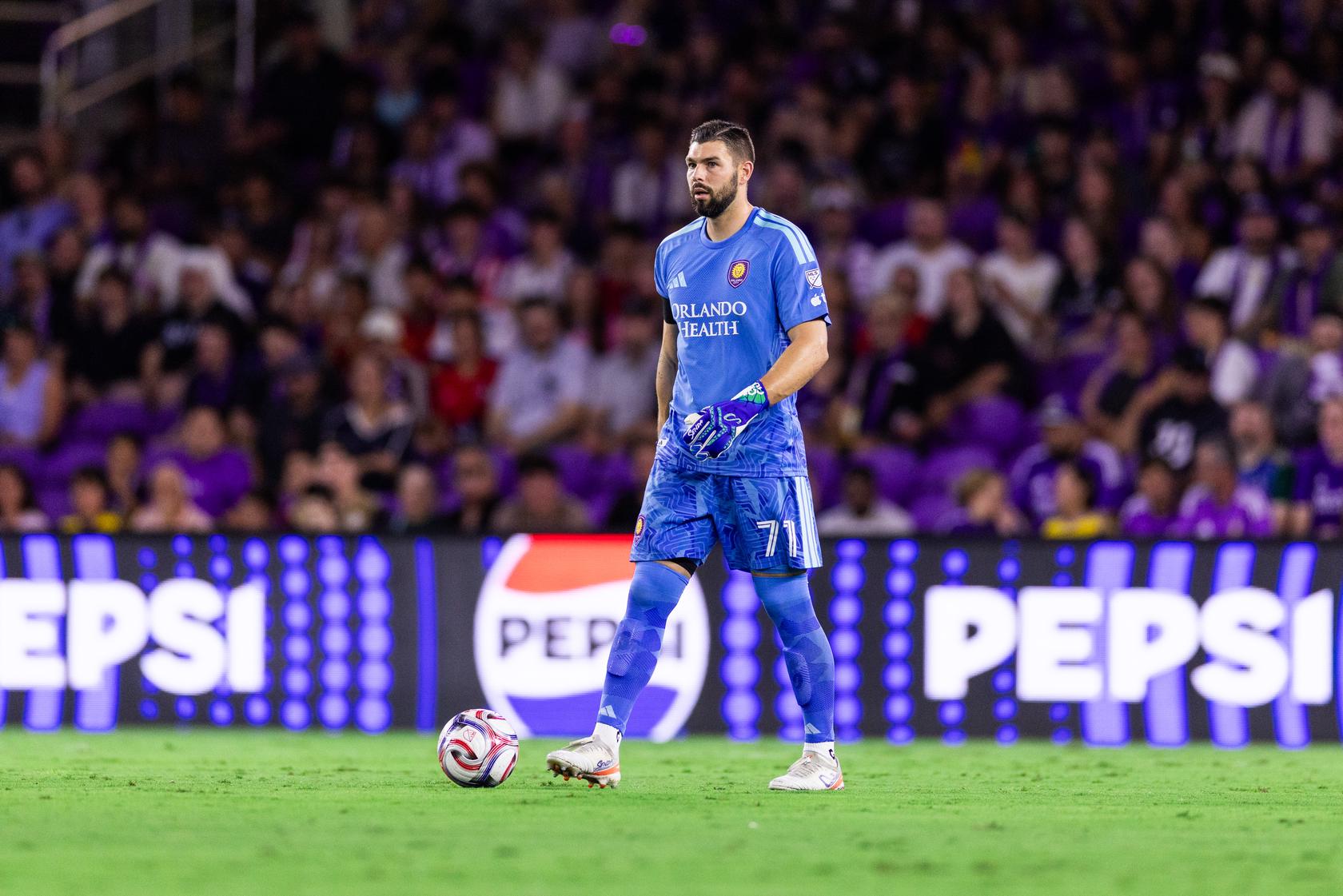
Orlando City defeated San Diego FC 1-0 in the first-ever match between the two clubs at Inter.co Stadium Saturday night on Antoine Griezmann’s goal. Despite a bevy of chances, the Lions were only able to score the one goal. Thankfully, it was enough for Orlando City to earn all three points and to move up to eighth in the Eastern Conference standings.
Here are my five takeaways from the match.
Back-and-Forth First Half
Orlando City and San Diego played similar styles in the first half. It started with the Lions on the front foot, pressuring San Diego’s back line. When it went the other way, Orlando City had to absorb the pressure. It went back and forth through the entire first half with San Diego having the advantage in possession and Orlando City the advantage in shots and shots on target. It felt like either team could get the opening goal. Fortunately, it was Orlando City that struck first.
Grizi Strikes Again
Orlando City struck first (and last, as it turned out) with Antoine Griezmann finishing off a beautiful team goal for Orlando City in the 28th minute. It was his fourth goal in the last three matches. Robin Jansson sent one of his distinctively accurate long balls to Daryl Dike in the right side of the box. Dike turned and quickly laid it off to Justin Ellis, who deftly pushed it forward to the oncoming Griezmann. He took one touch with his left foot to settle it and then took the shot with his right foot, putting it into the bottom left corner of the goal. It is the type of goal that is becoming more common for Orlando City, thanks to the quality Griezmann brings to the attack.
Recovery Defense
San Diego typically enjoys having the ball, and the visitors held 54% of the possession in the match, but it wasn’t enough. Orlando City did a good job of disrupting San Diego in the midfield, and often in San Diego’s half. The Lions were quick to recover whenever the ball was turned over. It was that tenacity that kept San Diego from being able to keep the ball for extended periods of time and limited their opportunities to create chances.
Darn Duah
There were many opportunities that went wanting for the Lions, including Wilder Cartagena’s shot in the 89th minute that hit the crossbar and went straight down but didn’t cross the line for a goal. However, if it wasn’t for San Diego’s Manu Duah, Orlando City may have scored five or more goals. The young defender finished with two tackles, four interceptions, three clearances, and one blocked shot. Even though I know it wasn’t the case, it felt like every one of those interventions came during a potential scoring opportunity for Orlando City. Thankfully, the Lions didn’t need a second goal to take all three points.
A Clean Sheet
Orlando City did just enough on defense to earn the first clean sheet since the 1-0 win over Nashville on July 25. Maxime Crepeau didn’t have too much to do as San Diego only managed seven shots, with only two of those on target, but he kept them all out of the back of the net. It was an emotional night for Crepeau who lost his father Rémi Crepeau earlier in the week. There was a moment of silence for his father before the match, and the team wore black armbands during the match to honor him. I’m always happy when Orlando City manages a clean sheet, but I’m very glad that Crepeau was able to earn one on this night in particular.
That is what I saw in Orlando City’s 1-0 victory over San Diego FC. It was a valuable three points as the club tries to overcome the pre-World Cup hole the Lions dug to start the season. Let us know your thoughts about the San Diego match in the comments below. Vamos Orlando!
Orlando City
Orlando City vs. San Diego FC: Final Score 1-0 as Griezmann’s Goal Enough for Lions Win
Antoine Griezmann’s first-half goal and a stout defensive effort lifted the Lions to a hard-fought home win.
Antoine Griezmann’s first-half goal was all that separated Orlando City and San Diego FC in their first-ever meeting. The French superstar’s teammates had numerous chances to double the lead for Orlando (8-11-4, 28 points), coming within inches at times, but that one strike was enough for a victory over San Diego (8-9-6, 30 points) at Inter.co Stadium.
Orlando City goalkeeper Maxime Crepeau, who lost his father just days ago, made two saves, and a defense that has struggled at times, held firm against San Diego to keep a clean sheet. The club held a moment of silence for Crepeau’s father before the match started.
“My respect for (Crepeau), for his family. We are proud of him in the way he faced this situation, and we support him like the family we are,” Orlando City interim head coach Martin Perelman said after the match. “We should finish the game earlier. We couldn’t, but we defended. We fight. The players did an amazing effort, and now we’re thinking of the next (game).”
Perelman’s lineup featured Crepeau in goal behind a back line of Bernardo Rhein, Robin Jansson, David Brekalo, and Griffin Dorsey. Joran Gerbet and Eduard Atuesta started in central midfield between wingers Ivan Angulo and Justin Ellis with Griezmann and Daryl Dike leading the attack.
The Lions started brightly, creating the first chance just a few minutes after kickoff. Griezmann found Ellis with a nice ball forward. The young attacker got to the ball first but misfired on his initial shot. Ellis eventually regathered and shot but sent his effort wide in the fourth minute. Three minutes later, Griezmann fired from the right channel, but San Diego goalkeeper CJ dos Santos made a good diving save, getting his right hand on it to keep the game scoreless.
Referee Joe Dickerson let the game get physical, ignoring Atuesta getting upended at midfield and a ball that might have had Dike in behind the defense had he not been grabbed and clipped. The big striker didn’t get a clean look at goal as a result of the no calls.
San Diego started to settle into the game as it reached the quarter-hour mark, seeing more of the possession and starting to build some looks at goal. The visitors had the ball in the net off a recycled corner kick in the 13th minute but the play was offside.
A free header by Onni Valakari went wide in the 17th minute as San Diego continued to gain rhythm and look for openings in the Orlando defense.
The Lions started looking more for transition opportunities with San Diego pressing high. One such play nearly came off in the 18th minute. Dorsey sent a ball to the back post on the counter with perhaps better options trailing. Angulo collected it on the left and sent it back in for Griezmann, who tried a bicycle kick but just missed getting onto it. The ball fell to Dorsey for a shot that deflected to Dike. The striker stuck a toe out and made contact with it but couldn’t direct it on frame.
Crepeau made a big save at the near post to deny Anders Dreyer in the 22nd minute, blocking it behind for a corner. Orlando dealt with the set piece and broke the other way. Dorsey had options in transition but he tried to pick out Griezmann and San Diego’s defense headed it behind for an Orlando corner. The ball pinged around off of various heads on the ensuing set piece until Dike was called for a foul on Oscar Verhoeven on an aerial duel.
The Lions broke the scoreless deadlock in the 28th minute. Jansson sent a great long ball over the top for Dike, who turned on the jets and got to it first on the right side of the penalty area. Dike slipped the ball past a defender to Ellis, who turned and found Griezmann. The Frenchman fired a right-footed shot from the right side that found the inside of the left post to make it 1-0. Ellis and Dike picked up assists on Griezmann’s fifth MLS goal in just eight matches.
“I think we just noticed that they’re playing this high line, even when there was no pressure on the ball,” Ellis said. “And when we have center backs like this on the ball, like Robin, David, when you give them time and space, it’s an opportunity, you know. And then (Jansson) puts a nice ball to Daryl — and adding Daryl to the squad and to the team is crucial, you know, because we didn’t really have that threat in behind. But me and Grizi (Griezmann), we like the ball at our feet, but Daryl has like this physical presence, and you know, he got in behind and kept calm, played me, and then I just checked my my shoulder, saw Grizi, and then…I mean every single time I pass him the ball, I have a feeling like he can do something. So that’s why I’m always looking for him. And it was a nice finish.”
The teams paused for a hydration break moments after the goal, and the action slowed as time wound down on the first half. San Diego fired into the side netting in the 38th minute but the play was offside anyway. Orlando’s best opportunity came when Ellis made a good run through traffic a minute later, but the play broke down when he unselfishly tried to slip the ball through traffic to Griezmann and the defense knocked it away.
That was it for the big moments in the opening period and after four minutes of added time, Dickerson blew the halftime whistle.
At the break, San Diego held the advantage in possession (55.6%-44.4%), passing accuracy (92.9%-90.1%), and corners (2-1). The Lions attempted more shots (6-3) and put more on target (2-1).
The teams opened the second half cautiously, with San Diego continuing to press high in the attacking end. Perelman made his first substitution in the 51st minute, sending Martin Ojeda in for Rhein, who played well in his return from a thigh injury.
Ellis made a good move to lead Orlando on the break in the 53rd minute. Dike fired from the right but Ian Murphy deflected it wide for a corner, but the Lions didn’t threaten from the set piece.
Ojeda worked himself free for an open shot just outside the box in the 59th minute but dos Santos went down to make a diving stop.
Atuesta won a corner on the recycled attack but again Orlando couldn’t pay it off.
Gabriel Pirani shot wide of the right post from the left for San Diego in the 69th minute on a shot that had little on it. Crepeau simply watched it roll gently out for a goal kick.
The Lions should have doubled the lead in the 72nd minute. Ojeda found Angulo in transition, putting the speedy attacker in on goal. Angulo rounded dos Santos despite a heavy touch and had a wide-open net. He went down from a light tug on the shoulder as he shot but got nothing on his effort, which Kieran Sargeant blocked on the line. Angulo wanted a penalty but it wasn’t much of a tug and he still should have scored. A yellow card was shown to the Orlando bench at the next stoppage for dissent.
Orlando had a couple of other near misses down the stretch. Ojeda showed he isn’t quite game sharp yet, as he and Griezmann nearly connected in the 84th minute. The Lions managed to win a corner off of it but couldn’t connect on the set piece. Substitute Luis Otavio picked up a yellow card to break up a potential counter off of the corner.
Substitute Tyrese Spicer got down the left flank in the 87th minute and sent a tantalizing low cross that somehow failed to find Ojeda or Marco Pasalic in the middle. Griezmann picked it up on the far right but dos Santos blocked his shot behind for another corner.
Midfielder Wilder Cartagena thought he’d scored on the ensuing set piece. The ball fell for him near the top of the area and he fired it toward goal. The ball looked like it hit the crossbar and then came off Manu Duah’s rear end and fell at the goal line. Part of the ball was across, but not the whole ball, and the spin carried it back out for San Diego to clear.
Nine minutes of stoppage time seemed like a lot, but there was little of note in those added minutes. San Diego’s best chance at an equalizer fell to Dreyer just outside the area right in the middle. The Designated Player fired a shot that hit the right post and stayed out, skipping out of play for a goal kick. After a late set piece, the match was over.
At full time, San Diego held the advantage in possession (54.2%-45.8%) and passing accuracy (91.5%-88.3%). Orlando City finished with more shots (15-7), shots on target (5-2), and corner, kicks (6-4).
“The win was very important,” Crepeau said. “We started the game confidently with the ball. Obviously, we were able to to hit them when their line was high sometimes, and then they were dangerous in transition in a couple of those moments, but we were able to shut the dangerous plays, and then the second half it was about finishing the game strong.”
It was obviously an emotional shutout win for the Canadian goalkeeper, which was visible when the final whistle blew.
“I’m grateful to be in a place where I’ve had so much support and love from my teammates, the staff, everybody in the organization, the city of Orlando,” Crepeau said. “I’ve had so many messages from all around the world, former teammates, even guys that I’ve played against, from Canada to the U.S., coast to coast. I’ve received so many messages. So, thank you to every single one of of the people that reached out. It’s something that I’m grateful (for), and I don’t take that support for granted.”
The Lions have a short turnaround with a road match Wednesday night in Atlanta.
Orlando City
Orlando City vs. San Diego FC: Preview, How to Watch, TV Info, Live Stream, Lineups, Match Thread, and More
The Lions welcome San Diego FC to Orlando for the first meeting ever between the two clubs.
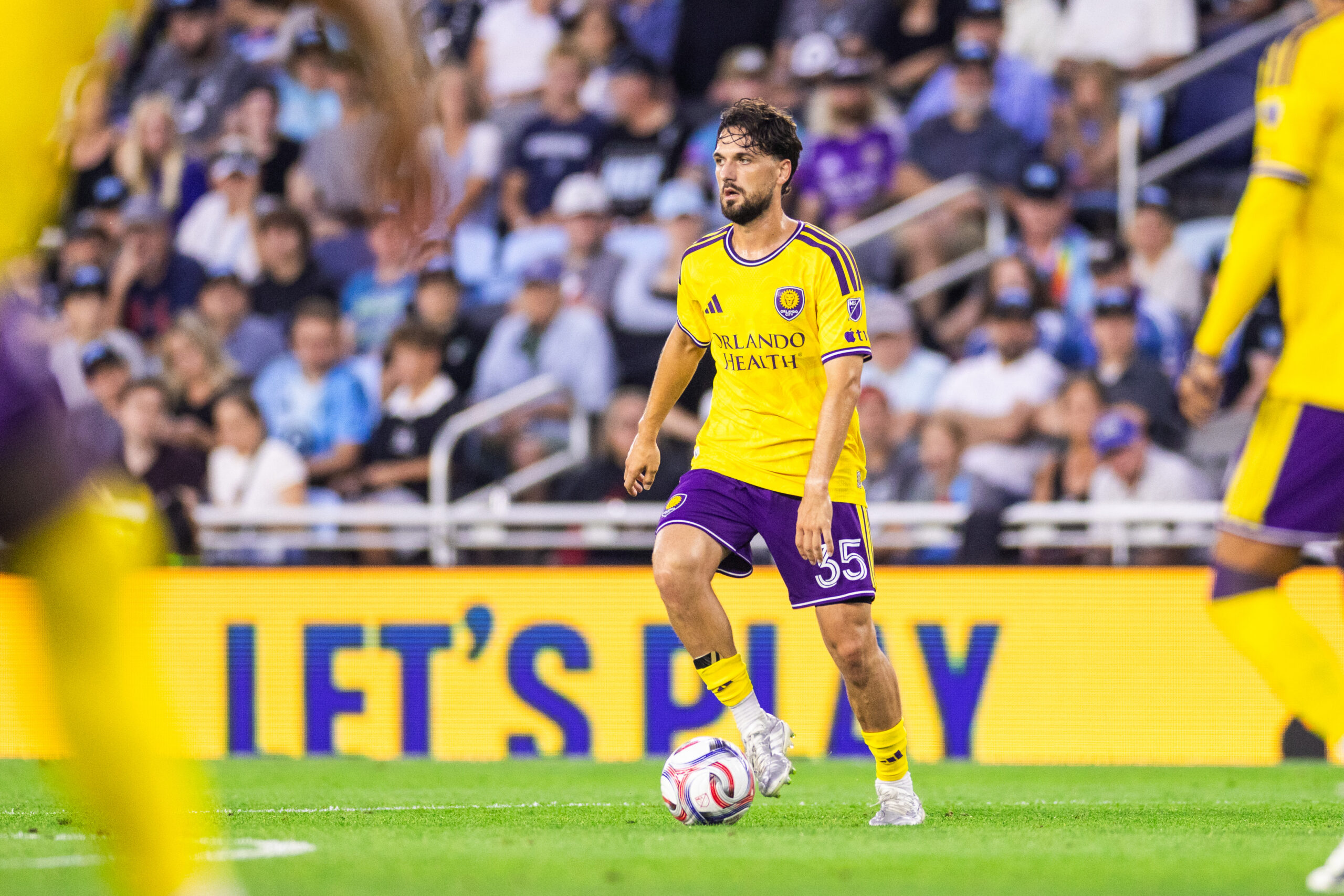
Welcome to your match preview and live thread for a Saturday night matchup between Orlando City (7-11-4, 25 points) and San Diego FC (8-8-6, 30 points) at Inter.co Stadium in Orlando (7:30 p.m., Apple TV). It’s the first-ever meeting between these two teams from different conferences
Here’s what you need to know ahead of the match.
History
As mentioned above, tonight’s meeting between the Lions and San Diego is the first in the series history, so there is no history. The Lions are 2-2-1 against Western Conference teams this season, which means little to nothing in this particular match, and San Diego is going to be Orlando City’s final opponent from the opposite conference in MLS regular-season play this season.
Overview
The Lions are coming off a wild 3-3 road draw at Minnesota United a week ago, in which Daryl Dike and Antoine Griezmann scored on either side of halftime on Orlando’s first two shot attempts to put their team up 2-0 in the 64th minute. Minnesota stormed back with three goals off defensive errors in a four-minute span to take a late 3-2 lead. Just when the Loons appeared to be headed for all three points, Tyrese Spicer scored in stoppage time, forcing Minnesota to split the points. Orlando has a modest 1-0-1 unbeaten streak entering tonight, and the Lions are 5-4-2 at home in 2026.
San Diego is coming off a 3-1 home win over the LA Galaxy despite having Jeppe Tverskov sent off. Tonight’s visitors have won two straight games, but both were at home. They lost their last home game 3-1 at Portland on Aug. 19 and are 2-5-3 away from home this season.
The key for Orlando City tonight will be to mark Anders Dreyer, which is far easier said than done, as he has emerged as one of the league’s best playmakers. His eight goals and 11 assists give him 19 total goal contributions to lead his team. Marcus Ingvartsen is Dreyer’s favorite teammate to combine with, as the Danish forward has converted 11 times, leading San Diego in goals, and has added five assists. However, Ingvartsen is listed as out with a lower body injury. Midfielder Onni Valakari has chipped in four goals and seven assists.
“We respect San Diego, but as well we prepare our game,” Orlando City interim head coach Martin Perelman said ahead of the match. “We know how strong we are, especially at home, so now we go.”
Orlando City will be without Braian Ojeda (foot) and Adrian Marin (thigh), while Bernardo Rhein (thigh), has been upgraded to questionable. San Diego will be without the aforementioned Ingvartsen (lower body) and Tverskov (suspension).
Match Content
- Our latest episode of The Mane Land PawedCast features our key match-ups and score predictions for tonight’s match.
- Our Ben Miller wrote about his three keys to an Orlando City win over San Diego.
Official Lineups:
Orlando City (4-4-2)
Goalkeeper: Maxime Crepeau.
Defenders: Bernardo Rhein, Robin Jansson, David Brekalo, Griffin Dorsey.
Midfielders: Ivan Angulo, Joran Gerbet, Eduard Atuesta, Justin Ellis.
Forwards: Antoine Griezmann, Daryl Dike.
Bench: Javier Otero, Zakaria Taifi, Iago, Wilder Cartagena, Luis Otavio, Tiago, Marco Pasalic, Martin Ojeda, Tyrese Spicer.
San Diego FC (4-3-3)
Goalkeeper: C.J. dos Santos.
Defenders: Kieran Sargeant, Ian Murphy, Manu Duah, Oscar Verhoeven.
Midfielders: Gabriel Pirani, Anibal Godoy, Alejandro Alvarado.
Forwards: Elias Achouri, Onni Valakari, Anders Dreyer.
Bench: Duran Ferree, Dagur Dan Thorhallsson, Christopher McVey, Bryan Zamble, David Vazquez, Ian Pilcher, Alex Mighten, Bryce Duke, Amahl Pellegrino.
Referees:
REF: Joe Dickerson.
AR1: Corey Parker.
AR2: Justin Howard.
4TH: Rodrigo Albuquerque.
VAR: Daniel Radford.
AVAR: Jeff Muschik.
How to Watch
Match Time: 7:30 p.m.
Venue: Inter.co Stadium — Orlando.
TV/Streaming: Apple TV.
Radio: AM 810 FOX Sports Radio Orlando (English), Mega 97.1 FM (Spanish), Nossa Rádio 1160 AM-WRLZ (Portuguese).
Social Media: For rapid reaction and live updates, follow us on Bluesky Social at @themaneland.bsky.social or follow Orlando City’s official Twitter (@OrlandoCitySC) or Bluesky (@OrlandoCitySC) feed.
Enjoy the match. Go City!


Orlando Pride vs Houston Dash: Final Score 3-1 as Yolanda Thomas Wins Her First Game in Charge

Orlando Pride vs. Houston Dash: Preview, How to Watch, TV Info, Live Stream, Lineups, Match Thread, and More

Orlando City vs. San Diego FC: Five Takeaways


-
 Orlando City1 week ago
Orlando City vs. Minnesota United: Preview, How to Watch, TV Info, Live Stream, Lineups, Match Thread, and More
-

 Orlando Pride7 days ago
Seb Hines Out as Orlando Pride Head Coach
-
 Orlando City1 week ago
Orlando City vs. Minnesota United: Final Score 3-3 as Lions Blow Late 2-0 Lead Then Equalize
-
 Orlando City2 weeks ago
Sometimes the Solution Is Just to Sign Antoine Griezmann
-
 Orlando Pride2 weeks ago
Orlando Pride vs. Washington Spirit: Preview, How to Watch, TV Info, Live Stream, Lineups, Match Thread, and More
-
 Lion Links2 weeks ago
Lion Links: 8/24/26
-
 Orlando City2 weeks ago
Orlando City vs. Real Salt Lake: Five Takeaways
-

 Lion Links2 weeks ago
Lion Links: 8/26/26