
Orlando City
Orlando City’s Most Successful Offensive and Defensive Lineups
An analysis of the best offensive and defensive groupings for Orlando City this season across all competitions.

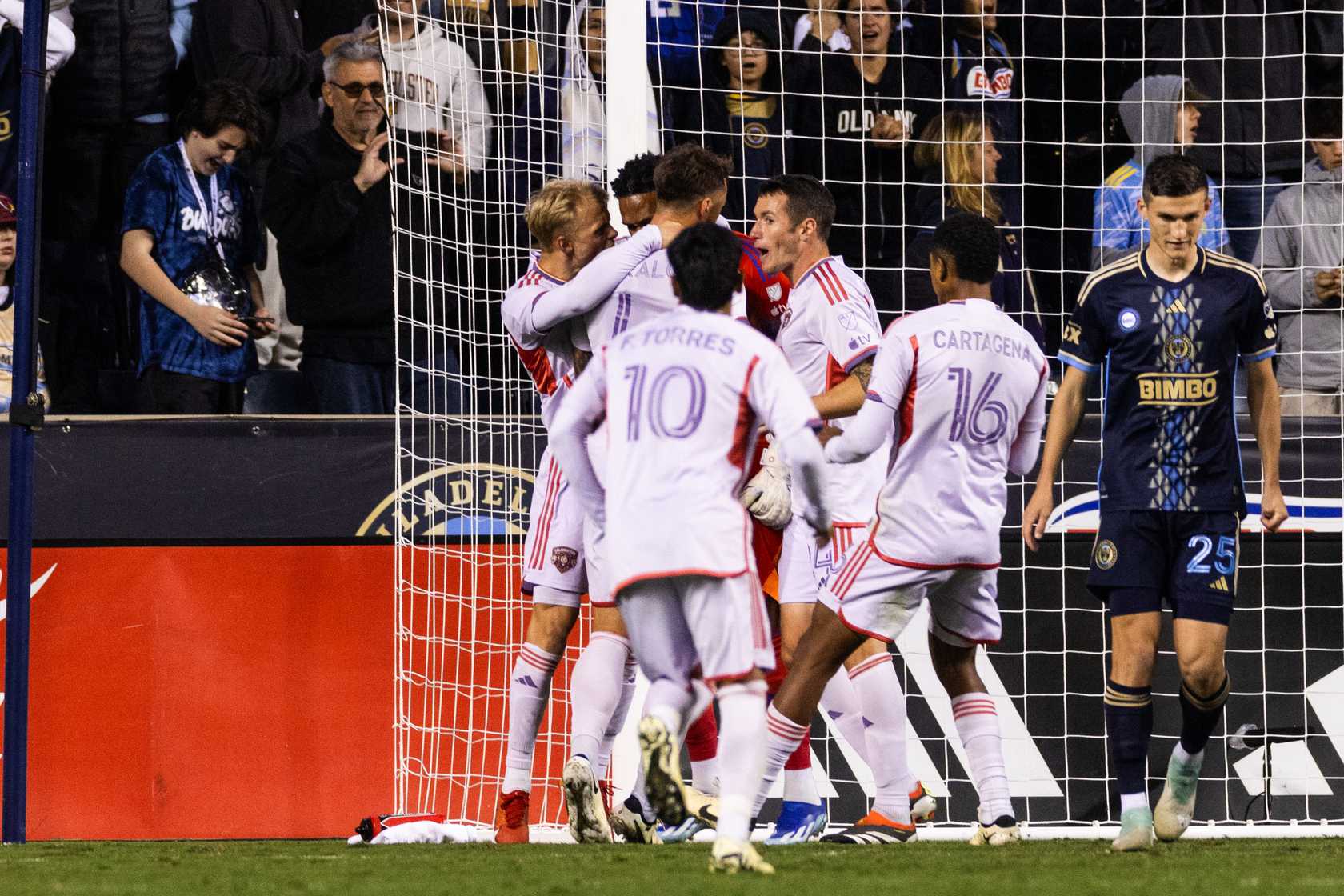
Soccer is a game that has cheer leaders but not cheerleaders, so there is usually no opportunity to hear people chanting out “two, four, six, eight, who do we appreciate?” at soccer matches. In this article, however, we are going to offer some appreciation, and look back at a two, a four, a six and….an 11 that we appreciate.
Let’s start with the two, and take a look at midfield tandem of César Araújo and Wilder Cartagena. Orlando City’s preferred partnership started 23 games alongside one another in all competitions in 2024, and in those games Orlando City went 13-4-6.
| Competition | Wins | Losses | Draws | Points per Game | Goal Differential |
| Concacaf Champions Cup | 1 | 0 | 1 | 2.00 | +3 |
| Leagues Cup | 1 | 0 | 2 | 1.67 | +3 |
| MLS | 11 | 4 | 3 | 2.00 | +13 |
| Total | 13 | 4 | 6 | 1.96 | +19 |
Taking a quick look at the final MLS standings, the 2.00 points per game in MLS play that Orlando City averaged when Araújo and Cartagena started together in the midfield would have ranked only behind Inter Miami’s 2.18 points per game across all 29 MLS teams and was 31% better than Orlando City’s actual final tally of 1.53 points per game (15-12-7). Doing the math, if the Lions were 11-4-3 with Araújo and Cartagena starting together (including six straight wins in their most recent six starts) and 15-12-7 overall, then they must have been 4-8-4 when it was a different starting midfield two, and 4-8-4 is a paltry 1.00 points per game, something closer to a team in the bottom third of the league. Orlando City’s lineup with their top midfield partnership was equivalent to a team on a top-two pace, a one-two punch that was frequently too powerful for an opponent to handle.
Moving on from two to four, let’s take a look at Orlando City’s back lines throughout the season to see which combination of four performed the foremost (ok, I’ll stop) throughout the season. There was a period of time early in the season when the Lions deployed a three-man back line with two wingbacks for a few games, but once they got everyone back from international matches and back to health they have rolled with the four-man back line ever since.
On the season Orlando City has played 41 games (34 in MLS, four in Concacaf Champions Cup, and three in Leagues Cup), so there have been 3,690 total minutes played by defensive groupings so far. Here are the six groupings that played at least 5% of the minutes, and how they have performed this season (own goals scored by Orlando City’s opponents have been excluded, players listed left to right on how they played positionally):
| Back Line | Minutes | % of Minutes | Goals Against | Goals Against per 90 Mins | Goal Differential |
| Santos, Jansson, Schlegel, Thorhallsson | 1,227 | 33.3% | 23 | 1.69 | +1 |
| Smith, Jansson, Brekalo, Thorhallsson | 496 | 13.4% | 9 | 1.63 | +3 |
| Schlegel, Cartagena, Brekalo | 386 | 10.5% | 4 | 0.93 | -3 |
| Smith, Jansson, Schlegel, Thorhallsson | 379 | 10.3% | 7 | 1.66 | +4 |
| Santos, Jansson, Brekalo, Thorhallsson | 367 | 9.9% | 5 | 1.23 | -2 |
| Santos, Jansson, Schlegel, Smith | 262 | 7.1% | 3 | 1.03 | +6 |
Interestingly, the three-man back line of Rodrigo Schlegel, Cartagena, and David Brekalo has the best goals against per 90 minutes rating, giving up less than one goal per game, but the team struggled to score while in this lineup — odd since a three-man back line allows for seven players to play higher up the field, as opposed to only six when in the standard four-man back line. I chalk a lot of this up to it being an unfamiliar formation and one that was played early in the season when the team was trying to figure out how to mix the attacking players together, rather than an issue caused by a three-man back line.
We are focusing on the fours here though, and while the teams preferred back line clearly appears to be Rafael Santos, Robin Jansson, Schlegel, and Dagur Dan Thórhallsson, the data points to two other groupings as ones that played at least 250 minutes together and had better goal differentials. The Santos, Jansson, Schlegel, and Kyle Smith back line did not debut until September, but it was effective against Charlotte (late game), Dallas (starting four), Philadelphia (starting four), and Cincinnati (starting four), and had the second-best goals against per 90 minutes rating of the most used lineups.
The Smith, Jansson, Schlegel, and Thórhallsson back line played together in nine different games — a mix of four starts and five games where they subbed into that grouping. While it was not a grouping that was difficult to break down and score against, as evidenced by the 1.66 goals against per 90 minutes, they were +4 in only 379 minutes together, so the Lions were banging in the goals at a rate of 2.61 goals scored per 90 minutes.
Sometimes the best defense is a good offense, but when we are trying to find the best defensive group of four, we want the best defense to be the best defense, so it looks like it would be either Santos, Jansson, Schlegel, and Smith or Santos, Jansson, Brekalo, and Thórhallsson. Alas, we never saw Santos, Jansson, Brekalo, and Smith together during the season, so there is no data around that grouping, and with Brekalo being seemingly the forgotten man in recent weeks, I do not think we are going to see that lineup in the playoffs either, unless there is an injury or a card situation.
For my four I’m going to go with the data, and while I expect that Thórhallsson will probably start over Smith in the next match, the data says the lineup should read Santos, Jansson, Schlegel, and Smith, with their low goals against and high goal differential.
We will yell out fore and drive our way over to six, and move from the defensive grouping to the offensive one. It is rather amazing how many different offensive combinations have played at least one minute this season. By my count, there were 107 unique offensive groupings that the Lions utilized throughout the 41 games.
While on the defensive side, Orlando City settled into a lineup that ended up playing almost exactly one-third of all minutes, on the offensive side, the most common lineup just barely reached half that number, and the six lineups that played the most together did not even play half of the total minutes available this season (players listed alphabetically, as I could not come up with an easy way to depict the offensive formation in a table).
| Attacking Group | Minutes | % of Minutes | Goals Scored | Goals per 90 Minutes | Goal Differential |
| Angulo, Araujo, Cartagena, Enrique, Ojeda, Torres | 615 | 16.7% | 11 | 1.61 | +7 |
| Angulo, Araujo, Cartagena, McGuire, Ojeda, Torres | 339 | 9.2% | 8 | 2.12 | +3 |
| Angulo, Araujo, Lodeiro, McGuire, Muriel, Ojeda, Torres | 177 | 4.8% | 5 | 2.54 | +3 |
| Angulo, Araujo, Lodeiro, McGuire, Muriel, Torres | 164 | 4.4% | 2 | 1.10 | -1 |
| Angulo, Araujo, Lodeiro, McGuire, Muriel, Torres | 148 | 4.0% | 4 | 2.43 | +1 |
| Angulo, Araujo, Cartagena, Lodeiro, McGuire, Torres | 127 | 3.4% | 1 | 0.71 | +1 |
No other attacking grouping even played one game’s worth of minutes together all season, but I do want to include the statistics from three additional groupings, because as you see here they were prolific, albeit in small samples:
| Attacking Group | Minutes | % of Minutes | Goals Scored | Goals per 90 Minutes | Goal Differential |
| Angulo, Araujo, Cartagena, Enrique, Muriel, Torres | 72 | 2.0% | 3 | 3.75 | +2 |
| Araujo, Cartagena, Enrique, Lodeiro, Ojeda, Torres | 64 | 1.7% | 4 | 5.63 | +4 |
| Angulo, Cartagena, Enrique, Lodeiro, Muriel, Torres | 38 | 1.0% | 3 | 7.11 | +2 |
I do not expect that any of these groupings would actually continue to score at this rate if they played more minutes together, but the two lineups with Araújo and Cartagena seem like lineups that the Lions could use if trailing, and even the bottom row where Nico Lodeiro would be in for Araújo could be possible as well, since Cartagena is generally more of an offensive threat than Araújo if the coaching staff decided to move to one holding midfielder or if they needed to choose one of the two to sub out.
Going back to the commonly used lineups, the question still remains on whether the group of five (Ivan Angulo, Araújo, Cartagena, Martin Ojeda and Facundo Torres) should play more minutes with Ramiro Enrique or Duncan McGuire. The data says they are more efficient with McGuire, to the tune of an additional half a goal per 90 minutes, but most of the McGuire minutes with this group have been played later in the match, when Orlando City was already ahead and the opposition was tired and chasing an equalizer. Enrique’s minutes have nearly all been as a starter since mid-summer, so he generally faces a fresh defense and an even scoreline, so the defenders are not taking as many risks.
Two lineups that are not in either of these tables, because they were each used for only 30 minutes this season, are Araújo, Cartagena, Enrique, Luis Muriel, Ojeda, and Torres and Araújo, Cartagena, Enrique, McGuire, Muriel, and Torres, and they each scored one goal in their time together for a goals-per-90-minutes average of 3.00. Both of those lineups do not contain Angulo, which sacrifices his speed and recovery ability to get back on defense, but they do include every primary creative attacking player except Lodeiro. The samples are too small to be quantitatively confident in their success, but the qualitative side of looking at those names and thinking about how they could line up is one that is exciting to consider with the wealth of attacking talent that they possess.
All of that said, I am going to to cheat a little bit and choose for my six to be Angulo, Araújo, Cartagena, Duncmiro Enriguire, Ojeda, and Torres, a grouping that is +10 for the season in goal differential and averages 1.79 goals scored per 90 minutes while only giving up 0.85 goals scored per 90 minutes. The group with Enrique is better defensively, giving up 0.59 goals per 90 minutes, as compared to 1.33 for the group with McGuire, while the group with McGuire is better offensively, scoring 2.12 goals per 90 minutes, as compared to 1.61 with Enrique.
Alright, so we have our two, our four and our six, and as promised we are going to skip the eight and go to the 11. If we look at the full 11-player lineup that we chose (using Pedro Gallese as the goalkeeper), we had a back line of Santos, Jansson, Schlegel, and Smith; holding midfielders Araújo and Cartagena; attacking midfielders Angulo, Ojeda, and Torres; and Enrique or McGuire at striker. That lineup played together only twice all season, both with Enrique as the striker, and they were +3 during the 110 minutes that they were on the field together, scoring three goals and giving up zero.
It is hard to lose when you give up zero goals, though Orlando City did manage to do so against Cruz Azul (kind of, it was a shootout loss after a draw), but when you average scoring 2.45 goals per 90 minutes and give up 0.00 goals per 90 minutes, that sounds like a winning lineup.
In fact, of all the lineups that played together for more than 75 minutes this season, that lineup does have the best goal differential per 90 minutes. Just as with some of the attacking groupings, there were some lineups that had better goal differentials per 90 minutes in a limited sample size of minutes, but in looking at the groups that played the most minutes, it is the 11-man group from the previous paragraph that performed the best per 90 minutes.
The 11-man lineup that was used the most was Gallese as goalkeeper; a back line of Santos, Jansson, Schlegel, and Thórhallsson; holding midfielders Araújo and Cartagena; attacking midfielders Angulo, Ojeda, and Torres; and Enrique as striker. That group was +7 for the season in nearly 300 minutes together, a goal differential of +2.17 per 90 minutes, which is also Borat-level very nice.
While it was a rough beginning to the season for Orlando City, as the year went on the Lions settled into lineups and rotations that maximized their abilities, as evidenced by their season-ending run of 11-3-3 in all competitions since the calendar turned to July. Óscar Pareja has identified his preferred lineup, and the data and the gut feelings he has around who to play are nearly exactly matched in terms of playing the right players in combination with one another.
Whether it is the two, the four, the six or the 11, Pareja knows who to play, I reckon.
Vamos Orlando!


Orlando City
Orlando City vs. Real Salt Lake: Five Takeaways
Here’s what we learned from Orlando City’s 2-1 victory over Real Salt Lake.

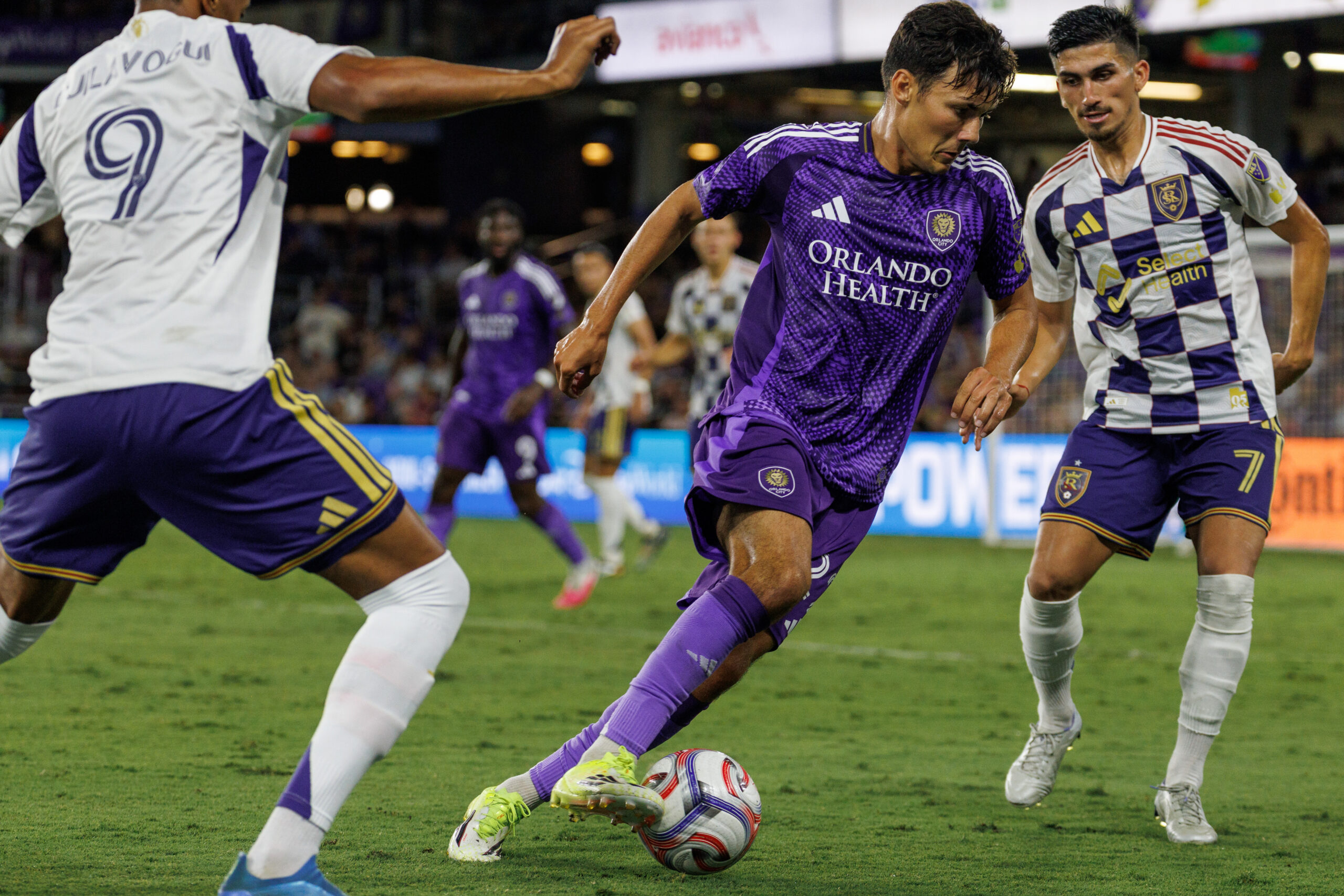
Orlando City hosted Real Salt Lake at Inter.co Stadium Saturday, and it was a tale of two halves. The first half was one of the most boring first halves of soccer ever, and the second half was a wild free-for-all with Orlando City coming to life. The Lions were able to earn all three points at home, defeating RSL 2-1. Here are my five takeaways from the match.
An Inevitable Goal
Orlando City put out a mostly first-choice team on short rest, while RSL rotated pretty heavily due to their schedule congestion and a Leagues Cup knockout match coming up on Tuesday.The Lions had the majority of the possession through the first 35 mintues, while RSL was able to send the ball over the top a few times early, but the visitors kept getting the timing wrong against Orlando’s high line, resulting in offside calls. That was until the 36th minute, when Dominik Marczuk managed to stay onside, blazed past Zakaria Taifi, and was all alone on the back post. It wasn’t hard to put it in from there. Orlando City had the better of the play up to that point, but it still felt like Real Salt Lake’s goal was more likely.
Possession Without Purpose
Despite holding 58% possession in the first half, Orlando City managed to get exactly zero shots on goal on zero shots total. Zero shots taken the entire first half! As I mentioned above, that was zero shots against a heavily rotated RSL squad. For a team with Antoine Griezmann, Marco Pasalic, and Griffin Dorsey in the starting lineup, that stat is unacceptable. The lack of any chances resulted in Martin Perelman bringing on Justin Ellis and Daryl Dike as offensive halftime substitutions.
Subs Make a Difference
It took less than 10 minutes for Ellis and Dike, along with fellow substitute Joran Gerbet, to make a difference. While it was ultimately Griezmann who scored the goal, it was Gerbet, Ellis, and Dike that made it happen. Gerbet picked up a loose ball Eduard Atuesta won and sent it to Ellis on the right. Ellis sent the ball into the box to Dike, who took it with his back to goal, pirouetted with the ball, and shot it. Unfortunately for Dike, Mason Stajduhar was there to block it. Unfortunately for Stajduhar, Griezmann was there for the poacher’s goal to level the score for Orlando City. Griezmann positioned himself wisely without the ball, but it was the three halftime subs that really made it happen.
Griezmann Gets Another
After equalizing, Orlando City had all the momentum and pressed for a second goal. It was Griezmann who provided the winning goal with his first brace for the Lions. If his first goal was a “right time, right place” type of goal, his second was luck and skill combined. He took a pass in the box from Tyrese Spicer and tried to back heel it to Dike. The ball bounced off the defender and right back to Griezmann, who wasted no time in putting it in the back of the net. It was a microcosm of Griezmann’s time in Orlando for me. He tried to be unselfish, but ultimately taking the shot himself was what was needed. More of this please.
Possession With Purpose
If Orlando City did almost nothing with the ball in the first half, the Lions did everything needed with the ball in the second half. They actually raised the possession to 60% by the end of the match, scored two goals, and didn’t allow a second from RSL. The defenders were able to clear most of the attacks and Maxime Crepeau cleaned up anything that got through. Orlando City was able to continue to push into the attack even after the second goal. As I said above, it was a tale of two halves, and fortunately, the second half was enough for the win.
That is what I saw in Orlando City’s 2-1 victory over Real Salt Lake. Let us know your thoughts in the comments below. Vamos Orlando!
Orlando City
Orlando City vs. Real Salt Lake: Final Score 2-1 as Griezmann’s Brace Lifts Lions to Win
Antoine Griezmann scored twice in the second half to help Orlando City erase a 1-0 deficit and beat RSL at home.

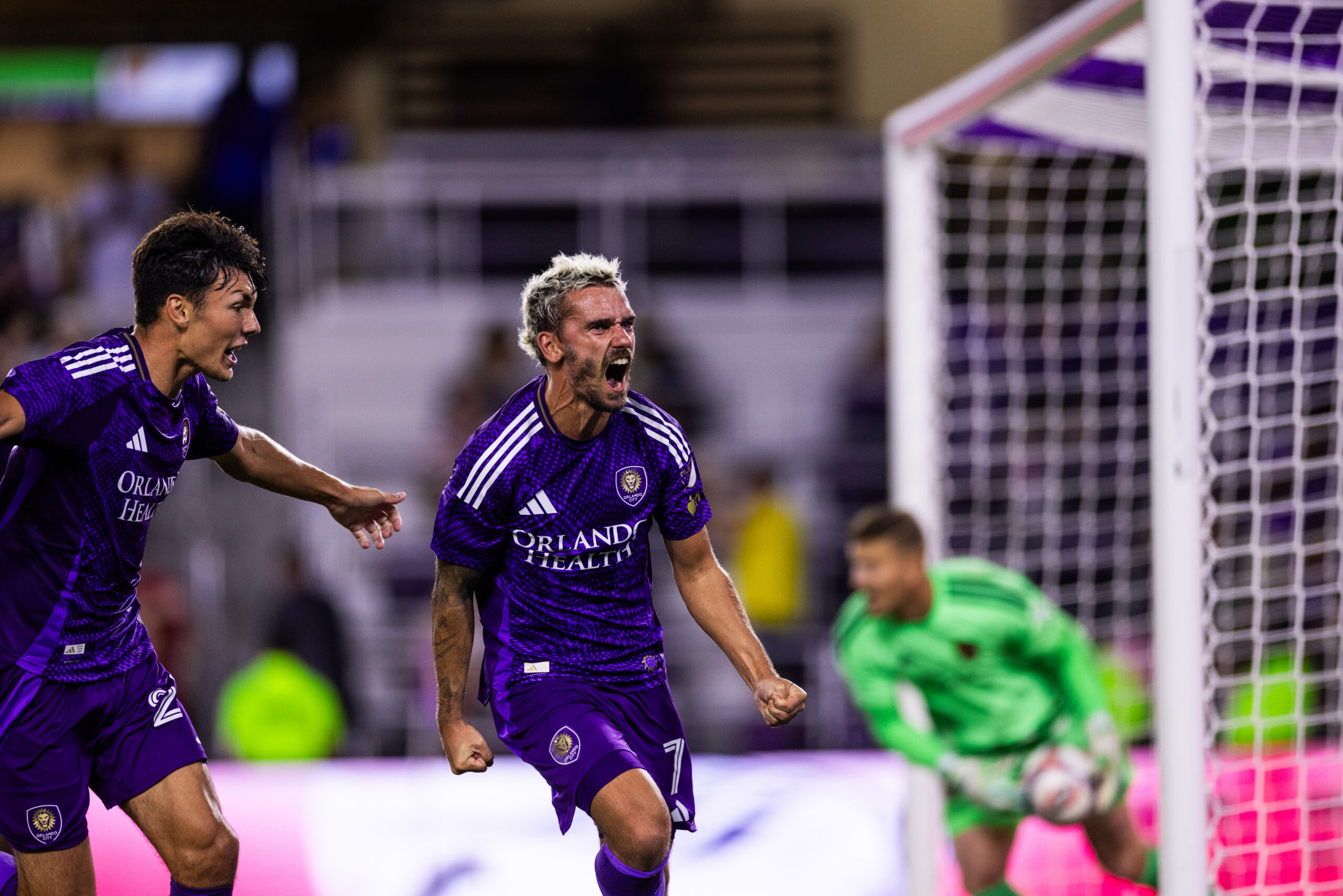
Antoine Griezmann scored two second-half goals for his first Orlando City brace, leading the Lions to a 2-1 comeback win over Real Salt Lake at Inter.co Stadium tonight. After a lethargic opening 45 minutes that saw the visitors take a 1-0 lead into the half on Dominik Marczuk’s goal, an energetic trio of halftime subs injected life into the attack for Orlando (7-11-3, 24 points).
Griezmann’s two goals pushed the Lions past Real Salt Lake (8-8-4, 28 points), but it’s fair to say Orlando City wasn’t clean enough in the first half and couldn’t turn possession into attacking threat until the introduction of second-half subs Justin Ellis, Joran Gerbet, Daryl Dike, and Tyrese Spicer.
The Lions snapped an 0-2-2 winless streak in all competitions and a 0-2-1 skid in league play with tonight’s win, moving just over the playoff line into ninth spot in the Eastern Conference.
“It was a tough game,” Orlando City interim head coach Martin Perelman said after the match. “It wasn’t easy the first half; we tried good and sometimes it happens like that, the game. I think the team in the second half was able to to play in a very difficult moment. It’s not easy and the guys did an amazing job.”
Perelman’s lineup included Maxime Crepeau in goal behind a back line of Zakaria Taifi, Robin Jansson, David Brekalo, and Griffin Dorsey. Luis Otavio and Eduard Atuesta started in central midfield inside of Ivan Angulo and Marco Pasalic, with Tiago joining Antoine Griezmann up top.
The first half consisted of long spells of Orlando possession that came to nothing against a heavily rotated RSL side, with former Lion Mason Stajduhar having to do nothing in goal, because the Lions couldn’t even manage one first-half shot attempt. The visitors were content to stay in their low block of five at the back and four midfielders, wait for the exhausted-looking hosts to misplace a pass or have a bad touch, and look for chances to hit on the counter or with balls over the top.
Griezmann looked the most in need of a rest, as several of his touches were heavy in the first half, but he was far from the only one.
There was a scary moment early in the game when Jansson collided with Marczuk on an attempted RSL switch of play. The Orlando City captain was fouled and stayed down to get treatment, eventually leaving the field under his own power. He was able to return moments later.
Orlando City won a few set pieces in the opening half but did nothing with them, while the visitors looked dangerous if they could stay onside, which they struggled to do early. When the Lions did manage to find space against RSL’s back line, the crosses were poor, ending up either out of play or in the goalkeeper’s hands.
The visitors broke through the dull affair in the 36th minute. Alexandros Katranis laid off a ball on the left flank for Sam Junqua behind him. Junqua picked up his head and spotted Marczuk’s well-timed run behind Taifi and delivered a nice cross. Marczuk met the ball in the air with his foot and knocked it past Crepeau to make it 1-0.
Crepeau kept things from getting worse just before halftime. Angulo turned the ball over on an attempted recycle of a failed set piece, igniting a Real Salt Lake counter. The ball ended up with Marczuk again on the right and this time Crepeau was able to get a hand on it to palm it out for a corner.
The Lions dealt with the set piece and the half came to an end with Orlando’s starters trailing 1-0 to an RSL B-squad that dien’t allow a single shot attempt.
At the break, Orlando City had the advantage in possession (59.4%-40.6%) and passing accuracy (89.7-84.2%), while Real Salt Lake led in shots (3-0) and shots on target (2-0) and each team won one corner.
“It was a complicated game,” Griezmann said. “It’s never easy starting off with with a negative mark like that, but we made changes at halftime and put more more guys further up the field, and we were able to to get that goal and really kind of give ourselves some time of tranquility to create more opportunities to create those occasions to go out and get the winner.”
Looking to injuct some life into the game, or at least some fresh legs, Perelman sent Gerbet, Dike, and Ellis into the game at halftime for Otavio, Tiago, and Pasalic. It took a few minutes for the subs to settle in, but it made a difference in the Lions’ energy level.
Marczuk had the first look at goal in the second half, however, firing from distance from the right side, but it caused no trouble for Crepeau in the 50th minute.
Gerbet and Atuesta worked well together in the middle, keeping the ball better and allowing Taifi to jump into the play on the left. Taifi had a shot blocked out for a corner in the 51st minute. A minute later, Atuesta played a slick through ball for Griezmann. With Stajduhar coming off his line, the Frenchman chipped a shot over him but it went inches wide of the left post.
Orlando scored seconds after Stajduhar put the ball back into play. Atuesta won the ball to Gerbet at midfield, and he turned and found Ellis on the right. Ellis sent it in front to Dike for the shot, but it was blocked to Griezmann, who cleaned up in front, making it 1-1 in the 53rd minute.
Taifi got down the left in the 55th minute and did well to cut back a cross for Griezmann entering the box. Griezmann hit his shot immediately but it fizzed just over the bar. Three minutes later, Taifi cut inside and fired but hit the outside of the left post.
Real Salt Lake sent on Diego Luna, Saba Lobjanidze, and Morgan Guilavogui to try to counter the energy Orlando’s subs had brought into the game, and things opened up a bit. Dorsey did well to stick out a foot to deny a pass that would have put Luna in on goal in the 64th minute.
Spicer came on for Taifi in the 69th minute and injected even more energy into the match. He quickly won a set piece on the left just moments after coming on near the left corner flag. Atuesta sent his delivery on target toward the near post but it was headed behind for a corner kick. The ensuing corner bounced out to Ellis near the top of the area. The Homegrown forward used some deft footwork to work his way past two defenders before getting his shot blocked out for another corner.
Real Salt Lake broke the other way after the set piece and Luna ended up with it. He fired on target but Crepeau blocked it out of play for a corner. Orlando partially cleared the set piece delivery and Katranis tried a shot from long range that was well off target.
Orlando City took the lead moments later. Jansson sent the ball long out of the back to Spicer on the left. The Trinidad & Tobago international did well to get a cross in for Griezmann in the box. The first touch got away from the Frenchman but he picked up the rebound and slotted it past Stajduhar to make it 2-1 in the 81st minute.
“I think it’s a very good cross from ‘Spice’ and I was thinking to do one touch to score but I did very bad,” Griezmann said. “The defender touched the ball and the ball came to me, and yeah I saw a lot of legs and I tried to just make a pass between the legs of the defender and here is where you need to be patient just for one or two seconds. And today I was very patient in this time and this is why I scored.”
“It’s mandatory for us to enjoy Griezmann,” Perelman said. “We are lucky to be in the moment that he’s here with us. He’s one of the best players in the history of this sport. We have the privilege to see him. It’s just about enjoying him, watching him and enjoying him.”
Real Salt Lake threw bodies forward into the attack, but aside from some corner kicks, the visitors couldn’t produce much. Any time it looked like RSL might create something in the final third, Orlando was able to block crosses or head them out of danger. Orlando City also kept the ball well for spells down the stretch, taking the pressure off and allowing the Lions to see out the game.
At the final whistle, the Lions held the advantage in possession (59.6%-40.4%), shots (13-9), passing accuracy (88.8%-82%), and corners (5-4). Real Salt Lake put more shots on target (4-3). Ultimately, the Lions were sharp enough in the second half to make up for the slow start, although RSL helped out by being offside seven times to just once for Orlando.
“In the final zone, we were a lot more aggressive,” Griezmann said of the second half. “We were pressing more and more aggressive with our press, and it was a really good way to to get the win tonight.”
“The players were wanting to give us that control of the game against a team who sat back a little bit,” Perelman said. “I think the guys did a huge effort. Fortunately we could come back, win, because we really need it, and now we need to rest and think (about) the next one.”
“Just so happy to have the win at home,” Gerbet said. “It’s been like a gritty one, but a necessary one, an important one towards like the end of the season to get some momentum, because we’re going to start to go away as well, so we need to start to gain momentum, and I think that was a great way to do it.”
The Lions now get an honest-to-goodness normal work week. Their next match will be a week from tonight at Minnesota United.
Orlando City
Orlando City vs. Real Salt Lake: Preview, How to Watch, TV Info, Live Stream, Lineups, Match Thread, and More
The Lions look to finish their long homestand with a bounce-back performance against RSL.
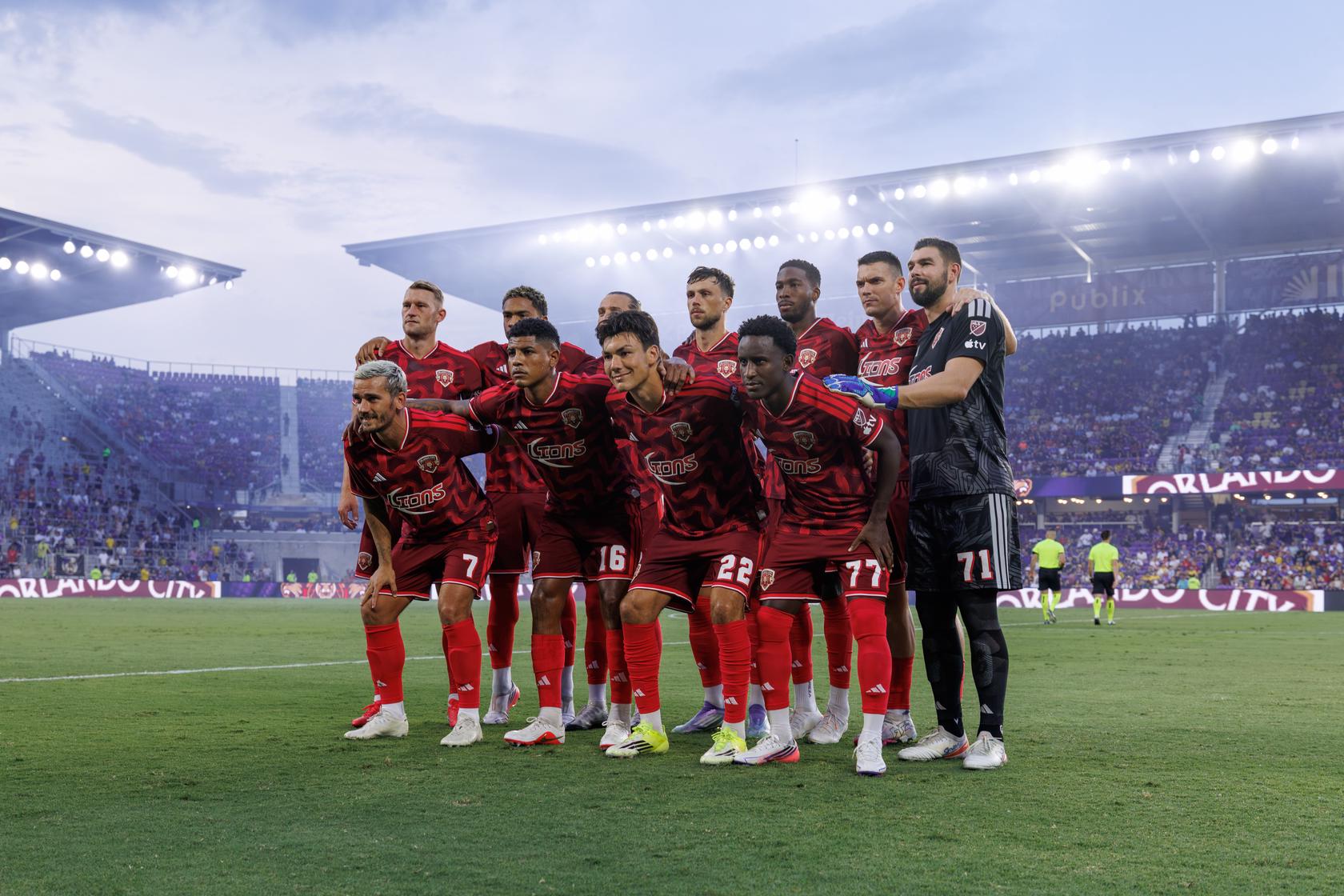
Welcome to your match thread and preview for a Saturday night showdown between Orlando City (6-11-3, 21 points) and Real Salt Lake (8-7-4, 28 points) at Inter.co Stadium (7:30 p.m., Apple TV). This is the first and only scheduled meeting between the two teams from opposing conferences and the first time they’ve met since 2023 in Utah.
Here’s what you need to know ahead of the match.
History
The Lions are 2-2-3 in seven previous MLS meetings with RSL, including a 1-0-2 mark at home. However, Orlando City is 0-2-1 in their last three games against tonight’s visitors.
The last time the teams met, it was a forgettable result for Orlando City fans. But if you do remember, it’s not for good reasons, because it was a 4-0 beatdown that Real Salt Lake laid on the Lions on July 8, 2023. Cristian Arango, Justen Glad, Jefferson Savarino, and Anderson Julio did the damage.
During the most recent matchup in Orlando, most of us had no idea what COVID-19 was yet. The Lions and Real Salt Lake met on opening day of the 2020 MLS season, playing to a 0-0 draw at Exploria Stadium on Feb. 29. Despite it being a Leap Day, no one wanted to leap onto the scoresheet.
Orlando City lost the previous meeting, a 2-1 Real Salt Lake win in Utah on April 13, 2019. Nani scored Orlando’s only goal that day, but it came late in the match after Sam Johnson and Demir Kreilach had staked RSL to a 2-0 lead.
The May 6, 2018 meeting in Orlando was a wild 3-1 win for the Lions in which RSL missed multiple good scoring chances, hitting the woodwork and forcing Joe Bendik into some big saves. Dom Dwyer, Lamine Sané, and Yoshimar Yotún provided Orlando’s offense to offset Corey Baird’s early strike.
When the teams met in 2017 at Rio Tinto, Will Johnson provided all the offense against his old club in a 1-0 Orlando City victory. Johnson’s tally in the 17th minute was all Orlando City needed to take the first win of the series after two draws the previous two seasons.
In 2016, the teams played a memorable opening day match in which the Lions roared back with a frantic rally, as Cyle Larin and Adrian Winter pulled City level in a 2-2 draw at the Citrus Bowl. Joao Plata scored both RSL goals — one from the penalty spot — and RSL led 2-0 despite going down a man for 25 minutes, prior to Chris Penso evening things out by sending off Darwin Ceren.
Orlando drew 1-1 on the road in 2015 while down to 10 men after Kaká was sent off at the end of the first half. The captain opened the scoring. Sebastian Jaime found the equalizer in the 28th.
Match Overview
Orlando City enters on a poor run of form in a congested fixture schedule. The Lions lost 2-1 at home against the Chicago Fire on Wednesday, making it four games without a win in all competitions (0-2-2) and they haven’t won in MLS play in their last three (0-2-1). While the defense is leaking just one or two goals per game of late, the offense has been less tidy in finishing chances, which could be attributed to some players, including Antoine Griezmann, not getting much rest during this stretch of seven games in 22 days. Orlando is a pedestrian 4-4-2 at home this season and is winless in its last two home matches (0-1-1).
Real Salt Lake sits eighth in the Western Conference after going 0-3-3 in its last six league matches, including a 4-3 home loss to FC Dallas on Wednesday. But, oddly enough, that stretch of matches sandwiches a 2-0-1 run in Leagues Cup, and RSL advanced to the knockout rounds, where it will play Club Leon on Tuesday, so we may see some rotation, assuming the Utah-based club is going all in on trying to win Leagues Cup or at least one of the three coveted Concacaf Champions Cup spots. Tonight’s match will be RSL’s first on the road since Aug. 1, where the team is 1-5-3 in 2026 in league play.
Sergi Solans leads tonight’s opponents in goals (9) and goal contributions (12), with Diego Luna leading in assists (6) while adding five goals for 11 total goal contributions. The departure of Zavier Gozo and his six goals and five assists is a tough break for RSL, because beyond those three, 10 goals are spread across eight different players.
The Lions must rediscover their scoring boots for this game, as the Orlando defense pitches precious few shutouts, and if RSL plays its starters, either Solans, Luna, or both could do some damage on the other end.
The Lions will be without Braian Ojeda (foot), Martin Ojeda (thigh), and Bernardo Rhein (thigh), while Adrian Marin (thigh) is questionable, so left back may be an adventure, with Zakaria Taifi, Ivan Angulo, and David Brekalo as the leading candidates to play there, and all of them are right-footed. Real Salt Lake will be without Zach Booth (hamstring), Griffin Dillon (foot), Emeka Eneli (knee), Glad (adductor), and Ariath Piol (Achilles).
Match Content
- The most recent episode of the PawedCast includes our key matchups and score predictions for tonight’s match.
- David Rohe gave his three keys to an Orlando City victory in tonight’s match.
Official Lineups
Orlando City (4-4-2)
Goalkeeper: Maxime Crepeau.
Defenders: Zakaria Taifi, Robin Jansson, David Brekalo, Griffin Dorsey.
Midfielders: Ivan Angulo, Luis Otavio, Eduard Atuesta, Marco Pasalic.
Forwards: Tiago, Antoine Griezmann.
Bench: Javier Otero, Iago, Wilder Cartagena, Joran Gerbet, Gustavo Caraballo, Harvey Sarajian, Tyrese Spicer, Justin Ellis, Daryl Dike.
Real Salt Lake (5-4-1)
Goalkeeper: Mason Stajduhar.
Defenders: Alexandros Katranis, Sam Junqua, Juan Arias, Kobi Henry, Domink Marczuk.
Midfielders: Aiden Hezarkhan, Luca Moisa, Pablo Ruiz, Lineker Rodrigues.
Forward: Victor Olatunji.
Bench: Rafael Cabral, Juan Sanabria, Philip Quinton, Lukas Engel, Noel Caliskan, Colin Guske, Morgan Guilavogui, Saba Lobjanidze, Diego Luna.
Referees
REF: Fotis Bazakos.
AR1: Brian Dunn.
AR2: Jose Da Silva.
4TH: Marcos DeOliveira.
VAR: Edvin Jurisevic.
AVAR: TJ Zablocki.
How to Watch
Match Time: 7:30 p.m.
Venue: Inter.co Stadium — Orlando.
TV/Streaming: Apple TV.
Radio: AM 810 FOX Sports Radio Orlando (English), Mega 97.1 FM (Spanish), Nossa Rádio 1160 AM-WRLZ (Portuguese).
Social Media: For rapid reaction and live updates, follow us on Bluesky Social at @themaneland.bsky.social or follow Orlando City’s official Twitter (@OrlandoCitySC) or Bluesky (@OrlandoCitySC) feed.
Enjoy the match. Go City!


Orlando Pride vs. Washington Spirit: Preview, How to Watch, TV Info, Live Stream, Lineups, Match Thread, and More

Orlando City vs. Real Salt Lake: Five Takeaways

Orlando City vs. Real Salt Lake: Final Score 2-1 as Griezmann’s Brace Lifts Lions to Win


-
 Orlando City2 weeks ago
Orlando City vs. Atletico de San Luis, Leagues Cup: Preview, How to Watch, TV Info, Live Stream, Lineups, Match Thread, and More
-
 Orlando City2 weeks ago
Orlando City vs. Club Leon, Leagues Cup: Final Score 2-1 as Lions Blow Halftime Lead in Loss
-

 Orlando Pride1 week ago
Barbra Banda Continues to Make Offers Scoreboard Can’t Refuse
-
 Orlando City1 week ago
Orlando City vs. Atletico de San Luis: Five Takeaways
-
 Orlando Pride2 weeks ago
Orlando Pride Sign Norwegian Forward Sanne Lekven
-
 Lion Links2 weeks ago
Lion Links: 8/12/26
-
 Orlando City2 weeks ago
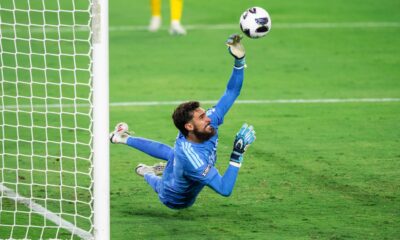
Orlando City vs. Atletico de San Luis, Leagues Cup: Final Score 2-2 (5-3) as Lions Blow Late Lead, Win Shootout
-
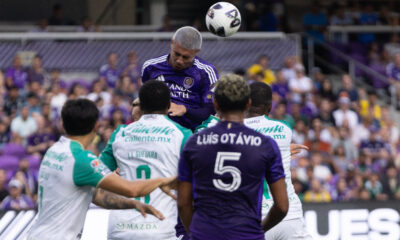
 Photo Galleries2 weeks ago
Orlando City vs. Club León, Leagues Cup: Photo Gallery