
Orlando City
Orlando City Players Evaluated by the “Goals Added” Metric
Let’s look at the Lions through the lens of a new (to me, anyway) soccer statistical metric.

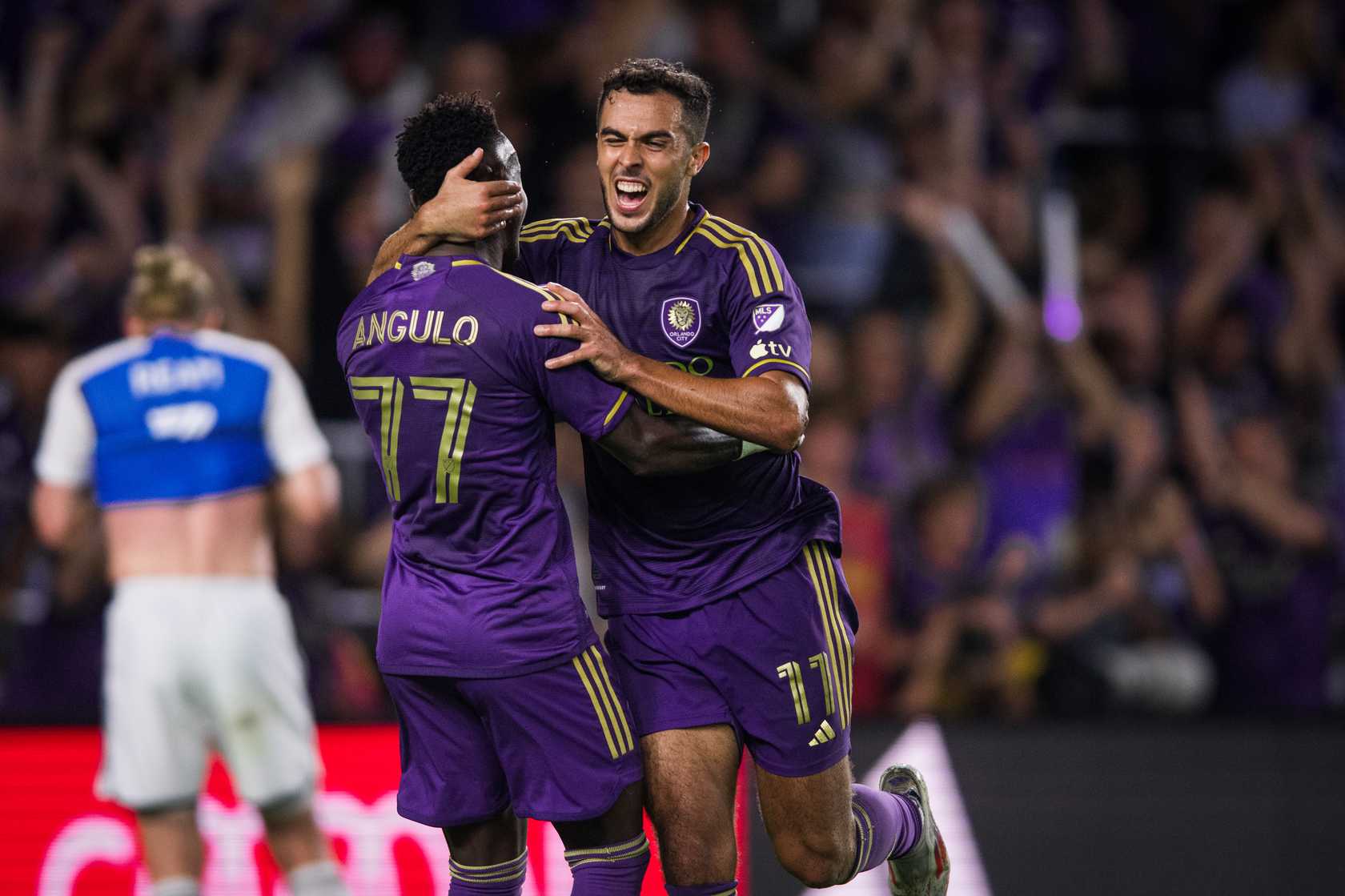
Colonel Kilgore in Apocalypse Now said that he loved the smell of napalm in the morning, and while I, thankfully, have no idea what that smells like, I do know a good quote when I hear one, and that line is widely considered one of the most memorable lines in movie history. It is also one of the most quoted, with various replacements for “napalm” being inserted as a turn of phrase. With that in mind, let me say that I love the smell of a brand new soccer dataset in the morning.
It’s not quite as catchy, but my love for soccer data at the very least approaches Kilgore’s love for napalm.
I reference a brand new soccer dataset because I just discovered a new one, with several new metrics and one of the best premises in all of soccer analytics. It is publicly available on americansocceranalysis.com and is updated frequently, and you can check it out yourself by clicking on this link.
The premise of this dataset (when I said new I really meant new to me, it has been around for a while but I just discovered it recently) is as follows, and while I highly recommend reading their more detailed explanation of goals added, the basic premise is this:
We wanted to derive a metric that values every action in units of goals, the currency of soccer. So many actions go unnoticed and/or underappreciated in traditional soccer statistics. Let’s measure them all, we said. And that’s what we did—well, for on-ball actions anyway.
Without copying even more from their explanatory articles on americansocceranalysis.com, the idea is that every action in a game creates the likelihood of a goal, and by summing up all of those actions, you can see which players contributed the most towards scoring goals and preventing goals. Most soccer metrics are heavily weighted towards offensive players, but the key one we will look at today, goals added (g+), gives credit to every play and not just the final plays that led to a goal.
For example, Martín Ojeda is having a monster season for Orlando City, and has had at least one goal contribution in his last 11 consecutive MLS games. Many of those goals or assists came from possessions that started several touches before he even received the ball, so while in the world of goal contributions (and also everyone’s favorite stats — expected goals and expected assists) the credit only goes to the assister and the scorer, in the world of goals added every player involved in the possession earned credit towards adding a goal.
Defenders, whose contributions to the beginning of a goal-scoring possession are often long forgotten by the final few plays, earn credit for the defensive stop that put the ball back into Orlando City’s possession and also for making forward passes that got the play started. The goals added metric sums up all of the actions that happen in a game and looks at whether they were positive or negative. Sometimes even a play that seems positive, like a completed pass from a left back to a center back, earns a negative value, since the pass went backwards and actually increased the opposition’s likelihood of scoring. Those actions fall into the following categories:
- Shooting: Shots
- Receiving: Receptions
- Passing: Passes
- Dribbling: Carries, Take-ons, Miscontrols, Dispossessions
- Interrupting: Tackles, Interceptions, Blocks, Clearances, Recoveries, Contested Headers
- Fouling: Fouls Committed, Fouls Received
Note that actual goals scored are not included in this metric. It is not that goals are not important — obviously they are — but this metric is about all the plays throughout the game that either prepare a team to score a goal or prevent the opposition from scoring. A completed pass into the center of the opposition’s box is much more valuable than a completed pass in the defensive third of the field, so it earns more g+ value for the passer and receiver. A tackle in front of a team’s own net is more valuable than a tackle at midfield due to the threat of the other team scoring, so those two tackles earn different g+ values as well. The research team looked at thousands of games to determine these assigned values, and in looking at the players who are at the top of the list for this season and previous seasons, their calculations definitely pass the smell test.
Their calculations also pass another test, a critical one that has been used for years when it comes to soccer data and assessing value. That test is known as the Messi Test, which is to say that for whatever metric you create, you had better hope that Lionel Messi comes out at or near the top, because even as much we at The Mane Land like to joke about Inter Miami and Messi, the man has been spectacular since he came to MLS and is head and shoulders better than everyone else in the league.
Even though he has played 300 fewer minutes than every other field player in the list below, Messi is still crushing everyone.
| Player | Team | Goals Added (g+) |
|---|---|---|
| Lionel Messi | Miami | 13.36 |
| Sam Surridge | Nashville | 10.37 |
| Dénis Bouanga | LAFC | 10.02 |
| Hugo Cuypers | Chicago | 9.86 |
| Rafael Navarro | Colorado | 9.48 |
| Zack Steffen | Colorado | 9.33 |
| Hany Mukhtar | Nashville | 9.05 |
| Prince Owusu | Montreal | 8.28 |
| Carles Gil | New England | 8.25 |
| Gabriel Pec | LA Galaxy | 8.19 |
Now, I know you are screaming “where’s Ojeda?” just like D’Angelo Barksdale was screaming “where’s Wallace?” at Stringer Bell in HBO’s The Wire. A timely reference by me right there — you’re welcome.
I was surprised not to see Ojeda in the top 10, but he is not far behind, sitting in 13th place through the games from this past weekend. The main culprit is that he does not get fouled as often and in as dangerous locations as other players, and he is not as much of a dribbler either, as he has only the sixth-most attempted take-ons and the fourth-most progressive carries on Orlando City. Ranking 13th out of 788 MLS players still puts him in the top 2% of all players, but I thought he would be higher.
I am sure Ojeda would rather contribute to real goals by scoring or assisting than to rack up value in a derived statistic like g+, but it goes to show that the creators of this metric took pains to be fair to all players in how they contributed to scoring and preventing goals, even if they are on a, shall we say, not-so-good team like Montreal. They mention in the explanation that I linked to earlier that actual goals scored are more random than most people think, which is why they excluded goals from the g+ formula.
As for looking at values, let’s take a look at Orlando City’s primary players and how they’ve performed this year.
| Player | Position | Position Rank | Overall Rank | Goals Added (g+) |
|---|---|---|---|---|
| Martín Ojeda | AM | 5 | 13 | 7.67 |
| Marco Pašalić | W | 4 | 17 | 7.13 |
| Alex Freeman | FB | 2 | 23 | 6.88 |
| Luis Muriel | ST | 11 | 33 | 6.33 |
| Iván Angulo | W | 17 | 82 | 4.68 |
| David Brekalo | FB | 12 | 103 | 4.33 |
| Eduard Atuesta | CM | 11 | 122 | 3.99 |
| Robin Jansson | CB | 17 | 124 | 3.98 |
| César Araújo | CM | 17 | 147 | 3.62 |
| Rodrigo Schlegel | CB | 28 | 162 | 3.33 |
| Pedro Gallese | GK | 24 | 482 | 0.98 |
I love the position rank feature, because unlike many other sites I think americansocceranalysis.com accurately depicts how soccer is played, breaking players out into eight distinct positions. If you don’t immediately recognize the abbreviations above, in this model, they stand for: goalkeeper (GK), center back (CB), fullback (FB), defensive midfielder (DM), center midfielder (CM), winger (W), attacking midfielder (AM) and striker (ST). The distinction between DM and CM is difficult. Araújo is more of a DM than a CM, but they classified him as a CM, so that is how he is listed. Had he been a DM, he would have ranked ninth, which feels more fair to me with how and where he plays.
How dare they not perfectly allocate the positions of more than 700 MLS players on 30 different teams on a free site! The nerve.
For those of you wondering about Kyle Smith, he is listed as playing AC, for Accountant. Just kidding, they listed him as a FB, which they also did for Dagur Dan Thórhallsson. Feels more fair for Thórhallsson than Smith, but I am sure every team has players who could slot into multiple spots, and again, I am not going to complain about something that is provided to everyone for free.
Going back to Orlando City’s primary players, it is testament to how well the team has played offensively and defensively that nine of the Lions’ 11 most frequently played players are in the top 20 at their position. Most teams start two fullbacks, two center backs and two wingers, meaning that across 30 teams there are 60 players at those three positions, and Orlando City has two in the top 12 at fullback, two in the top 17 at winger, and two in the top 28 at center back.
For the individual positions, the Lions feature players in fifth, 11th (two), 17th (“should” be ninth though), and the lowest is Gallese in 24th, which feels a bit low for El Pulpo, but the same data inputs apply to all goalkeepers, so there is no bias in their rankings.
Orlando City has four players in the overall top 33, and every other team either has zero, one, or two. This is another reason why Ojeda is not even higher on the individual rankings, as he is flanked by three elite playmakers, and they share in contributing to the goals — not just at the end with the actual goal contribution, but also in the buildup play as well.
Iván Angulo also deserves a special mention here, because he often draws the ire or frustration from many fans and, if we are being honest (we are), from The Mane Land’s staff at times due to some offensive shortcomings, but g+ puts him in the top third of MLS wingers this season. And he was 15th in 2024 and 13th in 2023. Maybe Óscar Pareja deserves a little more credit than we usually give him for seeing a winning all-around player in Angulo, who is on track for his third consecutive season of at least five goals added. Only three Lions have ever had three consecutive seasons of at least five goals added: Dom Dwyer between 2017-2019 (in 2017 he started with Sporting Kansas City before being traded to Orlando), Facundo Torres between 2022-2024, and Jansson, who still has a chance to add to his current streak of four straight seasons, which started back in 2021.
I really like g+ as an all-encompassing metric, and while it has some flaws (specifically that it only captures on-ball actions, and not anything that happens off the ball), it does better than anything I’ve seen at capturing the entire set of plays that lead to positive or negative outcomes. I really like that defenders and goalkeepers have opportunities to score high, as the plays they make to stop the opposition and initiate offensive attacks are just as important as the plays made at the end of offensive possessions. I think of goals added as a statistic about increasing goal differential, which is critical, because in order to win a game, a team needs a differential of at least one.
And when that winning team is Orlando City, I love the smell of that in the morning, afternoon, and evening.



Orlando City
Orlando City vs. San Diego FC: Preview, How to Watch, TV Info, Live Stream, Lineups, Match Thread, and More
The Lions welcome San Diego FC to Orlando for the first meeting ever between the two clubs.

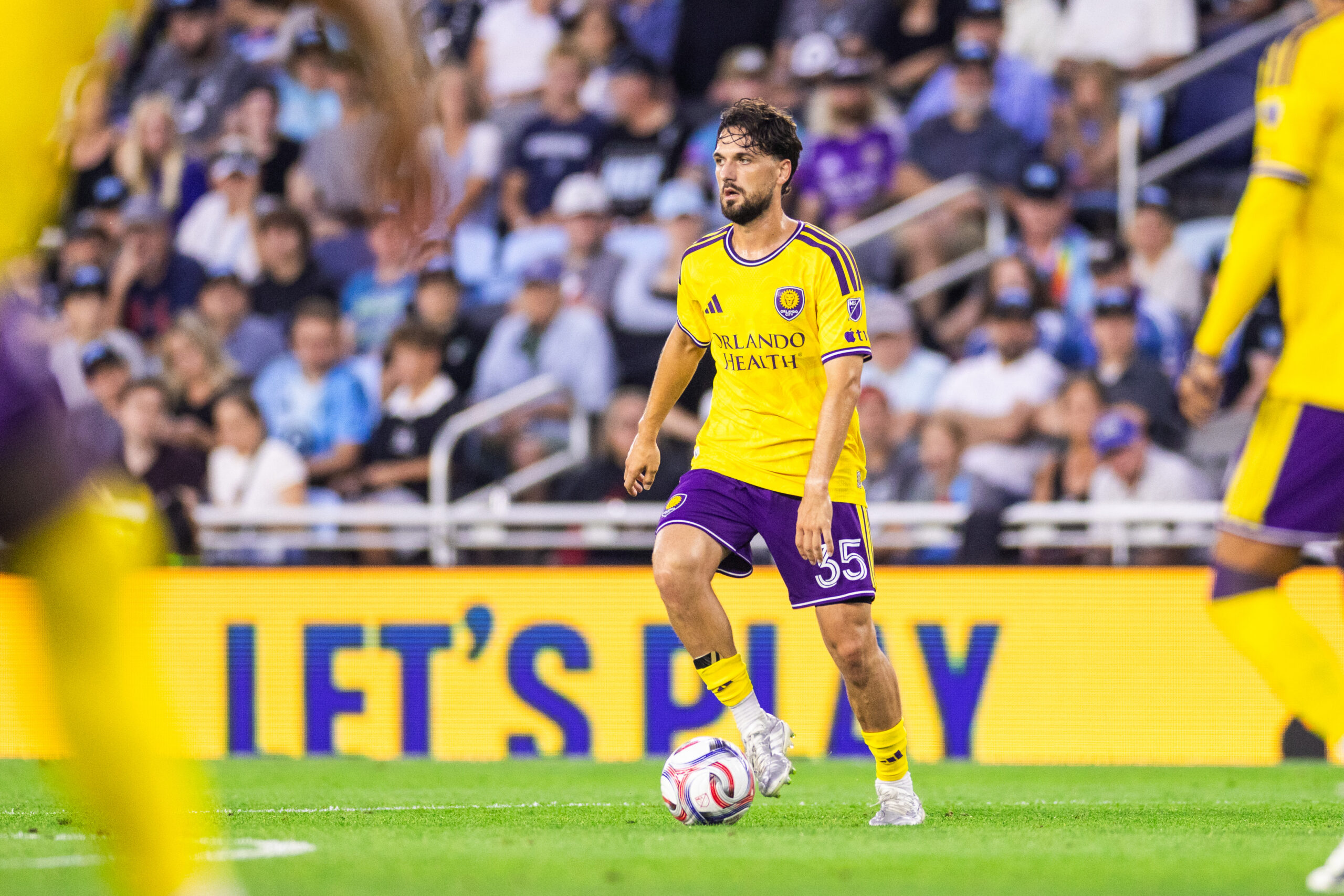
Welcome to your match preview and live thread for a Saturday night matchup between Orlando City (7-11-4, 25 points) and San Diego FC (8-8-6, 30 points) at Inter.co Stadium in Orlando (7:30 p.m., Apple TV). It’s the first-ever meeting between these two teams from different conferences
Here’s what you need to know ahead of the match.
History
As mentioned above, tonight’s meeting between the Lions and San Diego is the first in the series history, so there is no history. The Lions are 2-2-1 against Western Conference teams this season, which means little to nothing in this particular match, and San Diego is going to be Orlando City’s final opponent from the opposite conference in MLS regular-season play this season.
Overview
The Lions are coming off a wild 3-3 road draw at Minnesota United a week ago, in which Daryl Dike and Antoine Griezmann scored on either side of halftime on Orlando’s first two shot attempts to put their team up 2-0 in the 64th minute. Minnesota stormed back with three goals off defensive errors in a four-minute span to take a late 3-2 lead. Just when the Loons appeared to be headed for all three points, Tyrese Spicer scored in stoppage time, forcing Minnesota to split the points. Orlando has a modest 1-0-1 unbeaten streak entering tonight, and the Lions are 5-4-2 at home in 2026.
San Diego is coming off a 3-1 home win over the LA Galaxy despite having Jeppe Tverskov sent off. Tonight’s visitors have won two straight games, but both were at home. They lost their last home game 3-1 at Portland on Aug. 19 and are 2-5-3 away from home this season.
The key for Orlando City tonight will be to mark Anders Dreyer, which is far easier said than done, as he has emerged as one of the league’s best playmakers. His eight goals and 11 assists give him 19 total goal contributions to lead his team. Marcus Ingvartsen is Dreyer’s favorite teammate to combine with, as the Danish forward has converted 11 times, leading San Diego in goals, and has added five assists. However, Ingvartsen is listed as out with a lower body injury. Midfielder Onni Valakari has chipped in four goals and seven assists.
“We respect San Diego, but as well we prepare our game,” Orlando City interim head coach Martin Perelman said ahead of the match. “We know how strong we are, especially at home, so now we go.”
Orlando City will be without Braian Ojeda (foot) and Adrian Marin (thigh), while Bernardo Rhein (thigh), has been upgraded to questionable. San Diego will be without the aforementioned Ingvartsen (lower body) and Tverskov (suspension).
Match Content
- Our latest episode of The Mane Land PawedCast features our key match-ups and score predictions for tonight’s match.
- Our Ben Miller wrote about his three keys to an Orlando City win over San Diego.
Official Lineups:
Orlando City (4-4-2)
Goalkeeper: Maxime Crepeau.
Defenders: Bernardo Rhein, Robin Jansson, David Brekalo, Griffin Dorsey.
Midfielders: Ivan Angulo, Joran Gerbet, Eduard Atuesta, Justin Ellis.
Forwards: Antoine Griezmann, Daryl Dike.
Bench: Javier Otero, Zakaria Taifi, Iago, Wilder Cartagena, Luis Otavio, Tiago, Marco Pasalic, Martin Ojeda, Tyrese Spicer.
San Diego FC (4-3-3)
Goalkeeper: C.J. dos Santos.
Defenders: Kieran Sargeant, Ian Murphy, Manu Duah, Oscar Verhoeven.
Midfielders: Gabriel Pirani, Anibal Godoy, Alejandro Alvarado.
Forwards: Elias Achouri, Onni Valakari, Anders Dreyer.
Bench: Duran Ferree, Dagur Dan Thorhallsson, Christopher McVey, Bryan Zamble, David Vazquez, Ian Pilcher, Alex Mighten, Bryce Duke, Amahl Pellegrino.
Referees:
REF: Joe Dickerson.
AR1: Corey Parker.
AR2: Justin Howard.
4TH: Rodrigo Albuquerque.
VAR: Daniel Radford.
AVAR: Jeff Muschik.
How to Watch
Match Time: 7:30 p.m.
Venue: Inter.co Stadium — Orlando.
TV/Streaming: Apple TV.
Radio: AM 810 FOX Sports Radio Orlando (English), Mega 97.1 FM (Spanish), Nossa Rádio 1160 AM-WRLZ (Portuguese).
Social Media: For rapid reaction and live updates, follow us on Bluesky Social at @themaneland.bsky.social or follow Orlando City’s official Twitter (@OrlandoCitySC) or Bluesky (@OrlandoCitySC) feed.
Enjoy the match. Go City!
Orlando City
Orlando City vs. San Diego FC: Three Keys to Victory
Here’s what Orlando needs to do in order to return to winning ways against San Diego.


After the disappointment of two dropped points against Minnesota on Saturday, Orlando City is back home with an opportunity to get things back on track. The Lions need to keep picking up points if they want to keep pace in an increasingly crowded Eastern Conference, and Saturday’s game is a good chance to start September off on the right note. San Diego FC stands in the way of that good start, and what follows are three things that I believe Orlando needs to do in order to emerge victorious from this game.
Stay Strong on the Left
The left side of the defense has been a question mark for the Lions for much of the year. Adrian Marin, Bernardo Rhein, and Zakaria Taifi have all spent time at left back lately and have done so with varying degrees of success. Regardless of who suits up there on Saturday, that area of the field will be under scrutiny once again, since they’ll be tasked with stopping San Diego right winger Anders Dreyer. He has eight goals and 11 assists in 21 appearances this year, has played 60 key passes during that time, and is generally the lynchpin through which the San Diego offense operates. He hasn’t quite been on the same pace that saw him bag 19 goals and 19 assists in the regular season last year, but with four goal contributions in his last three MLS appearances, he’s extremely capable of wreaking havoc from the wing. A lot of the goals OCSC has conceded lately have come down the left side of the defense, and if that area of the field can’t be taken care of better, the Lions will likely be in for a difficult night.
Do Damage in Transition
Orlando’s current style of positionless, fluid, attacking soccer is at its best when it comes up against teams that want to come out and play. It struggles mightily against defensive bunkers but shines when the Lions can get out and run, target open spaces, and combine with teammates in unexpected areas. Fortunately for OCSC (in theory), San Diego is a team that likes to have the ball, as it has the highest average possession in the league. That means the Lions will have opportunities to force turnovers and break the other way at pace. In order to make that happen though, OCSC will need to be both disciplined and effective when it comes to applying its press. Then, if/when the Lions win the ball, correct decision-making and clinical execution in the final third will be key to avoid letting any chances slip through their fingers (paws?).
Clean Up the Self-Inflicted Errors
Orlando has dealt with more than its fair share of general defensive struggles this year, but avoidable errors have been a particular problem in recent weeks. Whether it’s been an ill-advised challenge, passing to the opposition in the defensive third, or leaving men unmarked in the box, unnecessary mistakes have cost OCSC points time and again. Against lesser opposition it hasn’t always mattered, as the Lions were able to rescue three points against Real Salt Lake, but if Orlando wants to make a playoff push, it needs to make a habit of playing cleaner games, plain and simple. San Diego is a good team with dangerous offensive players, and Saturday’s visitors will very likely take advantage of any opportunities that the Lions gift-wrap for them. Keeping things mistake-free will go a long way.
We’ve got ample proof this season that nothing is guaranteed, but if the Lions can lock down the left side of the defense, make hay in transition moments, and limit unforced errors, then they should be in a good position to take all three points from Saturday’s game. Vamos Orlando!
Lion Links
Lion Links: 9/4/26
Martin Ojeda details his recovery from injury, Anna Moorhouse loaned to Manchester City, Orlando City’s U.S. Open Cup journey, and more.

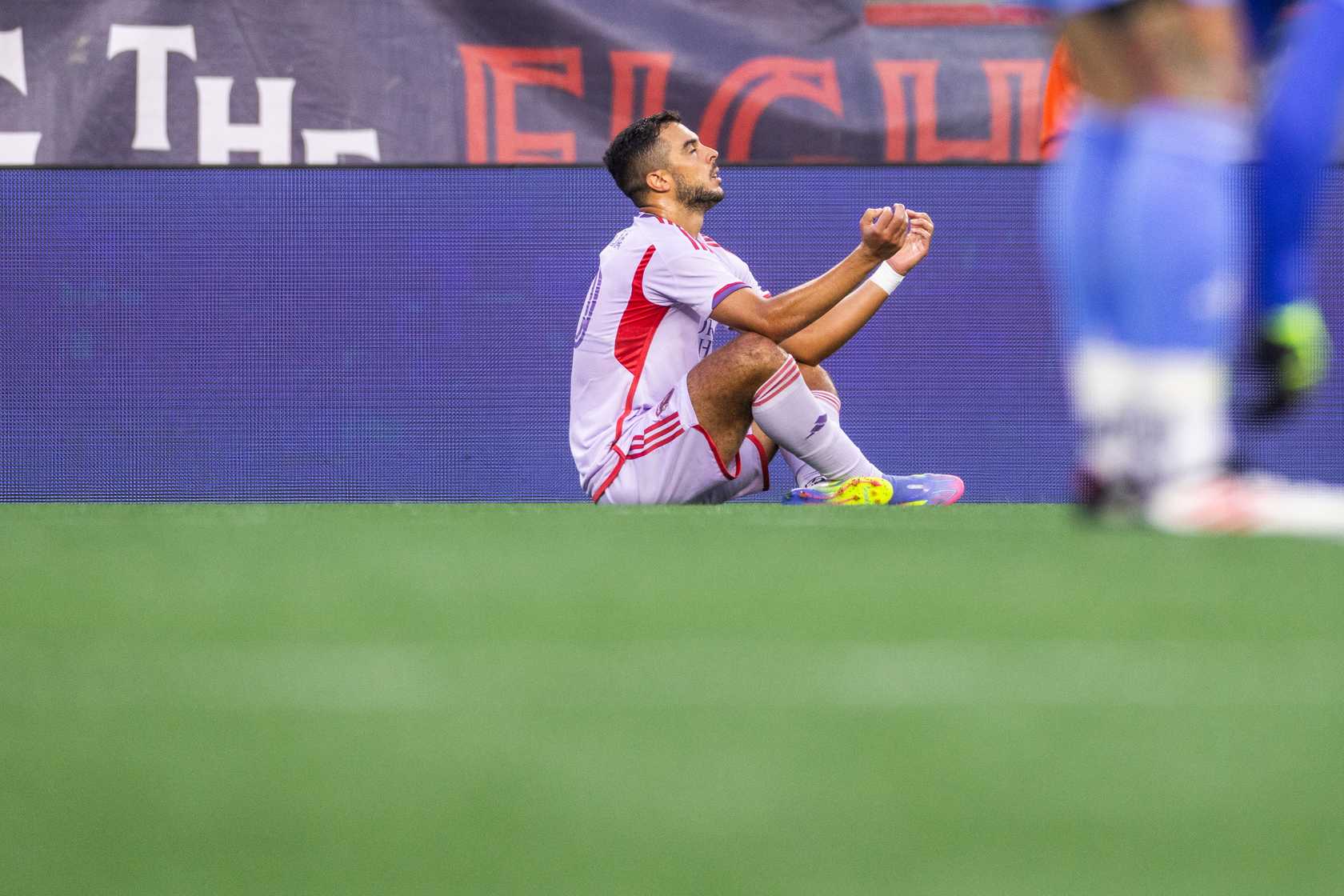
Three straight days of Orlando soccer starts tonight with Orlando City B’s road match against Inter Miami II at 7 p.m. Hopefully, Orlando’s teams do well over the next few days as crunch time is upon us when it comes to making the playoffs, especially for MLS NEXT Pro. For now though, let’s jump right into today’s links from around the soccer world!
Orlando City Prepares for San Diego FC
Orlando City will take on San Diego FC on Saturday in the first-ever game between the two clubs, and one of the storylines to keep an eye on is how much Martin Ojeda plays as he works his way back from injury. The Designated Player came off the bench late in Orlando’s 3-3 draw against Minnesota United in his first appearance since May 23. Not often injured, Ojeda spoke on how being off the field for over a month has shifted his perspective while training to return.
“You learn to value the moment much more. You learn to value every training session because, when you’re training on your own and you’re not available to your teammates, you feel uncomfortable,” Ojeda said. “You value being healthy more. It’s like everything in life. When you feel good, you live life almost on autopilot, so to speak. You go to work, you go home, you come back, you sleep. However, when you or someone close to you goes through an illness or something like that, you value the moment much more and become more conscious of what you’re experiencing.”
Pride Loan Anna Moorhouse to Manchester City
The Orlando Pride loaned goalkeeper Anna Moorhouse to Manchester City through January of 2027. Moorhouse joined the Pride prior to the 2022 season and helped the club win both the NWSL Championship and Shield in 2024. However, she has struggled this year alongside the rest of the Pride’s defense. Moorhouse hasn’t played in the past two games for the Pride, with Cosette Morche starting in her place. Her current contract with the Pride lasts through the 2027 NWSL season, so we’ll have to wait and see what her future with the club is when the loan ends.
Orlando City’s U.S. Open Cup Journey
Between the World Cup, regular season, and Leagues Cup this summer, it can be easy to forget that Orlando City is still in contention to win this year’s U.S. Open Cup. The Lions are in the semifinals of the tournament after crushing Atlanta United 4-1 in the quarterfinals back on May 19. The Lions won much tighter affairs prior to that win, with Javier Otero coming up with seven saves in a 1-0 win over FC Naples and Zakaria Taifi scoring in stoppage time to beat the New England Revolution 4-3 in the following match. Orlando will be on the road for its semifinal match against the Columbus Crew on Sept. 16, but the offense has received a boost due to the arrivals of Antoine Griezmann and Daryl Dike this summer.
MLS Transfer News Roundup
MLS signings continue to pour in as teams look to improve their squads for the rest of this season and beyond. The Colorado Rapids signed Ghanaian winger Ibrahim Sadiq from AZ Alkmaar, where he recorded 18 goals and seven assists in 85 appearances across three seasons with the Dutch club. San Diego also added an attacker by signing forward Cedric Bakambu, who joins as a free agent after playing at Real Betis. As for other notable moves from across the league, Real Salt Lake signed winger Dusan Zagar as an MLS U22 Initiative player, forward Lyle Foster joined the Houston Dynamo on loan, and the Columbus Crew continued to improve on offense by signing Moroccan winger Anass Zaroury on loan from Panathinaikos.
Free Kicks
- Former Orlando Pride player Christina Burkenroad is retiring from professional soccer and Monterrey will have Saturday’s game against Toluca be a send-off match for her.
- North Carolina Courage forward Ashley Sanchez was named NWSL Player of the Month after recording five goals and two assists in August.
- The Kansas City Current signed Cameroonian defender Maeve Nyadjou, who just helped her nation win the Women’s Africa Cup of Nations for the first time and was named 2026 WAFCON Best Young Player.
- Becky Sauerbrunn is joining the Portland Thorns as a technical consultant for the remainder of the 2026 NWSL season.
- Edin Dzeko announced that he will retire from international soccer following Bosnia and Herzegovina’s UEFA Nations League qualifier against Sweden on Oct. 2. That will be his 152nd match for Bosnia, wrapping up a 19-year-old international career that included 73 goals.
That’s all I have for you this time around. I hope you all have a fantastic Friday and rest of your weekend!


Orlando City vs. San Diego FC: Preview, How to Watch, TV Info, Live Stream, Lineups, Match Thread, and More

Orlando City B vs. Inter Miami II: Final Score 4-1 as OCB Claims Three Huge Points in South Florida

Orlando City vs. San Diego FC: Three Keys to Victory


-

 Orlando City2 weeks ago
Orlando City vs. Real Salt Lake: Final Score 2-1 as Griezmann’s Brace Lifts Lions to Win
-

 Orlando City2 weeks ago
Orlando City vs. Real Salt Lake: Preview, How to Watch, TV Info, Live Stream, Lineups, Match Thread, and More
-

 Orlando City B2 weeks ago
Orlando City B vs. Atlanta United 2: Final Score 5-1 as Young Lions Fall for Fifth Straight Time
-
 Orlando City1 week ago
Orlando City vs. Minnesota United: Preview, How to Watch, TV Info, Live Stream, Lineups, Match Thread, and More
-
 Lion Links2 weeks ago
Lion Links: 8/24/26
-
 Orlando Pride2 weeks ago
Orlando Pride vs. Washington Spirit: Preview, How to Watch, TV Info, Live Stream, Lineups, Match Thread, and More
-

 Orlando City2 weeks ago
Orlando City vs. Real Salt Lake: Five Takeaways
-

 Orlando City1 week ago
Sometimes the Solution Is Just to Sign Antoine Griezmann