
Orlando City
Running the Numbers: Orlando City’s Fastest, Fittest Players
Tracking data on Orlando City’s sprint speeds, sprints per 90 minutes, and overall distance covered per 90 minutes in 2026.

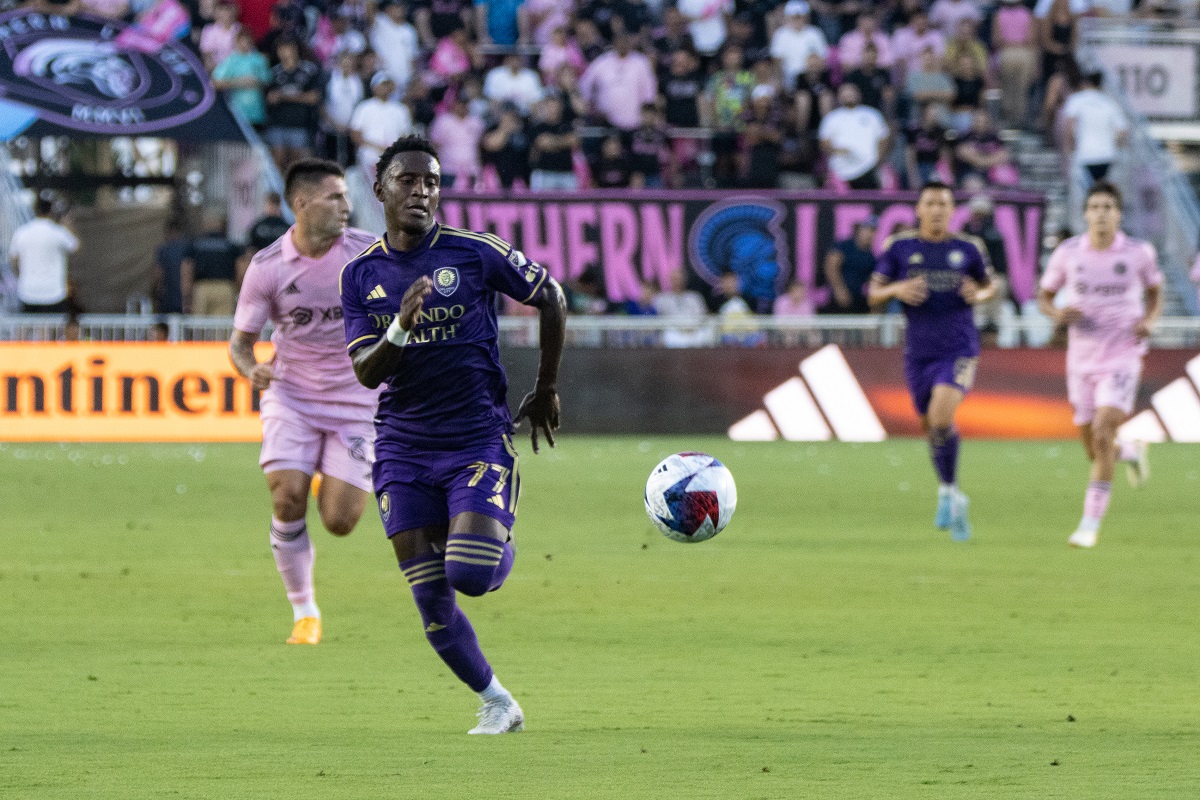
The calendar is finally showing less than two weeks until Orlando City’s next MLS game, though the team played a friendly against Tampa Bay Wednesday night and has another one scheduled against Dallas next week. When that next official game kicks off in San Jose on July 22, it will have been almost exactly two months since the Lions took the field, marking the continuation of what is an odd transition from the spring-to-fall schedule that Major League Soccer has employed since the league started in 1996.
There was a four-month break between Orlando City’s final game in 2025 and the start of the 2026 season, then three months of soccer, then this two-month break, then there will be five or possibly even six (if Orlando City can start playing defense more like lions instead of just lyin’ around) more months of soccer to close out 2026. After that, there will be a very short off-season followed by a “sprint season” from February to May in 2027, before the league moves to what I, as a former high school teacher, affectionally call the “school schedule” and start playing August to May like most of the soccer-playing world.
I miss the school schedule and two-month-long summer vacations. I digress.
The important thing to note here is that the 2026 season is going to restart soon, and then there will be a lot of MLS soccer in quick succession after that until a longer break in the summer of 2027. And speaking of quick, earlier this week I finally found some data I had long been looking for: tracking data on top sprint speed, number of sprints per 90 minutes, and total distance ran by MLS players. Sofascore started publishing this information for many top leagues in 2025, and for MLS, the outlet has the tracking information available for the 2026 season.
Unfortunately, the data display is not as simple as some other sites in terms of looking league-wide and ranking players all across the league, but it was set up to easily look at on a team-by-team basis. Sofascore did not share how it acquired this data, but presumably it either comes from the devices that you see all players wearing under their jerseys or some kind of automated tracking inside every stadium, as you could not rely on a tv broadcast to track running speed and distance traveled, considering not all players are on screen throughout the entire game.
Some context is important as well, especially for the top speed and number of sprints categories. From what I can tell, the top speed measured is a one-time top speed reached per player, which inherently gives an advantage to players who play in open spaces more often, like fullbacks, strikers, and wingers. Central defenders and midfielders certainly also have opportunities to go all out as well, but those positions do not lend themselves to as many chances for a player to get moving for the distance required to hit their top speed. As for the counts of total numbers of sprints, the site did not define what constitutes a “sprint,” but I am confident it tracked everyone in the same manner, so I think the data is unbiased by any subjective calculation.
As for the total distance ran, that is a straight-forward calculation, though it makes sense that some positions run far less distance than others. All of these distances run are exhausting to look at though. It takes most of us multiple days to accumulate as much distance covered as many players do in a single game. The “brothers” Ojeda have combined to run for nearly eight marathons worth of miles thus far this season. The only marathons happening in my house are tied to movies or TV shows.
That explanation felt more like a marathon than a sprint, so let’s get back on track (unintentional pun, I swear) and look at Orlando City’s running data for its players who have played at least 200 minutes (well, except for Colin Guske, who for some reason does not show in the database even though he has played nearly 300 minutes). We’ll skip the goalkeepers (Maxime Crépeau is faster than Javier Otero) and start with the defenders:
| Player | Top Speed (mph) | # of Sprints* | Total Distance Covered (miles)* |
|---|---|---|---|
| Griffin Dorsey | 22.3 | 23.1 | 6.6 |
| Adrián Marín | 22.3 | 11.1 | 5.8 |
| Tahir Reid-Brown | 21.5 | 24.7 | 6.5 |
| Zakaria Taifi | 21.1 | 21.8 | 6.9 |
| Iago | 21.1 | 10.8 | 5.7 |
| David Brekalo | 20.8 | 12.6 | 6.2 |
| Nolan Miller | 20.8 | 14.5 | 5.9 |
| Robin Jansson | 19.7 | 9.1 | 5.6 |
- *per 90 minutes
I was not surprised to see Griffin Dorsey near the top of these lists, but I was surprised to see Adrián Marín there, especially for the column on top speed reached. He must have really gotten moving on one run forward or, let’s be honest based on Orlando City’s defense thus far this season, a recovery run to get back on defense, because he ranks near the bottom of the group on the number of sprints per 90 minutes.
Robin Jansson, both for the position he plays and his age, unsurprisingly sits at the bottom of all three categories. All of the central defenders sit low on the number of sprints made and total distance covered, which makes sense based on how Orlando City deploys players in those positions — staying back on defense and rarely venturing up field unless it is in a dead ball situation.
The fastest defender tracked thus far this season was San Jose’s Daniel Munie, who clocked a 22.7 mph sprint, just a hare, sorry, hair, faster than Dorsey and Marín’s 22.3. San Diego’s Kieran Sargent leads all defenders by averaging 25.9 sprints per 90 minutes, but this is where Sofascore’s reporting was difficult to use. The site’s one chart with the top ranked players included every single player, meaning some players who had barely played all season were included, and their per-90-minutes values often looked out of whack compared to players who played lots of games. Sargent has only played 440 minutes thus far this season, enough that I included him as a top performer but far fewer than Orlando City’s primary defenders.
The same issue came up with total distance covered, and no defender in the site’s overall top 50 had played more than 400 minutes, so I could not find a good player comparison for a top defensive player in terms of distance covered.
On to the midfield (the positional allocations are Sofascore’s):
| Player | Top Speed (mph) | # of Sprints* | Total Distance Covered (miles)* |
|---|---|---|---|
| Iván Angulo | 22.2 | 27.3 | 6.6 |
| Braian Ojeda | 21.0 | 16.0 | 6.9 |
| Eduard Atuesta | 21.0 | 11.9 | 7.0 |
| Marco Pašalić | 20.9 | 19.6 | 6.7 |
| Justin Ellis | 20.8 | 11.7 | 6.1 |
| Luis Otávio | 20.8 | 22.9 | 7.1 |
*per 90 minutes
The eye test has always said that Iván Angulo is not only the fastest player on Orlando City but also among the fastest in the league, but Sofascore says otherwise, as the site has him third on the team behind Dorsey and Marín and 25th overall in MLS. I’d like to see a race among the three Lions, my money is on the Colombian Lion.
Angulo may be listed as the third fastest on the team but he is the leader in sprints per 90 minutes, and his 27.3 also ranks first in the entire league among midfielders, and second overall among all qualified players (those who have played at least 400 minutes). Sporting Kansas City’s Capita boasts the fastest top speed for a midfielder at 22.4 miles per hour — slightly faster than Angulo by Sofascore’s measurements.
Orlando City’s central midfielders cover the most ground, but while Eduard Atuesta and Braian Ojeda do so without a high number of sprints, Luis Otávio plays a faster and more aggressive type of game when he is on the field. Fellow central midfielder Patrick Yazbek of Nashville is the distance covered leader for midfielders, averaging a whopping 8.0 miles per 90 minutes.
Justin Ellis is an interesting case, as he seems to be a player who is always in a good position without doing a lot of running all over the field, while moving at a cruising pace. I do not mean to burden him with a comparison to Lionel Messi, but Messi is renowned for his ability to affect games even though he tends to run the least among all players on the field (Opta ranked Messi 618th of 618 players in the World Cup group stage for distance covered). Ellis plays a similar position in a similar style, is showing advanced ability at a young age, and both players have six letters in their first name and five in their last name. I’m just saying.
We’ll close with the forwards:
| Player | Top Speed (mph) | # of Sprints* | Total Distance Covered (miles)* |
|---|---|---|---|
| Tyrese Spicer | 21.7 | 21.3 | 6.7 |
| Duncan McGuire | 21.3 | 25.9 | 7.0 |
| Martín Ojeda | 21.1 | 19.2 | 6.9 |
| Tiago | 20.6 | 22.8 | 6.5 |
*per 90 minutes
Duncan McGuire definitely leaves it on the field every time he plays, ranking second on the team with nearly 26 sprints per 90 minutes, well ahead of every other player except for Angulo. Spicer’s top speed being fourth on the team is another reason that it is often better to bring him off the bench than start him, as he can come in and leave it all on the field in 30-ish minutes against players that likely have tired legs. Martín Ojeda is a workhorse, covering nearly the same distance as box-to-box midfielders Atuesta and Braian Ojeda, and Tiago makes the most of his time on the field as well, putting in nearly 23 sprints per 90 minutes — sixth on the team.
The forward group in Orlando ranks well behind the league leaders in the two categories where there were qualified forwards in the league’s top 50, as Seattle’s Osaze De Rosario is the fastest at 22.5 mph and Columbus Crew’s Wessam Abou Ali (pre-ACL injury) is the leader in sprints per 90 minutes with 33.
For those wondering about about new Lion Antoine Griezmann, Sofascore shows him matching the speed of Tiago, the number of sprints of Nolan Miller (25% more sprints per 90 minutes than Ellis may be a more useful comparison), and the total distance covered of Martín Ojeda during La Liga play this past season. I think he is going to slot in quite nicely in Orlando.
Just because a player runs fast, sprints a lot, or covers a lot of ground does not make them a good, or even useful, player. Speed and endurance are coveted in most sports, but those two alone rarely lead to wins and success. They are helpful traits, and Angulo’s speed and endurance help to partially explain why he has always been indispensable for the former and current Orlando City coaching staffs.
The second half of the race season is about to start, and we will take a look at all of these metrics at the end of the year to see if anything changed after the World Cup break. Hopefully the Lions come out of the blocks fast and run circles around their competition.
Vamos Orlando!



Orlando City
Intelligence Report: Orlando City vs. New York Red Bulls
Get caught up on how things have been going for the New York Red Bulls, courtesy of someone who knows them best.

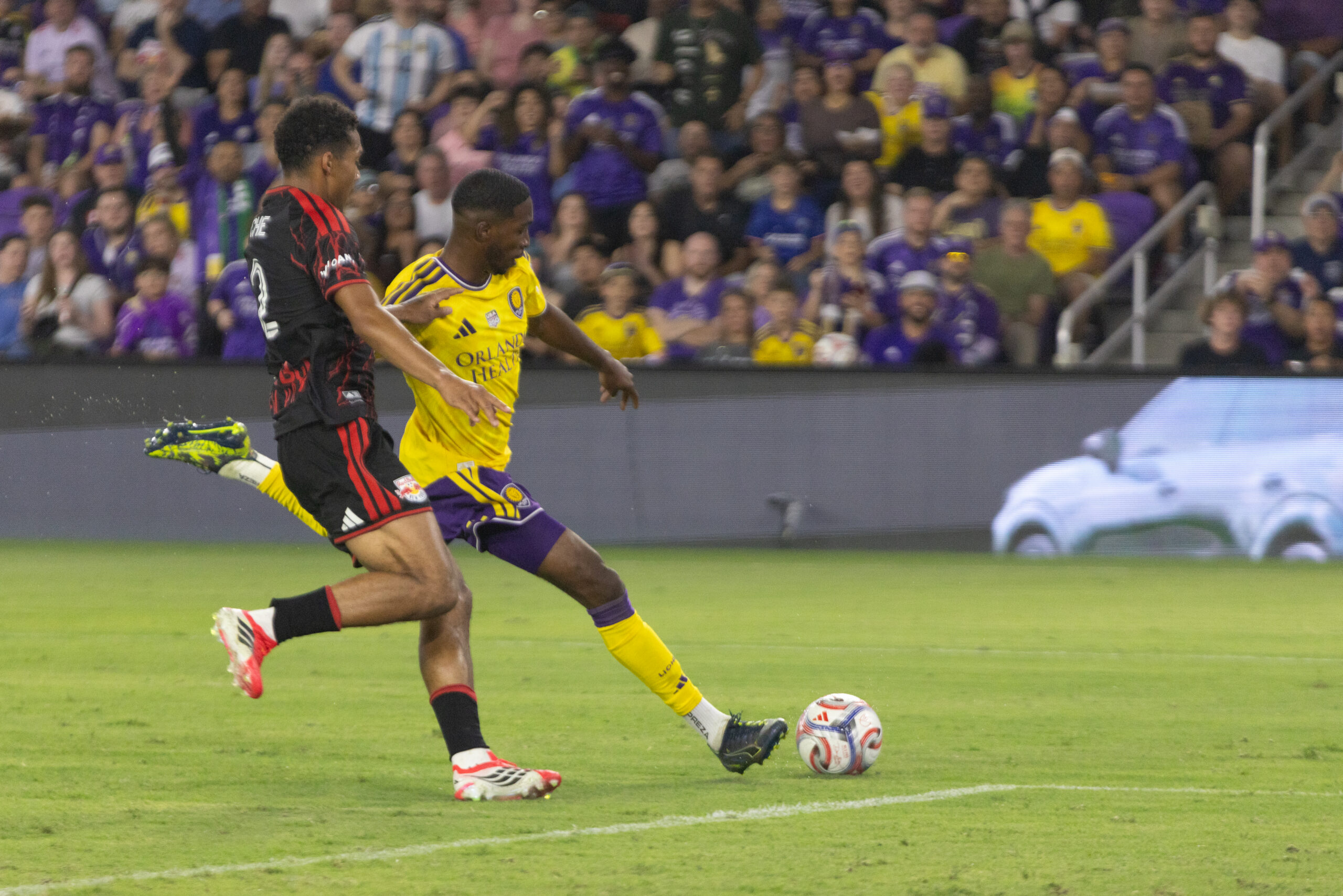
It’s matchday eve once again, as Orlando City will try to make it three wins in a row after coming back from the World Cup break. Standing between the Lions and three victories on the bounce are the New York Red Bulls, as OCSC will hit the road up to New Jersey on Saturday to try to exact vengeance for an opening day loss.
A match with the Red Bulls means I caught up with Mark Fishkin, who hosts the Seeing Red Podcast — an independent outlet that always provides excellent coverage of New York. As usual, he was kind enough to bring us up to speed on how things have been going for the Red Bulls since the season opener.
With five goals conceded in two post-World Cup games, the defense seems to be a sticky spot for the Red Bulls at the moment. What are you seeing back there that has contributed to the back line’s difficulties?
Mark Fishkin: There’s so much that’s gone into New York’s ineptitude in the back…young, young players still figuring things out on the back line (ages 17, 20, 22) plus a challenge in net with Ethan Horvath. Horvath is usually good for one or two spectacular saves every match, plus a massive howler. Every. Time. Out.
After torturing Orlando in the season opener, Julian Hall has kept on cooking and leads the team with 12 goal contributions. What has made him so effective this season?
MF: Hall is a fantastic finisher who has benefitted from exemplary service, mostly from Cade Cowell (six assists) on the right but also from Jorge Ruvalcaba (who is out for Saturday on yellow card accumulation), and Emil Forsberg. In the season opener, Hall’s performance opened eyes across the league, and the teenager hasn’t stopped. He’s been a bright spot for the team this season.
Based on what you’ve seen so far, what should the minimum expectation be for Red Bulls fans this year? What needs to happen for those expectations to be exceeded?
MF: Before the season, Red Bulls’ fans would have been happy with returning to the playoffs after the team’s first postseason miss since 2009 last year. However, a quick start, and then a great run before the World Cup Break (10 points over four matches) raised expectations in a big way. Since the break, however, the performances have been terrible. New York allowed three goals at one-win Philadelphia, then conceded twice to Charlotte in the first 12 minutes last week and lost 2-0. It’s been a rollercoaster of emotion for fans, and the car is heading down, down, down.
Will any players be unavailable due to injuries, suspensions, call-ups, etc.? What is your projected starting XI and score prediction?
MF: Key suspensions for the Red Bulls include Adri Mehmeti (red card last week) and the aforementioned Ruvalcaba. The Red Bulls are close to injury free.
Starting XI (4-3-3) could be: Ethan Horvath; Matthew Dos Santos, Julian Bazan, Justin Che, Dylan Nealis; Emil Forsberg, Gustav Berggren, Ronald Donkor; Mohammed Sofo, Julian Hall, Cade Cowell.
*score prediction not provided
Thank you to Mark for the great update on the Red Bulls. Vamos Orlando!

Lion Links
Lion Links: 7/31/26
Yutaro Tsukada loaned to Rhode Island FC, Orlando Pride play the North Carolina Courage tonight, NWSL ends deal with Victory+, and more.


Happy Friday, Mane Landers! It’s the final day of July, and I’m hoping that the Orlando Pride can close out the month on a positive note tonight. We also have both Orlando City and Orlando City B to look forward to Saturday night. Let’s jump right into today’s links from around the soccer world!
Yutaro Tsukada Loaned to Rhode Island FC
Orlando City loaned forward Yutaro Tsukada to Rhode Island FC in the USL Championship for the remainder of the 2026 season. Selected by Orlando in the first round of the 2024 MLS SuperDraft, Tsukada signed a first-team contract that August after impressing with Orlando City B. Unfortunately, he missed all of last season due to a knee injury and has only made two appearances for the Lions this season. Hopefully, he can make the most of his playing time in Rhode Island.
Orlando Pride Visit North Carolina Courage Tonight
The Orlando Pride are on the road tonight for a game against the North Carolina Courage. Road wins have been hard to come by for Orlando this season, as the Pride have only won two games away from the City Beautiful this year. While the Pride have struggled when visiting WakeMed Soccer Park over the years, they did manage to draw 1-1 against the Courage there last year. Orlando generated plenty of opportunities in its 1-0 win over the Chicago Stars, and midfielder Haley McCutcheon spoke on how that’s a positive sign heading into this match.
“I think we can either look at our chances and not converting them as a frustration point, or we can look at it as confidence that we’re creating these chances,” she said. “We’ve taken it into this week as: okay, we’re creating, and now we just need that final piece. Especially without Barbra here, it gives other players an opportunity to step up and be the finisher.”
NWSL Terminates Agreement With Victory+
Starting on Sunday, all NWSL games that were scheduled to stream on Victory+ will instead be streamed for free on NWSL+ after the league terminated its media rights agreement with the broadcast partner. The multi-year agreement lasted less than a year and the termination is reportedly due in part to unfulfilled payments to the NWSL. You can check out games on NWSL+ through the league’s website or its app.
UEFA Agrees to Boycott FIFA Events
In response to FIFA President Gianni Infantino’s scheme to sell stakes in the World Cup to private equity investors, UEFA’s 55 member nations convened and agreed to boycott all FIFA competitions. Concacaf also released a statement rejecting Infantino’s proposal, expressing concern over the lack of due process and more. We’ll see where the dominoes fall from here, with the FIFA U-20 Women’s World Cup set to take place in Poland starting on Sept. 5. While it’s tough seeing women’s soccer events at risk in this game of chicken, it’s nice to see that the confederations aren’t just shaking their heads while going along with the plans.
Free Kicks
- Barbra Banda and Zambia will face off against Nigeria in Casablanca on Saturday in a critical Women’s Africa Cup of Nations match.
- The Philadelphia Union transferred South African defender Olwethu Makhanya to Rangers in the Scottish Premiership for a reported $4.5 million fee. The 22-year-old has been with the Union for three years and was part of South Africa’s World Cup roster.
- FC Cincinnati midfielder Gerardo Valenzuela was suspended for an additional game and fined by the MLS Disciplinary Committee for his violent conduct against the Columbus Crew on July 25. As a result, he’ll miss out on the match against Orlando City on Aug. 15.
- Talks are reportedly taking place for American attacker Giovanni Reyna to move from Borussia Monchengladbach to Strasbourg in France.
- Eddie Howe is reportedly set to exit as Newcastle United’s head coach after nearly five years at the helm.
- English defender John Stones has joined Inter Milan following the expiration of his contract with Manchester City.
That’s all I have for you this time around. I hope you all have a fantastic Friday and rest of your weekend!
Orlando City
Lion’s Share: Orlando City Will Cash In on FIFA World Cup Payouts
How much does Orlando City stand to make for its players participating in World Cup qualifying and the 2026 World Cup?
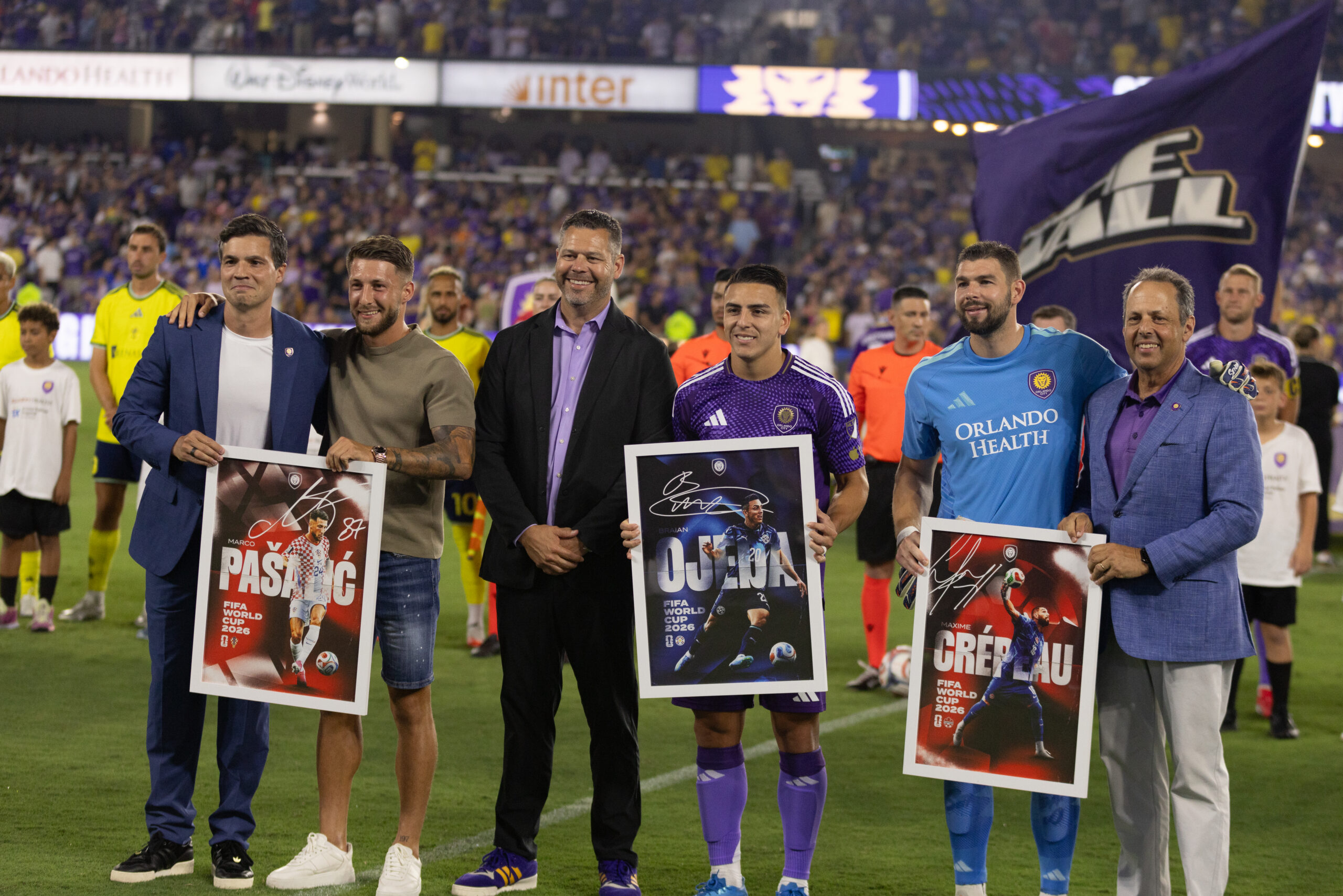
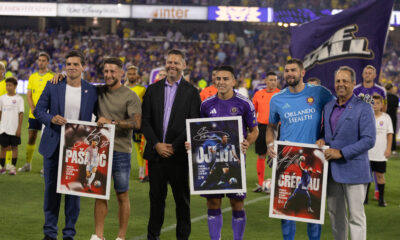
Orlando City played its first home game in two months Saturday night, and right before kickoff there was a cool moment on the field as the club celebrated the three Lions who played in the 2026 FIFA Men’s World Cup: Maxime Crépeau, Braian Ojeda, and Marco Pašalić. All three players played on teams that made it out of the group stage, and Crépeau’s Canada and Ojeda’s Paraguay both made it to the Round of 16. I watched all of the games for all three Lions during the World Cup, and it was always fun to hear the announcers mention that those three players represented Orlando City from Major League Soccer.
There is no more soccer to be played in the 2026 World Cup, but FIFA is now getting down to the business of what it really cares about doing — counting up all the money it made and distributing enough of it so that FIFA’s leaders stay in power. Few organizations in the world are as reviled as FIFA, yet we all love soccer so much we just grin and bear it so we can watch the world’s best on the biggest stages. The only positive thing about FIFA President Gianni Infantino is his magnificent bald head (I may be slightly biased due to being not so slightly follicly challenged), and the less time spent on him the better.
I do not want to spend any more time on Infantino and will instead spend time looking at FIFA’s spending — in particular what is coming Orlando City’s way in the upcoming months. The Athletic’s Chris Weatherspoon wrote a great article recently detailing how FIFA will compensate clubs for allowing their players to participate in the World Cup, and he laid out the two ways that clubs will be paid by FIFA post-World Cup:
FIFA pays out on the basis of how many days finals participants are at the competition, between the mandatory release date of May 25 and the day after their national team’s last match in the competition.
(FIFA pays clubs) For any player who was selected in a matchday squad for any of the 905 qualifying games that determined the 48 participating teams this June and July. On top of that, clubs of players who were named in squads for the three host countries in their 10 friendlies before this summer’s finals will also receive payment.
The payment amounts are not fully locked in yet, but the estimates are that clubs will be paid approximately $5,000 per day that their team members were at the World Cup and $2,632 per matchday selection for World Cup qualifiers and/or friendlies for players from the three host nations. Let’s take a look at what Orlando City should be expecting to receive from FIFA, hopefully hand-delivered on an ostentatiously large check.
Pašalić’s Croatia was eliminated by Portugal on July 2, and both Crépeau’s Canada (eliminated by Morocco) and Ojeda’s Parauguay (eliminated by France) went out on July 4. Using FIFA’s parameters of a start date of May 25 running through the day after a team was eliminated and an amount of $5,000 per day yields the payouts below to Orlando City:
| Player | National Team | Days at World Cup | FIFA Payout |
|---|---|---|---|
| Maxime Crépeau | Canada | 42 | $210,000 |
| Braian Ojeda | Paraguay | 42 | $210,000 |
| Marco Pašalić | Croatia | 40 | $200,000 |
| Total | 124 | $620,000 |
Not quite what Noah accomplished in 40 days and nights, but $620,000 is a nice payout from the arc of the World Cup. The Athletic included in its article a list of the 50 clubs that will earn the most from their players participating in the World Cup, and the 50th ranked club (Juventus) is estimated to make $1.2 million, approximately twice what Orlando City will earn. No Major League Soccer teams are in the estimated top 50 clubs, and by my calculations LAFC (the only MLS club that sent four players) led the way at $790,000, with Inter Miami just behind at $780,000.
Looking at which players played in qualifying games was a fun exercise, as qualifying for the 2026 World Cup started way back in September of 2023, so it was a blast from the recent past to look at the rosters from the last few years. The list below contains all players owned by Orlando City (mostly Lions, but some Young Lions) who were called up and dressed for their national teams during their time in Orlando. This list only counts appearances on the gameday roster for World Cup qualifiers and recent friendlies for Canada and USA (it would have counted friendlies for Mexico too, but our southern neighbors continue to be Lion-free). The estimated payout per appearance is $2,632.
| Player | National Team | Qualifiers/Friendlies | FIFA Payout |
|---|---|---|---|
| Maxime Crépeau | Canada | 4 | $9,448 |
| Marco Pašalić | Croatia | 8 | $18,896 |
| David Brekalo | Slovenia | 6 | $14,172 |
| Wilder Cartagena | Peru | 10 | $23,620 |
| Tyrese Spicer | Trinidad & Tobago | 5 | $11,810 |
| Alex Freeman | USA | 6 | $14,172 |
| Pedro Gallese | Peru | 17 | $40,154 |
| Facundo Torres | Uruguay | 12 | $28,344 |
| Abdi Salim | Somalia | 3 | $7,086 |
| Wilfredo Rivera | Puerto Rico | 2 | $4,724 |
| Nabi Kibunguchy | Kenya | 2 | $4,724 |
| Total | 75 | $177,150 |
Though Ojeda appeared in the World Cup for Paraguay he only joined Orlando City after World Cup qualification was completed in South America, so he did not earn any money for the club in this manner. Had Alex Freeman stayed with the club through the World Cup, as many thought he might, he would have earned the most money for Orlando City as he was called up for all of the 10 most recent friendlies for the U.S. Men’s National Team and he was at the World Cup for 43 days. Alas, only six of his friendly appearances counted, but Orlando City surely enjoyed counting the reportedly $4+ million transfer fee the club received from Villarreal in Spain.
Club legends Pedro Gallese and Facundo Torres ended up contributing the most from their appearances, though neither player ended up actually playing in the World Cup, as Peru did not qualify and Torres was not selected by Uruguay. You should have stayed in Orlando, Facu!
Orlando City B was well represented also, with Abdi Salim and Nabi Kibunguchy participating in African qualifying matches and Wilfredo Rivera in North American qualifying, as even though Puerto Rico is an unincorporated territory of the United States it is a full FIFA member on its own.
Five current Lions contributed to qualifying, the aforementioned Crépeau and Pašalić as well as David Brekalo, Wilder Cartagena, and Tyrese Spicer. Brekalo dressed for all six of Slovenia’s matches , Cartagena was called in for every match for Peru up until he suffered an injury in early 2025, and Spicer dressed in every match for Trinidad & Tobago except for its final qualifier, which took place after it could no longer advance from its group.
The overall tally for Orlando City’s participation in qualifying is an estimated $177,150, which combined with the estimated $620,000 from its players who actually participated in the World Cup means that the club should receive a check for something in the vicinity of $800,000 whenever FIFA distributes its spoils to all of the clubs around the world. FIFA may have no interest in accountability in most matters, but its accounting teams are like a well-oiled machine with collecting and distributing bribes funds, so that check should be coming soon.
That payment will close the door on the 2026 World Cup for Orlando City, one that appears to have been successful for the club as all three players contributed to their national teams, returned healthy (Pašalić has yet to play, but he is training and likely will dress for Saturday’s game), and earned more than half a million dollars for the club. The team has also taken all six points since the World Cup break ended, but two games is still far too small of a sample to say the team is back to being a threat in the Eastern Conference.
Maybe that will be the final payoff, though.
Vamos Orlando!


Orlando Pride vs. North Carolina Courage: Preview, How to Watch, TV Info, Live Stream, Lineups, Match Thread, and More

Intelligence Report: Orlando City vs. New York Red Bulls

Lion Links: 7/31/26


-
 Orlando City1 week ago
Orlando City vs. San Jose Earthquakes: Final Score 4-0 as Lions Blank Quakes in Griezmann’s Debut
-
 Orlando City1 week ago
Orlando City vs. San Jose Earthquakes: Preview, How to Watch, TV Info, Live Stream, Lineups, Match Thread, and More
-
 Orlando City1 week ago
Orlando City vs. San Jose Earthquakes: Five Takeaways
-

 Lion Links1 week ago
Lion Links: 7/23/26
-
 Orlando City2 weeks ago
Daryl Dike Returns to Orlando City, Signs Deal Through 2027
-

 Orlando Pride1 week ago
Orlando Pride vs. Chicago Stars FC: Preview, How to Watch, TV Info, Live Stream, Lineups, Match Thread, and More
-
 Orlando City6 days ago
Orlando City vs. Nashville SC: Preview, How to Watch, TV Info, Live Stream, Lineups, Match Thread, and More
-

 Orlando City6 days ago
Orlando City vs. Nashville SC: Final Score 1-0 as Spicer’s Goal Sinks League Leaders