
Opinion
Pedro Gallese’s Recent Form No Surprise
Pedro Gallese’s recent solid form isn’t anything new, you just need to know where to look.

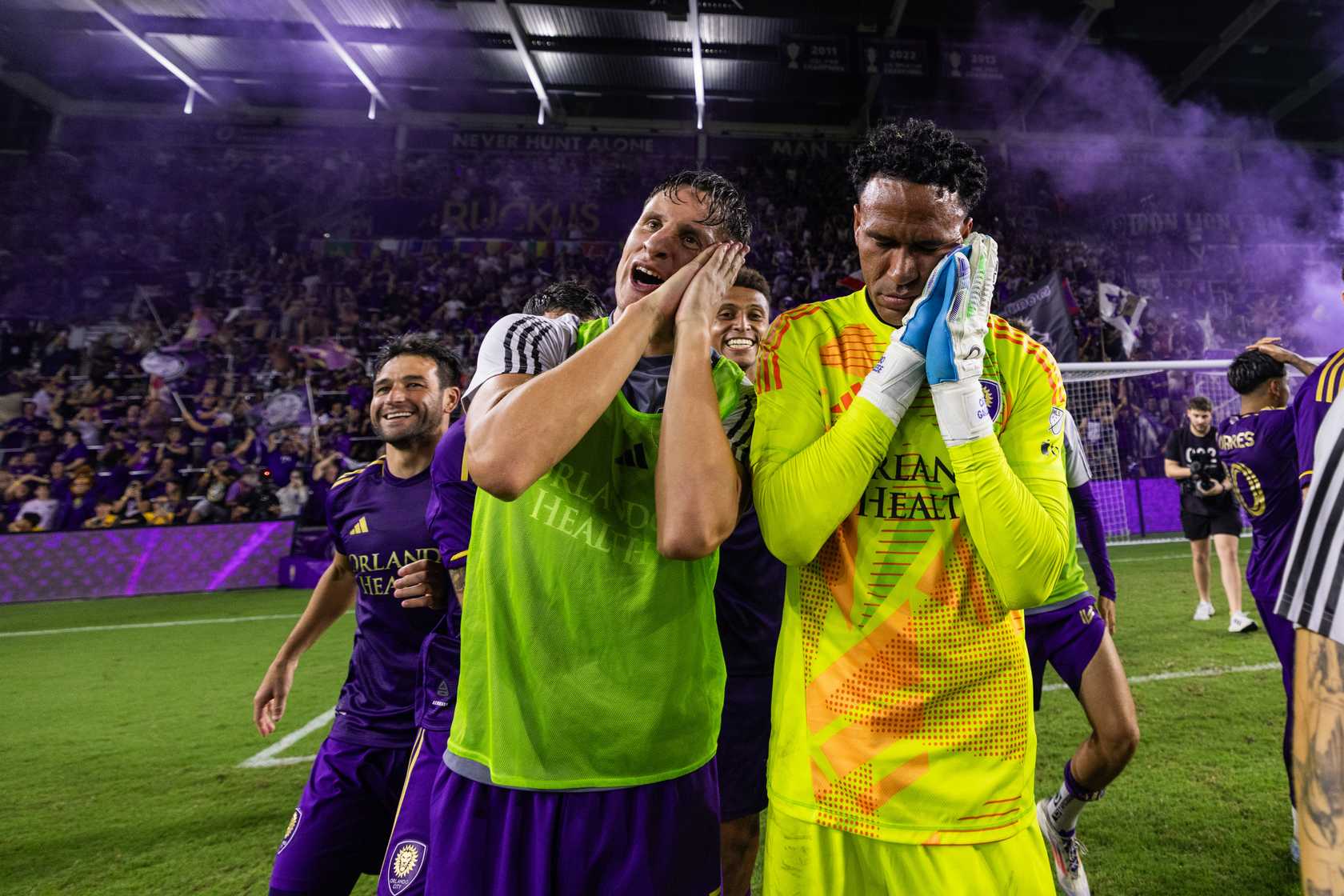
One of the more frustrating narratives surrounding Orlando City at the beginning of the season was the assertion that goalkeeper Pedro Gallese was playing poorly and was costing the Lions points. The main point of emphasis from the detractors was the Lions’ 4-2 opening day loss to the Philadelphia Union, although he also got a lot of flak for his performances against Toronto FC, and during the 2-1 loss to New York City FC. That criticism has started to get quieter in recent weeks, particularly after he made the bench of the most recent MLS Team of the Matchday, but I don’t think he was playing nearly as poorly as some people made him out to be at the start of the season, and his recent performances haven’t come out of nowhere.
So let’s talk about those two big supposed “black marks” on his 2025 resume. Most of the chatter came from the opening game against the Union, with him coming in for criticism in two instances here, and here. I want to specifically address the mention of Gallese allowing six goals on 2.9 post-shot expected goals. Listen, I don’t actually have a problem with the xG stat the way some people do, and I truly think it can be incredibly useful when used properly in certain contexts. I just don’t think the numbers tell the full story here.
Against the Union, three goals came from inside or on the edge of the six-yard box, and were one-touch finishes. Gallese realistically had no chance on two of them (the first and fourth goals), and while the other one came from an acute angle and was mostly right at him, the ball is still coming so fast and from such a short distance that it still feels a bit nitpicky to place the blame entirely on him. Yes, he arguably could have done better, but there are plenty of goalkeepers in this league that aren’t saving that.
The other goal of the night came from a Rodrigo Schlegel error and a first touch shot from the edge of the box that came as El Pulpo was already moving laterally across his goal to shift with the rest of his defense, only for the shot to be heading for the opposite side of the net. Despite the distance the shot is coming from, that one also feels harsh to blame him for in my book. Again, I love xG when it’s used properly, but I just don’t think this is a fair application, as it doesn’t take into account where Gallese is at the time of the turnover-produced shot — only the shooter’s location. I find it pretty hard to look at each one of those goals and honestly say that he should save them. To me, there’s a big difference between something a goalkeeper could do more to save and something they should do more to save.
The other two goals out of the aforementioned six came against Toronto FC, and honestly it’s hard for me to put a ton of blame on him for either of them. The first came off a corner and was a header from inside the six-yard box, and although he should maybe do better considering the angle of the shot and his placement in the goal, the final shot comes from about three yards away. I’m sorry, but that just requires excellent reaction time, and while it’s the sort of shot that we do see saved in MLS sometimes, I’m not sure it’s one that we should expect to see saved. TFC’s final goal of the night was a great strike from distance in the bottom corner that also came through a few bodies, which meant Gallese didn’t see it until fairly late on. Again, to me this is a shot that he could do more to save, but not one that he should do more to save, and that’s an important distinction.
Honestly, the most justified criticism I’ve seen probably comes from here, when speaking about the 2-1 loss to NYCFC. Gallese gave up a huge rebound for the hosts’ second and eventual game-winning goal. Frankly, it wasn’t great at all and it ended up costing Orlando City a point. That being said, he did still make seven saves in that game and kept the Lions in it with a chance to salvage a late point.
Aside from the error against NYCFC though, El Pulpo has largely been mistake free and pretty blameless for the three goals he’s conceded. One was a penalty kick against the New York Red Bulls, and the second was a one-touch finish from about three yards away which also came against the Red Bulls. Go back and watch the film, and you won’t be shocked to hear that I hold him blameless for both. The goal he surrendered against the LA Galaxy wasn’t great, as Christian Ramirez’s flick isn’t exactly traveling at light speed. But, the shot also goes the opposite way of which Gallese’s momentum is already carrying him, so that’s something to consider. Aside from the rebound against NYCFC, this is the one goal he’s given up in 2025 that I really think he should have done better with.
The Peruvian has gotten a lot of praise (and rightly so) for the three straight clean sheets he’s kept in Orlando’s last three games. He’s made 11 saves during that time and got absolutely peppered late against Montreal, when Orlando went down to 10 men (again!). But he’s been making saves all year long, and the one game he didn’t register any (the season opener), was also a game where you can make a real argument that he couldn’t have done a better job of attempting to stop the ball going in than he already did. His save percentage of 73% is 19th out of 33, which is close to bang average; and his clean sheet percentage of 37.5% is tied for ninth.
Oh, and if we want to bring post-shot expected goals back into this, then let’s look at his post-shot expected goals minus goals allowed (PSxG-GA). PSxG-GA uses expected goals to provide a stat that is based on how likely a goalkeeper is to save a shot. The number can be either positive or negative, with a positive number suggesting either a better-than-average shot-stopping ability, or a goalkeeper that’s been luckier than most. Gallese’s PSxG-GA of 1.7 is tied for 13th out of 49 goalkeepers, which ain’t half bad, is it? It’s worth mentioning that some of the rankings are skewed by keepers who only spent a small amount of time on the field and either let in a ton of goals or very few, but that’s the funny thing about raw stats — they need context.
At the end of the day, I’m not trying to sit here and say that Gallese has been flawless this season, is completely blameless for each and every one of the goals he’s conceded, and that every ounce of criticism that’s come his way has been unfair. There are absolutely goals that he should have done a better job on, but even at the time they were written, I think some of the assertions that he was a massive weak point for the Lions were overblown and not properly justified. He’s had a few shaky moments, like any keeper, but the defense in front of him wasn’t doing him any favors at times, and he was still regularly making saves to keep Orlando City in games. While it’s nice that he’s finally getting some plaudits, he’s had himself a perfectly fine 2025 season for the most part. You just have to take the time to look.



Opinion
Orlando City’s Final Playoff Push Filled with Challenges
The Lions will need to contend with a busy schedule, tricky opponents, and injury concerns while pushing to secure a playoff spot.
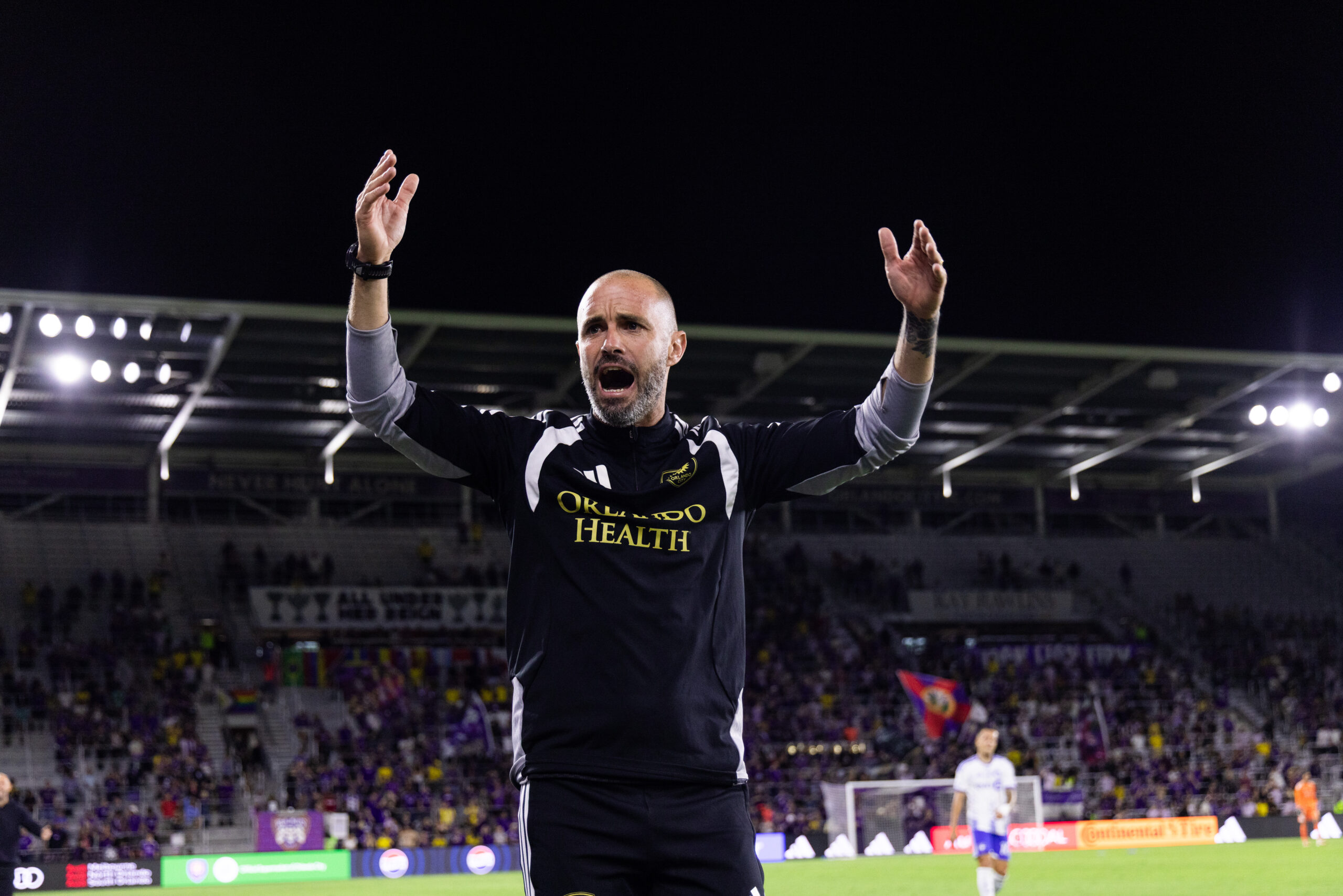
Orlando City has seven games remaining in the 2026 MLS season, which means that crunch time is officially upon us. The Lions currently sit seventh in the Eastern Conference with 34 points but are only one point ahead of FC Cincinnati in 10th place. As a result, OCSC’s final matches of the season are of massive importance, but the men in purple will need to deal with a number of different hurdles if they want to keep the longest active postseason streak in the league alive for another year.
Fixture Congestion
As has been the case with much of a season that went on a two-month break for the 2026 World Cup, Orlando City is staring down the barrel of another busy month. Of the Lions’ seven remaining matches, six will take place in a jam-packed 21-day stretch during the month of October, before Decision Day against the New England Revolution on Nov. 7. Things get started Saturday at home against the Columbus Crew, and then OCSC plays away against Toronto on Wednesday, home against D.C. United on Saturday, Oct. 17, home against New York City FC on Saturday, Oct. 24, before finishing the month with back-to-back away games against the Chicago Fire on Oct. 28, and against Charlotte FC on Halloween. While there’s an even split of home and away matches, it’s still an absolutely hellish stretch.
Fortunately, most teams are in the same boat, and there’s a week in between the home matches against D.C. and NYCFC that may help a little, but it’s still a lot of games in a short amount of time. That won’t be anything new to this team after how busy August and September were, but that doesn’t mean it’ll be any easier to deal with.
Tricky Opponents
Let’s talk more about the games themselves, specifically the teams Orlando will be up against, because it’s an interesting mix. I wouldn’t classify the set of teams that the Lions will face down the stretch as either easy or difficult. Rather, it’s a tricky bunch that should both provide some good opportunities to pick up points, while also throwing up some pretty unappetizing matchups. First up is the Crew. The bad news is that they knocked Orlando out of the U.S. Open Cup in fairly convincing fashion, but on the flip side, the game is at home and the team will be well-rested — two conditions that usually lend themselves to OCSC playing fairly well. Hitting the road to Toronto on short rest feels like a recipe for disaster, but the Reds haven’t been playing great after losing 3-0 to Orlando back in September. Then it’s another game on short rest, but it comes against a D.C. side sitting in 11th and is winless in its last three.
After that, there’s a week off before welcoming an NYCFC team that has been in the midst of a free fall down the table, and then road trips to two strong teams in Chicago and Charlotte, both of which are on short rest. The team gets a week to prepare before facing another strong side on Decision Day in the Revs.
On paper, the games against Columbus, D.C., and NYCFC feel winnable. While Orlando lost to the latter two teams on the road earlier in the year, I think this version of Orlando is better than what it was in March and April when it lost to those teams, and the Lions have been infinitely better at home than on the road.
Conversely, I’ll be thanking my lucky stars if any points are picked up from back-to-back road trips to Chicago and Charlotte on short rest, while playing the Revs on Decision Day feels like a tough task even at home.
The backdrop of all this is the fact that the six teams immediately below Orlando in the table are all within at least five points of it. Plus, the Lions play four of those six teams in NYCFC, D.C., Columbus, and Toronto. At this point in the season, every game matters, but each of those contests takes on added importance because of how much of an impact they can have on the table. Win, and you put distance between yourself and one of the teams below you. Lose, and that team reels you in a little bit more if not outright leapfrogging you altogether.
Health and Availability
While Orlando’s list of unavailable players doesn’t look nearly as bad as it has at times this season, there are still some big absences that the team will have to contend with.
For one thing, barring a run all the way to the MLS Cup final, Tyrese Spicer’s season is over after he had surgery to repair a Jones fracture in his right foot. For those of you keeping score at home, that is now the third Jones fracture suffered by an Orlando City player this season, after Robin Jansson had surgery to repair one before the season started, and Braian Ojeda went under the knife to fix one back on Aug. 6. While the attacking positions aren’t looking as thin as they once were now that Martin Ojeda is fit and Marco Pasalic is staying put, Spicer was in the midst of an excellent season and had six goals and two assists in just 869 league minutes. Not having his spark off the bench is a big miss, and it also provides less options when it comes to rotation.
Then there’s the cases of Griffin Dorsey, and more recently, Justin Ellis. Let’s start with Dorsey, who hasn’t played since going off at halftime of the 3-2 win over Atlanta United due to a back issue, and while he carried a questionable designation for Orlando’s most recent game against the Philadelphia Union, he ultimately did not play. Presumably, two extra weeks of recovery will see him ready to go this weekend, but even if he does make a much-needed return to the field, Orlando needs to be careful with managing him.
Even after missing four games through injury, Dorsey has still played the fifth-most league minutes on the team behind Ivan Angulo, Maxime Crepeau, David Brekalo, and Robin Jansson — in that order. Angulo is the type of physical specimen that should be studied in a lab, while Crepeau, Brekalo, and Jansson aren’t asked to do nearly as much running as Dorsey is when he’s healthy. The Lions’ defense hasn’t been great all season, but it was mostly doing enough to keep the team in games before the right back went onto the shelf. Without him, it’s given up 10 goals in four games across all competitions and has won just one of those contests. I understand the temptation to keep Dorsey on the field as much as possible, given what he adds both offensively and defensively, but Martin Perelman needs to use him in tandem with Zakaria Taifi or risk losing the defender for another extended period of time when Orlando can least afford it.
That brings us to Justin Ellis. If you watched the United States Men’s National Team take down Canada 1-0 on Tuesday, then you probably got an almighty scare when Ellis went down after a physical play during the first half and had to leave the field after receiving treatment. He eventually returned in style and scored the game’s only goal, but he was visibly hobbled in the minutes after he came back on, and left the stadium at halftime to have an MRI done.
While we haven’t heard any updates since then and no news is presumably good news, caution may be needed when it comes to Saturday’s match against the Crew in order to prevent the injury turning into a more long-term issue.
Outside of Spicer, Braian Ojeda, and any lingering issues for Dorsey and Ellis, the team should have a clean bill of health to begin the final run-in, so that’s good news.
At the end of the day, the home stretch of this season is not going to be easy. The Lions will need to contend with fixture congestion, games against tricky opponents that have huge implications in the standings, and the ever-present injury and availability challenges. The Eastern Conference table has razor thin margins at the moment, and there’s very little room for error. We’re about to learn a lot about what this team is really made of over the course of the next seven games, for better or worse. Here’s hoping we like what we see. Vamos Orlando!
Opinion
Orlando City Must Heed August Lessons Ahead of Crowded September
Orlando City would be wise to take the lessons it learned in August and apply them to a packed September slate.
If it feels like Orlando City has played a boatload of matches during the month of August, get ready to experience some deja vu. After playing a whopping seven games in 31 days this month, the Lions will compete six times in 30 days during September. The August slate was a mixed bag for the men in purple. The team won just two of its seven contests and looked leggy as the days drew on after returning to league play with two strong performances over the San Jose Earthquakes and Nashville SC at the end of July. There were certainly mitigating factors, as the Lions battled injuries in areas with questionable depth, but there are a few lessons that have been dished out over the past month that can hold the Lions in good stead ahead of another period of fixture congestion.
Address the Left Back Situation
Fortunately, steps have already been taken to handle the first item on our list. Left back has continuously been a problem for Orlando City this year, as Adrian Marin largely hasn’t looked at the level Orlando needs him to be. Bernardo Rhein showed enough promise to displace him and played well, but he went down injured and Martin Perelman has had to use a combination of Marin and Zakaria Taifi (a natural right back) ever since. Taifi has been inconsistent on the left, and is susceptible to being beaten down the flank and over the top at the back post, and he certainly looks more comfortable on the right than the left.
Thursday’s loan signing of left back Vinicius Nogueira gives the Lions another natural left back to work with, and his arrival will hopefully help solve the problems in that area of the field. If it doesn’t, then it might be wise to consider shifting Brekalo out wide until Rhein returns to fitness, although that solution would depend on Iago, Marin, or possibly Wilder Cartagena being able to capably deputize at center back.
Don’t Be Afraid to Rotate
While rotation in certain areas was difficult at times due to absences at times of Rhein, Marin, Braian Ojeda, Martin Ojeda, and Marco Pasalic, Orlando looked noticeably leggy as August stretched on. Antoine Griezmann has yet to come off the field in a game he’s played for the Lions, and Justin Ellis has started all but three of the nine games the team has played after the World Cup break. Considering they are currently the team’s two most dynamic players, Orlando needs them at their best, and it wasn’t surprising to see loose touches, sloppy passing, and slow decision-making start to creep in as the month drew itself out. Fortunately, Perelman has shown himself more amenable to finding rest for Ellis lately, as the youngster has played just 308 of the last possible 540 minutes since. That will need to continue in order for him to be at his best, and Griezmann almost certainly needs to start being used in a similar way so as not to risk an injury.
Mix-Up the On-Field Approach
When Orlando’s fluid, position-less style of football works, as it did against San Jose, it’s almost unstoppable. The new-look style is at its best against opponents that want to come out and attack, as it emphasizes flooding numbers forward in transition and hitting opponents on the counterattack. When it doesn’t work, in the way we saw during the first half against Real Salt Lake, it’s extremely ineffective. Players need to be fit and rested to do the level of running that’s asked of them, and against teams that are content to sit back and stack numbers behind the ball, it can be hard to create chances when the Lions lack a traditional focal point up front to play off of.
By contrast, when Daryl Dike came on in the second half of the RSL game and Griezmann shifted into midfield, OCSC looked like a completely different team that arguably should have scored more than the two goals it managed. Perelman did well to make the correct adjustments, but there needs to be a willingness to be more flexible with the lineups and approach from the opening whistle — both for rotational and strategic purposes.
In soccer, as in life, there are no guarantees of anything. With that said, if OCSC can successfully incorporate those three August takeaways into its September campaign, it should theoretically put the team in a good position to succeed. Vamos Orlando!
Opinion
Three Unlikely Players Who Could Shape the Second Half of Orlando City’s Season
Three Lions who are in position to affect Orlando’s fortunes as they start the back half of the 2026 season.
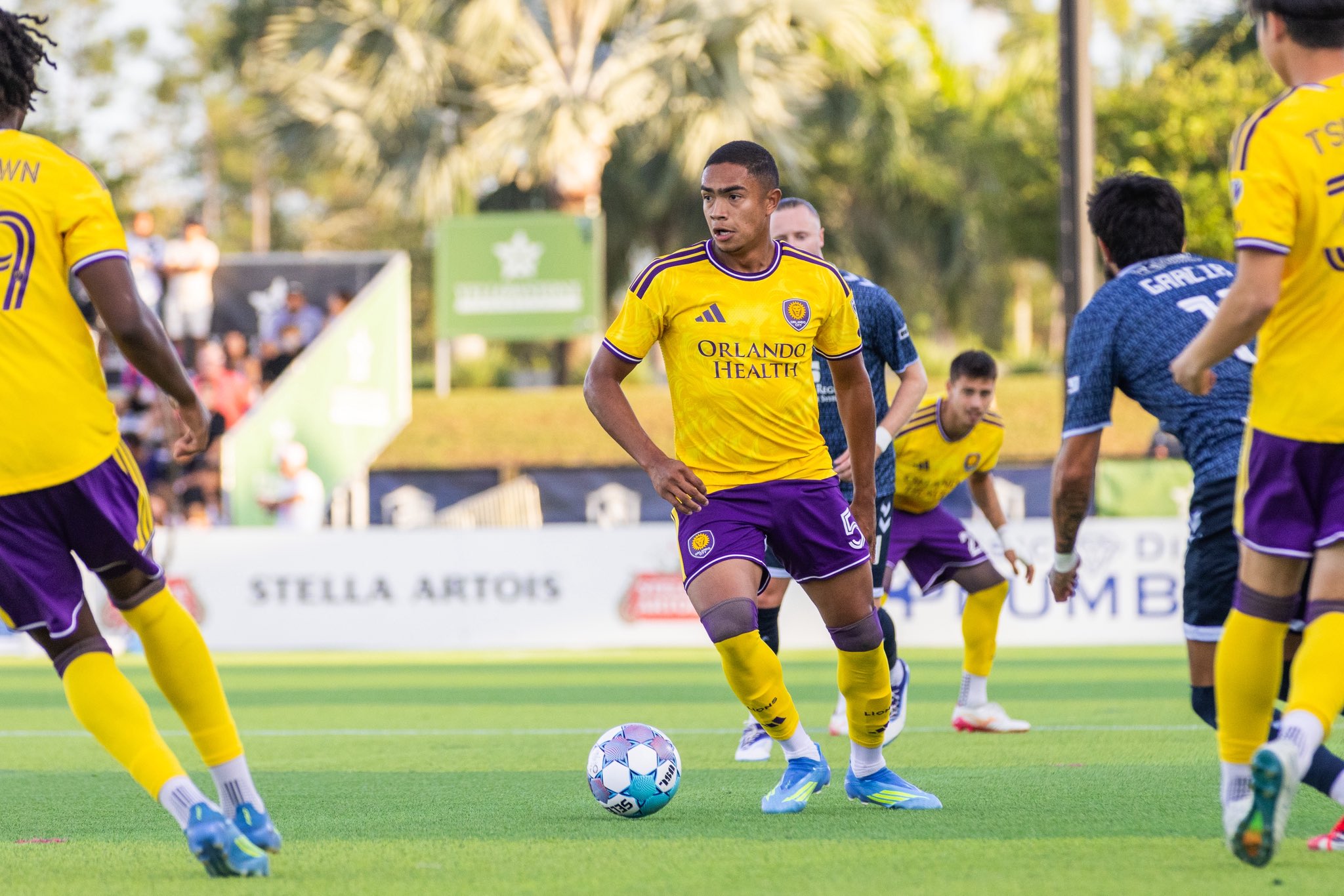
With 18 matches under its belt in Major League Soccer, Orlando City is just past the midway point of its season. Despite a horrific first few months, there’s been reason for optimism lately with improved play and some better results to go along with it. There’s still a lot of improvement that can be made, and with MLS play, Leagues Cup, and a U.S. Open Cup semifinal all on the table, there will be plenty of time to do so.
When it comes to key players for the rest of the season, there are a few usual suspects that spring to mind. Antoine Griezmann, Justin Ellis, Martin Ojeda (once he’s back from injury), Robin Jansson, and Maxime Crepeau are probably chief among those names. Rather than focus on them, I’d like to discuss a few less prominent names that could have large impacts on the remainder of the Lions’ season.
Bernardo Rhein
We start with a player who has emerged at a rapid pace in Orlando’s first four games back from the World Cup break. The 18-year-old Rhein has started two of them, and for my money he’ done enough to firmly displace Adrian Marin as the starting left back. He helped keep a clean sheet in his first start against Nashville, contributing a tackle, a clearance, an interception, and six recoveries while also providing a key pass. He then came on at halftime against the New York Red Bulls and had two interceptions, a tackle, and two key passes, while providing both an offensive and defensive upgrade over Marin after a rough outing for the Spaniard. Against Monterrey, his three completed dribbles were tied for the most in the match, and he also recorded three tackles, two interceptions, a clearance, and seven recoveries.
It hasn’t been flawless, as he can get caught out of position or have balls played over him at times, but by and large he’s looked like he’s belonged. That’s good too, because while Marin’s technical ability isn’t an issue, his physical traits are. He simply doesn’t look like he can move well enough or quickly enough to play fullback in MLS, and shy of him taking over for David Brekalo while the Slovenian reprises the left back role he’s so often held for this team, Marin should be backing up Rhein. The youngster has flashed good defending in 1-v-1 situations, and has shown himself to be capable of contributing at the other end of the field as well.
That offensive ability gives Orlando the option to overload either side of the field and provides some balance and variance in the attack that will make the Lions tougher to play against. Care will be needed to not have Rhein and Griffin Dorsey pushing forward at the same time, leaving the defense exposed, but the next player on the list can help mitigate the danger that would come from those situations.
Luis Otavio
Orlando City announced on Thursday night that Braian Ojeda has had surgery to repair a Jones fracture in his right foot. He’ll likely be on the shelf at least six to eight weeks, and the club says it expects him to be back in the fall. With Ojeda out, 19-year-old Luis Otavio likely has the inside track to his starting role in central midfield. He’s the one who took Ojeda’s place in the lineup against Monterrey, and he’s played more than Wilder Cartagena, with 13 appearances and 547 league minutes to five and 47 for the Peruvian.
After some shaky performances earlier in the year, Otavio was excellent in his two recent starts against Nashville and Monterrey — going the full 90 against the Mexican side. Against the ‘Yotes, he filled in admirably for the suspended Eduard Atuesta with three tackles, two clearances, two recoveries, and a key pass. Wednesday night saw him take over for the injured Ojeda and record three tackles, two interceptions, one clearance, and three recoveries.
So far, he hasn’t offered what Ojeda does going forward, but frankly he doesn’t really need to. With the way Ivan Angulo, Tyrese Spicer, Ellis, and Griezmann have been playing, there are plenty of creative forces on the field, and that’s without the injured Martin Ojeda. All Otavio needs to do is provide a physical and energetic presence in the middle of the field, and he’s capable of doing that. The youngster can cover a lot of ground, isn’t shy about putting in a tackle, and is generally good at doing the sort of unheralded dirty work that made Cesar Araujo so vital during his time as a Lion. It’s too soon to say for sure that Otavio will follow in the Uruguayan’s mold, but he should certainly get plenty of opportunities to do so given (Braian) Ojeda’s injury.
Daryl Dike
That brings me to Orlando’s most recent signing. Dike made his first appearance in his second stint as a Lion on Wednesday, and he showed some encouraging signs during his 20 minutes on the field. His hold-play was as good, his movement was clever, and he completed two of the three dribbles he attempted while generally being the fast and physical handful that he was before going across the pond. He’ll rue the cross that he fluffed his lines on, as a goal on his return would have been a dream, but he got himself into good areas and was extremely difficult for the Monterrey defenders to deal with.
There’s probably some rust that needs to be shaken off — a few of his runs could have been timed a little better, and while he only attempted four passes, completing just two of them leaves a little to be desired. He should get plenty of chances to build sharpness though, as the Lions have at least six more matches to play during the month of August, and he’s got a unique profile when compared to the rest of the attacking options on the team. While it’ll be tough to displace Ellis, given how he’s been playing, Dike offers an option as a target forward and could be lethal when receiving service from Orlando’s creative players.
Sean Rollins recently wrote about Orlando’s need for a dependable, goal-scoring center forward, and if Dike can rediscover the form he showed during his first stint in purple, then it could push the Lions in the right direction up the table. While the defense has been better after the World Cup break, its still shown itself to be vulnerable, and OCSC will likely find itself in need of regular goals if it wants to keep picking up results. Once Martin Ojeda returns, he and Griezmann should be able to help with that, but if Dike can share the load, then it’ll add another dimension to the team.
On the flip side, if those three guys don’t play well, then it could make life much more difficult for Orlando. If Rhein struggles, then either Marin will need to reprise his role, swap with Brekalo, or the Lions might move to a three man defense that would risk disrupting the fluid offensive style they’ve been using. Otavio not playing well would put a lot of pressure on Wilder Cartagena, Joran Gerbet, and Colin Guske — all of whom are either mostly or completely untested this year for various reasons. If Dike can’t get going again it might not be the end of the world since OCSC’s offense largely hasn’t been the problem this season, but it would deprive the Lions of a unique, difficult-to-handle option and lessen Orlando’s ability to effectively rotate.
Personally though, I think all three players will come good to some degree. Otavio and Rhein have done good things in their extended time on the field lately, and Dike looked promising on Wednesday and should get plenty of great service while also having familiar surroundings and a proven track record to hold him in good stead. Here’s hoping I’m right. Vamos Orlando!


Orlando City vs. Toronto FC: Final Score 3-3 as Road Defense Again an Issue for OCSC

Orlando City vs. Toronto FC: Preview, How to Watch, TV Info, Live Stream, Lineups, Match Thread, and More

SkoPurp Soccer Episode 142: International Pride, Houston Dash Preview, and More

Orlando City vs. Columbus Crew: Preview, How to Watch, TV Info, Live Stream, Lineups, Match Thread, and More

Orlando City vs. Columbus Crew: Final Score 3-2 as Angulo Wins It Late for the Lions

Orlando City vs. Columbus Crew: Five Takeaways


-

 Lion Links2 weeks ago
Lion Links: 9/30/26
-

 Lion Links2 weeks ago
Lion Links: 10/1/26
-

 Orlando Pride2 weeks ago
Orlando Pride vs. San Diego Wave FC: Final Score 2-1 as Pride Near Playoff Elimination with Loss
-
 Lion Links2 weeks ago
Lion Links: 10/2/26
-

 Orlando Pride2 weeks ago
Orlando Pride vs. San Diego Wave FC: Preview, How to Watch, TV Info, Live Stream, Lineups, Match Thread, and More
-

 Lion Links1 week ago
Lion Links: 10/6/26
-
 Orlando City2 weeks ago
Orlando City’s Season to Remember – For Better and Worse
-

 Orlando Pride2 weeks ago
Orlando Pride vs. San Diego Wave: Three Keys to Victory