
Opinion
Mirage vs. Reality: On the Sustainability of the San Jose Performance
Was the 4-0 win in California simply a flash in the pan, or should we expect more of the same from OCSC?

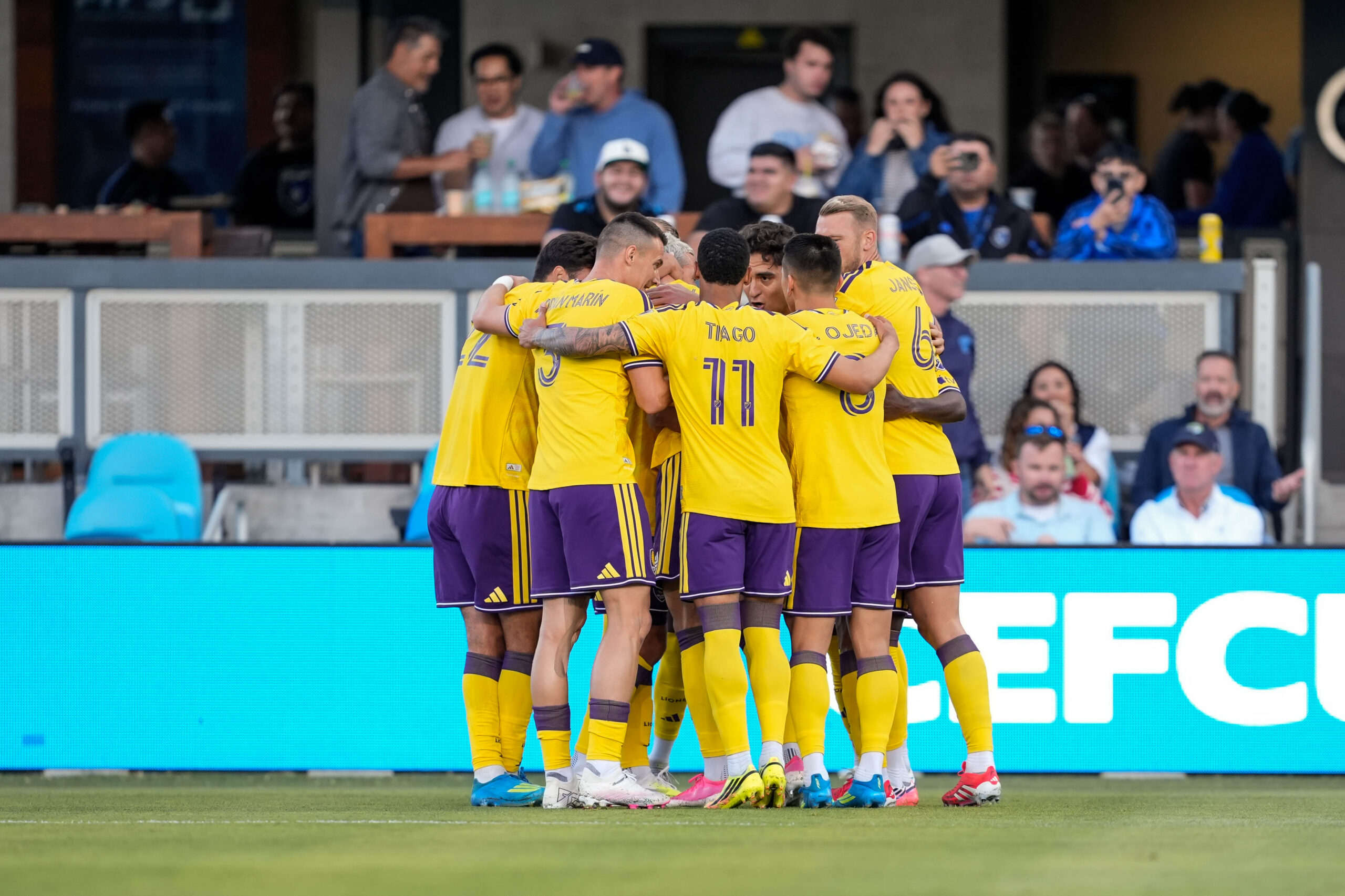
While we all no doubt missed having Orlando City games to watch during Major League Soccer’s sabbatical for the World Cup, its also probably fair to say that Wednesday’s return to action against the San Jose Earthquakes was tinged with a good deal of trepidation. After all, the Lions had been hammered 6-2 on the road by FC Cincinnati in their final match before the layoff, comfortably had the worst defense in the league, had yet to keep a clean sheet, and had given up a whopping 31 of their 44 goals conceded on the road.
It didn’t help matters that San Jose was in the top five of the Supporters’ Shield standings, was the second-best team in the Western Conference (level on points for first but edged out on goal differential), and had scored 33 goals in 15 games while giving up just 15. It’s true that the Quakes weren’t in great form before the break, winning just one of their last five, but there was still plenty of reasons to worry that Orlando would pick up where it had left off in Ohio back on May 23.
Instead, the Lions not only hammered San Jose 4-0, but arguably should have beaten the Earthquakes by an even more lopsided scoreline. The team played a fluid, position-less brand of soccer that gave the home team absolute fits, and kept a first league clean sheet of the year to boot. It was an extremely unexpected, but exceedingly welcome, performance.
The big question now, is whether it can be replicated.
Well, maybe not directly replicated, as 4-0 wins tend to be relatively uncommon occurrences for even the very best of teams. Rather, can the things that made Orlando successful on Wednesday be built upon and repeated, or was the team’s performance a flash in the pan that we shouldn’t expect to see again?
First, let’s talk about the performance itself.
The highlight was how the team looked going forward. Every player on the field not named Maxime Crepeau, Adrian Marin, Robin Jansson, or David Brekalo was constantly drifting anywhere and everywhere in the attacking half, taking up unexpected positions and rarely remaining in the position designated for them by the formation. Ivan Angulo functioned as a no.10 despite nominally playing right midfield, Justin Ellis and Antoine Griezmann could be found anywhere from the opposition’s 18-yard box to the midfield line or deeper, and the same could be said for Braian Ojeda and Eduard Atuesta. San Jose found the positional interchanging extremely difficult to deal with, especially during the first half hour of the game, but did settle in a little better after halftime.
Speaking of Ellis and Griezmann, they were terrors for their entire time on the pitch. As previously mentioned, both of them were dropping deep to receive the ball, exchanged quick passes with their teammates, and then turned to bomb forward themselves or play balls through or over the defense. That quick passing and clever movement was a theme for OCSC as a whole, but the two forwards were the best examples of it with Angulo coming a close third.
The speed of play for Orlando meant that the team had a lot of joy in transition moments, and the Lions constantly seemed to be springing players behind the defense, or running at San Jose’s defense with men in support. Only some poor execution when it came to passing and finishing in the final third prevented the good guys from putting even more goals on the board.
When it came to keeping the ball out of their own net, the Lions did several things very well. For one thing, the defense seemed to be more organized than we’ve seen it this year, aside perhaps from the U.S. Open Cup win against Atlanta. Orlando caught San Jose offside seven times on Wednesday, and on several occasions it was more down to the defense stepping together as a unit and staying in a disciplined line than it was on the Earthquakes being lazy or mistiming their runs.
When San Jose did carve out good chances, Crepeau was a towering presence in between the posts for the Lions. His seven saves will take the headlines, but there were also several instances where he was quick and smart in coming off his line to beat a San Jose runner to a ball and prevent a 1-v-1 situation. He also made several of his best saves on shots that were ultimately ruled out for offside or he almost certainly would have cracked double digits. It was a pre-eminent performance, and he looked to be brimming with confidence after a good showing for Canada at the World Cup.
Now to be objective, OCSC had some things working in its favor. San Jose was without Niko Tsarikis, who has two goals and four assists in 11 games (then again, the Lions were without Martin Ojeda, Marco Pasalic, and Daryl Dike), and the Earthquakes’ finishing was…not great. Two particular instances stood out: Beau Leroux missing wide left in the 38th minute when he was unmarked at the top of the six-yard box, and Jack Skahan touching a ball toward on onrushing Crepeau in the 57th minute rather than passing to a wide-open Ousseni Bouda for a tap-in. There were also several times when a ‘Quakes player just missed getting on the end of a ball in a dangerous area, or when bad giveaways in dangerous areas by the Lions went unpunished.
San Jose also made some unforced errors of its own, like the turnover that led to Griezmann’s goal. Then there was the set piece marking, which was atrocious. Brekalo and Ojeda were both completely unmarked for their goals, and it was shockingly bad defending for a team that hadn’t given up any set piece goals going into Wednesday’s game.
Now, what exactly should we make of all this?
Well, when it comes to what Orlando did, there’s an argument to be made that the team’s offensive performance from open play can be replicated. The team has had plenty of time to work on this position-less style of play on the training ground and was still having lots of joy with its quick passing and fluid movement even after San Jose had time to make halftime adjustments. The defense mostly held up well and stayed organized against one of the league’s more potent attacks, and when the Earthquakes did create chances, Crepeau kept up the form he showed in his last four games for Canada.
Orlando could also have benefitted from Tiago and Tyrese Spicer finishing clear-cut chances they were given by Ellis, Atuesta, and Griezmann. Martin Ojeda’s return and the addition of Dike can help chances turn into goals.
On the flip side, this is the first time anyone’s seen the Lions try to play this way, so its always going to be tougher to stop something you haven’t been able to train for. The element of surprise isn’t something that should be discounted when it comes to Wednesday. Other teams may make Orlando pay for some of the shaky moments that it had at the back, and not every team is going to make three big errors that the Lions can take advantage of.
For me, the answer lies somewhere between the two ends of the spectrum. I do not expect the Lions to look like 2008-2009 Barcelona every week, but I also don’t think its fair to say that Orlando simply benefitted from favorable circumstances and bounces. It’s perhaps best to say that OCSC did things that can be replicated, but there’s no guarantee those things will be replicated. The movement, passing, decision-making, defensive organization, and goalkeeping are things that can build a good foundation for success if Orlando can repeat them, and those are the things I’d focus on more than the number of goals or the clean sheet.
At the end of the day, we’re working on a small sample size and shouldn’t get carried away by one game, regardless of how fun it was. Wednesday’s performance wasn’t necessarily an illusion or the truth of what this team is. Rather, it was a glimpse of what this team has an opportunity to be. There’s work to be done and areas that can be improved on, but the Lions showed enough in San Jose for us to have hope for a season that’s looked hopeless more often than not. Vamos Orlando.


Opinion
Wednesday’s Decisions May Haunt Orlando City During Season’s Home Stretch
In-game decisions proved costly during Wednesday’s loss and may have an effect as the season winds down.
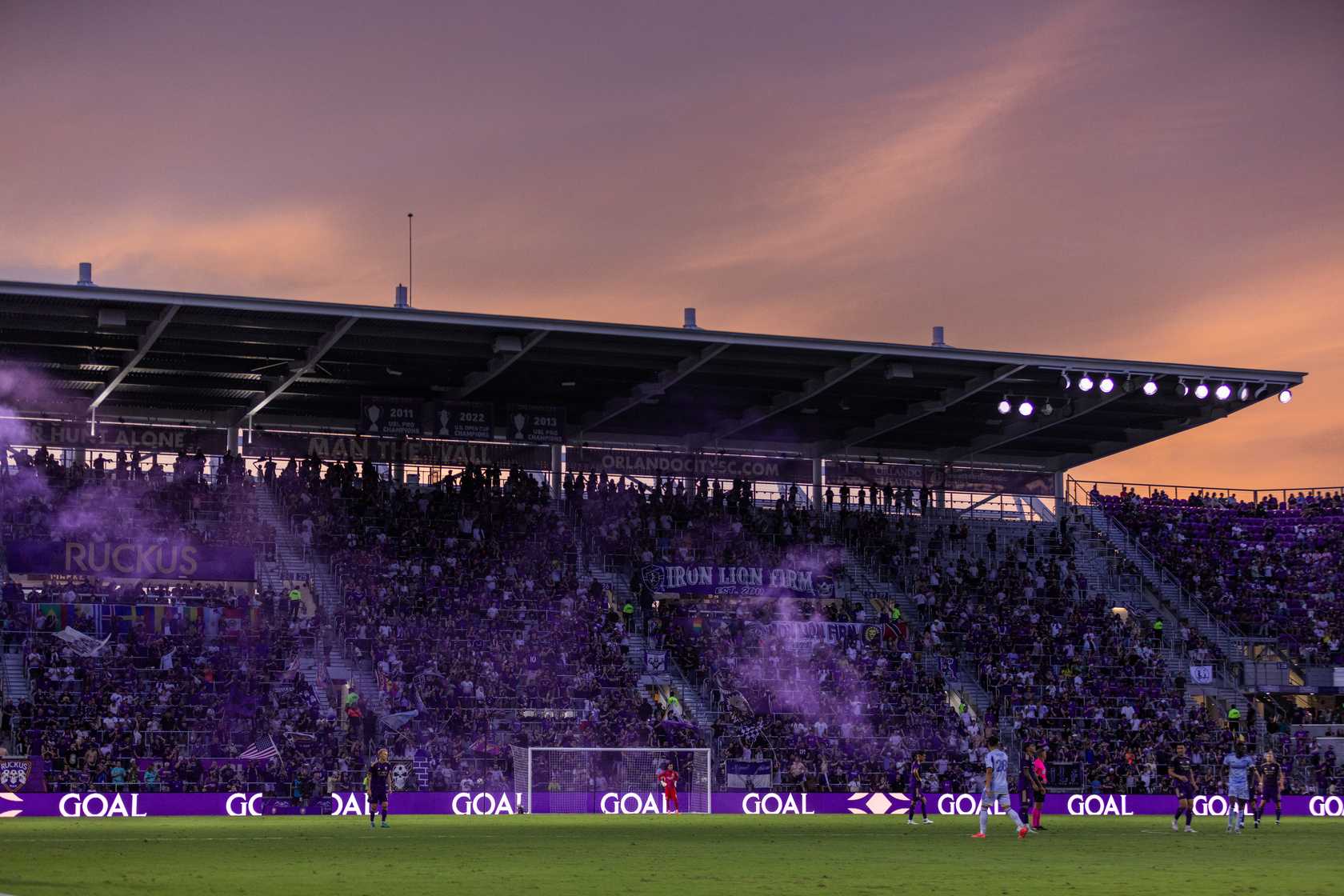
Orlando City sits seventh in the Eastern Conference, and while five points separate the Lions and the three teams immediately outside the playoff picture, things are far from comfortable. OCSC just battled one of those teams, Toronto FC, to a draw, and will welcome the other two, D.C. United and New York City FC, to Inter.co Stadium on back-to-back Saturdays.
There are six teams within six points of Orlando, and while OCSC has five more games to play, two of its opponents (FC Cincinnati and D.C. United) have a game in hand. All this is to say that at this stage of the season, small moments, decisions, and mistakes can have a huge effect on the outcome of the campaign. Wednesday’s 3-3 draw with Toronto FC provided an ample reminder of that fact.
The starting lineup for that game was an interesting one to say the least. With Robin Jansson unavailable due to a knock, and Griffin Dorsey out with a lingering back issue, Iago started next to David Brekalo at center back, while Ivan Angulo got the start at right back. I have no issue with Iago getting the start, as this roster isn’t exactly overflowing with proven options at center back. Angulo playing right back was the much more curious of Martin Perelman’s decisions for me, and not because I have anything against Angulo. He has not so quietly taken over Kyle Smith’s role as a guy who has played just about every position this year, and for the most part has done anywhere from good to serviceable in the process.
Rather, why put Angulo in that position when you have Zakaria Taifi, a right back by trade, ready and available? The 21-year-old hasn’t been perfect with the senior team this year, but he’s actually used to playing the position, and that counts for something. Angulo is at his best when using his speed to chase guys down and recover the ball, but tends to struggle defending 1-v-1 and with his defensive positioning because, well, he’s a winger by trade. Playing Taifi at fullback and Angulo in the midfield would have freed up the Colombian to make more of an impact higher up the field. Plus, the man tasked with covering when the right back went forward, Eduard Atuesta, isn’t exactly known for his defensive prowess either. Putting Angulo and Atuesta on the same side and saddling them with a lot of defensive responsibilities created a vulnerability in the Orlando lineup, and it isn’t remotely surprising that all three of Toronto’s goals either started or were finished on the Lions’ right flank.
To be fair, it’s possible that playing Taifi at right back wouldn’t have made a difference. After all, the defense has been giving away goals at an alarming rate regardless of who’s back there this season. I just struggle to get on board with the decision to not deploy a natural right back, particularly one that’s played just under 850 league minutes this year.
The other thing that stuck out to me was the substitution patterns, particularly during the later stages of the game. While I liked the decision to bring on Daryl Dike with the team chasing the game, as well as throwing Braian Ojeda on after the Lions went ahead in an attempt to inject fresh legs into the midfield, I have questions about how things went the rest of the way. For one thing, while Taifi eventually entered the game in place of Atuesta after Toronto had equalized, why not make that change immediately after Orlando took the lead? I understand wanting to keep Atuesta on while chasing a winner, but with how shaky OCSC looked on its right flank, effectively closing down the game was probably going to take more than simply bringing on Ojeda.
Then there’s the fact that two substitutions went unused altogether, basically three if you account for the fact that Atuesta came off in the fourth of five minutes of stoppage time. Orlando is in the midst of playing three games in eight days and may not have Justin Ellis or Jansson available at the weekend after both missed out on the midweek game. With a massive game against D.C. United looming large on the horizon, you want to be as fresh as possible, but Harvey Sarajian is the only player who got any meaningful sort of rest after coming off in the 67th minute. The Lions didn’t have the strongest possible bench with Tyrese Spicer, Marco Pasalic, Ellis, Jansson, and Dorsey all unavailable for various reasons, but I wouldn’t have minded seeing the likes of Joran Gerbet, Bernardo Rhein, or Tiago make appearances to spell some of the starters—especially once Dike’s goal hit the back of the net.
At the end of the day, while a road draw perhaps isn’t the worst result in the world considering the team’s struggles away from home this season, the fact that Orlando dropped two points late is brutal, however you slice it. Those two extra points would have given the Lions four points of breathing room between the Lions and the chasing pack, and to keep the majority of the starters on for so long but still end up dropping points is an extra kick in the teeth. It’ll hurt even more if the team looks tired and flat on Saturday and can’t get the job at home against a D.C. United side that’s breathing down its neck.
Of course, it’s worth pointing out that in soccer, as in life, there are no guarantees. We have no way of knowing whether starting Taifi would have fixed Orlando’s issues on the right side, or if he and other defensive subs coming on immediately after Dike’s goal would have prevented Toronto’s winner. We should have a better idea Saturday night if leaving two subs in the chamber was a bad idea, but it’s also possible that if Orlando does use all of its changes that the team doesn’t claw itself out of the 2-1 hole it was in. Regardless, I think there’s something to be said for putting yourself in the best possible position to succeed at this point in the year. I don’t think OCSC did that during Wednesday’s game, and the decisions made during that contest could well hurt the Lions on Saturday as well. Here’s hoping that isn’t the case. Vamos Orlando!
Opinion
Orlando City’s Final Playoff Push Filled with Challenges
The Lions will need to contend with a busy schedule, tricky opponents, and injury concerns while pushing to secure a playoff spot.
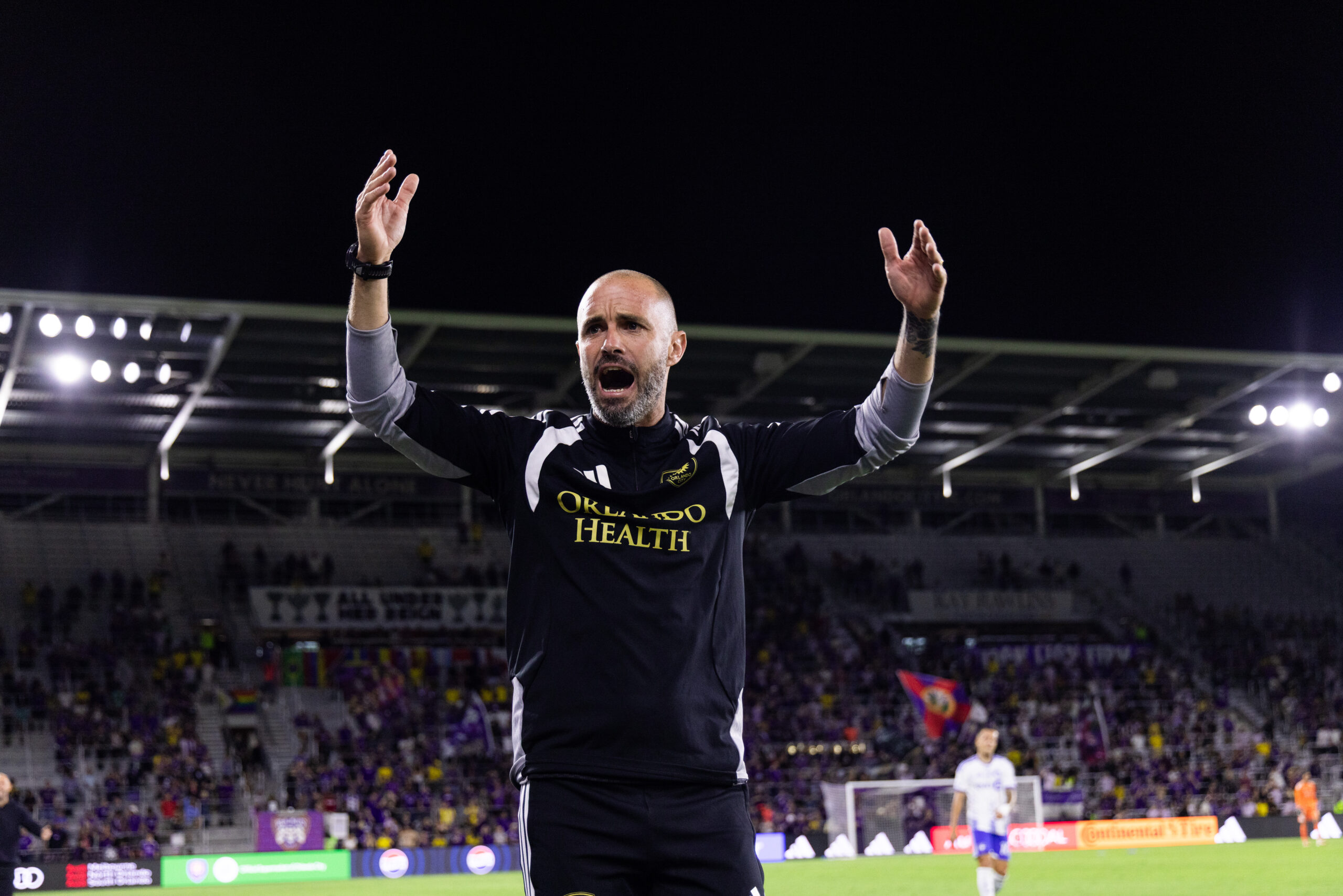
Orlando City has seven games remaining in the 2026 MLS season, which means that crunch time is officially upon us. The Lions currently sit seventh in the Eastern Conference with 34 points but are only one point ahead of FC Cincinnati in 10th place. As a result, OCSC’s final matches of the season are of massive importance, but the men in purple will need to deal with a number of different hurdles if they want to keep the longest active postseason streak in the league alive for another year.
Fixture Congestion
As has been the case with much of a season that went on a two-month break for the 2026 World Cup, Orlando City is staring down the barrel of another busy month. Of the Lions’ seven remaining matches, six will take place in a jam-packed 21-day stretch during the month of October, before Decision Day against the New England Revolution on Nov. 7. Things get started Saturday at home against the Columbus Crew, and then OCSC plays away against Toronto on Wednesday, home against D.C. United on Saturday, Oct. 17, home against New York City FC on Saturday, Oct. 24, before finishing the month with back-to-back away games against the Chicago Fire on Oct. 28, and against Charlotte FC on Halloween. While there’s an even split of home and away matches, it’s still an absolutely hellish stretch.
Fortunately, most teams are in the same boat, and there’s a week in between the home matches against D.C. and NYCFC that may help a little, but it’s still a lot of games in a short amount of time. That won’t be anything new to this team after how busy August and September were, but that doesn’t mean it’ll be any easier to deal with.
Tricky Opponents
Let’s talk more about the games themselves, specifically the teams Orlando will be up against, because it’s an interesting mix. I wouldn’t classify the set of teams that the Lions will face down the stretch as either easy or difficult. Rather, it’s a tricky bunch that should both provide some good opportunities to pick up points, while also throwing up some pretty unappetizing matchups. First up is the Crew. The bad news is that they knocked Orlando out of the U.S. Open Cup in fairly convincing fashion, but on the flip side, the game is at home and the team will be well-rested — two conditions that usually lend themselves to OCSC playing fairly well. Hitting the road to Toronto on short rest feels like a recipe for disaster, but the Reds haven’t been playing great after losing 3-0 to Orlando back in September. Then it’s another game on short rest, but it comes against a D.C. side sitting in 11th and is winless in its last three.
After that, there’s a week off before welcoming an NYCFC team that has been in the midst of a free fall down the table, and then road trips to two strong teams in Chicago and Charlotte, both of which are on short rest. The team gets a week to prepare before facing another strong side on Decision Day in the Revs.
On paper, the games against Columbus, D.C., and NYCFC feel winnable. While Orlando lost to the latter two teams on the road earlier in the year, I think this version of Orlando is better than what it was in March and April when it lost to those teams, and the Lions have been infinitely better at home than on the road.
Conversely, I’ll be thanking my lucky stars if any points are picked up from back-to-back road trips to Chicago and Charlotte on short rest, while playing the Revs on Decision Day feels like a tough task even at home.
The backdrop of all this is the fact that the six teams immediately below Orlando in the table are all within at least five points of it. Plus, the Lions play four of those six teams in NYCFC, D.C., Columbus, and Toronto. At this point in the season, every game matters, but each of those contests takes on added importance because of how much of an impact they can have on the table. Win, and you put distance between yourself and one of the teams below you. Lose, and that team reels you in a little bit more if not outright leapfrogging you altogether.
Health and Availability
While Orlando’s list of unavailable players doesn’t look nearly as bad as it has at times this season, there are still some big absences that the team will have to contend with.
For one thing, barring a run all the way to the MLS Cup final, Tyrese Spicer’s season is over after he had surgery to repair a Jones fracture in his right foot. For those of you keeping score at home, that is now the third Jones fracture suffered by an Orlando City player this season, after Robin Jansson had surgery to repair one before the season started, and Braian Ojeda went under the knife to fix one back on Aug. 6. While the attacking positions aren’t looking as thin as they once were now that Martin Ojeda is fit and Marco Pasalic is staying put, Spicer was in the midst of an excellent season and had six goals and two assists in just 869 league minutes. Not having his spark off the bench is a big miss, and it also provides less options when it comes to rotation.
Then there’s the cases of Griffin Dorsey, and more recently, Justin Ellis. Let’s start with Dorsey, who hasn’t played since going off at halftime of the 3-2 win over Atlanta United due to a back issue, and while he carried a questionable designation for Orlando’s most recent game against the Philadelphia Union, he ultimately did not play. Presumably, two extra weeks of recovery will see him ready to go this weekend, but even if he does make a much-needed return to the field, Orlando needs to be careful with managing him.
Even after missing four games through injury, Dorsey has still played the fifth-most league minutes on the team behind Ivan Angulo, Maxime Crepeau, David Brekalo, and Robin Jansson — in that order. Angulo is the type of physical specimen that should be studied in a lab, while Crepeau, Brekalo, and Jansson aren’t asked to do nearly as much running as Dorsey is when he’s healthy. The Lions’ defense hasn’t been great all season, but it was mostly doing enough to keep the team in games before the right back went onto the shelf. Without him, it’s given up 10 goals in four games across all competitions and has won just one of those contests. I understand the temptation to keep Dorsey on the field as much as possible, given what he adds both offensively and defensively, but Martin Perelman needs to use him in tandem with Zakaria Taifi or risk losing the defender for another extended period of time when Orlando can least afford it.
That brings us to Justin Ellis. If you watched the United States Men’s National Team take down Canada 1-0 on Tuesday, then you probably got an almighty scare when Ellis went down after a physical play during the first half and had to leave the field after receiving treatment. He eventually returned in style and scored the game’s only goal, but he was visibly hobbled in the minutes after he came back on, and left the stadium at halftime to have an MRI done.
While we haven’t heard any updates since then and no news is presumably good news, caution may be needed when it comes to Saturday’s match against the Crew in order to prevent the injury turning into a more long-term issue.
Outside of Spicer, Braian Ojeda, and any lingering issues for Dorsey and Ellis, the team should have a clean bill of health to begin the final run-in, so that’s good news.
At the end of the day, the home stretch of this season is not going to be easy. The Lions will need to contend with fixture congestion, games against tricky opponents that have huge implications in the standings, and the ever-present injury and availability challenges. The Eastern Conference table has razor thin margins at the moment, and there’s very little room for error. We’re about to learn a lot about what this team is really made of over the course of the next seven games, for better or worse. Here’s hoping we like what we see. Vamos Orlando!
Opinion
Orlando City Must Heed August Lessons Ahead of Crowded September
Orlando City would be wise to take the lessons it learned in August and apply them to a packed September slate.
If it feels like Orlando City has played a boatload of matches during the month of August, get ready to experience some deja vu. After playing a whopping seven games in 31 days this month, the Lions will compete six times in 30 days during September. The August slate was a mixed bag for the men in purple. The team won just two of its seven contests and looked leggy as the days drew on after returning to league play with two strong performances over the San Jose Earthquakes and Nashville SC at the end of July. There were certainly mitigating factors, as the Lions battled injuries in areas with questionable depth, but there are a few lessons that have been dished out over the past month that can hold the Lions in good stead ahead of another period of fixture congestion.
Address the Left Back Situation
Fortunately, steps have already been taken to handle the first item on our list. Left back has continuously been a problem for Orlando City this year, as Adrian Marin largely hasn’t looked at the level Orlando needs him to be. Bernardo Rhein showed enough promise to displace him and played well, but he went down injured and Martin Perelman has had to use a combination of Marin and Zakaria Taifi (a natural right back) ever since. Taifi has been inconsistent on the left, and is susceptible to being beaten down the flank and over the top at the back post, and he certainly looks more comfortable on the right than the left.
Thursday’s loan signing of left back Vinicius Nogueira gives the Lions another natural left back to work with, and his arrival will hopefully help solve the problems in that area of the field. If it doesn’t, then it might be wise to consider shifting Brekalo out wide until Rhein returns to fitness, although that solution would depend on Iago, Marin, or possibly Wilder Cartagena being able to capably deputize at center back.
Don’t Be Afraid to Rotate
While rotation in certain areas was difficult at times due to absences at times of Rhein, Marin, Braian Ojeda, Martin Ojeda, and Marco Pasalic, Orlando looked noticeably leggy as August stretched on. Antoine Griezmann has yet to come off the field in a game he’s played for the Lions, and Justin Ellis has started all but three of the nine games the team has played after the World Cup break. Considering they are currently the team’s two most dynamic players, Orlando needs them at their best, and it wasn’t surprising to see loose touches, sloppy passing, and slow decision-making start to creep in as the month drew itself out. Fortunately, Perelman has shown himself more amenable to finding rest for Ellis lately, as the youngster has played just 308 of the last possible 540 minutes since. That will need to continue in order for him to be at his best, and Griezmann almost certainly needs to start being used in a similar way so as not to risk an injury.
Mix-Up the On-Field Approach
When Orlando’s fluid, position-less style of football works, as it did against San Jose, it’s almost unstoppable. The new-look style is at its best against opponents that want to come out and attack, as it emphasizes flooding numbers forward in transition and hitting opponents on the counterattack. When it doesn’t work, in the way we saw during the first half against Real Salt Lake, it’s extremely ineffective. Players need to be fit and rested to do the level of running that’s asked of them, and against teams that are content to sit back and stack numbers behind the ball, it can be hard to create chances when the Lions lack a traditional focal point up front to play off of.
By contrast, when Daryl Dike came on in the second half of the RSL game and Griezmann shifted into midfield, OCSC looked like a completely different team that arguably should have scored more than the two goals it managed. Perelman did well to make the correct adjustments, but there needs to be a willingness to be more flexible with the lineups and approach from the opening whistle — both for rotational and strategic purposes.
In soccer, as in life, there are no guarantees of anything. With that said, if OCSC can successfully incorporate those three August takeaways into its September campaign, it should theoretically put the team in a good position to succeed. Vamos Orlando!


Orlando City vs. D.C. United: Final Score 4-1 as Griezmann Leads Lions to Win

Orlando City vs. D.C. United: Preview, How to Watch, TV Info, Live Stream, Lineups, Match Thread, and More

Wednesday’s Decisions May Haunt Orlando City During Season’s Home Stretch


-
 Opinion1 week ago
Orlando City’s Final Playoff Push Filled with Challenges
-

 Lion Links2 weeks ago
Lion Links: 10/6/26
-
 Orlando City1 week ago
Orlando City vs. Columbus Crew: Final Score 3-2 as Angulo Wins It Late for the Lions
-
 Orlando City1 week ago
Orlando City vs. Columbus Crew: Preview, How to Watch, TV Info, Live Stream, Lineups, Match Thread, and More
-
 Orlando City7 days ago
Orlando City vs. Columbus Crew: Five Takeaways
-

 Orlando Pride2 weeks ago
Loss to San Diego Exposed Orlando Pride’s Roster-Building Failures
-
 Lion Links2 weeks ago
Lion Links: 10/7/26
-
 Orlando City4 days ago
Orlando City vs. Toronto FC: Preview, How to Watch, TV Info, Live Stream, Lineups, Match Thread, and More