
Uncategorized
USL’s Identity Crisis is Baseball’s Fault

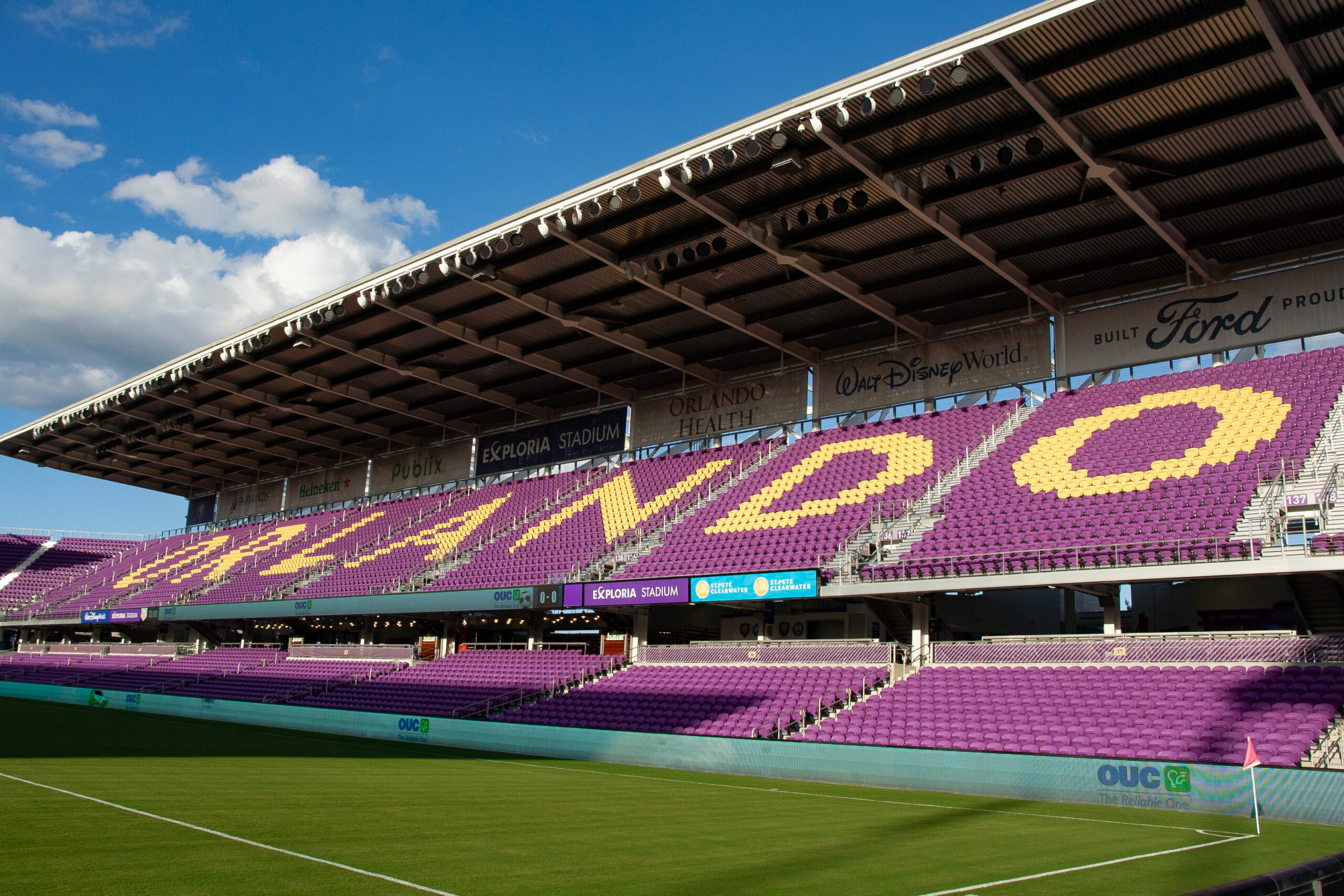
If you ask the stereotypical promotion/relegation advocate on Twitter about his thoughts on the relationship between MLS and the third-division USL, he'll probably respond with some form of the phrase, "I believe all football soccer clubs in this country deserve a chance to compete at the highest level. I believe a free and open league structure is what the United States needs to be taken seriously as a football soccer nation."
It is clear to me, now, that this is an impossibility. You can blame Branch Rickey.
I often find myself wondering about an alternate history of baseball in the United States, not simply because I like baseball, but also for soccer reasons. Baseball is the historical sport of this country, and as such it set the precedent for, and informs our opinions of, how American professional sports operate. It can also be easily paralleled with the history of soccer in England and the world at large.
Baseball wasn't always the organized machine we see today, with a neatly stacked rung of minor leagues whose members' sole purpose is to develop players for their affiliated major league clubs. Once upon a time, minor league baseball teams played in regional independent leagues across the country — such as the Western League, the Pacific Coast League, and the Missouri Valley League — as independent clubs who sold off their best prospects much in the same fashion we see from smaller soccer clubs in Europe.
This history is very similar to, for purposes of example, the history of The Football League in England. Prior to the legalized professionalism of soccer in 1885, clubs participated in local and regional competitions and the FA Cup. The Football League was founded it 1888 and, for the first four seasons, its member clubs were re-elected after each season. The concept of promotion and relegation didn't enter the fray until the League absorbed a rival league, the Football Alliance, into a second division in 1892.
In baseball, a league hierarchy only existed because of the depth of the pockets of the big leagues versus the small ones and, most importantly, a formal agreement between the the two biggest leagues — the American League and the National League — that saw them respect each others player contracts, creating a “separate but equal” status quo (this was, apparently, common practice in the country at the time) and also saw the creation of a championship between the two league champions, the World Series.
Had that agreement not taken place and the leagues instead agreed to, say, merge into two divisions, pro/rel could very well be the common practice in American sports. Incidentally, a similar scenario can be imagined for the NBA-ABA merger of 1976, but, partially because baseball is the original sport of the United States and set the precedents, things happened as they did.
Combine these events with Branch Rickey's creation of the farm system in the 1930's, and you have the historical antecedents that are causing the USL's identity crisis.
We find ourselves in an American soccer world where there are two leagues independent of one another, MLS and the NASL, and a third, the USL, that is securely in bed with the former. The USL-MLS relationship is all fine and good from the holistic perspective of creating a better American soccer player, but the problems lie in how the USL represents itself.
The party line of the USL is that each of its teams is an independent club, but in a league where eight teams will not be allowed to compete in the national cup competition due to competing interests of ownership, that hardly seems the case. I’ve covered the issues of the USL in a piece which ran about a year ago, in which I interviewed Chad Hollingsworth, American minor league soccer aficionado and proprietor of scratchingthepitch.com. I recently renewed that conversation after a fully completed season of MLS-owned clubs competing in the USL.
“I do not think that the influx of MLS-2 teams cheapens the competition,” Hollingsworth said. “S2 (Seattle Sounders) was virtually unbeatable at home. Los Dos (LA Galaxy) made a run to the championship game. Real Monarchs (Real Salt Lake) were the hottest team at the end of the season.
"Development of players for MLS teams is the primary function of MLS-2 teams, but the best development comes in a competitive environment. While results are not the ultimate goal for these teams, results provide some context for player development."
Last season, the USL was a league which allowed a college player, Derrick Etienne, to compete against full professionals. Just this week, Etienne signed an MLS Homegrown contract, making him a professional player.
JUST IN: @NewYorkRedBulls Sign Derrick Etienne, Brandon Allen as Homegrown Players #RBNY pic.twitter.com/YXxuYIlBMY
— Jason Baum (@JasonBaumPR) December 21, 2015
I believe Derrick Etienne is first MLS HGP signing who played for his club’s USL team as an amateur player. 3g,3a in 14gp this year.
— Jonathan Yardley (@jtyardley) December 21, 2015
Hollingsworth isn't troubled by the league allowing an amateur to compete, "I don't think it hurts the league's credibility," he said. "If the players are up to snuff, then it should be a positive for the league to have them in competition.
"It would be different if the MLS-2 teams trotted out 18 academy guys for every match that weren't USL-quality players. Whether the MLS staffs care about results or not, the teams are getting them. LA II was one goal from being in the championship match two years in a row."
Where does Hollingsworth see a problem? With MLS player rehab assignments and other short term loans, similar to the one Mike Magee took in a one-game loan to Saint Louis FC.
"I don't think, though, that a small number of good amateurs diminishes the credibility of the competition. I think one-match loans of lots of marginal MLS players to a USL team hurts the credibility of the league much more than amateurs."
To his point, Toronto FC II had fifteen players make five or fewer appearances for the team, five of which only made a single appearance.
Does Hollingsworth think the USL sees these identity crisis issues as important?
"I don't. I've raised some of them myself, sometimes directly to the league," he said. "I think they perceive them as non-issues.
"The goal of the USL is to make money."
Is the USL a legitimate professional competition? Or is it a league of farm teams? I believe Branch Rickey might think the latter.
Polling Closed
| Player | Votes |
| Yes. They have quality players competing to win games. | 65 |
| No. MLS owned teams, one-game loans and amateur players don’t make legitimacy. | 20 |




Orlando City
Orlando City vs. San Jose Earthquakes: Preview, How to Watch, TV Info, Live Stream, Lineups, Match Thread, and More
Orlando City restarts its 2026 MLS campaign late tonight out west at San Jose.

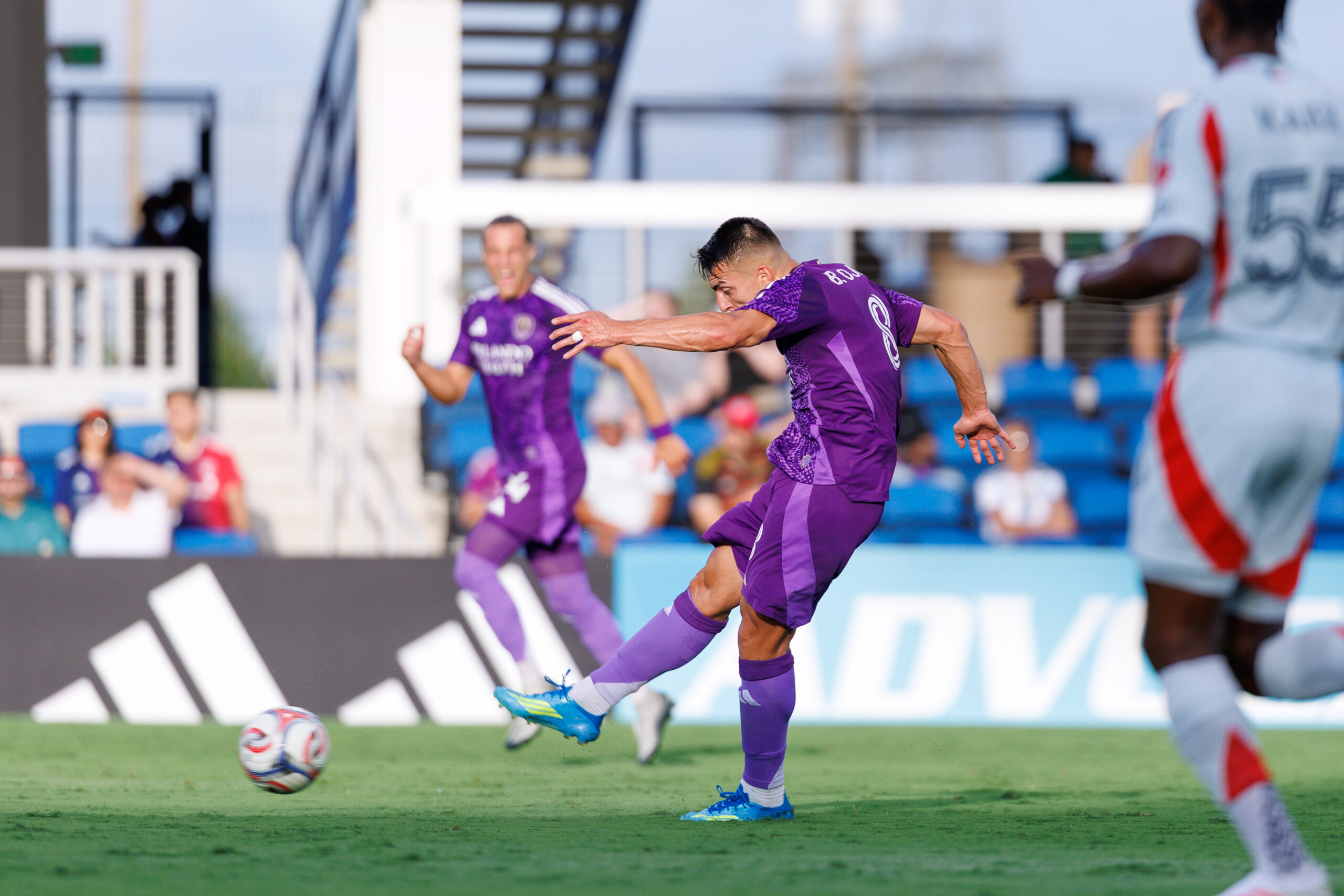
Welcome to your match thread for a late night midweek matchup tonight between Orlando City (4-9-2, 14 points) and the San Jose Earthquakes (10-3-2, 32 points) at PayPal Park (10:30 p.m., Apple TV). This is the only scheduled meeting between the teams in 2026 and the first time the teams have met since 2024.
Here’s what you need to know ahead of tonight’s match.
History
Orlando City is 3-1-3 in the previous seven MLS meetings with the Quakes since the club joined Major League Soccer in 2015. The Lions got their only away win in the series in the last meeting and enter tonight 1-1-2 on the road against San Jose.
The teams last met on May 18, 2024, with Jack Lynn coming off the bench to score the game’s only goal. Lynn’s strike in the 89th minute broke the scoreless deadlock and lifted the Lions to a 1-0 victory.
The teams met in Orlando most recently way back on June 22, 2021, with the Lions beating the Quakes down, 5-0. Orlando got things started with an early penalty kick goal by Nani, followed by braces from Benji Michel and Daryl Dike to easily put the game away. The lasting memory from the game is Michel’s celebratory dance wearing a cowboy hat that came out of the stands.
Prior to that Orlando City romp, the last time the teams met was on Aug. 31, 2019 when the Lions got freight trained 3-0 at Avaya Stadium, giving the Quakes their first win in the series. San Jose’s offense came via a Chris Wondolowski brace and an early opening goal by Magnus Eriksson. Orlando looked flat and weary out of the gate.
The Lions were victorious in Exploria Stadium in the 2018 meeting on April 21, a 3-2 Orlando win. It was the first win in the series for either side after three straight draws. Chris Mueller, Sacha Kljestan, and Dom Dwyer gave the Lions a 3-0 lead before Florian Jungwirth pulled two back in the game’s late stages.
The Lions led all of the first three matches in the second half only to see San Jose pull level, with two of those tying goals coming late. In the 2017 meeting, Carlos Rivas finally broke the scoreless tie and gave Orlando City the lead in the 81st minute, but Wondolowski spoiled the Lions’ night with an equalizer two minutes later as the teams drew at Avaya Stadium, 1-1.
In 2016, the Lions were gut-punched in the 94th minute in an emotional match that ended in a 2-2 draw. It was the first home match following the Pulse nightclub tragedy and what appeared to be a storybook ending to a cathartic win turned sour on a last-gasp equalizer by Shea Salinas. Seb Hines — now the Orlando Pride’s head coach — opened the scoring for Orlando, only to see Chad Barrett tie it up. Julio Baptista restored the lead in stoppage time, but Salinas ruined everything.
The two teams also drew in the first meeting, a 1-1 affair at Levi’s Stadium in Santa Clara, with the Lions down to 10 men after Brek Shea was sent off in the first half. Kaká and Wondolowski each scored from the penalty spot four minutes apart in that initial meeting.
Overview
The teams meet tonight to get their post-World Cup portion of the season started. Orlando City has been terrible on the road all season long, keeping only one MLS opponent under two goals all year away from home and allowing five goals twice (at New York City FC and Nashville) and six goals twice (at LAFC and in the team’s most recent match away at FC Cincinnati just before the break).
Orlando City is a putrid 1-6-1 on the road this season, and now the Lions must face the Western Conference co-leaders tonight before coming home to face Supporters’ Shield-leading Nashville SC at home on Saturday. They’ll have to play at least tonight’s game without Martin Ojeda, who is out with a thigh injury sustained some time between his first-half goal a week ago in a friendly against FC Dallas and the time the availability report dropped on Tuesday.
But it isn’t all bad news for the Lions, who should have both Antoine Griezmann and Dike in the lineup. Griezmann was the club’s highly prized and widely publicized summer Designated Player signing, while Dike’s return to Orlando came together more recently, following his departure from West Bromwich Albion. They’ll help the club’s offense, but the attack hasn’t been the issue in 2026 — it’s been the historically porous defense, which is on pace to shatter the MLS record for goals conceded.
Meanwhile, San Jose is one of the first half of the season’s biggest surprises, as the Quakes have been outstanding in 2026. Scoring 34 goals while conceding just 15, San Jose is among the league leaders in goals scored (tied for third), goals conceded (third), and goal differential (+19, third).
The Earthquakes are 4-2-1 at home and are coming off a 3-1 road win at Portland in their last game prior to the World Cup break. San Jose boasts Golden Boot challenger Preston Judd, who leads the Quakes with 11 goals, adding two assists in his 15 appearances. Ousseni Bouda has chipped in five goals and three assists. Niko Tsakiris leads the team with seven assists to go along with his two goals, but he’s still recovering from a lower body injury and is not available tonight. However, the arrival of Timo Werner (four goals and five assists in just seven games) has truly elevated Bruce Arena’s Quakes, and he’ll need to be one of the main focal points for the Orlando defense.
To have any shot at taking something from this game, the Lions will need to play better road defense than they have all season. Orlando can score goals, but with Ojeda out, Griezmann will need to adapt quickly, and someone other than the team’s leading scorer will need to find the net.
The Lions will play without Ojeda (thigh), Joran Gerbet (knee), Nolan Miller (knee), Colin Guske (international duty), and Clovis Archage (international duty). In addition, Marco Pasalic may or may not have returned to the team after the World Cup. He was not in training Monday, although interim head coach Martin Perelman said he expected the Croatian back soon. The Earthquakes will be without Nonso Adimabua (lower body), former Lion Earl Edwards Jr. (lower body), DeJuan Jones (lower body), and Tsakiris (you guessed it, lower body…come on, San Jose).
Match Content
- Our most recent PawedCast includes our key matchups and score predictions for tonight’s match.
Official Lineups:
Orlando City (4-4-2)
Goalkeeper: Maxime Crepeau.
Defenders: Adrian Marin, David Brekalo, Robin Jansson, Griffin Dorsey.
Midfielders: Ivan Angulo, Braian Ojeda, Eduard Atuesta, Tiago.
Forwards: Justin Ellis, Antoine Griezmann.
Bench: Javier Otero, Bernardo Rhein, Tahir Reid-Brown, Zakaria Taifi, Iago, Wilder Cartagena, Luis Otavio, Harvey Sarajian, Tyrese Spicer
San Jose Earthquakes (4-2-3-1)
Goalkeeper: Angus Gunn.
Defenders: Jamar Ricketts, Reid Roberts, Daniel Munie, Benjamin Kikanovic.
Defensive Midfielders: Beau Lerouox, Ronaldo Vieira.
Attacking Midfielders: Timo Werner, Nick Fernandez, Ousseni Bouda.
Forwards: Preston Judd.
Bench: Jonathan Gonzalez, Dave Romney, Paul Marie, Jack Skahan, Jack Jasinski, Ian Harkes, Francesco Montali, Max Floriani, Darius Johnson.
Referees
REF: Elijio Arreguin.
AR1: Adam Wienckowski.
AR2: Mike Nickerson.
4TH: Timothy Ford.
VAR: Jose Carlos Rivero.
AVAR: TJ Zablocki.
How to Watch
Match Time: 10:30 p.m.
Venue: PayPal Park — San Jose, CA.
TV/Live Stream: Apple TV.
Radio: AM 810 FOX Sports Radio Orlando (English), Mega 97.1 FM (Spanish), Nossa Rádio 1160 AM-WRLZ (Portuguese).
Social Media: For rapid reaction and live updates, follow us on Bluesky Social at @themaneland.bsky.social or follow Orlando City’s official Twitter (@OrlandoCitySC) or Bluesky (@OrlandoCitySC) feed.
Enjoy the match. Go City!
Podcasts
PawedCast Episode 542: Tampa Bay Friendly, McGuire Traded, OCB Beats Cincinnati, and More
Lions maul the Rowdies in friendly action, OCB wins on the road, and it’s transfer season.

Orlando City welcomed I-4 Derby rival Tampa Bay to Inter&Co Stadium for a friendly match on Wednesday and then proceeded to bludgeon the Rowdies with a couple of hammers named Antoine Griezmann and Justin Ellis. The two attackers combined for a goal and four assists in a 6-0 beatdown of the team from the Gulf Coast, with five different Lions scoring and Griffin Dorsey forcing an own goal. We discuss Griezmann’s first minutes with Orlando City, what the team showed in its formation, and how good Justin Ellis’ vision is.
Oh, and it’s also transfer season now. Duncan McGuire is on his way out and Marco Pasalic reportedly will follow soon, while a new left back may be headed from Spain to Orlando.
Following all of that, we discuss Maxime Crepeau being added to the MLS All-Star Team and the announcement that he’ll participate in the 2026 MLS All-Star Skills Challenge.
Our mailbagbox asked us about which World Cup semifinalist players we’d want to join Orlando this season (if we could only pick one), and more. Remember, if there’s anything — and we do mean anything — you want us to address on the show, just ask us by tweeting it to us at @TheManeLand with the hashtag #AskTMLPC, or hitting us up on Bluesky Social with that same hashtag.
After the mailbagbox, we dive into OCB’s 2-1 road win at FC Cincinnati 2. It wasn’t the prettiest game by the Young Lions, but they managed to do enough to earn three points on the road, where they’ll stay to face Chattanooga on Saturday. We briefly preview that game.
Finally, Orlando City will be in Dallas Wednesday for the second of two friendlies leading up to the restart of the MLS season. It’s unlikely we’ll get a lot of details about that one, but we’ll see what happens. Maybe the FC Dallas folks will help us out.
Be sure to rate and review our show wherever you get your podcasts. Remember, we’ll read any five-star reviews we get on Apple Podcasts on the next show.
If you’d like to support our independent writing and podcasting efforts, we’d love to have you as a subscriber or donor over at our Buy Me a Coffee site.
Here’s how No. 542 went down:
0:15 – Orlando City crushed the Rowdies, the transfer season is in full swing, plus: hey now, Crepeau’s an all-star.
28:50 – The mailbagbox is always good for a hypothetical scenario.
36:54 – The Young Lions slipped past Cincy and head to Chattanooga, while the senior Lions head to Dallas.
Podcasts
SkoPurp Soccer Episode 119: International Break, USWNT, Louisville Preview, and More
The Pride return from a long international break looking to get their first-ever road win against Racing Louisville.

It feels like months since the Orlando Pride last took the field, but the calendar says otherwise. If you believe calendars, it’s only been a little less than three weeks, but time moves strangely in the post-pandemic apocalyptic world.
Anyway, we don’t have a match to recap, so we touched on a couple of Pride players putting the ball in the net during the international break and chat a bit about the United States Women’s National Team’s three-game friendly series against Japan. Emma Hayes used a lot of players, and the team looked solid for two of the three matches, but the rotated middle game seemed a bit disjointed. Hayes has greatly expanded the player pool and will have plenty of options when the World Cup approaches.
Our mailbagbox had questions about a potential change in the NWSL schedule, as the league explores adopting the fall-to-spring slate, and opposition own goals. Remember, you can ask us anything by hitting us up on Twitter at either @TheManeLand or @SkoPurpSoccer and using the hashtag #AskSkoPurp. You can use that same hashtag and hit @TheManeLand.bsky.social up on Bluesky. Or you can visit our show page, scroll down, and fill out the handy form. We’d also appreciate any ratings or reviews you can leave wherever you get your podcasts, and if you do that on Apple Podcasts, we’ll find them easily and read them on the show.
After the mailbagbox, we turned our attention toward Friday’s late afternoon tussle with Racing Louisville in Kentucky. The Pride have never won on the road against Louisville, and it’s about high time they did. This match begins a congested push to the June World Cup break, and although Friday’s hosts aren’t high in the table, the Pride must be at their best to get a road result in this fixture. We look back at the series history, compare the two sides, provide our key matchups in the game, and make our final score predictions.
If you’d like to support our independent writing and podcasting efforts, we’d love to have you as a subscriber or donor over at our Buy Me a Coffee site.
Here’s how Episode 119 went down:
0:15 – We open the show with a little banter about the Pride in the international break and the USWNT’s series vs. Japan.
9:03 – The mailbagbox features questions via both eletronic mail and social media. We welcome all modes of delivery.
19:59 – The Pride travel to Louisville to face Racing. They’ve never won in Kentucky, but we inform them how to do so.


Orlando City, Orlando Pride Facing Similar Issue

Lion Links: 8/3/26

Orlando City vs. New York Red Bulls: Player Grades and Man of the Match

Orlando City vs. New York Red Bulls: Three Keys to Victory

Lion’s Share: Orlando City Will Cash In on FIFA World Cup Payouts

Orlando Pride vs. North Carolina Courage: Preview, How to Watch, TV Info, Live Stream, Lineups, Match Thread, and More


-
 Orlando City2 weeks ago
Orlando City vs. San Jose Earthquakes: Final Score 4-0 as Lions Blank Quakes in Griezmann’s Debut
-
 Orlando City2 weeks ago
Orlando City vs. San Jose Earthquakes: Preview, How to Watch, TV Info, Live Stream, Lineups, Match Thread, and More
-
 Orlando City2 weeks ago
Orlando City vs. San Jose Earthquakes: Five Takeaways
-
 Lion Links2 weeks ago
Lion Links: 7/23/26
-
 Orlando Pride1 week ago
Orlando Pride vs. Chicago Stars FC: Preview, How to Watch, TV Info, Live Stream, Lineups, Match Thread, and More
-
 Orlando City1 week ago
Orlando City vs. Nashville SC: Final Score 1-0 as Spicer’s Goal Sinks League Leaders
-
 Orlando City1 week ago
Orlando City vs. Nashville SC: Preview, How to Watch, TV Info, Live Stream, Lineups, Match Thread, and More
-
 Orlando City1 week ago
Orlando City vs. Nashville SC: Five Takeaways