
Orlando City
Orlando City vs. New York City FC: Five Takeaways

Orlando City stretched its unbeaten streak to yet another game as it drew 1-1 with NYCFC. The Lions started well but NYCFC did well to grow into the game after ferocious early pressure from OCSC.
All three points would have been the preferred result, especially based on the balance of play in the early going. NYCFC adjusted well though, and Orlando was probably missing a couple players that would have made all the difference in unlocking the Pigeons’ defense more than just the one time.
Orlando Started Well
The Lions began the game very well. Andres Perea was released inside of one minute of play, but could only fire his shot into the side netting. After that the Lions were pretty darn good for the opening half hour of the game. They controlled possession well, had several excellent passing sequences, and created several chances. The pressure paid off in the 18th minute when Chris Mueller was able to open the scoring with a very well taken header. Unfortunately, the Lions weren’t able to finish another. They weren’t able to create a ton of chances for the rest of the game but the ones they did get went wanting.
Ruan Impactful in Return
Ruan made his return to the starting lineup after not playing in OCSC’s last two matches, and he certainly made his presence felt, especially early. He completely skinned Gudmundur Thórarinsson on the right wing and put the ball perfectly on Mueller’s head for Orlando’s goal. While his offensive impact faded along with the rest of his teammates as the game went on, he displayed his incredible speed several times when tracking back and beating NYCFC players to dangerous balls. Kyle Smith was an able deputy in his absence, but the Brazilian just brings a different element to this team when he’s in the lineup, and that was on display last night.
Young Midfielders Show Well
Joey DeZart and Perea got the starts in the heart of midfield, and for the most part they played pretty well. In the first half hour they were especially good, working hard to disrupt NYCFC when the visitors had the ball, and being smart and tenacious in possession. Perea was especially good at pressing the Pigeons and caused several turnovers while DeZart used his larger frame to good effect when holding up the ball and maintaining possession during challenges by opposing players. They faded as the game went on, however, and the team’s play descended into general sloppiness. Still, they both looked like they belonged for the most part, and put in hard-working shifts.
Rowe’s Big Night
Brian Rowe…wow. He was the Man of the Match in this game, and it wasn’t particularly close. He made seven saves on the night, with three of them being of the spectacular variety. His stops in the 64th and 83rd minutes were simply as good as you’ll see, and on a night when Orlando was sloppy for the majority of the game the Lions needed him to come up big, he did. Rowe made his 100th start in Major League Soccer and he may have turned in his best performance in an Orlando shirt. Aside from his shot stopping he had safe hands when claiming crosses, commanded his box well, and distributed the ball well to his outfield players. He was absolutely excellent last night, and having a backup goalkeeper of his quality and professionalism is invaluable. I’ll be drinking many drinks in his honor.
Sloppy Night for Orlando
As mentioned before, Orlando was sloppy after starting the game well and it was the team’s undoing. After the initial half hour of mostly good play, it ranged from inconsistent to mediocre for the rest of the night. The passing became less crisp, Orlando was far less secure with the ball, and only managed two shots in the second half — a Nani free kick that was well saved by Sean Johnson, and a long-range effort from Kamal Miller. It’s true that the good guys were missing some important pieces in this game though.
In particular, Uri Rosell and Mauricio Pereyra likely would have been extremely helpful in maintaining possession, creating chances, and helping the overall fluidity of Orlando’s play. After NYCFC made adjustments during the first half hydration break, the Lions looked slightly bereft of ideas, and were simply unable to maintain their early level of play. Based on the opening 30 minutes this was a game the team should have won, and the manner in which the match ended up playing out was frustrating.
All in all though, a point is a point. The good guys’ unbeaten streak remains intact, and considering that Joao Moutinho, Rosell, Pereyra, Tesho Akindele, Benji Michel, Sebas Mendez, and Pedro Gallese were all unavailable, getting a point against one of the better teams in the East is ultimately a good thing. I’ll take the time again to spout off about how damn good Rowe was, but hopefully it won’t take a repeat performance from him to get a result against the New York Red Bulls on Sunday.



Orlando City
Orlando City vs. San Diego FC: Preview, How to Watch, TV Info, Live Stream, Lineups, Match Thread, and More
The Lions welcome San Diego FC to Orlando for the first meeting ever between the two clubs.

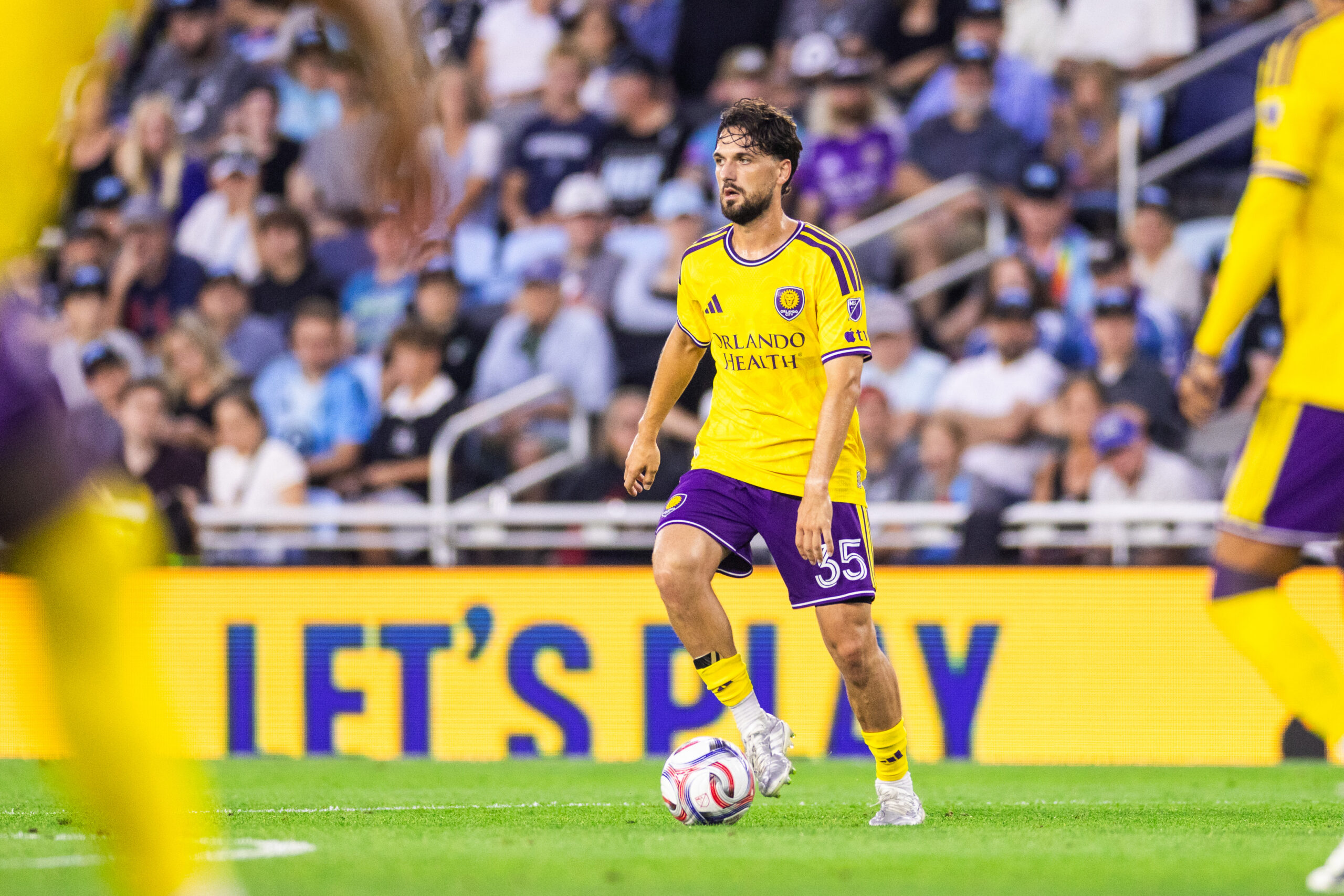
Welcome to your match preview and live thread for a Saturday night matchup between Orlando City (7-11-4, 25 points) and San Diego FC (8-8-6, 30 points) at Inter.co Stadium in Orlando (7:30 p.m., Apple TV). It’s the first-ever meeting between these two teams from different conferences
Here’s what you need to know ahead of the match.
History
As mentioned above, tonight’s meeting between the Lions and San Diego is the first in the series history, so there is no history. The Lions are 2-2-1 against Western Conference teams this season, which means little to nothing in this particular match, and San Diego is going to be Orlando City’s final opponent from the opposite conference in MLS regular-season play this season.
Overview
The Lions are coming off a wild 3-3 road draw at Minnesota United a week ago, in which Daryl Dike and Antoine Griezmann scored on either side of halftime on Orlando’s first two shot attempts to put their team up 2-0 in the 64th minute. Minnesota stormed back with three goals off defensive errors in a four-minute span to take a late 3-2 lead. Just when the Loons appeared to be headed for all three points, Tyrese Spicer scored in stoppage time, forcing Minnesota to split the points. Orlando has a modest 1-0-1 unbeaten streak entering tonight, and the Lions are 5-4-2 at home in 2026.
San Diego is coming off a 3-1 home win over the LA Galaxy despite having Jeppe Tverskov sent off. Tonight’s visitors have won two straight games, but both were at home. They lost their last home game 3-1 at Portland on Aug. 19 and are 2-5-3 away from home this season.
The key for Orlando City tonight will be to mark Anders Dreyer, which is far easier said than done, as he has emerged as one of the league’s best playmakers. His eight goals and 11 assists give him 19 total goal contributions to lead his team. Marcus Ingvartsen is Dreyer’s favorite teammate to combine with, as the Danish forward has converted 11 times, leading San Diego in goals, and has added five assists. However, Ingvartsen is listed as out with a lower body injury. Midfielder Onni Valakari has chipped in four goals and seven assists.
“We respect San Diego, but as well we prepare our game,” Orlando City interim head coach Martin Perelman said ahead of the match. “We know how strong we are, especially at home, so now we go.”
Orlando City will be without Braian Ojeda (foot) and Adrian Marin (thigh), while Bernardo Rhein (thigh), has been upgraded to questionable. San Diego will be without the aforementioned Ingvartsen (lower body) and Tverskov (suspension).
Match Content
- Our latest episode of The Mane Land PawedCast features our key match-ups and score predictions for tonight’s match.
- Our Ben Miller wrote about his three keys to an Orlando City win over San Diego.
Official Lineups:
Orlando City (4-4-2)
Goalkeeper: Maxime Crepeau.
Defenders: Bernardo Rhein, Robin Jansson, David Brekalo, Griffin Dorsey.
Midfielders: Ivan Angulo, Joran Gerbet, Eduard Atuesta, Justin Ellis.
Forwards: Antoine Griezmann, Daryl Dike.
Bench: Javier Otero, Zakaria Taifi, Iago, Wilder Cartagena, Luis Otavio, Tiago, Marco Pasalic, Martin Ojeda, Tyrese Spicer.
San Diego FC (4-3-3)
Goalkeeper: C.J. dos Santos.
Defenders: Kieran Sargeant, Ian Murphy, Manu Duah, Oscar Verhoeven.
Midfielders: Gabriel Pirani, Anibal Godoy, Alejandro Alvarado.
Forwards: Elias Achouri, Onni Valakari, Anders Dreyer.
Bench: Duran Ferree, Dagur Dan Thorhallsson, Christopher McVey, Bryan Zamble, David Vazquez, Ian Pilcher, Alex Mighten, Bryce Duke, Amahl Pellegrino.
Referees:
REF: Joe Dickerson.
AR1: Corey Parker.
AR2: Justin Howard.
4TH: Rodrigo Albuquerque.
VAR: Daniel Radford.
AVAR: Jeff Muschik.
How to Watch
Match Time: 7:30 p.m.
Venue: Inter.co Stadium — Orlando.
TV/Streaming: Apple TV.
Radio: AM 810 FOX Sports Radio Orlando (English), Mega 97.1 FM (Spanish), Nossa Rádio 1160 AM-WRLZ (Portuguese).
Social Media: For rapid reaction and live updates, follow us on Bluesky Social at @themaneland.bsky.social or follow Orlando City’s official Twitter (@OrlandoCitySC) or Bluesky (@OrlandoCitySC) feed.
Enjoy the match. Go City!
Orlando City
Orlando City vs. San Diego FC: Three Keys to Victory
Here’s what Orlando needs to do in order to return to winning ways against San Diego.

After the disappointment of two dropped points against Minnesota on Saturday, Orlando City is back home with an opportunity to get things back on track. The Lions need to keep picking up points if they want to keep pace in an increasingly crowded Eastern Conference, and Saturday’s game is a good chance to start September off on the right note. San Diego FC stands in the way of that good start, and what follows are three things that I believe Orlando needs to do in order to emerge victorious from this game.
Stay Strong on the Left
The left side of the defense has been a question mark for the Lions for much of the year. Adrian Marin, Bernardo Rhein, and Zakaria Taifi have all spent time at left back lately and have done so with varying degrees of success. Regardless of who suits up there on Saturday, that area of the field will be under scrutiny once again, since they’ll be tasked with stopping San Diego right winger Anders Dreyer. He has eight goals and 11 assists in 21 appearances this year, has played 60 key passes during that time, and is generally the lynchpin through which the San Diego offense operates. He hasn’t quite been on the same pace that saw him bag 19 goals and 19 assists in the regular season last year, but with four goal contributions in his last three MLS appearances, he’s extremely capable of wreaking havoc from the wing. A lot of the goals OCSC has conceded lately have come down the left side of the defense, and if that area of the field can’t be taken care of better, the Lions will likely be in for a difficult night.
Do Damage in Transition
Orlando’s current style of positionless, fluid, attacking soccer is at its best when it comes up against teams that want to come out and play. It struggles mightily against defensive bunkers but shines when the Lions can get out and run, target open spaces, and combine with teammates in unexpected areas. Fortunately for OCSC (in theory), San Diego is a team that likes to have the ball, as it has the highest average possession in the league. That means the Lions will have opportunities to force turnovers and break the other way at pace. In order to make that happen though, OCSC will need to be both disciplined and effective when it comes to applying its press. Then, if/when the Lions win the ball, correct decision-making and clinical execution in the final third will be key to avoid letting any chances slip through their fingers (paws?).
Clean Up the Self-Inflicted Errors
Orlando has dealt with more than its fair share of general defensive struggles this year, but avoidable errors have been a particular problem in recent weeks. Whether it’s been an ill-advised challenge, passing to the opposition in the defensive third, or leaving men unmarked in the box, unnecessary mistakes have cost OCSC points time and again. Against lesser opposition it hasn’t always mattered, as the Lions were able to rescue three points against Real Salt Lake, but if Orlando wants to make a playoff push, it needs to make a habit of playing cleaner games, plain and simple. San Diego is a good team with dangerous offensive players, and Saturday’s visitors will very likely take advantage of any opportunities that the Lions gift-wrap for them. Keeping things mistake-free will go a long way.
We’ve got ample proof this season that nothing is guaranteed, but if the Lions can lock down the left side of the defense, make hay in transition moments, and limit unforced errors, then they should be in a good position to take all three points from Saturday’s game. Vamos Orlando!
Lion Links
Lion Links: 9/4/26
Martin Ojeda details his recovery from injury, Anna Moorhouse loaned to Manchester City, Orlando City’s U.S. Open Cup journey, and more.

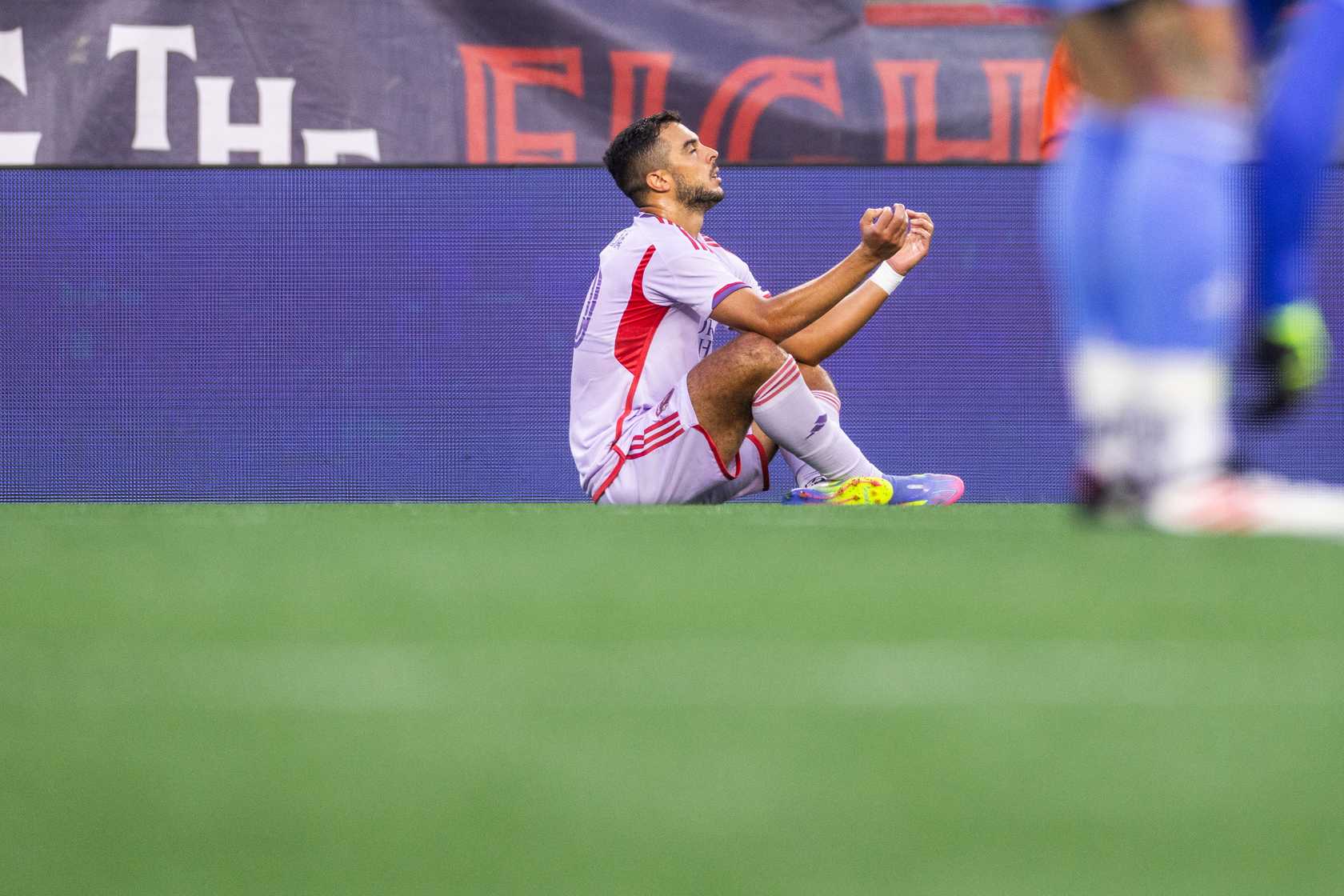
Three straight days of Orlando soccer starts tonight with Orlando City B’s road match against Inter Miami II at 7 p.m. Hopefully, Orlando’s teams do well over the next few days as crunch time is upon us when it comes to making the playoffs, especially for MLS NEXT Pro. For now though, let’s jump right into today’s links from around the soccer world!
Orlando City Prepares for San Diego FC
Orlando City will take on San Diego FC on Saturday in the first-ever game between the two clubs, and one of the storylines to keep an eye on is how much Martin Ojeda plays as he works his way back from injury. The Designated Player came off the bench late in Orlando’s 3-3 draw against Minnesota United in his first appearance since May 23. Not often injured, Ojeda spoke on how being off the field for over a month has shifted his perspective while training to return.
“You learn to value the moment much more. You learn to value every training session because, when you’re training on your own and you’re not available to your teammates, you feel uncomfortable,” Ojeda said. “You value being healthy more. It’s like everything in life. When you feel good, you live life almost on autopilot, so to speak. You go to work, you go home, you come back, you sleep. However, when you or someone close to you goes through an illness or something like that, you value the moment much more and become more conscious of what you’re experiencing.”
Pride Loan Anna Moorhouse to Manchester City
The Orlando Pride loaned goalkeeper Anna Moorhouse to Manchester City through January of 2027. Moorhouse joined the Pride prior to the 2022 season and helped the club win both the NWSL Championship and Shield in 2024. However, she has struggled this year alongside the rest of the Pride’s defense. Moorhouse hasn’t played in the past two games for the Pride, with Cosette Morche starting in her place. Her current contract with the Pride lasts through the 2027 NWSL season, so we’ll have to wait and see what her future with the club is when the loan ends.
Orlando City’s U.S. Open Cup Journey
Between the World Cup, regular season, and Leagues Cup this summer, it can be easy to forget that Orlando City is still in contention to win this year’s U.S. Open Cup. The Lions are in the semifinals of the tournament after crushing Atlanta United 4-1 in the quarterfinals back on May 19. The Lions won much tighter affairs prior to that win, with Javier Otero coming up with seven saves in a 1-0 win over FC Naples and Zakaria Taifi scoring in stoppage time to beat the New England Revolution 4-3 in the following match. Orlando will be on the road for its semifinal match against the Columbus Crew on Sept. 16, but the offense has received a boost due to the arrivals of Antoine Griezmann and Daryl Dike this summer.
MLS Transfer News Roundup
MLS signings continue to pour in as teams look to improve their squads for the rest of this season and beyond. The Colorado Rapids signed Ghanaian winger Ibrahim Sadiq from AZ Alkmaar, where he recorded 18 goals and seven assists in 85 appearances across three seasons with the Dutch club. San Diego also added an attacker by signing forward Cedric Bakambu, who joins as a free agent after playing at Real Betis. As for other notable moves from across the league, Real Salt Lake signed winger Dusan Zagar as an MLS U22 Initiative player, forward Lyle Foster joined the Houston Dynamo on loan, and the Columbus Crew continued to improve on offense by signing Moroccan winger Anass Zaroury on loan from Panathinaikos.
Free Kicks
- Former Orlando Pride player Christina Burkenroad is retiring from professional soccer and Monterrey will have Saturday’s game against Toluca be a send-off match for her.
- North Carolina Courage forward Ashley Sanchez was named NWSL Player of the Month after recording five goals and two assists in August.
- The Kansas City Current signed Cameroonian defender Maeve Nyadjou, who just helped her nation win the Women’s Africa Cup of Nations for the first time and was named 2026 WAFCON Best Young Player.
- Becky Sauerbrunn is joining the Portland Thorns as a technical consultant for the remainder of the 2026 NWSL season.
- Edin Dzeko announced that he will retire from international soccer following Bosnia and Herzegovina’s UEFA Nations League qualifier against Sweden on Oct. 2. That will be his 152nd match for Bosnia, wrapping up a 19-year-old international career that included 73 goals.
That’s all I have for you this time around. I hope you all have a fantastic Friday and rest of your weekend!


Orlando City vs. San Diego FC: Preview, How to Watch, TV Info, Live Stream, Lineups, Match Thread, and More

Orlando City B vs. Inter Miami II: Final Score 4-1 as OCB Claims Three Huge Points in South Florida

Orlando City vs. San Diego FC: Three Keys to Victory


-

 Orlando City2 weeks ago
Orlando City vs. Real Salt Lake: Final Score 2-1 as Griezmann’s Brace Lifts Lions to Win
-
 Orlando City2 weeks ago
Orlando City vs. Real Salt Lake: Preview, How to Watch, TV Info, Live Stream, Lineups, Match Thread, and More
-
 Orlando City B2 weeks ago
Orlando City B vs. Atlanta United 2: Final Score 5-1 as Young Lions Fall for Fifth Straight Time
-
 Orlando City1 week ago
Orlando City vs. Minnesota United: Preview, How to Watch, TV Info, Live Stream, Lineups, Match Thread, and More
-
 Lion Links2 weeks ago
Lion Links: 8/24/26
-
 Orlando Pride2 weeks ago
Orlando Pride vs. Washington Spirit: Preview, How to Watch, TV Info, Live Stream, Lineups, Match Thread, and More
-

 Orlando City2 weeks ago
Orlando City vs. Real Salt Lake: Five Takeaways
-

 Orlando City1 week ago
Sometimes the Solution Is Just to Sign Antoine Griezmann