
Orlando Pride
Orlando Pride Summer Transfer Window: Notable Free Agents
A look at the Pride’s roster and which players could solidify Orlando’s title aspirations by joining this summer.

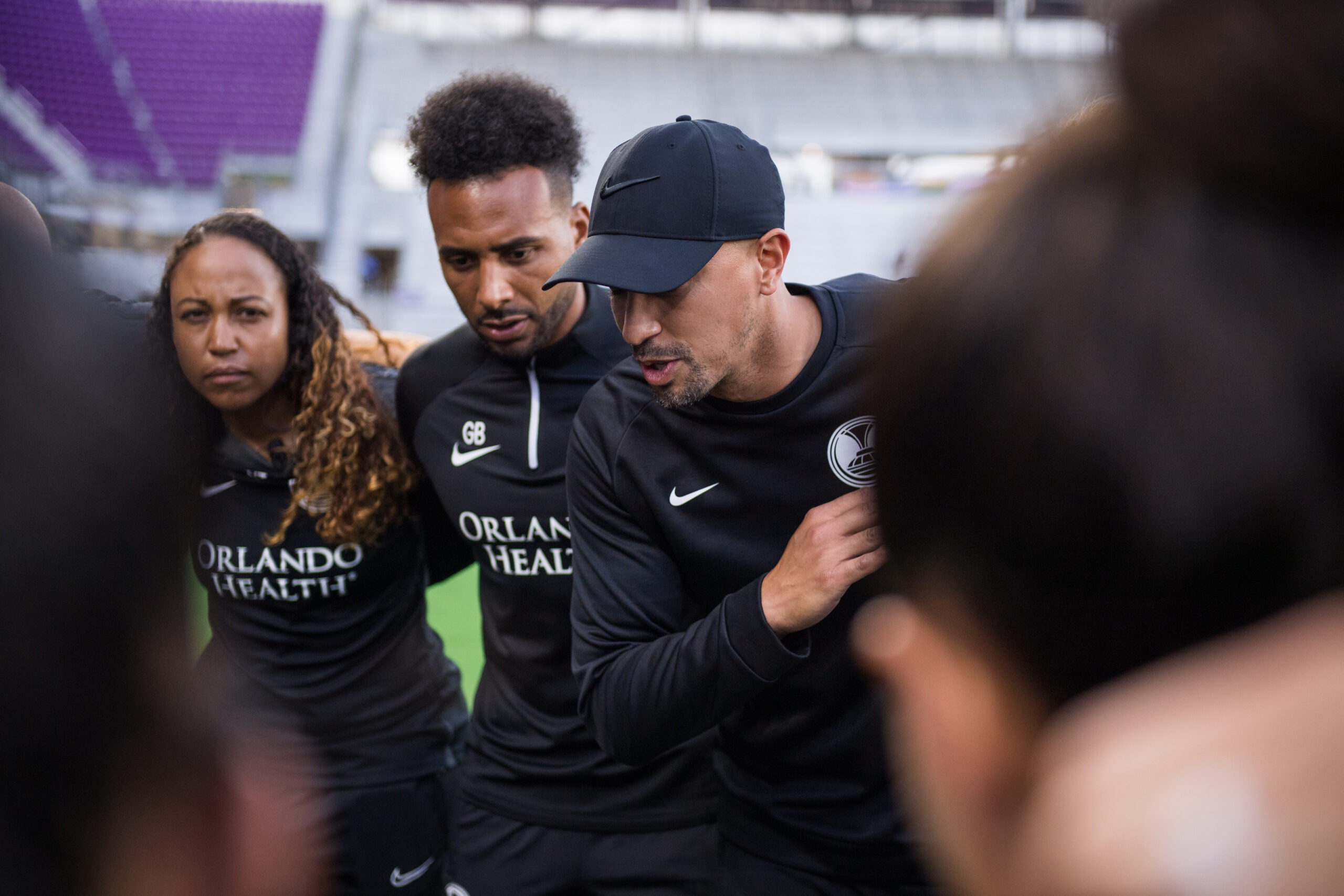
The Orlando Pride are now 12 matches into the 2024 NWSL season, and they are performing at or near the highest levels seen in the club’s history. The Pride continue to pace the league, tied for first with the Kansas City Current, but continuous improvement is required to stay at the top.
After the record-setting victory against the Portland Thorns, Marta summed up what it means to be top of the table, “we now look behind and see everyone running after us, so we just need to run [faster].”
The hard work of Orlando’s squad and coaching staff is showing on the field. Behind the scenes, Pride Vice President of Soccer Operations and General Manager Haley Carter is closely monitoring the contract situations of the top players in Europe as many seasons abroad come to a close. On that front, Carter and staff have hit the ground running this summer by securing the signature of Grace Chanda, a highly-talented Zambian attacking midfielder meant to add new dimensions to the Pride in front of goal. Even after this signing, there may be room on the roster within the salary cap to add more talent to this squad.
Current Roster and Rules
The NWSL has three key limits on roster construction by which each team must abide. The first is the salary cap, which sits at $2.75 million for 2024, double the limit from the year prior. Unfortunately, NWSL salary details are not typically reported publicly. One salary that is known is that of Barbra Banda, who earns a $525,000 annual salary after she arrived on the second-largest transfer fee in league history. Despite her price tag, the increased cap space from 2023 should leave additional room to add more top players to the roster.
The second rule is that each team was given seven international roster slots at the beginning of 2024. The Pride gained an additional slot in a trade with Utah Royals FC that included Carly Nelson, bringing their total to eight. Six of these slots are currently occupied by Luana, Amanda Allen, Barbra Banda, Grace Chanda, Evelina Duljan, and Sofia Manner, leaving the Pride with two slots remaining.
Lastly, the Pride are allowed 26 players on their active roster, a category that excludes certain players such as those with a season-ending injury (SEI). Of the 30 players on Orlando’s roster, four — Luana, Simone Charley, Megan Montefusco, and Viviana Villacorta — are on the SEI list. In the case of Villacorta, club training videos posted to social media hint that Pride fans might not have to wait too long for her return to action.
Regardless of the seemingly full roster today, Carter and staff do have levers at their disposal to create room in the squad. They may choose to loan out players in need of minutes or mutually agree to terminate the contracts of players not in the club’s current or long-term plans.
Available Free Agents and Potential Roles
Because the Pride are playing so well, it is especially tricky to find the right players to sign to add depth or upgrade a starting role. However, there are a few areas that the club could target. Listed below are several high-profile, out-of-contract players that fit these roles.
Laura Freigang – Forward
The Orlando Pride attack is currently performing at a high level, and Banda is a big reason why. Since her debut, she has scored, assisted, or drawn a penalty for 13 of the Pride’s last 15 goals. However, there has been a lack of production when Banda is not on the pitch, as Sean Rollins recently wrote. Adriana has typically been an attacking focal point for the Pride, but she has been hampered by knocks and fitness this season. To make Orlando’s attack more resilient to these absences, someone like Laura Freigang would add more goal-scoring depth to the front line and help carry the load.
Freigang is a 26-year-old German international with 27 caps to her name. For the past four seasons, she has starred for Eintracht Frankfurt in the Frauen-Bundesliga, where she scored 48 times and assisted 15 times in 82 career appearances. She pairs these creation numbers with a 76.4% pass completion percentage, making her one of the better all-around forwards in Europe.
Prior to her time in Frankfurt, she played collegiately for Penn State, sharing an alma mater with current Pride players Kerry Abello and Cori Dyke. This familiarity with the U.S., as well as the increased finances available to NWSL clubs, can make playing in the States an appealing option for Freigang, as well as other players abroad.
Julia Grosso – Attacking Midfielder
Orlando has played in a handful of different formations so far this season, sometimes to maximize a weakness that Head Coach Seb Hines sees in the opposition, and sometimes to cover gaps created by injury. The midfield has been the area of the pitch that has had to deal with the most absences, namely Luana’s season-ending illness and Angelina’s ongoing recovery from a knee injury.
As mentioned above, the Pride have already signed Chanda to add depth and versatility to the midfield. From the club’s comments when she signed, it is obvious they view her as a gifted attacker that can cover multiple positions. If the Pride do not feel they are done reinforcing the midfield, they may take a long look at Julia Grosso.
Grosso is a 23-year-old Canadian who has just completed a three-year stint at Juventus in Italy, the same club from which the Pride signed Duljan. At Juventus, Grosso featured in 50 matches, scoring nine times. Despite her young age, she already has 63 appearances for Canada, but has fallen down the pecking order as of late and there have been rumors of her moving to the NWSL to be closer to home and national team scouts.
Grosso’s passing and goal-scoring numbers are among the top for midfielders in Europe, though her defensive metrics show a player that prefers to join the attack. This profile could make her a different and intriguing option for Pride staff, depending on how they view the evolution of the midfield and the role of Chanda.
Lucy Bronze – Right Back
The Pride could improve their midfield depth in an unexpected way, by signing a new defender. In recent weeks, Hines has solved the issue of Orlando’s injured midfielders by pulling Haley McCutcheon from right back to defensive midfield and moving each member of the back line one position to the right to cover. This game of dominoes could be avoided altogether by adding another starting caliber right back and moving McCutcheon to the midfield on a more permanent basis. This could also shift the back line back to the left one space, allowing Abello to move forward.
One of the most exciting players in the world, Lucy Bronze, is out of contract at Barcelona and could be available, although she is sure to have many clubs interested in signing her. The 32-year-old English international was voted Best FIFA Women’s Player in 2020. For Barcelona, Bronze won just about every trophy possible in the past two seasons, including each of the last two UEFA Women’s Champions League, Liga F, and Spanish Supercopa trophies, as well as the most recent Copa de la Reina.
Despite all of the success, Barcelona is struggling to afford contract renewals for their top players, the same issue plaguing Barcelona’s men’s team. It is already rumored that U.S.-based clubs are interested in Bronze’s signature if she does not renew. Given that she could start for almost any club in the world, the Pride should do what they can to jump the queue for Bronze.
Sandra Panos – Goalkeeper
The last role that Orlando may consider adding is an additional goalkeeper to compete with Anna Moorhouse. While Moorhouse boasts four clean sheets and a 76% save percentage, she has been error prone in her time in Orlando, leading to crucial dropped points.
In the winter window, the Pride signed Sofia Manner to the goalkeeper position, stating they “expect [her] to challenge for the starting position,” but she has yet to make an appearance for the club. McKinley Crone has been the bench option. Manner and Crone are on one-year deals, club options notwithstanding, so the goalkeeper position is one that will need attention soon.
It just so happens that another great Barcelona player is available due to the team’s financial constraints. To truly elevate Orlando’s goalkeeping core, 31-year-old Sandra Panos would be an excellent addition. Panos spent the last nine seasons in Catalonia, but local reports have hinted at interest from teams in the U.S., England, and Mexico. Similar to Bronze, a player of this caliber cannot be ignored when they are available. It just remains to be seen if a top club in the NWSL can entice the Spanish international to cross the Atlantic for a new opportunity.



Orlando Pride
Individual Brilliance, Collective Failure: The Pride’s Lost Season
Several Pride players have standout statistics, but the team’s performance will leave the Pride short of playoff qualification.

My son joined his first real basketball team this fall, which has given me a reason to share my favorite basketball movies with him. He is not old enough for some (I’m looking at you, Above the Rim and White Men Can’t Jump), but classics like Hoosiers and Space Jam are just as watchable today as they were when they came out last century.
While Hoosiers is probably the top basketball movie on my list, Blue Chips is just behind it. The whole premise of Blue Chips (a coach looking the other way while boosters entice top “blue chip” players to come to his college by offering under-the-table deals) is not something that would be a problem in 2026, with NIL money flowing like lava to high school recruits, but back in the 1990s, those kinds of deals were against NCAA rules. The fictional Western University, which definitely was not based on UCLA, needed some elite players, quickly, and so they broke the rules to bring in three of the best high school players in the country.
There is no official definition of what defines a “blue chip” anything, but the term comes from casinos, where blue chips traditionally were the highest valued chips a player could hold.
As a mathematician, I have spent a lot of time thinking about casinos and games of chance, as all of them are based on probabilities. The end goal in a casino is to walk away with money, preferably more than the amount that you started with, just as the end goal in soccer is to walk away with points, also preferably more than the amount that you started with.
In order to do that in soccer, a team needs to score goals and prevent goals from being scored, and thankfully the American Soccer Analysis (ASA) goals added metric captures that value for us. It is a singular metric, and certainly not the only value metric that exists, but it is my favorite, because I think it does the best job of looking at the entire game of soccer and quantifying value from different components.
The overall goals added value is made up by the sum of a player’s performance in six sub-metrics, each weighted evenly. Those six sub-metrics are:
- Shooting: Shots.
- Receiving: Receptions.
- Passing: Passes.
- Dribbling: Carries, take-ons, miscontrols, dispossessions.
- Interrupting: Tackles, interceptions, blocks, clearances, recoveries, contested headers.
- Fouling: Fouls committed, fouls received.
As there is no formal definition of how to quantify a blue chip performance, I am going to use “in the top 10% at their position” as my benchmark. ASA’s data goes all the way back to 2016, conveniently the same season that the Orlando Pride joined the NWSL, and the table below reveals the number of Pride field players who finished in the top 10% of all players at their position at each sub-metric.
| Season | Dribbling | Fouling | Interrupting | Passing | Receiving | Shooting | Blue Chips |
|---|---|---|---|---|---|---|---|
| 2016 | 1 | 4 | 3 | 1 | 1 | 2 | 12 |
| 2017 | 1 | 1 | 2 | 5 | 4 | 3 | 16 |
| 2018 | 1 | 2 | 0 | 0 | 4 | 4 | 11 |
| 2019 | 1 | 2 | 3 | 2 | 2 | 1 | 11 |
| 2020* | N/A | N/A | N/A | N/A | N/A | N/A | N/A |
| 2021 | 1 | 1 | 6 | 2 | 1 | 0 | 11 |
| 2022 | 0 | 2 | 3 | 0 | 0 | 2 | 7 |
| 2023 | 3 | 2 | 1 | 3 | 3 | 3 | 15 |
| 2024 | 4 | 3 | 2 | 3 | 1 | 3 | 16 |
| 2025 | 1 | 3 | 0 | 1 | 2 | 1 | 8 |
| 2026 | 3 | 3 | 1 | 2 | 3 | 2 | 14 |
- *The Pride did not compete during the 2020 season due to COVID-19.
Unsurprisingly, the two seasons with the most blue chip performances are 2017 and 2024, the only two seasons when the Pride finished in the top three in the league table. It was a little surprising that the 2023 team had so many blue chip performances, considering that team did not make the playoffs. However, even though that team finished seventh in the table, it was just two points back from finishing fourth, and if not for an own goal by Anna Moorhouse on a poor punch attempt during the penultimate game of the season, the Pride would have finished fifth and in the playoffs. Sigh.
The current team ranks next in Pride history, with 14 blue chip performances up to this point of the season. Those 14 are the fourth-most in the NWSL this year, and the team with the most, Kansas City, only has 16.
It is disappointing that Orlando has only a sliver of a chance to make the playoffs, as the team appears likely to have squandered one of the best seasons in league history from Barbra Banda (12th-best season ever in overall goals added, and the top-ranked player in 2026). Among strikers, Banda has four blue chip performances, ranking in the top 10% in dribbling, fouling, receiving, and shooting.
Not to be outdone, Haley McCutcheon is also in the top 10% among defensive midfielders in those same four categories. McCutcheon’s six goals ties her for 24th overall in the league, and she is second on the Pride despite not playing an attacking position (well, sometimes she’s placed there, but she’s still a defensive midfielder). Her season is not as historically impressive as Banda’s (her 2026 is only 61st best among all-time defensive midfielders), but she has been the seventh- best defensive midfielder this season and is in the top 10% in four categories.
Banda and McCutcheon account for eight of the Pride’s 14 blue chip performances, the other six are:
- Zara Chavosi (center back) – Dribbling.
- Rafaelle (center back) – Fouling.
- Julie Doyle (winger) – Interrupting.
- Hailie Mace (fullback) – Passing.
- Marta (striker) – Passing.
- Hannah Anderson (center back) – Receiving.
Among those players, only Rafaelle has had a good season overall. The Brazilian ranks sixth among all center backs in 2026, the other five players, and for that matter everyone else on the team aside from McCutcheon, rank outside the top 25% at their positions.
This includes both of the Pride’s goalkeepers, as neither Moorhouse or Cosette Morché are in the top 25% for 2026. Goalkeeper has never been a strong position for the Pride in ASA’s goalkeeping metrics. Dating back to the 2016 season, there have been 84 opportunities for Pride goalkeepers to earn a blue chip rating in the six goalkeeping metrics (claiming, fielding, handling, passing, shotstopping, sweeping), and the collective has only finished in the top 10% in a category seven times.
Fans could care less about blue chip players. The only color that really matters is gold, as in the Tiffany & Co-designed NWSL trophies for the regular season and playoff champions. Blue chip players can go a long way toward helping a team win those trophies, but in the end, the team’s performance always matters the most.
The 2026 Pride will be remembered for moments of brilliance, in particular from the bluest of blue chip players in Banda, but the enduring memory will be probably be the team’s collective failure to put it all together and even qualify for the playoffs.
And that leaves all of us Pride fans feeling blue.
Orlando Pride
Loss to San Diego Exposed Orlando Pride’s Roster-Building Failures
Friday night’s loss to San Diego exposed the roster construction problems that have plagued the Pride throughout the 2026 season.

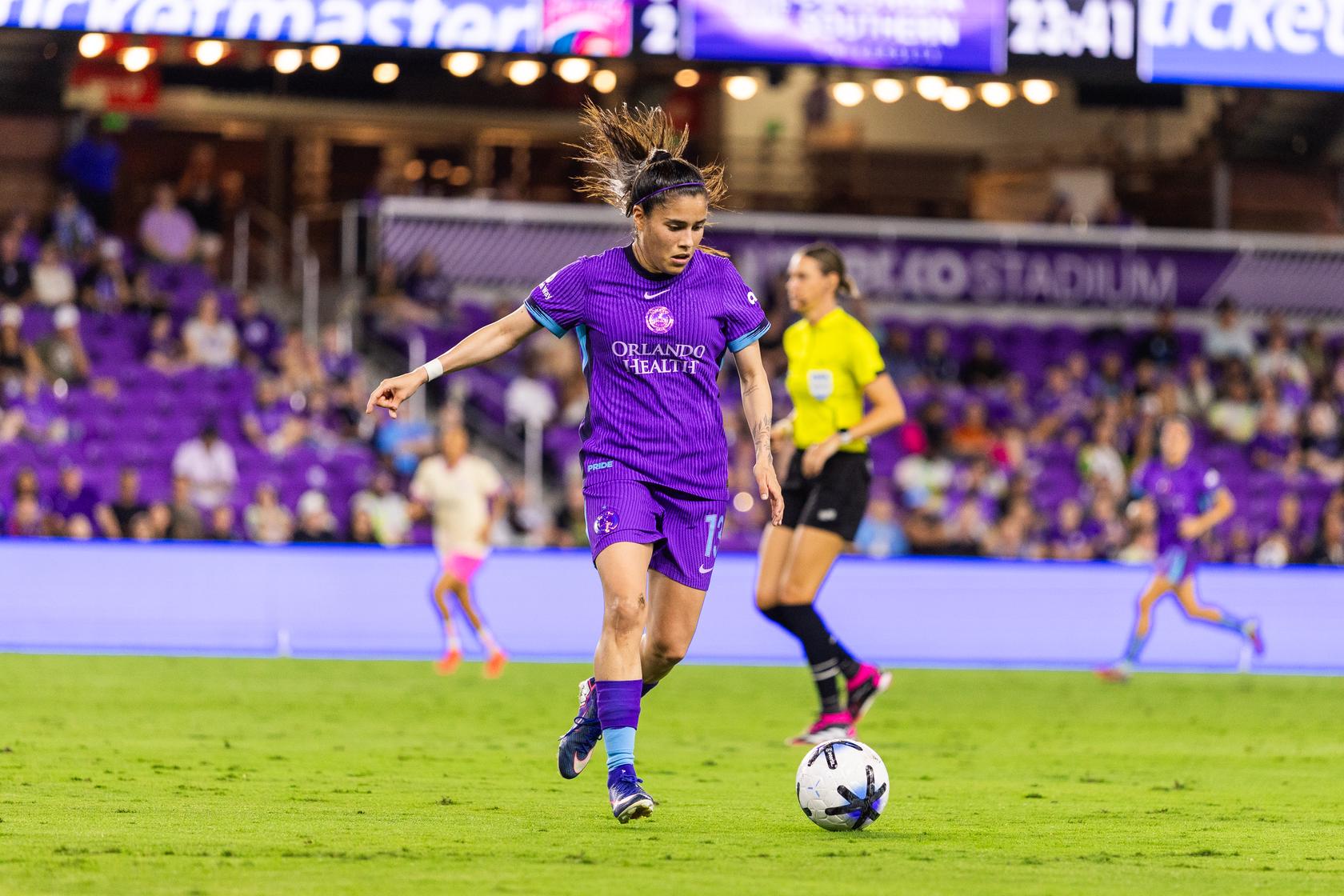
The Orlando Pride’s 2-1 loss to the San Diego Wave on Friday night was about much more than two defensive mistakes and a failure to find an equalizer. It was a snapshot of the problems that have plagued the Pride throughout the 2026 season — problems that, in many cases, were foreseeable before the season even began.
The situation at center back began changing before Caitlin Carducci ever took over as the Pride’s vice president of soccer operations and general manager. On Nov. 18, 2025, Haley Carter stepped down from her role after three seasons leading the club’s soccer operations. Carter had overseen the roster that won the NWSL Shield and Championship in 2024 and reached the 2025 NWSL semifinals. But she left before the most significant changes to the 2026 roster took place.
On Jan. 7, Kylie Nadaner announced her pregnancy, making it clear that she would miss a significant portion of the 2026 season. Two days later, Emily Sams requested a move and was traded to Angel City FC for a club-record $650,000 in intraleague transfer funds. The Pride replaced Sams by acquiring Hannah Anderson from Chicago Stars FC for $70,000. Four days after the Sams trade, on Jan. 13, Orlando hired Carducci to replace Carter.
That timeline matters. Carducci did not create the crisis at center back. She inherited it. But she also inherited a roster that had just lost Sams, knew Nadaner would miss a significant portion of the season, and had Rafaelle as the only remaining established center back from the group that had helped anchor the defense during the club’s most successful season. The question became whether the new front office could adequately address the problem before the season began.
It didn’t.
Instead, the Pride plugged Hailie Mace — typically a fullback —into central defense and spot started Anderson when the oft-injured Rafaelle was unavailable.That would have been a significant gamble even if Rafaelle had remained healthy. Instead, she’s continued to deal with injury problems that date back to 2024, including missing the majority of that season after an injury sustained with Brazil at the Olympics. Her availability has continued to be an issue, leaving the Pride without the defensive depth they needed when Nadaner and Sams were no longer options.
Friday night was the clearest example of what that meant. With Nadaner still on maternity leave and Rafaelle on the bench, Anderson started alongside right-back-turned-center-back Cori Dyke in the middle of defense.
In the 22nd minute, Anderson played a back pass that was too soft and put goalkeeper Cosette Morché in a difficult position. Morché had to come off her line to make a sliding play and, although she made the initial save, the rebound fell to Gia Corley, who finished into an empty net.
It was a mistake by Anderson, but leaving it at that misses the larger problem. Anderson shouldn’t have been the player the Pride were relying on to fill such an important role in a season when the club already knew its center back situation was going to be compromised. The problem isn’t that Anderson made a mistake. The problem is that the Pride had so little margin for error behind her.
The club had an opportunity to address that position more aggressively after Sams left and Nadaner’s absence became certain. Instead, Anderson became the primary replacement for Rafaelle, and the rest of the center back group never developed enough depth to withstand the combination of injuries and absences. That vulnerability was decisive against San Diego.
The same issue has appeared at the other end of the field, where the Pride have become increasingly dependent on Barbra Banda to provide offense. Banda has been extraordinary this season, and her performance against San Diego was another example. She won the penalty that gave her team life in the second half and then converted it herself. That means Banda has now scored 17 of Orlando’s 36 goals, accounting for 47.2% of the team’s total. Nearly half of the Pride’s goals have come from one player, an extraordinary level of dependence for a team that has struggled to produce elsewhere in the attack.
The Pride knew they needed support for Banda. They spent a world-record $1.5 million transfer fee on Aug. 21, 2025, to bring Jacquie Ovalle to Orlando, making the Mexican international the most expensive women’s soccer transfer at the time. There have been flashes from Ovalle, and she’s shown the individual quality that made her such an important player for Tigres and Mexico, but the overall production hasn’t matched the scale of the investment. Ovalle has three goals and three assists this season.
That doesn’t mean Ovalle is solely responsible for the team’s offensive problems. But the Pride also haven’t gotten the offensive return they needed from the player they acquired for a world-record fee, leaving Banda to carry an enormous share of the burden. The loss to San Diego was another example. Banda won a penalty, scored the goal, and the Pride still couldn’t produce enough to get a point.
That’s become an uncomfortable pattern for a team that entered the season expecting to compete at a much higher level. The Pride’s off-season wasn’t devoid of additions, and the club brought in players to address multiple areas of the roster while continuing to add pieces during the season. But roster construction isn’t simply about adding players. It’s about identifying where a team is vulnerable and making sure those vulnerabilities are adequately covered.
The Pride’s center back situation wasn’t a surprise. Nadaner was going to miss time. Sams was gone. Rafaelle had an injury history and turned 35 in June. Those circumstances left very little room for another injury or an extended absence. Yet, as the season has progressed, The Pride have been forced to rely on Dike and Anderson in high-leverage situations.
The attack presented a similar problem. Banda was already established as the team’s most dangerous offensive player, so the club needed other players to contribute around her. Instead, the team’s most productive attacker has scored nearly half of its goals, while the club’s record signing has produced three goals and three assists in league play.
Even more telling, Haley McCutcheon, who played right back and defensive midfielder before this season, is second on the team with six goals, but she’s scored those six goals across only four of Orlando’s 27 matches, contributing two braces and two other games with one goal each. Having a player who has spent much of her career in defensive roles emerge as the team’s second-leading scorer underscores just how little consistent attacking production the Pride have received from their more natural offensive players.
Those aren’t unrelated problems. They’re two sides of the same roster-building issue. On defense, an injury or absence forced a less-established player into a critical role. On offense, the lack of production from the supporting cast left Banda with an enormous burden.
That’s what made Friday night particularly frustrating. The Pride weren’t beaten because San Diego produced some unstoppable attacking performance. The Wave took advantage of Pride mistakes, built a 2-0 lead and forced the hosts to spend the rest of the night trying to recover.
To their credit, the Pride did respond. Banda won and converted the penalty early in the second half, and they showed the fight to get back into the game. But the team couldn’t produce the second goal it needed. Once again, the roster didn’t give enough margin for error. A defensive mistake became decisive because there weren’t enough proven options available behind Anderson. Meanwhile, the offensive deficit remained decisive because Banda couldn’t do everything herself.
A championship-caliber team needs to be able to withstand injuries, absences, and individual mistakes. It needs enough depth that losing one player doesn’t fundamentally change what the team can do, and it needs enough attacking options that opponents can’t simply focus on stopping its most dangerous player.
That’s particularly important for a team that had just brought in a general manager whose stated mandate was to build on what the club had already established. When Carducci was hired, the Pride described her as a leader with a history of building championship-caliber rosters after her work with the Kansas City Current. She arrived roughly 10 weeks before the regular season, inheriting a roster that already had significant questions to answer.
There’s certainly context to consider. Carducci didn’t choose to leave the club in November, didn’t create Nadaner’s pregnancy situation, and didn’t initiate Sams’ trade request. She also didn’t make the decision to spend a world-record fee on Ovalle, which happened while Carter was still in charge of soccer operations. But that doesn’t change the larger issue. Once Carducci took over, the center back situation was known, Rafaelle’s availability remained uncertain, and the team still needed more consistent attacking production around Banda.
The new front office knew what the issues were and had time to address them before the team’s March 15 kickoff. Yet, the same problems still persist.
Friday night’s result showed the cost of not giving the team enough depth to deal with those problems. Anderson made a costly mistake, but the Pride had placed themselves in a position where one mistake could be decisive. Banda did everything she could to bring her team back into the game, but they still didn’t have enough production around her to find an equalizer.
You can point to individual mistakes, missed chances, injuries, or bad breaks, and all of those things are part of the explanation. But when the same concerns keep appearing time after time, it becomes clearer that the roster wasn’t built to withstand them in the first place.
That’s why the loss to San Diego should be viewed as more than another disappointing result in a disappointing season. It exposed the problem that’s plagued the team since the off-season. The Pride had one of the league’s most prolific goal scorers doing almost everything possible to keep the attack alive and had players fighting to get back into a game they had fallen behind in early. But they didn’t have enough around them.
For a team that spent the previous two seasons establishing itself as a championship contender, that may be the most telling part of all.
Orlando Pride
Orlando Pride vs. San Diego Wave FC: Final Score 2-1 as Pride Near Playoff Elimination with Loss
Early Pride defensive lapses and missed attacking opportunities tilted the game in San Diego’s favor. Orlando could not overcome it.

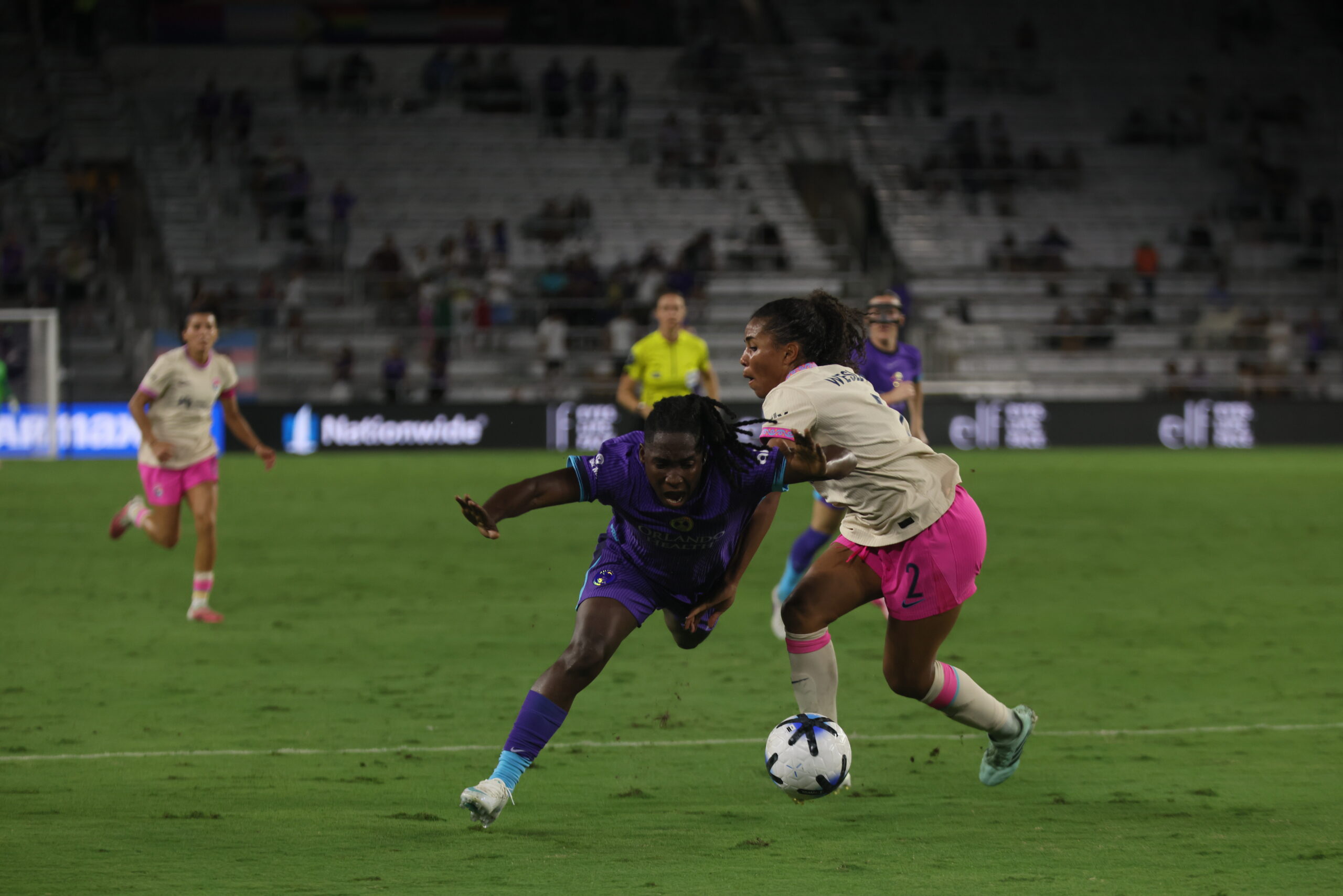
The Orlando Pride wasted some early chances and conceded two easy goals in the first half and weren’t able to fight back in a 2-1 loss to the San Diego Wave at Inter.co Stadium tonight. While other results will decide whether it was the end of the playoff chase for Orlando (10-14-3, 33 points), the Pride have no one but themselves to blame for some shoddy defending that gave the visiting Wave (16-8-3, 51 points) a lead that proved to be insurmountable.
Lia Godfrey and Gia Corley built San Diego a 2-0 lead on the road and Barbra Banda’s penalty kick pulled one back early in the second half, but the Pride could get no closer.
“Tough result for where we are. We gift them a goal early on, and then we’re kind of having to dig ourselves out,” Orlando Pride interim head coach Yolanda Thomas said after the match. “But I think there were some moments early in the game where we didn’t really control the momentum, or we weren’t given the opportunity to control the momentum. Really proud of the effort, the heart, the commitment to go get ourselves back in the game. Unfortunately, didn’t get us all the way back.”
Thomas’ lineup featured Cosette Morche in goal behind a back line of Hailie Mace, Hannah Anderson, Corey Dike, and Oihane. Angelina and Ally Lemos started in central midfield behind an attacking line of Solai Washington, Jacquie Ovalle, and Haley McCutcheon with Banda up top.
The Pride created the game’s first chance just seconds after the opening kickoff. Banda sent the ball left for Washington on a two-on-two break. Washington slowed, then cut inside her defender and shot, but her weak effort was straight at goalkeeper Sandra Panos.
“I think we need to capitalize on the chances we have, because we had really good ones early in the in the game,” Thomas said. “And if you do that, you build momentum and confidence, and probably execute a bit better in the final piece.”
It was a costly wasted opportunity, as the visitors scored just minutes later. The Pride turned the ball over in their defensive third, and Anderson knocked a cross attempt out of play for a corner. Orlando only cleared the ensuing set piece out for a throw on the left. San Diego scored off the throw-in with a simple toss in to Godfrey, who turned around Lemos, cut across the box left to right with on one on her, and fired a near-post shot past Morche.
“That first goal comes off of a throw-in that maybe individually doesn’t look like a dangerous situation, but being mentally present to to deal with with challenges, even in the moments that don’t look like the most dangerous, I think is is really key,” Thomas said.
San Diego continued to keep the pressure on after the goal for several minutes, but the Pride eventually were able to find a little rhythm. That led to a fantastic Washington cross from the left to McCutcheon entering the box on the right in the 11th minute. McCutcheon, sporting a mask to protect a broken nose from the last match, headed the cross toward goal but the Wave defense was well positioned and blocked the shot.
A minute later, Kenza Dali used her defender as a screen and fired toward the left post from outside the area but Morche picked it up in time to move over and make the save.
The back-and-forth play continued with Banda sending a weak shot from long distance hopping to Panos in the 13th minute. It was the Pride’s last shot on target of the half.
The Wave doubled their lead in the 22nd minute and it was a gift from Orlando that set it up. A poorly played and too-soft back pass by Anderson created problems and forced Morche to come off her line to make a sliding play to beat a San Diego attacker to the ball. Trinity Byars picked up the loose ball and Morche made a huge save from point-blank range. But the second rebound fell for Corley, who fired into the empty net to make it 2-0.
The Pride created a chance to pull that goal right back when Mace sent a terrific cross from the left to meet Oihane’s run on the right. The Spanish fullback had a free header but got under it and popped it well over the crossbar from just a few yards out in the 26th minute.
Banda turned and fizzed a shot wide of the right post a minute later as the Pride put together some sustained possession if not pressure.
Morche did well to scramble back to her far post to catch a dangerous deflected shot in the 31st minute.
Mace tried her luck from extreme range in the 37th minute and sent her shot well over the crossbar. The last half-chance of the half came in the 40th minute when Ovalle sent in a dangerous cross through the area from the left. It was just out of Banda’s reach, however, and went all the way through.
At the break, the Wave had the advantage in possession (58%-42%), shots on target (4-2), passing accuracy (88%-82%), and corners (1-0). Orlando attempted more shots (7-6).
Orlando pulled a goal back right after the restart. Banda got behind Kennedy Wesley in the 48th minute and the defender bundled her over from behind. Referee Alex Billeter thought about it for a couple of seconds and pointed to the spot.
Banda needed treatment from the trainers while the video assistant referee took a long look at it. The call was upheld, and although Lemos had held the ball at the spot, she turned it over to Banda to take the kick. Banda took a big run-up like she was going to smash it, but at the last moment she pulled up and placed a perfect shot just inside the right post to make it 2-1 in the 52nd minute.
The goal brought the visitors back to life, as the Wave kept a lot of sustained pressure on Orlando through the second half. San Diego, as a result, won a lot of set pieces, including a corner in the 57th minute when Morche saved a shot from Dali from just outside the area. Three minutes later, Perle Merroni fired from long range but sent her shot well over the bar.
“We had a bit of a lapse and couldn’t get a hold of the ball for a good 12-to-15-minute spell a few minutes into the second half, and we have to own that,” Thomas said. “Didn’t press the way we needed to.”
“Props to San Diego. They play really well, like really good soccer, really close connections,” second-half substitute Summer Yates added. “It makes it really hard to get pressure on the ball.”
The Pride finally got forward and won a corner moments later. Angelina sent in a good cross on the set piece but McCutcheon headed wide of the right post.
Laurina Fazer found herself in plenty of space on the left outside the area in the 63rd minute but fired just wide of the left post. Three minutes later, Byars smashed a shot toward goal and Morche made a great diving stop to push it wide. Fazer again was left alone in the 75th minute on the left side and sent a curling shot that crashed off the right post.
Neither team could do much with a few set pieces down the stretch and the Wave held on for the win.
At the final whistle, San Diego held the advantage in possession (61.1%-38.9%), shots (15-11), shots on target (6-3), passing accuracy (86.5%-78%), and corners (6-2).
“Obviously disappointing,” Yates said about the result. “I know we’re like trying to make playoffs, so we need every win we can, and this puts us in a little bit of a pickle of we don’t know if we’re going to make it or not, which is really disappointing because I think this group has worked their butt off all year.”
The Pride may be officially eliminated this weekend depending on results elsewhere around the league, but realistically, the 2026 playoff chase is over barring something truly remarkable.
The Pride are off next weekend for the international break, returning to NWSL play on Oct. 18 when they visit the Houston Dash.

Individual Brilliance, Collective Failure: The Pride’s Lost Season

Orlando City vs. Toronto FC: Five Takeaways

Lion Links: 10/15/26


-
 Lion Links2 weeks ago
Lion Links: 10/1/26
-

 Orlando Pride2 weeks ago
Orlando Pride vs. San Diego Wave FC: Final Score 2-1 as Pride Near Playoff Elimination with Loss
-

 Orlando Pride2 weeks ago
Orlando Pride vs. San Diego Wave FC: Preview, How to Watch, TV Info, Live Stream, Lineups, Match Thread, and More
-
 Lion Links2 weeks ago
Lion Links: 10/2/26
-
 Orlando City2 weeks ago
Orlando City’s Season to Remember – For Better and Worse
-

 Lion Links1 week ago
Lion Links: 10/6/26
-

 Opinion7 days ago
Orlando City’s Final Playoff Push Filled with Challenges
-

 Orlando Pride2 weeks ago
Orlando Pride vs. San Diego Wave: Three Keys to Victory