
Orlando City
Orlando City’s Supersonic Defensive Lineup
How Orlando City’s back line groupings have performed against opponents at the top, middle, and bottom of the MLS standings.

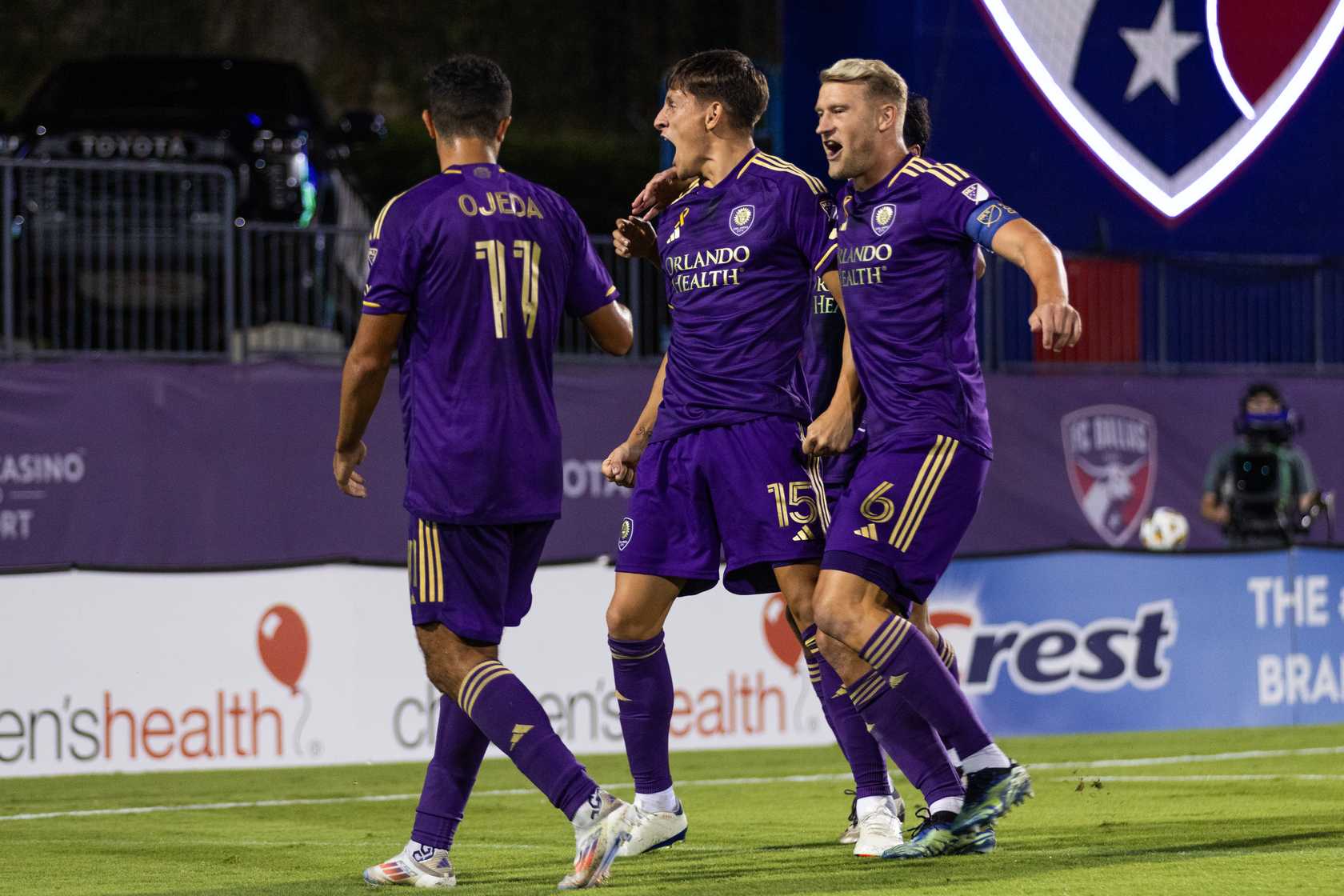
My parents are in town visiting this week, and on Wednesday night our whole family went in the pool and played a spirited game of Marco…Pašalić. This has nothing to do with my article, but I highly recommend that all Orlando City fans make this switch from Polo to Pašalić when playing that game in the pool. Coincidentally, I wrote about Mr. Pašalić this week in our exclusive newsletter, UpRoar, that you can receive every Monday, 52 weeks a year, by clicking on this link and supporting The Mane Land. And now, on with the show.
Iconic rock band Oasis performed together for the first time in years last Friday evening, literally getting the band back together for a huge concert tour that will likely be one of the biggest tours in the world, if not the biggest, in 2025. Last week, I wrote about mirages, and this week I am bringing up an oasis. Clearly I have deserts on my mind. I have never been through the desert, not even while riding a horse with no name, but this article is brought to you by the letter D, as in deserts, desserts (which I like much more than deserts), and defense.
Writing about soccer defense is much more difficult than writing about soccer offense, because most of the sport’s defensive statistics center around individual defensive plays, and those plays do not tell us a whole lot about how well a team’s defense is performing.
For example, tackles won is clearly a defensive statistic, but does knowing how many tackles a team wins per game clearly indicate whether a defense is good or not? Here are two MLS teams and their tackles won per 90 minutes thus far this season:
- Team A: 12.3 tackles won, first in MLS.
- Team B: 7.76 tackles, won, 30th in MLS.
Team A is Philadelphia and Team B is Columbus, two of the league’s top performing teams in the standings, and yet they are at the opposite end of the rankings for tackles won. The top-ranked team in the Eastern Conference, Cincinnati, has the ninth-most tackles won per 90 minutes, The best team in the west, San Diego, ranks 20th. The correlation between tackles won per 90 minutes and points earned per 90 minutes is only 0.15, which means that there is not a strong relationship between the two variables.
Tackles won is a good metric for the evaluation of an individual defender but is not a useful metric to look at for the team as a whole, and if you look through commonly kept defensive statistics, I think they all can be looked at similarly. Blocked shots, clearances, fouls, interceptions (of note here, a certain Team O ranks dead last in the league in interceptions per 90 minutes), and tackles are all important and can tell somewhat of a story, but that story is mostly about that individual defender and not the game itself.
What tells the story about a defense is really quite simple: where does it allow shots from and do those shots go into the back of the net? We often caveat the use of expected goals (xG) on this site, but there is no caveat here this week, because xG is a good measure of the defense’s ability to prevent shots from good goal-scoring locations. Goals are the game’s most important metric, so of course they need to be included as well. As such, let’s take a look at Orlando City’s defensive groupings by expected goals allowed and real goals allowed, adding in a layer of whether the opponent was a team currently ranked in the top third, middle third, or bottom third of MLS teams in points earned per game.
For the tables below I have included every Orlando City back line combination (players ordered from left to right as they played on the field) that played at least 90 minutes together during MLS play. The total minutes for these seven groupings make up 85% of all minutes played for the Lions, and while there are 18 other groups that have played together, it did not seem necessary to include all of them.
Let’s start by looking at expected goals allowed (all data from Opta’s analysis on fbref.com) — the measure of the ability of a defense to limit shots allowed from dangerous locations.

This is a heatmap, so dark green (closer to zero) is good and dark red (higher numbers) is bad. As mentioned in my article last week, Orlando City has been pretty good against the league’s best teams and not as good against teams in the middle. Some of that is clearly on display here with how the defense allowed more shots and/or shots from more dangerous locations per 90 minutes against teams in the middle third of MLS than against the top teams. Allowing expected goals is an indicator of a defense’s performance, but allowing actual goals is just a little more important. Below is the table of actual goals allowed per 90 minutes, and right away you will see some darker red, but don’t miss out on the dark green in the upper left either.

Yes, it is indeed the case that in 248 minutes against teams in the top 10 — in this case, Philadelphia, Miami, and Portland — Orlando City’s top defensive grouping of David Brekalo, Robin Jansson, Rodrigo Schlegel, and Alex Freeman held all three opponents scoreless while playing as a back four. I said it in that way because the Philadelphia game on April 5 was a tight one, with Kyle Smith coming on for the final 22 minutes and, in my eyes, joining the back four as a back five, and so I coded it that way.
Regardless, Philadelphia did not score in that match, so whether as a back four or back five the defense held the Union scoreless, and aside from the season opener, when Robin Jansson unexpectedly was injured during pregame warmups, the story all season long in games against the top teams has been a story about great defense. Orlando City shut out the three teams I mentioned in the prior paragraph, and while the Lions allowed two goals by Cincinnati, one of those was a free kick from 35 yards away that Pedro Gallese saves nearly every time, but unfortunately did not that time.
Excluding Evander’s free kick, the team gave up one goal in 360 minutes against top 10 opponents, and even that one goal was a product of a Lions defense that was pushed up the field trying to get an equalizer and got caught on a counterattack. The back line is not solely responsible for the defense, but it is a critical component, and perhaps it is that those players rise to the occasion against the best opponents or maybe it is something else. Whatever it is, I hope it is sustainable, because the schedule still has seven games remaining against top 10 teams, and it sure would be nice to keep those top teams to limited numbers of goals.
The trio of Brekalo, Jansson, and Schlegel primarily played with Freeman but also with Dagur Dan Thórhallsson and Kyle Smith at points, and those three together with any other right back have played 1,052 minutes and only allowed 1.03 goals per 90 minutes in MLS play (1.03 goals allowed per 90 minutes, which ranks second in MLS. Only Philadelphia at 1.00 is better). It should not be a surprise that the team’s three best defenders play extremely good defense together, and while we will not see them together against Montréal on Saturday due to Jansson being out with yellow card accumulation, they should be back together, likely with Freeman, for the game next Wednesday against New York City FC.
On the season, the Lions are allowing 1.33 goals per game, 12th in the league, but they have been extremely leaky in recent games, giving up 12 goals in the last six matches. Prior to that, they were averaging 1.07 goals allowed per game, and I think it is high time they get back to playing binary defense, only giving up zero or one in every game.
Computer scientists loved that reference.
Defensive statistics are not yet as advanced in soccer as offensive statistics are, so while I spent a lot of time with the available defensive data from sites like fbref.com, whoscored.com, and fotmob.com, what ultimately stood out to me the most was the simple measure of goals allowed by opponent (I know, I know, who would have thought?). I wanted to give the Orlando City defense some love with creative data, but instead what I think is that they just need to keep the band of Brekalo, Jansson, and Schlegel playing together, as they make pretty great music when Óscar Pareja puts them in the lineup.
In honor of Oasis, a seminal band for those of us born in the early 1980s, some (read: I) might say that if Pareja acquiesces, they will not often have to look back in anger, and at the end of the season there might be a champagne supernova waiting for the Lions by The (wonder) Wall.
Vamos Orlando!



Orlando City
Intelligence Report: Orlando City vs. New York City FC
Get up to speed on the Pigeons ahead of Saturday’s game, courtesy of someone who knows them best.

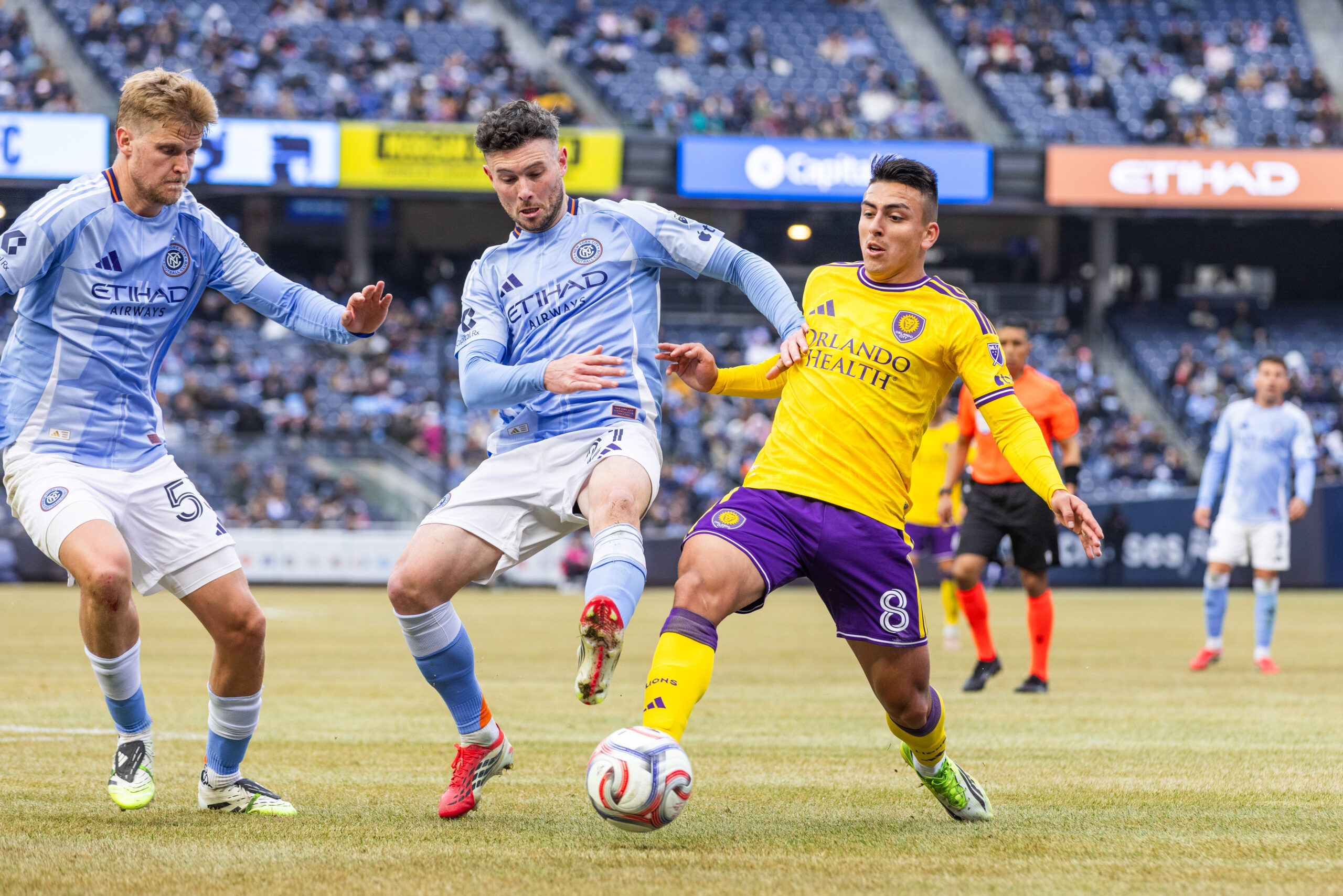
Happy Friday, everyone. Orlando City got a week of rest after taking care of business against D.C. United at home, and it returns to the purple palace Saturday night to face a New York City FC team with its back against the wall in the race for a playoff place.
A showdown with the Pigeons means I caught up with Matthew Mangam of New York Soccer Journal. As always, he was helpful in getting us up to speed on NYCFC, and we appreciate his help. I also answered some of his questions about Orlando City, so make sure you check them out over at their place!
Talk me through NYCFC’s summer transfer business. Who’s out, who’s in to replace them, and how have they performed?
Matthew Mangam: NYCFC’s summer business wasn’t anything groundbreaking. The club brought in striker Luighi on loan from SE Palmeiras and got back midfielder/defender James Sands, whose loan with St. Pauli ended.
Luighi started off well, bagging four goals in his first seven league appearances. But since then, the 20-year-old is on a five-game drought. To his credit, Luighi started only two of his last five games. As for Sands, this is his third stint at NYCFC, so the versatile 26-year-old was welcomed back with open arms.
The biggest acquisition this summer, though, was Bénie Traoré. The winger joined the club as a Designated Player from FC Basel in Switzerland, but it hasn’t gone well. In 15 league appearances, Traoré has one goal — a penalty kick that hit off the post and went in — and no assists.
The club’s last move that didn’t happen in the summer surprised everyone: adding free agent Matt Miazga. The veteran defender hasn’t made his debut yet, and I’m honestly not sure when he will.
New York City has been a wildly different team since the league restarted after the World Cup. What’s happened to cause the change in form?
MM: I honestly don’t know where to start with this one. There’s so much I could say, but if I did then I’d be here all day. I’ll narrow it down to this: NYCFC can’t play a complete 90 minutes.
NYCFC has conceded six goals in stoppage time this season, is 0-4-12 after falling behind 16 times, and is 4-5-6 at home. So, they can’t hang onto leads — they’ve lost seven points after the 75th minute — they have no come-from-behind wins, and they’re poor at home.
There are other smaller factors, like injuries, individual mistakes from usually solid players (Matt Freese and Sands), and players struggling, but, as I said, it’s a lot.
The playoffs are still in reach, as NYCFC is just two points out of eighth. What needs to happen in order to get above the line and stay there?
MM: Simply put, NYCFC needs to win all four remaining games, or, at the very least, go 3-1-0. Teams around them, like Toronto, Columbus, and Cincinnati, are picking up wins and building separation, so NYCFC is in a do-or-die situation.
Getting Alonso Martínez back and starting again is huge, but you can’t expect him to return from a brutal injury and save the team immediately; it’s not fair. Traoré has to step up and show why the club paid DP money for him — one lone goal that, in my opinion, fortunately went in, and no goals from open play is extremely concerning.
Also, Nico Fernández Mercau hasn’t scored in five matches. He’s getting double- and triple-marked because teams are now well aware of how talented the Argentine is, but he has to find a way back on the scoresheet in this stretch. NYCFC needs him to. So, so badly.
Will any players be unavailable due to injury, suspension, etc.? What is your projected starting lineup and score prediction?
MM: The only players out are the ones with long-term injuries: Keaton Parks, Kai Trewin, Maxi Moralez, Arnau Farnós, and Drew Baiera.
Given that NYCFC needs to win or the season is practically over, I expect Head Coach Pascal Jansen to leave it all out there with his best possible lineup:
Matt Freese; Kevin O’Toole, James Sands, Thiago Martins, Tayvon Gray; Andres Perea, Aiden O’Neill; Hannes Wolf, Nico Fernández Mercau, Agustin Ojeda; Alonso Martínez.
I think Nico Fernández Mercau and Alonso Martínez score, but it won’t be enough, as Antoine Griezmann gets a brace and both teams settle for a 2-2 draw.
Thank you to Matt for his excellent refresher on NYCFC. Vamos Orlando!

Lion Links
Lion Links: 10/23/26
Orlando City prepares for New York City FC, Antoine Griezmann’s impact in Orlando, U.S. will host FIFA Women’s Club World Cup, and more.

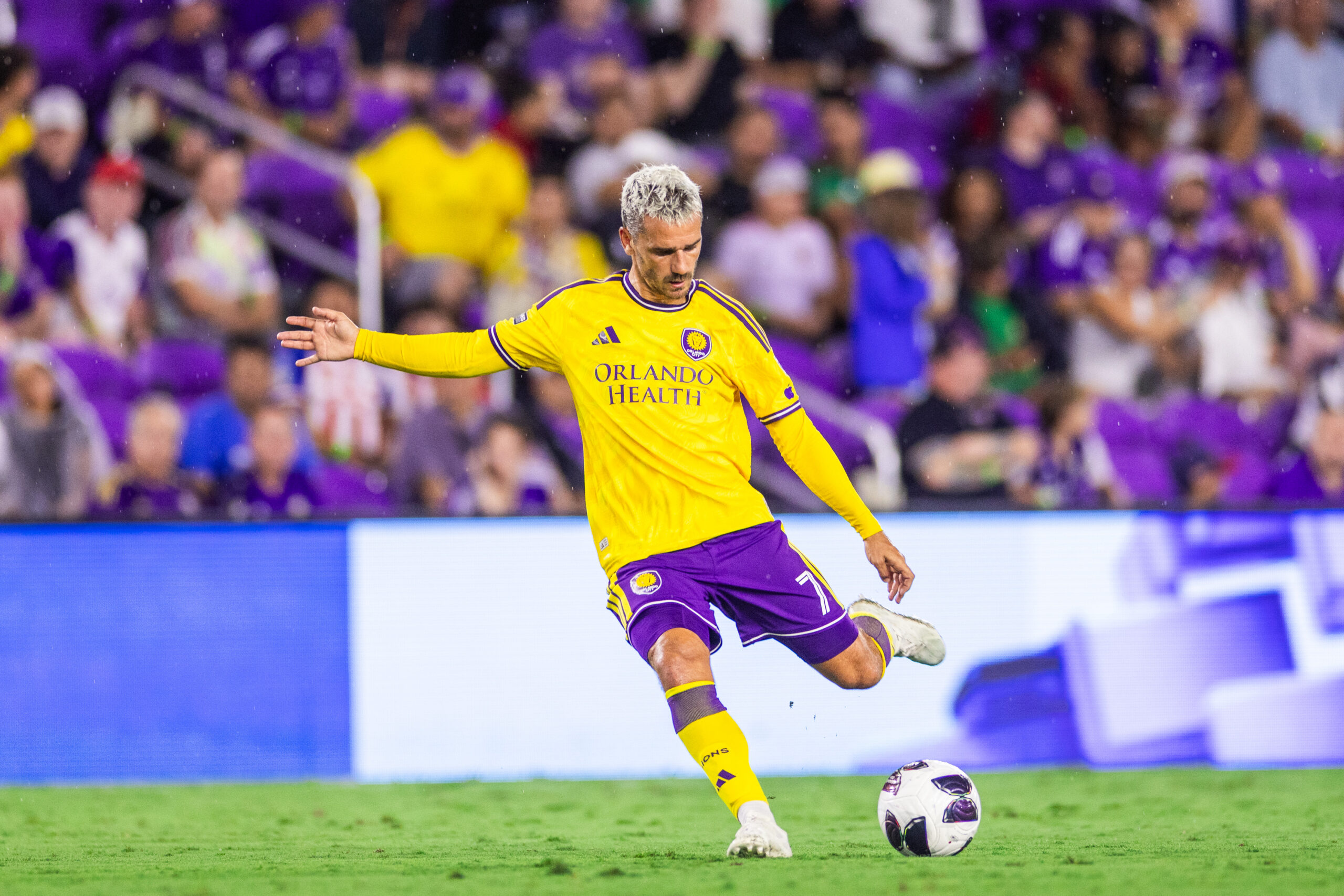
Happy Friday, Mane Landers! It’s been a pretty nice week for me, as I was able to watch all of Slow Horses and finish reading Bad Words by Rioghnach Robinson, both of which were brilliant. Attention now turns to this weekend’s soccer, with both Orlando City and the Orlando Pride playing at home over the next couple of days. Let’s get to the links!
Orlando City Prepares for New York City FC
The Lions host New York City FC on Saturday in one of the marquee matchups in MLS as the regular season nears its conclusion. Plenty has changed since Orlando’s 5-0 loss to NYCFC on March 7. The Lions have clawed their way up the table while the Pigeons have only won once in their past 13 league games. NYCFC enters this match after a 1-1 draw with LAFC that included an equalizer by former Lion Andres Perea to give the team a valuable point amid the playoff race. Nicolas Fernandez Mercau, Luighi, and Benie Traore are all NYCFC players the Lions will need to keep in check, or else it could end up being another high-scoring affair in the City Beautiful.
Antoine Griezmann’s Impact on Orlando’s Offense
Orlando’s wait for Antoine Griezmann to join in the summer has proven to be well worth it, as he’s transformed Orlando’s attack into a force to be reckoned with just as the playoffs near. Although Griezmann wasn’t able to enjoy a fairytale ending with Atletico Madrid by lifting the Copa del Rey or Champions League trophies this year, he’s breathed life into an Orlando side that struggled mightily prior to his arrival. The 35-year-old has recorded 12 goals and seven assists in just 14 appearances this season. Not only has he excelled when it comes to getting the ball in the net, but he’s done well in terms of defensive metrics and intangibles as well.
U.S. Will Host Women’s Club World Cup
The inaugural FIFA Women’s Club World Cup will be held in the U.S. in January of 2028 with the host cities still to be determined. There will be 19 clubs taking part, with Gotham, Arsenal, Barcelona, and Club America having already qualified along with three other teams so far. This tournament is sandwiched between the 2027 Women’s World Cup in Brazil and the 2028 Summer Olympics in Los Angeles, so there’s plenty of exciting women’s soccer to look forward to in the coming years.
U.S. U-17 Women’s National Team Wins at World Cup
The United States U-17 Women’s National Team won 6-1 against Kenya in the group stage of the FIA U-17 Women’s World Cup in Morocco, clinching a spot in the round of 16. Maggie DiMaria scored four goals to bring her total to 10 across just two games. The U.S. will play its final group game on Sunday against China PR, which also won both of its games against Kenya and Samoa to secure a spot in the knockout stage. The winner of this group will get to avoid a match with Spain in the round of 16, so there’s still plenty to play for before the next round gets underway.
Free Kicks
- The first leg of the Concacaf Nations League quarterfinal between the United States Men’s National Team and Haiti has been moved from Kingston to Miami. Haiti has had to play games outside of the country due to unrest and submitted a request to Concacaf to play in the country of its opponent.
- American center back Naomi Girma is now dealing with a calf injury that may sideline her for a few weeks according to Chelsea Head Coach Sonia Bompastor. She missed out on the team’s recent friendlies against Spain and may be absent for the Concacaf W Championship quarterfinal against El Salvador next month too.
- The United States Women’s Cerebral Palsy National Team beat Ireland 15-0 to advance to the IFCPF Women’s World Cup final, which takes place today against Australia. Annie Wickett scored five goals with four other players scoring braces.
- The San Diego Wave signed defender Mimi Van Zanten to a contract extension through the 2029 season. She’s made 27 appearances for San Diego during her rookie season, helping the club keep pace in the NWSL Shield race.
- After being stretchered off the field due to a head injury in the U.S. Open Cup final, St. Louis City goalkeeper Roman Burki is alert and in good spirits, according to the club.
That’s all I have for you this time around. I hope you all have a fantastic Friday and rest of your weekend!
Orlando City
Orlando’s October Outburst Originated Months Ago
Orlando City’s October offensive surge may look like a recent development, but the Lions have been scoring at an impressive rate for months.
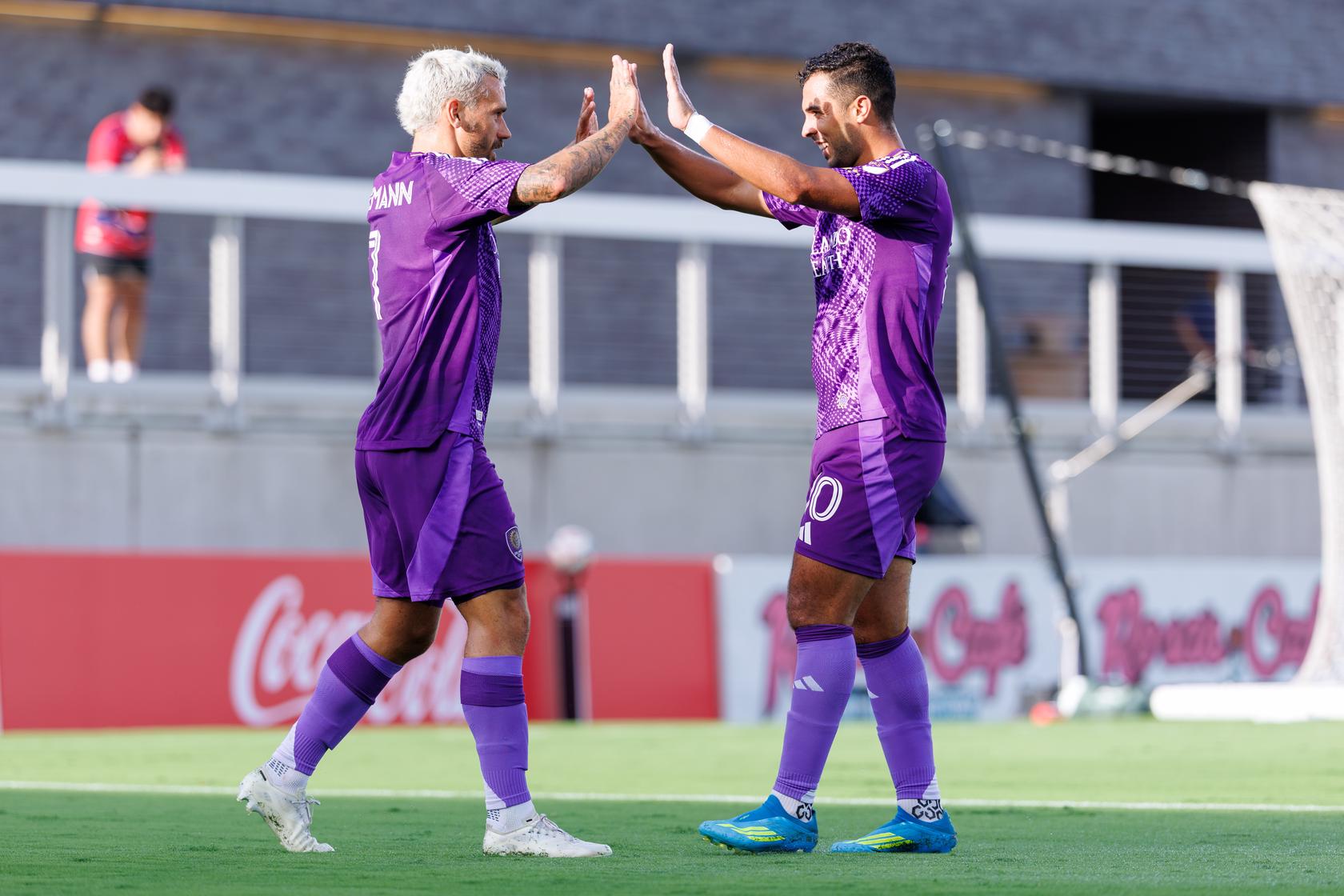
We do not watch nearly enough Sesame Street in my house, but ever since the summer we say that A is for Antoine when the show discusses the alphabet. Sadly, this replaced A is for Andrew, which is my name, because Antoine Griezmann is more popular than me in my house. I cannot say that I am surprised, but I can say that it hurts just a little bit. More than a little bit.
For the past few years, O has been for Ojeda, as in Martín Ojeda, the man who is now Orlando City’s all-time leading goal scorer. This October, however, O is for offense, as the Lions have scored 10 goals during their three October matches, and that tally leads all of MLS this month. Orlando City’s offense has actually been on point for several months now, as you can see from the chart below (MLS games only):
| Month | Goals Scored | Games Played | Goals per Game |
|---|---|---|---|
| February | 1 | 1 | 1.0 |
| March | 4 | 4 | 1.0 |
| April | 7 | 5 | 1.4 |
| May | 11 | 5 | 2.2 |
| July* | 5 | 2 | 2.5 |
| August | 9 | 5 | 1.8 |
| September | 11 | 5 | 2.2 |
| October | 10 | 3 | 3.3 |
| Total | 58 | 30 | 1.9 |
- *There were no games in June due to the FIFA Men’s World Cup
Griezmann arrived for the July games, but even before that, the offense had started to heat up in May. Although May 1 is an arbitrary date, if we use it as a benchmark it allows us to capture two-thirds of Orlando City’s season, as the first 10 games happened before May and the team has now played 30 in total. Since May, the Lions rank fourth in MLS in goals scored with 46, sitting behind only Miami (54), Philadelphia (52), and St. Louis (47).
In a matter of perfect symmetry, the Lions also rank fourth in goals allowed, and by rank fourth I most certainly do not mean they are among the best defensive teams in the league. Orlando City has allowed 41 goals in the last 20 games, which is an average of more than two goals allowed per game but is also fewer than the 46 the team has scored. I know you already did the math in your head, but 46 – 41 = 5, and that +5 goal differential since May puts the Lions at eighth overall in MLS.
Perhaps we are now in the Inception timeline, because in yet another matter of symmetry Orlando City has also earned the eighth-most points (34) since May 1. This is yet another reminder of how poor of a start the club had this season, with seven losses in those first 10 games.
Since then, however, the 2026 team has performed like the teams of the past few years, but even with a top 10 performance for two-thirds of the season, it has not been able to climb above seventh in the Eastern Conference. This is because four of the five best teams since May are in the same conference, and the ninth and 10th hottest teams, right behind Orlando City, are also in the East. For those of you counting, hopefully in a voice like The Count’s (“Ah, ah,ah!”), that makes seven of the top 10 Eastern teams, so it is no wonder that the Lions are still in a precarious playoff position.
Saturday’s game against New York City FC is, on paper, the easiest of the remaining four games, but then again, the Pigeons did dirty pigeon things all over the Lions in the first matchup, winning that game 5-0. A repeat performance would wipe away the +5 goal differential Orlando has since May, but in addition to the fact that this game will be played on an actual soccer field, there is another pretty major difference between the early season Lions and the current Lions: Griezmann.
The French superstar is up to 12 goals scored and six primary assists (to go with one secondary assist in only 14 MLS games, which is wild), and he and Ojeda make up one of only seven tandems in the league in which both players have at least 12 goals each (Ojeda has 15). Only three tandems have at least 13 goals each (Miami’s Lionel Messi and Luis Suárez, Cincinnati’s Kévin Denkey and Evander, and Nashville’s Sam Surridge and Hany Mukhtar), and with another goal from Griezmann, the two Lions would become the second pair in club history to each score at least 13 goals in a season, joining Facundo Torres and Duncan McGuire in 2023.
Marco Pašalić scored in the most recent game, and both Iván Angulo and Justin Ellis have recorded double-digit goal contributions, so let’s hope the team’s recent offensive onslaught continues, because with all the injuries on the back line and some difficult opponents coming up on the schedule, the Lions will likely need to put up multiple goals if they are going to get results and qualify for the playoffs for the seventh consecutive season.
And considering how poor the start to the season was, if they can orchestrate that it would be outstanding. Let’s gooooooooo.
Vamos Orlando!


Intelligence Report: Orlando City vs. New York City FC

Lion Links: 10/23/26

Orlando’s October Outburst Originated Months Ago


-

 Opinion2 weeks ago
Orlando City’s Final Playoff Push Filled with Challenges
-
 Orlando City2 weeks ago
Orlando City vs. Columbus Crew: Five Takeaways
-
 Orlando City1 week ago
Orlando City vs. Toronto FC: Preview, How to Watch, TV Info, Live Stream, Lineups, Match Thread, and More
-
 Orlando City2 weeks ago
Orlando City vs. Columbus Crew: Final Score 3-2 as Angulo Wins It Late for the Lions
-
 Orlando City2 weeks ago
Orlando City vs. Columbus Crew: Preview, How to Watch, TV Info, Live Stream, Lineups, Match Thread, and More
-
 Orlando City6 days ago
Orlando City vs. D.C. United: Final Score 4-1 as Griezmann Leads Lions to Win
-
 Lion Links2 weeks ago
Lion Links: 10/13/26
-

 Lion Links1 week ago
Lion Links: 10/14/26