
Opinion
On Witnessing the Slow, Agonizing Unraveling of a Season
Orlando City’s season slowly faded in front of our eyes, and there was nothing we could do to stop it.


There are times in life when you can see something happening, or realize something is happening, but can do very little, if anything at all, to stop it from happening. It’s a distinctly demoralizing experience, watching something unfold that you have no power to change, and you can encounter that situation in any number of settings.
As an example, I’d like to tell a story about something that happened to me this spring. I was in Miami visiting some friends and we had taken out a boat for a few hours to swim and relax. After being in the water for a bit, I was at the back of the boat and intended to make my way up to the front to join some people and dry off. My phone was in my hand, and thinking that I wanted to be safe and secure, went to put it into my pocket as I navigated the narrow ledge along the side of the boat that would take me to the front. Unfortunately, the boat shifted as I went to put the phone in my pocket, it got stuck on the edge of said pocket, was knocked out of my hand, bounced off the deck of the boat once, and directly into the water. I watched it happening and knew what was going to happen, but I found myself frozen until it was too late and my phone was lost to a watery grave.
I want you to keep this anecdote in mind as we delve into the slow, torturous end of Orlando City’s 2025 season, as I’ll be relating back to it periodically.
Hindsight is always 20/20, and with the benefit of hindsight there are a number of small events that led to the Lions exiting the playoffs with a whimper in the play-in game, before the postseason ever really began. The prologue came before the season even started, when the decision was made to enter the campaign with no true backup at left back, and very thin/unproven depth at both center back and winger. The club was going to need to rely on new signings and young players to step up to the challenge, while also replicating an oddly healthy 2024 campaign — both of which were risky gambles in isolation, but when paired together became positively perilous. For now though, let’s leave the state of the opening day roster to the side, and fast forward to the month of August.
After matchday 27, Orlando was sitting pretty with seven more league games to go. The Lions were fourth in the Eastern Conference on 47 points — just five points back from FC Cincinnati in first. OCSC was riding a four-game winning streak in the league, a seven-game unbeaten streak in all competitions, and had advanced to the knockout rounds of Leagues Cup. With just six points separating Orlando and the ninth-place Chicago Fire, the margins were thin, but the good guys were in the driver’s seat.
Then came the first in a small line of events that led to this season ending in the manner it did. The club has always valued cup competitions and rightly so. After all, the first piece of silverware the Lions won as an MLS club was the U.S. Open Cup, and Orlando City has usually done well in knockout competitions. So, when the team made the knockout portion of Leagues Cup, it was not surprising to hear Oscar Pareja and some of the players talk about their desire to compete on two fronts and do their best to win a trophy, particularly after reaching the semifinals.
The result was that, after beating Toluca on penalties on Aug. 20, Pareja made the decision to field a heavily rotated team on Aug. 23 on the road against Nashville SC, with the semifinal against Inter Miami on Aug. 27 looming large. The chips were pushed into the middle of the proverbial table, and winning Leagues Cup was prioritized heavily. It was a decision akin to me making up my mind to go to the front of the boat and to put my phone in my pocket as I did so. There was plenty of good reasoning behind it at the time, but it was the beginning of the end.
Consider what happened next: Nashville thrashed Orlando 5-1, the Lions lost the semifinal to Miami 3-1, and then dropped the third-place game 2-1 to the LA Galaxy, missing out on the Concacaf Champions Cup spot that came with it. True, there were some interesting officiating decisions in the Miami game, and missing the suspended David Brekalo hurt Orlando against the Galaxy. It’s also true that heavy cross-country travel undoubtedly played a role in some of the performances at that time, particularly against the Galaxy. OCSC played Sporting Kansas City at home on Aug. 16, flew to LA to play Toluca on Aug. 20, then traveled to play in Nashville on Aug. 23, played away against Miami on Aug. 27, and then flew back across the country to play the Galaxy on Aug. 31.
Now that being said, the club knew that’s what the travel would look like when the decision was made to prioritize Leagues Cup. The organization knew that Toluca had hosting rights and understood the gauntlet the schedule would present if Orlando got by the Mexican side. Long-distance travel is simply a fact of life for an MLS club, and while the team picked up Adrian Marin and Tyrese Spicer as reinforcements, Rafael Santos going the other way meant that the change at fullback was a net zero. Still, the team tried to prepare itself for the packed run-in as best it could — at first.
The next domino to fall was Ramiro Enrique being sold. While it didn’t officially occur until Sept. 8, the Argentine was rumored to be headed out the door in late August and was not in the squad for the third-place game against the Galaxy — presumably because he was waiting for the finishing touches to be put on his paperwork. If the reported numbers are to be believed, then the club made a profit on the striker, and there’s something to be said for selling if the money is right not standing in the way of the player’s wishes.
The other side of the argument is that Enrique had eight goals and two assists when he was sold, and he finished the year fourth on the team in goals behind Martin Ojeda, Marco Pasalic, and Luis Muriel. While Duncan McGuire was finally healthy in late August after undergoing a second surgery, the team needed all the bodies it could get when looking at the schedule, especially bodies that had a knack for scoring important goals like Enrique did.
In the context of my boat story, the Enrique sale equates to me attempting to put my phone in the pocket facing the ocean, rather than the one up against the boat. Understandable to use the oceanside pocket, given that I was using my boat-side hand to hold onto a railing and keep myself steady, but wouldn’t it have been wiser to simply make sure my phone was secure before making my way to the front at all? In the same manner, wouldn’t it have been wiser to outright keep a guy that productive, or at least try to arrange for him to be loaned back until the MLS season ended before joining his new club? Perhaps Al-Kholood refused. We may never know, but we do know that in the seven games after he was sold, Orlando scored more than one goal on only two occasions.
Another domino came in the form of Orlando’s Aug. 30 match against the Vancouver Whitecaps being rescheduled for Oct. 11 because of the Lions playing the Galaxy in the third-place game on Aug. 31. Not only did that mean that new Whitecap Thomas Muller would have additional time to settle into his new surroundings, but it also meant that the game would take place during an international break. While that certainly seemed less than ideal, our next domino meant that when the Vancouver game finally rolled around, the outlook was downright ominous.
Beginning with the Sept. 13 match against D.C. United, Marin and Cesar Araujo were sidelined with injuries. Marin eventually returned against FC Cincinnati on Sept. 28, but in the next game against the Columbus Crew on Oct. 4, Joran Gerbet tore his ACL in the fifth minute, ending his season. That meant that due to injuries and call-ups, Brekalo, Alex Freeman, Pasalic, Spicer, Gerbet, Araujo, Colin Guske, and Gustavo Caraballo were all unavailable for the Vancouver match. Matters then got even worse in that game when Robin Jansson went off injured in the 18th minute. After McGuire entered to replace him, Pareja did not make another sub until the 86th minute, when Zakaria Taifi came on for McGuire. By that point, Orlando had surrendered a one-goal lead, and many players looked dead on their feet.
On one hand, there wasn’t much to work with on the bench. After McGuire entered in the first half, it left Papi with Taifi, Shak Mohammed, Thomas Williams, Favian Loyola, and Titus Sandy Jr. to call on. Still, the decision to ride the clearly exhausted starters as long as he did can and should be questioned. Watching a team get overrun and simply hoping that they can hang on and things work out is not usually a strategy for success. In the same fashion, watching one’s phone plummet to the deck of a boat and bounce overboard while frozen rooted to said deck rather than trying to stop it, all while that boat is out and drifting on Biscayne Bay, is rarely the right move to make, yet that’s precisely where I, and Orlando City both found ourselves.
The Lions, of course, went on to lose that game at the death, and personally it felt like a breaking point to me. If that shorthanded, outgunned team had somehow been able to snatch a result against one of the best in the West, I felt like it could be used as a rallying point entering the playoffs — aside from the fact that the three points would have been invaluable and ultimately have seen the team finish in sixth. Orlando had made a nasty habit of dropping points late in games all year, a point that I hesitate to even call a domino given how ingrained it seemed to be in this team’s DNA. Still, I couldn’t help but feel that if the trend had been bucked at that moment, it could have propelled this team forward in the right direction. Instead, it seemed to break the Lions for good.
What followed was the disastrous Decision Day performance against Toronto FC and the equally calamitous showing against Chicago. Araujo returned as a substitute against Toronto, and he and Jansson were both in the starting lineup against Chicago, but it was too late. On both occasions the Lions simply didn’t look like themselves. In Toronto it was a case of being sloppy and giving away chances, while failing to take advantage of some excellent ones that Orlando created, while in Chicago the team looked like it never got off the plane. Late efforts were made in each game, as Brekalo scored in the 54th minute to make it 3-1 against Toronto, and McGuire bagged a 92nd-minute consolation goal to make it 4-2, while Spicer’s 89th-minute goal in the play-in game made the score 3-1.
Particularly in the Chicago game though, it was damning that the Lions only showed the sort of intensity and fight that was needed from the opening whistle once the game was already out of hand at 3-0 with 20 minutes to go. It felt similar to me grabbing a pair of goggles and diving into the water roughly a minute after my phone had disappeared below the surface into seven feet of water with a strong current and plenty of vegetation present on the bottom — noble enough efforts when examined in isolation but always unlikely to succeed when you have the full context of the situations.
Could this all have been prevented had different choices been made? Perhaps. Maybe if there’s a deeper squad at the beginning of the year, the team is better equipped to handle the brutal travel brought on by Leagues Cup and the subsequent rash of absences for the critical game against Vancouver. Maybe if the Lions didn’t prioritize Leagues Cup so heavily, the Vancouver game wouldn’t have needed to be moved in the first place, and OCSC wouldn’t have come away from its Leagues Cup odyssey with nothing to show for it but an injured, exhausted, misfiring squad. Maybe if I’d held my phone in my hand or left it in my backpack inside the cabin, I’d still have it, and wouldn’t be able to make this flawless, perfect metaphor as a result. We’ll never know.
What we do know is that instead, the injuries, suspensions, and call-ups gradually took their toll, the offense stopped scoring, and game by game the season slowly, agonizingly slipped away in front of our eyes. Just like that, my phone, and Orlando City’s 2025 season were lost to the literal and metaphorical waves.
Because I’m an idiot, my phone wasn’t backed up, and as a result I lost years’ worth of pictures and texts from friends and loved ones. Lots of memories went out the window, and I started over with a new, blank device. As frustrating as that was, it’s especially fitting when it comes to comparing my nautical misadventure in 2025 with Orlando City’s competitive one. The odds are good that this team will look extremely different next year, and while it might not be the completely clean slate that I had, we’ll probably be saying goodbye to a lot of familiar faces from the last couple of seasons, and welcoming some new ones in their stead.
Change is inevitable, and if this club wants to compete and reach the heights that it aspires to, then change is needed. It’ll be sad in some respects, but after watching the way this season slowly, painstakingly failed to fulfill on the promise it held with just seven league games left, it’ll also be welcome. Here’s to new phones, and new (hopefully more successful) seasons.
Vamos Orlando.


Opinion
Three Unlikely Players Who Could Shape the Second Half of Orlando City’s Season
Three Lions who are in position to affect Orlando’s fortunes as they start the back half of the 2026 season.
With 18 matches under its belt in Major League Soccer, Orlando City is just past the midway point of its season. Despite a horrific first few months, there’s been reason for optimism lately with improved play and some better results to go along with it. There’s still a lot of improvement that can be made, and with MLS play, Leagues Cup, and a U.S. Open Cup semifinal all on the table, there will be plenty of time to do so.
When it comes to key players for the rest of the season, there are a few usual suspects that spring to mind. Antoine Griezmann, Justin Ellis, Martin Ojeda (once he’s back from injury), Robin Jansson, and Maxime Crepeau are probably chief among those names. Rather than focus on them, I’d like to discuss a few less prominent names that could have large impacts on the remainder of the Lions’ season.
Bernardo Rhein
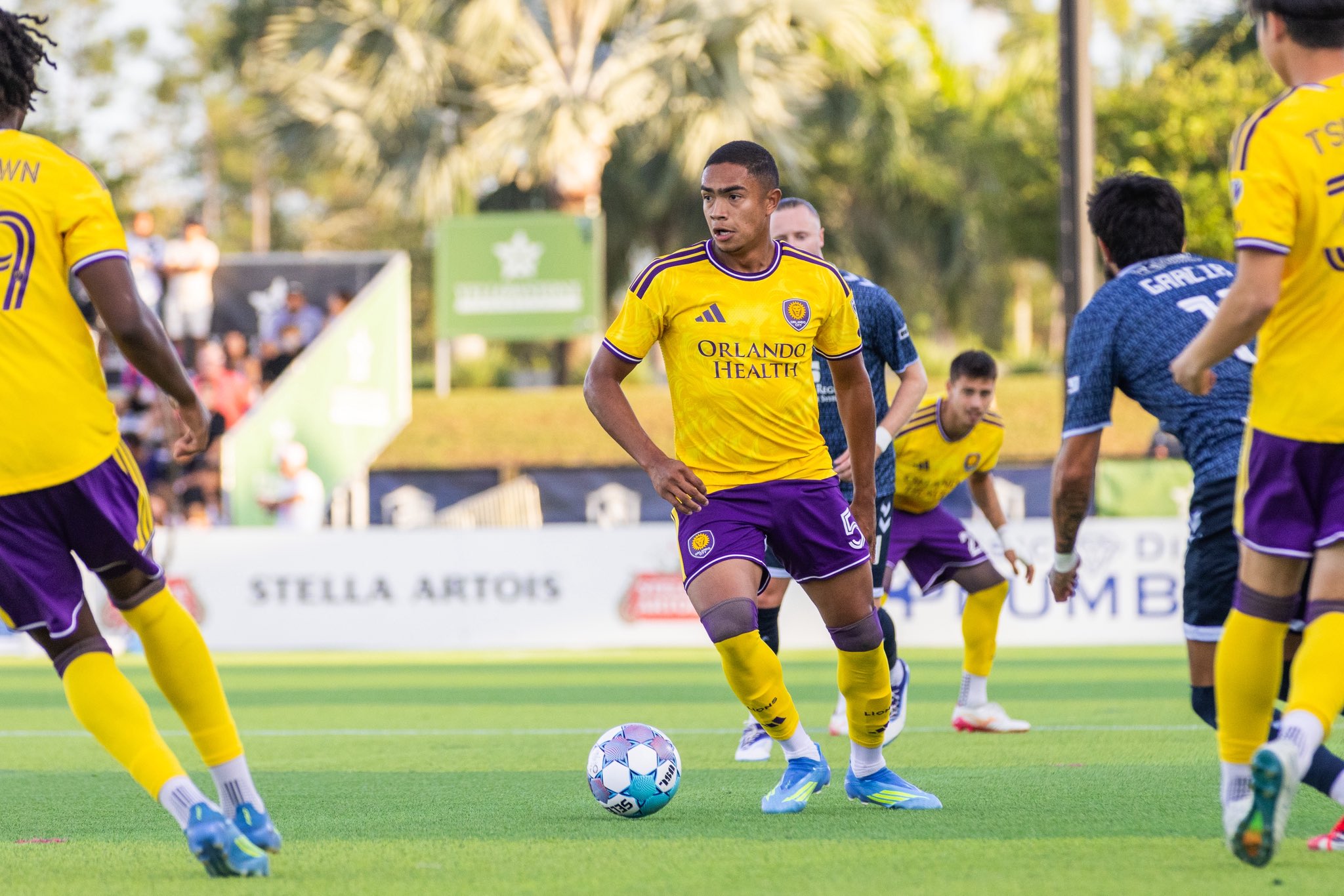
We start with a player who has emerged at a rapid pace in Orlando’s first four games back from the World Cup break. The 18-year-old Rhein has started two of them, and for my money he’ done enough to firmly displace Adrian Marin as the starting left back. He helped keep a clean sheet in his first start against Nashville, contributing a tackle, a clearance, an interception, and six recoveries while also providing a key pass. He then came on at halftime against the New York Red Bulls and had two interceptions, a tackle, and two key passes, while providing both an offensive and defensive upgrade over Marin after a rough outing for the Spaniard. Against Monterrey, his three completed dribbles were tied for the most in the match, and he also recorded three tackles, two interceptions, a clearance, and seven recoveries.
It hasn’t been flawless, as he can get caught out of position or have balls played over him at times, but by and large he’s looked like he’s belonged. That’s good too, because while Marin’s technical ability isn’t an issue, his physical traits are. He simply doesn’t look like he can move well enough or quickly enough to play fullback in MLS, and shy of him taking over for David Brekalo while the Slovenian reprises the left back role he’s so often held for this team, Marin should be backing up Rhein. The youngster has flashed good defending in 1-v-1 situations, and has shown himself to be capable of contributing at the other end of the field as well.
That offensive ability gives Orlando the option to overload either side of the field and provides some balance and variance in the attack that will make the Lions tougher to play against. Care will be needed to not have Rhein and Griffin Dorsey pushing forward at the same time, leaving the defense exposed, but the next player on the list can help mitigate the danger that would come from those situations.
Luis Otavio
Orlando City announced on Thursday night that Braian Ojeda has had surgery to repair a Jones fracture in his right foot. He’ll likely be on the shelf at least six to eight weeks, and the club says it expects him to be back in the fall. With Ojeda out, 19-year-old Luis Otavio likely has the inside track to his starting role in central midfield. He’s the one who took Ojeda’s place in the lineup against Monterrey, and he’s played more than Wilder Cartagena, with 13 appearances and 547 league minutes to five and 47 for the Peruvian.
After some shaky performances earlier in the year, Otavio was excellent in his two recent starts against Nashville and Monterrey — going the full 90 against the Mexican side. Against the ‘Yotes, he filled in admirably for the suspended Eduard Atuesta with three tackles, two clearances, two recoveries, and a key pass. Wednesday night saw him take over for the injured Ojeda and record three tackles, two interceptions, one clearance, and three recoveries.
So far, he hasn’t offered what Ojeda does going forward, but frankly he doesn’t really need to. With the way Ivan Angulo, Tyrese Spicer, Ellis, and Griezmann have been playing, there are plenty of creative forces on the field, and that’s without the injured Martin Ojeda. All Otavio needs to do is provide a physical and energetic presence in the middle of the field, and he’s capable of doing that. The youngster can cover a lot of ground, isn’t shy about putting in a tackle, and is generally good at doing the sort of unheralded dirty work that made Cesar Araujo so vital during his time as a Lion. It’s too soon to say for sure that Otavio will follow in the Uruguayan’s mold, but he should certainly get plenty of opportunities to do so given (Braian) Ojeda’s injury.
Daryl Dike
That brings me to Orlando’s most recent signing. Dike made his first appearance in his second stint as a Lion on Wednesday, and he showed some encouraging signs during his 20 minutes on the field. His hold-play was as good, his movement was clever, and he completed two of the three dribbles he attempted while generally being the fast and physical handful that he was before going across the pond. He’ll rue the cross that he fluffed his lines on, as a goal on his return would have been a dream, but he got himself into good areas and was extremely difficult for the Monterrey defenders to deal with.
There’s probably some rust that needs to be shaken off — a few of his runs could have been timed a little better, and while he only attempted four passes, completing just two of them leaves a little to be desired. He should get plenty of chances to build sharpness though, as the Lions have at least six more matches to play during the month of August, and he’s got a unique profile when compared to the rest of the attacking options on the team. While it’ll be tough to displace Ellis, given how he’s been playing, Dike offers an option as a target forward and could be lethal when receiving service from Orlando’s creative players.
Sean Rollins recently wrote about Orlando’s need for a dependable, goal-scoring center forward, and if Dike can rediscover the form he showed during his first stint in purple, then it could push the Lions in the right direction up the table. While the defense has been better after the World Cup break, its still shown itself to be vulnerable, and OCSC will likely find itself in need of regular goals if it wants to keep picking up results. Once Martin Ojeda returns, he and Griezmann should be able to help with that, but if Dike can share the load, then it’ll add another dimension to the team.
On the flip side, if those three guys don’t play well, then it could make life much more difficult for Orlando. If Rhein struggles, then either Marin will need to reprise his role, swap with Brekalo, or the Lions might move to a three man defense that would risk disrupting the fluid offensive style they’ve been using. Otavio not playing well would put a lot of pressure on Wilder Cartagena, Joran Gerbet, and Colin Guske — all of whom are either mostly or completely untested this year for various reasons. If Dike can’t get going again it might not be the end of the world since OCSC’s offense largely hasn’t been the problem this season, but it would deprive the Lions of a unique, difficult-to-handle option and lessen Orlando’s ability to effectively rotate.
Personally though, I think all three players will come good to some degree. Otavio and Rhein have done good things in their extended time on the field lately, and Dike looked promising on Wednesday and should get plenty of great service while also having familiar surroundings and a proven track record to hold him in good stead. Here’s hoping I’m right. Vamos Orlando!
Opinion
Mirage vs. Reality: On the Sustainability of the San Jose Performance
Was the 4-0 win in California simply a flash in the pan, or should we expect more of the same from OCSC?
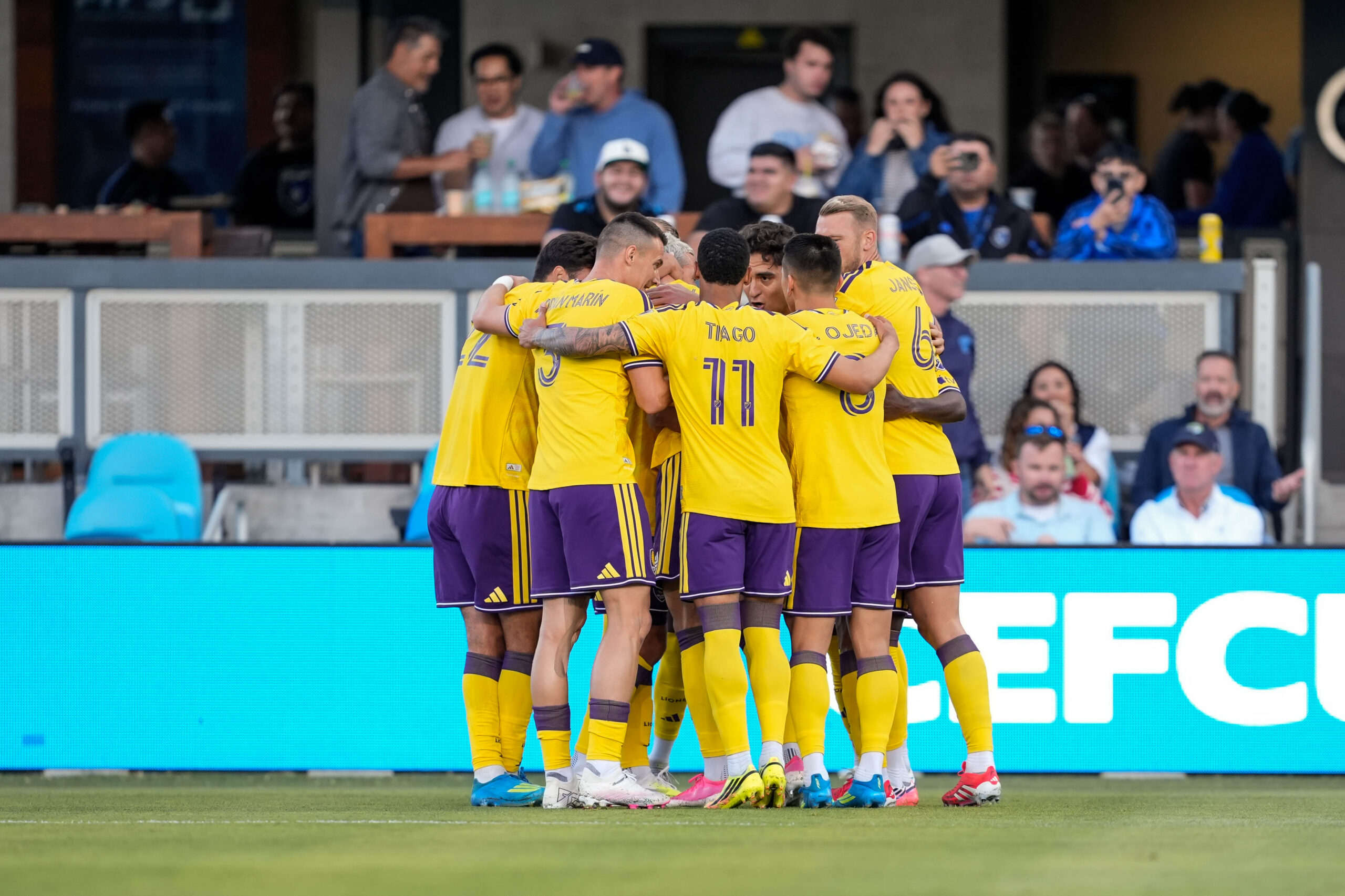
While we all no doubt missed having Orlando City games to watch during Major League Soccer’s sabbatical for the World Cup, its also probably fair to say that Wednesday’s return to action against the San Jose Earthquakes was tinged with a good deal of trepidation. After all, the Lions had been hammered 6-2 on the road by FC Cincinnati in their final match before the layoff, comfortably had the worst defense in the league, had yet to keep a clean sheet, and had given up a whopping 31 of their 44 goals conceded on the road.
It didn’t help matters that San Jose was in the top five of the Supporters’ Shield standings, was the second-best team in the Western Conference (level on points for first but edged out on goal differential), and had scored 33 goals in 15 games while giving up just 15. It’s true that the Quakes weren’t in great form before the break, winning just one of their last five, but there was still plenty of reasons to worry that Orlando would pick up where it had left off in Ohio back on May 23.
Instead, the Lions not only hammered San Jose 4-0, but arguably should have beaten the Earthquakes by an even more lopsided scoreline. The team played a fluid, position-less brand of soccer that gave the home team absolute fits, and kept a first league clean sheet of the year to boot. It was an extremely unexpected, but exceedingly welcome, performance.
The big question now, is whether it can be replicated.
Well, maybe not directly replicated, as 4-0 wins tend to be relatively uncommon occurrences for even the very best of teams. Rather, can the things that made Orlando successful on Wednesday be built upon and repeated, or was the team’s performance a flash in the pan that we shouldn’t expect to see again?
First, let’s talk about the performance itself.
The highlight was how the team looked going forward. Every player on the field not named Maxime Crepeau, Adrian Marin, Robin Jansson, or David Brekalo was constantly drifting anywhere and everywhere in the attacking half, taking up unexpected positions and rarely remaining in the position designated for them by the formation. Ivan Angulo functioned as a no.10 despite nominally playing right midfield, Justin Ellis and Antoine Griezmann could be found anywhere from the opposition’s 18-yard box to the midfield line or deeper, and the same could be said for Braian Ojeda and Eduard Atuesta. San Jose found the positional interchanging extremely difficult to deal with, especially during the first half hour of the game, but did settle in a little better after halftime.
Speaking of Ellis and Griezmann, they were terrors for their entire time on the pitch. As previously mentioned, both of them were dropping deep to receive the ball, exchanged quick passes with their teammates, and then turned to bomb forward themselves or play balls through or over the defense. That quick passing and clever movement was a theme for OCSC as a whole, but the two forwards were the best examples of it with Angulo coming a close third.
The speed of play for Orlando meant that the team had a lot of joy in transition moments, and the Lions constantly seemed to be springing players behind the defense, or running at San Jose’s defense with men in support. Only some poor execution when it came to passing and finishing in the final third prevented the good guys from putting even more goals on the board.
When it came to keeping the ball out of their own net, the Lions did several things very well. For one thing, the defense seemed to be more organized than we’ve seen it this year, aside perhaps from the U.S. Open Cup win against Atlanta. Orlando caught San Jose offside seven times on Wednesday, and on several occasions it was more down to the defense stepping together as a unit and staying in a disciplined line than it was on the Earthquakes being lazy or mistiming their runs.
When San Jose did carve out good chances, Crepeau was a towering presence in between the posts for the Lions. His seven saves will take the headlines, but there were also several instances where he was quick and smart in coming off his line to beat a San Jose runner to a ball and prevent a 1-v-1 situation. He also made several of his best saves on shots that were ultimately ruled out for offside or he almost certainly would have cracked double digits. It was a pre-eminent performance, and he looked to be brimming with confidence after a good showing for Canada at the World Cup.
Now to be objective, OCSC had some things working in its favor. San Jose was without Niko Tsarikis, who has two goals and four assists in 11 games (then again, the Lions were without Martin Ojeda, Marco Pasalic, and Daryl Dike), and the Earthquakes’ finishing was…not great. Two particular instances stood out: Beau Leroux missing wide left in the 38th minute when he was unmarked at the top of the six-yard box, and Jack Skahan touching a ball toward on onrushing Crepeau in the 57th minute rather than passing to a wide-open Ousseni Bouda for a tap-in. There were also several times when a ‘Quakes player just missed getting on the end of a ball in a dangerous area, or when bad giveaways in dangerous areas by the Lions went unpunished.
San Jose also made some unforced errors of its own, like the turnover that led to Griezmann’s goal. Then there was the set piece marking, which was atrocious. Brekalo and Ojeda were both completely unmarked for their goals, and it was shockingly bad defending for a team that hadn’t given up any set piece goals going into Wednesday’s game.
Now, what exactly should we make of all this?
Well, when it comes to what Orlando did, there’s an argument to be made that the team’s offensive performance from open play can be replicated. The team has had plenty of time to work on this position-less style of play on the training ground and was still having lots of joy with its quick passing and fluid movement even after San Jose had time to make halftime adjustments. The defense mostly held up well and stayed organized against one of the league’s more potent attacks, and when the Earthquakes did create chances, Crepeau kept up the form he showed in his last four games for Canada.
Orlando could also have benefitted from Tiago and Tyrese Spicer finishing clear-cut chances they were given by Ellis, Atuesta, and Griezmann. Martin Ojeda’s return and the addition of Dike can help chances turn into goals.
On the flip side, this is the first time anyone’s seen the Lions try to play this way, so its always going to be tougher to stop something you haven’t been able to train for. The element of surprise isn’t something that should be discounted when it comes to Wednesday. Other teams may make Orlando pay for some of the shaky moments that it had at the back, and not every team is going to make three big errors that the Lions can take advantage of.
For me, the answer lies somewhere between the two ends of the spectrum. I do not expect the Lions to look like 2008-2009 Barcelona every week, but I also don’t think its fair to say that Orlando simply benefitted from favorable circumstances and bounces. It’s perhaps best to say that OCSC did things that can be replicated, but there’s no guarantee those things will be replicated. The movement, passing, decision-making, defensive organization, and goalkeeping are things that can build a good foundation for success if Orlando can repeat them, and those are the things I’d focus on more than the number of goals or the clean sheet.
At the end of the day, we’re working on a small sample size and shouldn’t get carried away by one game, regardless of how fun it was. Wednesday’s performance wasn’t necessarily an illusion or the truth of what this team is. Rather, it was a glimpse of what this team has an opportunity to be. There’s work to be done and areas that can be improved on, but the Lions showed enough in San Jose for us to have hope for a season that’s looked hopeless more often than not. Vamos Orlando.
Opinion
A Summer Catharsis
I’ve got a lot of things on my mind, and now you’re going to hear about it.

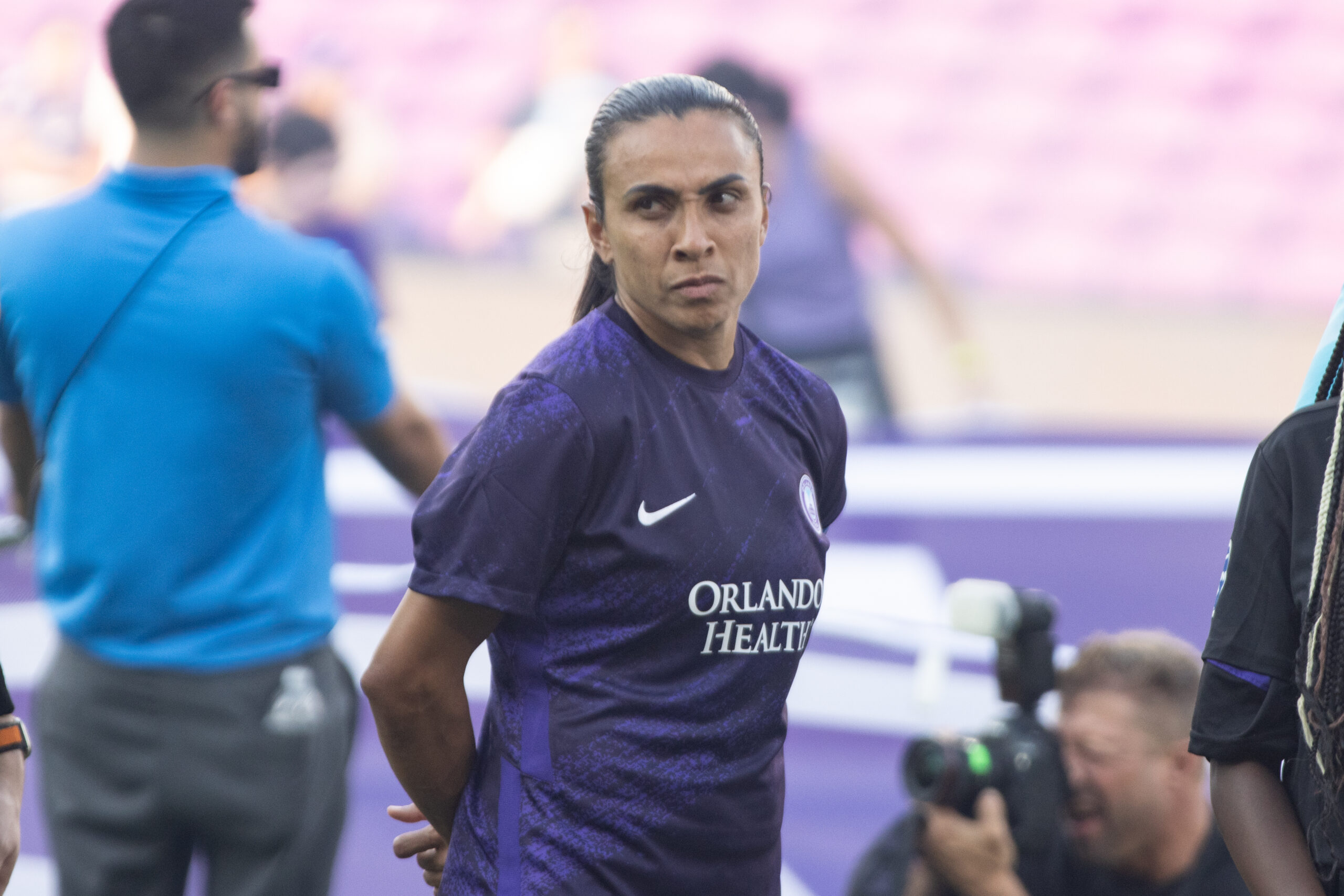
I’ve been told that it’s not healthy to hold in negative emotions. Doing so leads to resentment, high blood pressure, and a weakened immune system. As such, I’m going to take this opportunity to let out some frustrations I currently have about the soccer I care about in my life. Perhaps you share some of these frustrations? I’m hoping that doing so will allow me to let go of the negative and move into a healthier head space. Here we go.
The World Cup
I have mostly enjoyed this World Cup. There have been amazing matches and interesting stories. However, there are some things that have frustrated me. The whole Folarin Balogun red card situation was a debacle from the start. The card shouldn’t have been given and FIFA should have corrected it within 24 hours if it was going to do so. One ridiculously corrupt person shouldn’t have called another ridiculously corrupt person in an effort to make it “better,” because it ended up having the opposite effect.
The USMNT had all the good vibes. The team was playing free-flowing, beautiful football. The rest of the world didn’t have the animosity toward our team or our fans as much as in the past. That all changed after FIFA’s decision. I want to be clear that all of this was decided well above Balogun, the other players, the coaches, and even U.S. Soccer. Despite that, the people harmed were the players and the coaches. I believe it galvanized a Belgium squad that wasn’t playing as well before the controversy. I’m not saying the U.S. would have won the match, but the vibes were off and it showed in the way the team played.
The other thing that is bothering me is the disparity of decisions resulting in potentially game-changing penalties and disciplinary decisions between smaller countries and traditional powerhouse nations so far this World Cup. By disparity I mean 9-0 in favor of the traditional powerhouses. A disproportionate number have been in matches featuring Argentina, but I’m sure everything is on the up and up. After all, we’re talking about FIFA, right? I need to go get my tinfoil hat.
The Orlando Pride
We’re less than two years removed from the Orlando Pride winning the double in 2024. There are plenty of players from that squad still on the team, yet you would be hard pressed to think it’s the same team. To be fair, there are a lot of factors as to why, but that doesn’t mean I have to like it.
Kylie Nadaner is rightly taking time to give birth to future Orlando City player Nolan. We also saw the departures of Haley Carter from management and Emily Sams from the back line. Rafaelle has mostly been an excellent player at center back, but the team didn’t go get someone to play with her. I still believe Hailie Mace was brought in to be a center back despite not really being a center back. The club dropped the ball in not getting an actual center back after Sams left and Nadaner went on maternity leave.
Jacquie Ovalle was brought in to complete an attack that would have included Barbra Banda and Marta. Thanks to injuries, we have yet to see that trio together. The Pride don’t have a viable backup striker, and Banda will soon be gone for the Women’s Africa Cup of Nations tournament. Not adding an additional striker was another personnel failure for the club.
So many of the players who played above their heads in 2024 have regressed since. Julie Doyle and Summer Yates have all but disappeared. Angelina hasn’t looked like her best self, and the same can be said about many others. The Pride lead the league with 14 free agents, meaning there is an opportunity for a rebuild. I don’t like that it comes so soon after winning everything, but here we are.
I mentioned above about Carter leaving. The club did have one notable acquisition in bringing on Caitlin Carducci as her successor. I’m hopeful that the Pride can turn things around, though I think it will mean a lot of turnover in the roster. The issue is what happens while we’re waiting on Carducci to implement her vision. This team is barely hanging onto a playoff spot, and I don’t have a lot of confidence the Pride can grind out enough results to get over the line.
I know that was a lot of negativity, but I feel better after writing it all down. I remain a dedicated supporter of both the Pride and the USMNT. If you’re wondering why I didn’t include my frustrations about Orlando City, it’s because I’m waiting to see what Martin Perelman can do after what is effectively a preseason, thanks to the World Cup break and the arrival of Antione Griezmann. If things don’t get better I’ll revisit that in the future.
Thank you for going along on my mental health journey. Hopefully, you found some peace as well. Vamos Orlando!


Orlando City vs. FC Cincinnati: Five Takeaways

Orlando Pride vs. Portland Thorns FC: Final Score 2-1 as Pride Fall on Late Goal

Orlando City vs. FC Cincinnati: Final Score 1-1 as Lions Battle Back on Spicer’s Goal

Orlando City vs. Atletico de San Luis, Leagues Cup: Preview, How to Watch, TV Info, Live Stream, Lineups, Match Thread, and More

Orlando Pride Sign Norwegian Forward Sanne Lekven

Orlando City vs. Atletico de San Luis, Leagues Cup: Final Score 2-2 (5-3) as Lions Blow Late Lead, Win Shootout


-
 Orlando City2 weeks ago
Orlando City vs. CF Monterrey, Leagues Cup: Final Score 2-1 as Spicer Leads Lions to Victory
-
 Orlando City2 weeks ago
Orlando City vs. Monterrey, Leagues Cup: Preview, How to Watch, TV Info, Live Stream, Lineups, Match Thread, and More
-
 Orlando City2 weeks ago
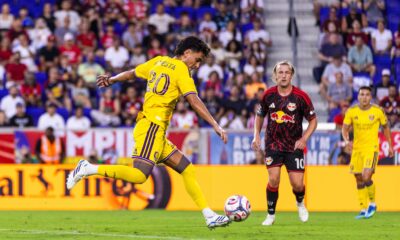
Orlando City vs. New York Red Bulls: Final Score 3-2 as Poor Start Sinks Lions
-

 Orlando City1 week ago
Orlando City vs. Club León, Leagues Cup: Preview, How to Watch, TV Info, Live Stream, Lineups, Match Thread, and More
-
 Orlando City4 days ago
Orlando City vs. Atletico de San Luis, Leagues Cup: Preview, How to Watch, TV Info, Live Stream, Lineups, Match Thread, and More
-
 Orlando City1 week ago
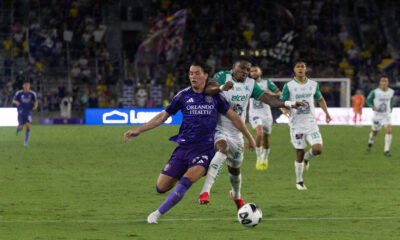
Orlando City vs. Club Leon, Leagues Cup: Final Score 2-1 as Lions Blow Halftime Lead in Loss
-
 Orlando City2 weeks ago
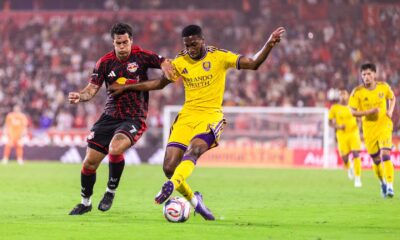
Orlando City vs. New York Red Bulls: Player Grades and Man of the Match
-
 Orlando City2 weeks ago
Orlando City vs. New York Red Bulls: Five Takeaways