
Orlando City
Orlando City vs. Atlanta United: Three Keys to Victory
What do the Lions need to do to win back-to-back matches against Atlanta United?

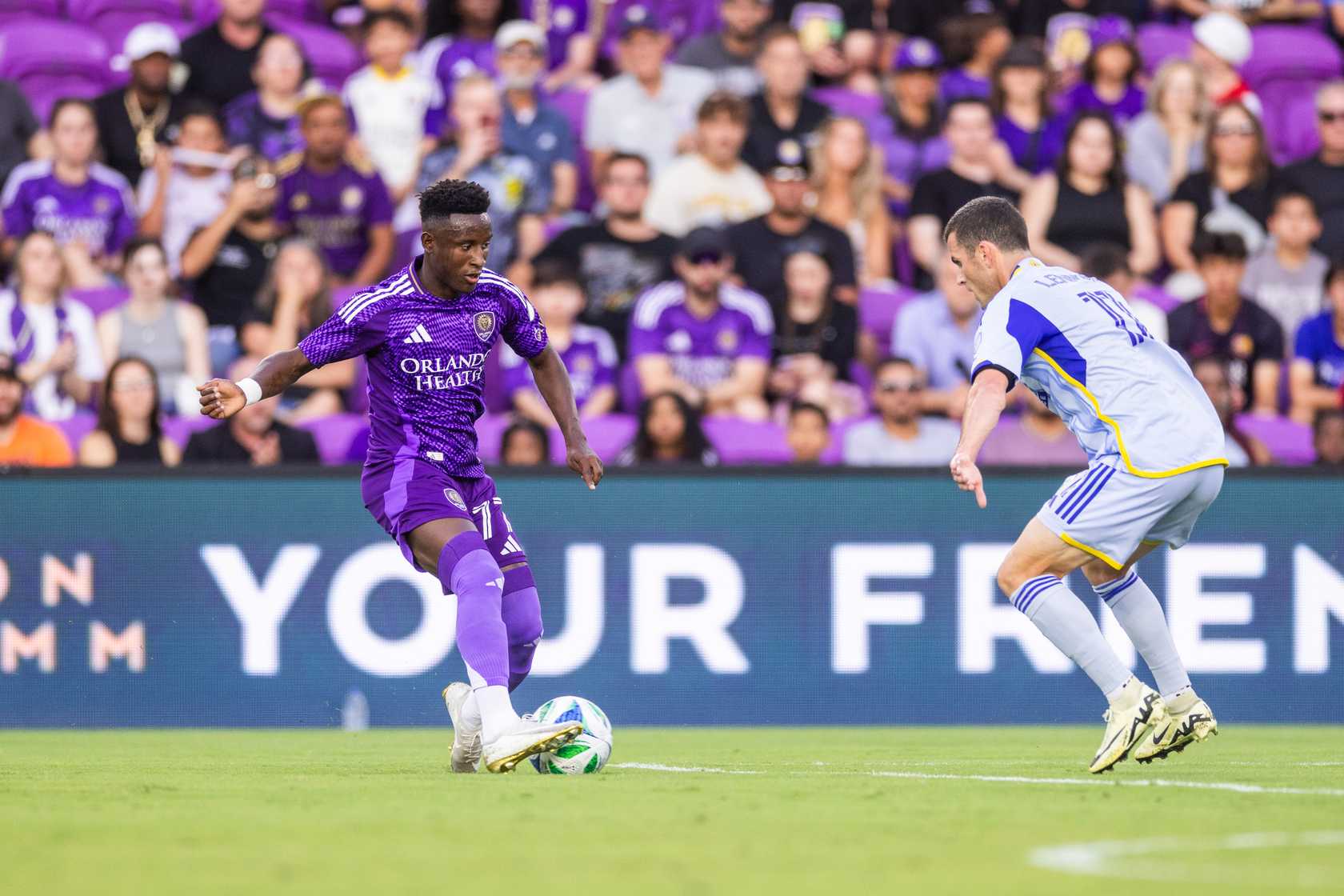
This is a two-for-one deal since Orlando City plays Atlanta United in back-to-back matches in a four-day span. First up is a regular-season match at Inter&Co Stadium followed three days later by a U.S. Open Cup match — also at home. The Lions are coming off a thrilling 4-3 victory over the Philadelphia Union. What must the Lions do to earn all three points against Atlanta Saturday evening and advance in the U.S. Open Cup on Tuesday night?
Find a Defense
Atlanta United has scored 13 goals this season. That is the same amount that the Philadelphia Union scored after Wednesday’s match against Orlando City. As I’m certain you remember, the Union scored three goals in that match. It was an indictment on the defense to give up that many goals to the bottom team in the Eastern Conference that had scored just 10 all season entering Wednesday. The Lions now face a similar challenge of stopping a bad offensive team from scoring heaps of goals. Orlando City was not able to do that against Philadelphia.
The biggest challenge for the Lions — other than poor passing — is stopping Atlanta’s top scorer Aleksei Miranchuk. He has scored five goals and added two assists this season. His fellow Designated Player, Emmanuel Latte Lath, has produced only two goals and two assists but is still a threat. This is likely a historically bad Orlando City defense, but the players need to pull it together to win a match they should win and, hopefully, advance to the Open Cup semifinals.
Keep the Offense Rolling
Orlando City has scored 14 goals in the last five MLS matches and 18 goals across all competitions in the last six. As a result, the goal differential which was in the upper 20s at one point is now “only” -17. That is obviously still extremely bad but loads better than before. Given the shoddy defense I mentioned above, it is crucial that Orlando City continues to find the back of the net in these two matches against Atlanta.
Martin Ojeda is tied for fourth in the league with nine goals. Duncan McGuire, Tyrese Spicer, Justin Ellis, and Marco Pasalic all have three goal contributions so far this season. Scoring four goals against lower ranked opponents isn’t something to brag about, but it is helpful in getting results. Orlando City is likely to give up some goals and will need to overcome that with offensive firepower as the Lions did against Philadelphia.
180 Minutes
Coaches will tell you that they take things one game at a time. That is, of course, coach speak, though at least partially true. However, the idea that coaches don’t plan out farther than one match at a time is ludicrous. If Martin Perelman isn’t at least somewhat combining the planning for these two matches, then that is a problem. While he cannot predict what will happen in the first match, he has hopefully made contingencies for various general outcomes.
Having the two matches be against the same opponent makes the task both easier and more difficult. If the two matches were against different teams, lineups could be adjusted based on the tactics needed to approach the different players and styles of each team. With it being the same team, that is less of an option. There will be some rotation through the two matches, but given there are the same sets of players available — barring injuries or red cards — tactics are likely similar for each match. Orlando City has occasionally put together 45 minutes of decent play. Now, the Lions need to quadruple that.
That is what I will be looking for on both Saturday and Tuesday nights. This is an opportunity to build momentum heading into the World Cup break. Let me know your thoughts in the comments below. Vamos Orlando!




Orlando City
Orlando City vs. Toronto FC: Final Score 3-3 as Road Defense Again an Issue for OCSC
The Lions came from behind twice and eventually led late but conceded even later to drop two vital points north of the border.

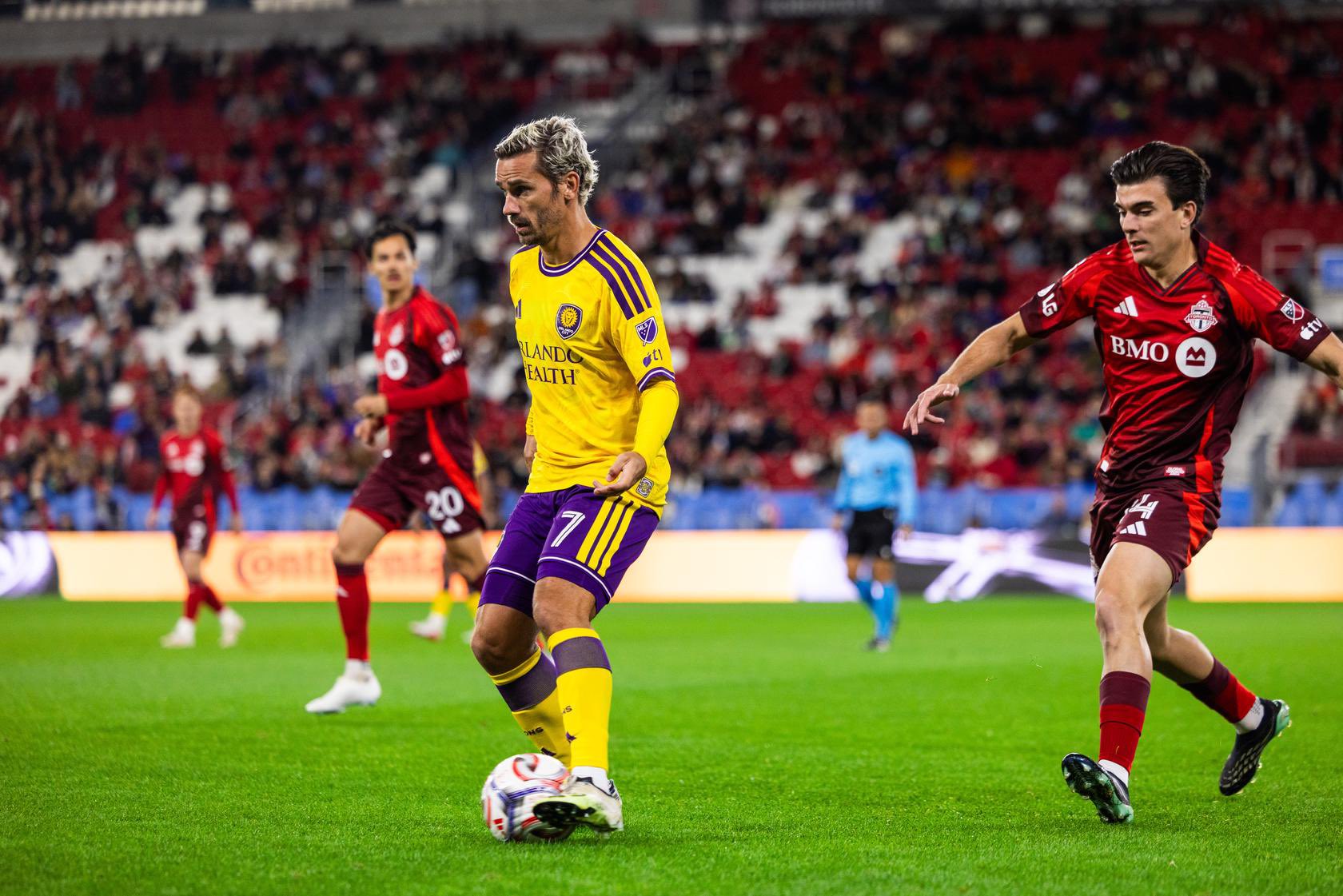
Orlando City improbably came back from a pair of deficits to take a late 3-2 lead against Toronto FC tonight. But the porous defense again showed up at an inopportune time, allowing the hosts to pull a goal back and force a 3-3 draw at BMO field in Toronto, Ontario, Canada. All three Toronto goals were either scored on Orlando’s defensive right or originated with a turnover there as the Lions again were without Griffin Dorsey, creating issues for Orlando (11-13-5, 38 points) and joy for Toronto (7-10-12, 33 points).
Ivan Angulo and Eduard Atuesta swapped roles back and forth all night as City played its positionless, fluid style, and it was a defensive catastrophe again, with Orlando now conceding 11 goals in its last three away matches. Atuesta failed to mark the only man near him on the first goal, Angulo did the same on the third, and Angulo’s defensive third turnover started the counter that led to the second.
On the other end, Martin Ojeda scored from the spot, Antoine Griezmann equalized the game at 2-2 late, and Daryl Dike scored what looked like a game-winner in a substitute appearance. But Matheus Pereira’s late goal let two valuable points slip out of Orlando’s hands. Lewis Morgan and Theo Corbeanu also scored for the Reds.
“I think at the end of the day, we conceded goals that cost us too much,” Orlando City interim head coach Martin Perelman said after the match. “Unforced mistakes, maybe. We need to improve there.”
Perelman’s lineup had to be adjusted as Robin Jansson picked up a knock and Justin Ellis picked up an illness late in the week. Goalkeeper Maxime Crepeau started behind a back line of Vinicius Nogueira, Iago, David Brekalo, and Angulo. Defensive midfielders Wilder Cartagena, Luis Otavio, and Atuesta joined Harvey Sarajian in the midfield behind attackers Martin Ojeda and Antoine Griezmann.
Orlando started brightly but couldn’t create anything despite having some good forays into the attacking third. Angulo won a corner when his cross was blocked behind in the second minute. The hosts knocked down the cross, which fell to Nogueira, but he hit his shot poorly and it was well off target.
After overcooking a couple of long balls that would have seen Nogueira and Sarajian get down the left flank, Orlando reverted to its usual, sloppy road self.
The first warning sign came in the eighth minute, when Cartagena’s turnover led to a Josh Sargent break. Sargent faked a right-footed shot, stepped left past a sliding Cartagena and Iago, and fizzed a shot just wide of the left post.
Griezmann nearly put Sarajian in a minute later. Sarajian raced to get past Richie Laryea and beat the defender to the outside, but Laryea got a toe on the ball just before Sarajian could get onto it, knocking it into space in front of goal with Luka Gavran out of position, but no one in a gold jersey was near it and Toronto cleared the danger.
Daniel Salloi flicked a header past Crepeau and into the net in the 14th minute, but he was a couple of steps offside. Two minutes later, Nogueira gave Corbeanu far too much space. The Toronto winger cut inside from the right side and fired a shot that Crepeau parried wide for a corner. Orlando managed to clear and tried to counter, but Ojeda slipped on the turf and the transition chance evaporated.
Morgan found himself in far too much space in the Orlando box in the 19th minute but didn’t make good contact on his shot, sending a soft one to Crepeau. Morgan made up for it eight minutes later by opening the scoring. Griezmann got dispossessed in traffic in his defensive third and the ball was knocked out to Corbeanu on the right flank. Nogueira couldn’t block the cross in and Atuesta seemed oblivious to the only player anywhere near him as Morgan nodded it inside the right post to make it 1-0 in the 27th minute.
Orlando seemed to have no real idea how to work the ball through Toronto’s defensive shape, often passing backward through traffic after breaking a line of pressure. The Lions won a set piece late in the half and again the hosts knocked it down. Iago got to it first at the top of the six on the right side but sent his spinning shot attempt high over the goal from close range.
The Lions took the ball away in the attacking third a minute later and Griezmann picked out Ojeda in the box, but the Argentine either tried to flick it on goal or to find Angulo on the right. Either way, he muffed the opportunity, sending it out of play wide of the right post.
With Orlando struggling to create, the hosts helped the Lions out as the end of the half approached. A harmless ball into the box from the left took a high bounce and hit Matheus Pereira on the arm. The referee spotted it and pointed to the spot, awarding a penalty.
Ojeda’s shot didn’t fool Gavran but he placed it so well that it slipped inside the right post to make it 1-1 just seconds into stoppage time.
The goal was his 48th across all competitions, which made Ojeda the club’s all-time leading goal scorer, passing Facundo Torres.
Despite Orlando seemingly not having a clear vision of how to attack Toronto, the halftime stats were mostly even. The Lions had more possession (58.6%-41.4%) but much of that was just passing back and forth around the back, then losing possession when approaching the final third. Orlando City also held the advantage in passing accuracy (86.3%-76.1%), while Toronto put more shots on frame (3-1). Both teams attempted five shots and earned one corner in the opening period.
Seconds after the restart, Toronto got a gift of its own, but it didn’t pay off. Otavio cleanly cut in front of Sargent to knock the ball away, but referee Armando Villarreal called a foul after Sargent’s momentum carried him over top of the Brazilian midfielder. Alonso Coello’s shot deflected wide, turning into a corner. Iago cleared the corner cross but Toronto recycled it back into the area, where Sargent got his head to it but it skipped off the side and went out of play for a goal kick.
Toronto restored its lead two minutes later anyway. Angulo gave the ball away in his own third with a soft pass intended for Iago to give the hosts a quick counterattack. Niklas Dorsch easily got to the wayward pass first and got in behind Iago, but Crepeau made a huge save on the initial shot. The ball caromed toward the right post. Nogueira was slower to react than Corbeanu, who slipped it under the Brazilian’s foot and in to make it 2-1 in the 49th minute.
Just moments after the goal, Angulo failed to control a ball under pressure and gave up an unnecessary corner, but the Lions fended it off. He gave the ball away again in the 58th minute in his own end and Toronto broke quickly, sending it out to the right to Cobreanu. The winger had two runners in the area and both were open, but he overcooked his cross, which sailed beyond his teammates and out for a goal kick.
While his “fullback” work was suspect all night, Angulo was good in the attacking half. He made an incisive run into the box through several Toronto defenders in the 60th minute, but his shot was partially blocked and bounced harmlessly to Gavran.
Orlando escaped in the 66th minute when Benjamín Kuscevic fired off the right post and Coello missed the target on the rebound. Coello then got booked for a hard challenge on Otavio, providing a stoppage for Dike to enter the match for Sarajian.
Orlando won a few corner kicks in quick succession moments later, but although the ball pinged around dangerously a few times, they couldn’t pay them off. The best chance came on the third of those, with Griezmann picking out Iago near the penalty spot. The Brazilian turned and tried to head his shot on target but missed badly wide to the right on a difficult attempt.
Kuscevic picked up a yellow card moments later for pulling back Dike in space, setting up a free kick from distance. The ensuing set piece shouldn’t have worked but somehow it did. Ojeda’s long-range free kick delivery was low and Sargent should have had an easy clearance, but it came off the side of his foot and skipped to the right side of the area, where Iago headed it back the other way. Griezmann was wide open on the left and fired his shot past Gavran to make it 2-2 in the 77th minute.
Griezmann extended his streak to nine games with a goal contribution and scored his 10th MLS goal in just 13 games.
Toronto quickly got back on the front foot, winning a corner at the other end. Crepeau made a vital save on Kuscevic’s header on the set play as Nogueira couldn’t prevent the shot, which went through traffic and ended up in the goalkeeper’s midsection, with the Canadian doing well not to spill it. Two minutes later, the Lions took the lead.
Griezmann orchestrated the goal by sending it wide to Angulo on the left. Angulo sent in a return pass that Griezmann allowed to go through his legs to Dike behind him. The big striker smashed his shot inside the right post to put Orlando up 3-2 in the 83rd minute.
“I think, you know, we have a whole bunch of smart players on the team, and I kind of always tell myself that no matter what, when the ball’s on the side, I’m going to be in the box,” Dike said. “And you know, some clever play from Grizi, and then, yeah, a good little finish. I’m happy about it.”
With Zakaria Taifi on the bench and available substitution slots remaining, it’s curious that a defense-for-offense swap wasn’t made after Dike’s goal, giving Orlando fresh legs and a more natural right back on the pitch, especially with Angulo playing long minutes on short rest, but it was a contributing factor in the outcome, especially considering Taifi subbed on for Atuesta after Toronto equalized.
Just when it looked like the Lions might get a rare 2026 road win, things fell apart. Substitute Djordje Mihailovic was left in too much space on the right, just outside the area. He smashed a shot toward goal as three defenders tried to converge, and the ball appeared to take a slight deflection toward the right. Crepeau dove at full stretch and palmed it away, but Pereira stepped past an inattentive Angulo on the back side and put the rebound into an empty net to tie the game at 3-3 in the 90th minute.
In fact, the Reds nearly scored a winner before Taifi entered the match. Angulo couldn’t stay with Derrick Etienne Jr. in the second minute of stoppage time and he sent a dangerous cross toward the top of the six. Crepeau dove off his line and got a hand to it but couldn’t control it. Mihailovic arrived first and tried to chip the Canadian goalkeeper, but he sent the effort wide of the left post.
Taifi finally came on for Atuesta two minutes later, pushing Angulo into the midfield.
“Everybody knows we are missing some players, and then we try to find solutions,” Perelman said. “We have players like Ivan (Angulo), like Edu (Atuesta), who are very generous, and they fight. They give everything on the field. I think they did a good job, and then of course we conceded some goals. As well we score, and we tie. That’s it. We can’t go back. So now we look forward. This is still long. Only a couple of games missing, but it’s a long season. We know how to go through it. We know where we come from. We know where we’re going. That’s it.”
The rest of stoppage time was largely uneventful with each team failing to capitalize on a long-range free kick, but Kuscevic put a scare into the Lions with a shot from inside the box that he sent wide to the left in the seventh added minute.
At full time, Orlando City held the advantage in possession (55.7%-44.3%) and passing accuracy (85.2%-75.5%), but Toronto attempted more shots (16-15) and put far more on target (8-3). Each team won five corners in the game.
“It was a point. It’s not what we wanted, because we came here to win,” Perelman said. “Things to improve, like always. But at the same time, great effort from the players, personality to play here. I think the effort was there, the performance as well, and that’s it. That’s a point on the road. Now we continue in our journey until the end.”
“A little bit frustrating, because I think we did well to put ourselves in a good position,” Dike added. “And, of course, you’re never going to be happy when you don’t win. Good point away from home, but of course we want to win, so it’s frustrating to lose two points in the manner that we did.”
It’s another quick turnaround for the Lions, who welcome D.C. United to Orlando on Saturday.
Orlando City
Orlando City vs. Toronto FC: Preview, How to Watch, TV Info, Live Stream, Lineups, Match Thread, and More
The Lions try to build on Saturday’s win over Columbus as they head north to visit Toronto.
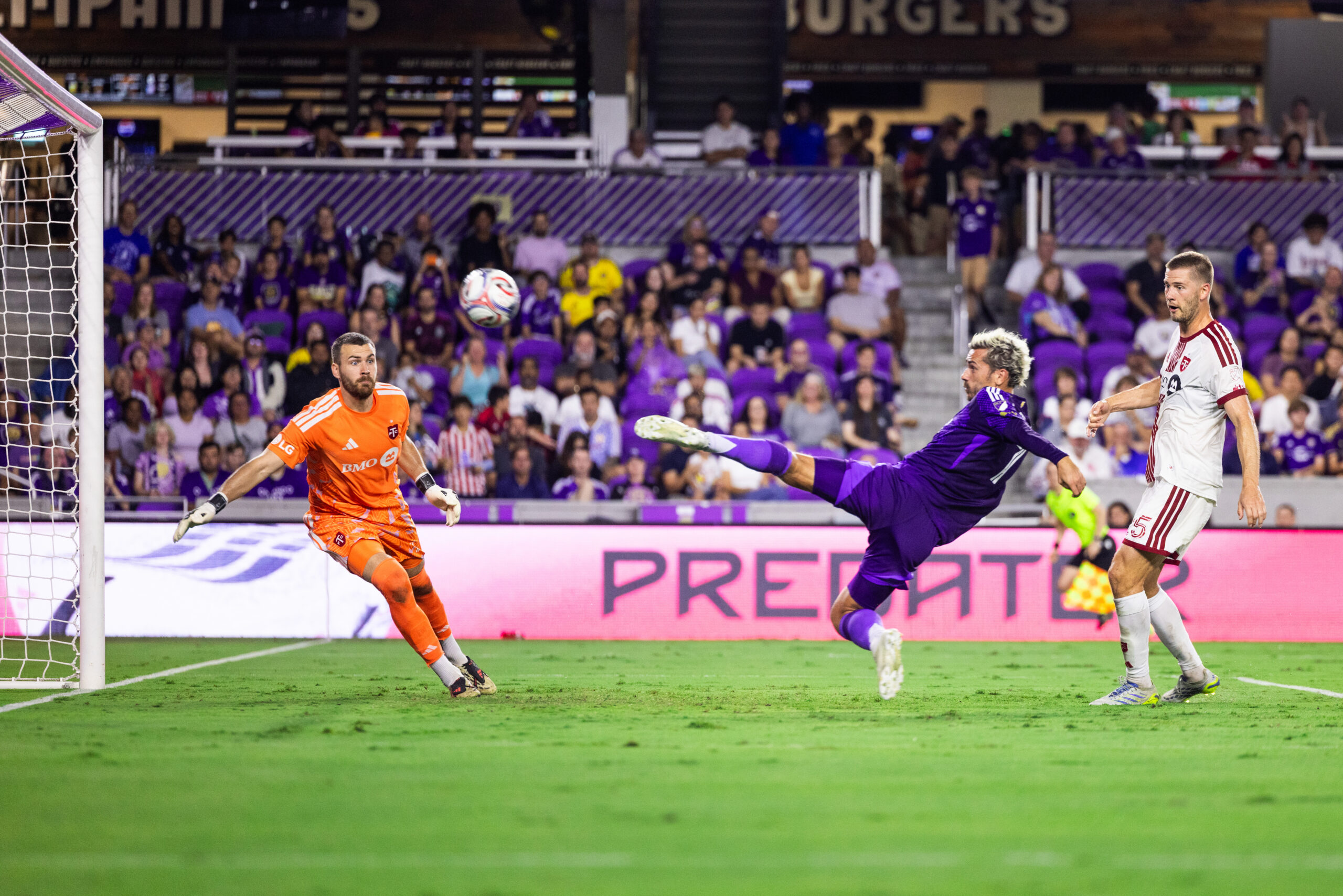
Welcome to your preview and match thread for a midweek matchup between Orlando City (11-13-4, 37 points) and Toronto FC (7-10-11, 32 points) at BMO Field in Toronto, Ontario, Canada (7:30 p.m., Apple TV). It’s the second of the two scheduled meetings between the Eastern Conference rivals this season.
Here’s what you need to know ahead of the match.
History
Orlando is 11-10-3 in the all-time, regular-season series. The Lions are 4-5-3 as the road team in the series, although one of those “away” wins took place in Orlando during the 2021 season, in which the Canadian teams had to stay in the United States due to the COVID-19 pandemic.
The last time the teams met, the Lions won 3-0 at home on Sept. 12. Antoine Griezmann, Harvey Sarajian, and Ivan Angulo provided the offense, but it was a 1-0 lead until the late going.
The last time these teams faced each other in Canada, on Decision Day 2025 — Oct. 18 — the Reds ran rampant in a 4-2 win over the Lions. Djordje Mihailovic scored in each half, with Jonathan Osorio and Deandre Kerr adding a goal apiece to more than offset Orlando’s strikes by David Brekalo and Duncan McGuire. The loss knocked Orlando into the final position in the Wild Card play-in game, so it was costly.
The teams first renewed acquaintances in 2025 on March 1 in Orlando, with the Lions winning 4-2. Cesar Araujo and Alex Freeman scored moments apart, with Martin Ojeda and Dagur Dan Thorhallsson chipping in goals, while Sigurd Rosted and Deybi Flores scored for the visitors.
The teams met at BMO Field in Toronto on July 3, 2024, with the Lions earning a 2-1 revenge win on an Ojeda goal and an own goal by Nicksoen Gomis forced by Facundo Torres, coming from behind after Derrick Etienne, Jr. had given the Reds an early lead.
The Lions and Reds met in Orlando on April 27, 2024, and the Lions led most of the match on a McGuire goal. However, the Reds flipped the game on its head late, scoring twice in the final three minutes of normal time. Former Red/current Lion Tyrese Spicer and Prince Owusu scored to lift Toronto to a 2-1 win.
The final meeting of 2023 took place in Toronto on Decision Day, Oct. 21, when McGuire came off the bench and scored twice to beat the Reds 2-0. The teams met in Orlando on July 4, 2023, with Orlando City putting the Reds to the sword on Independence Day, beating the Canadian side, 4-0. Araujo, McGuire, Thorhallsson, and Ercan Kara scored for the Lions, and Toronto finished with 10 men after Federico Bernardeschi was shown his second yellow card just past the hour mark.
Orlando City also romped 4-0 over the Reds in the previous meeting, Sept. 17, 2022, at Exploria Stadium. Torres, Kara, and Tesho Akindele scored for the Lions to go along with a Lukas MacNaughton own goal. The Lions also won 1-0 on May 14, 2022, at BMO Field, thanks to a 92nd-minute goal from Kyle Smith, who flicked a header from a corner kick cross inside the far post to lift Orlando City to victory.
The Lions went 2-0-1 in three meetings with Toronto FC in 2021. The teams played to a 1-1 draw at BMO Field on July 17. Jozy Altidore came off the bench to score the opener, but Nani equalized from the penalty spot minutes later. Benji Michel drew the penalty, which was originally ruled a foul on the Orlando winger but was overturned after video review by referee Marcos de Oliveira.
The other Toronto “home match” in the 2021 season series came on June 19 at Exploria Stadium. The Reds were dealing with pandemic restrictions in Canada that forced the team to play home games in the United States. Orlando City built a 2-0 early lead on goals by Akindele and Nani, only to see Toronto tie the match by halftime on goals by Ayo Akinola and Osorio. Junior Urso scored late to lift the Lions to a 3-2 victory. The teams first met that year on May 22, with Orlando City claiming a 1-0 win on Akindele’s goal.
The teams did not play in 2020 due to the COVID-19 pandemic. Prior to the MLS stoppage for the pandemic, the teams met most recently in Toronto on Aug. 10, 2019, with the Lions grabbing a point at BMO Field in a 1-1 draw. Michel opened the scoring in the second half, but the Reds equalized off a scramble following a set piece just minutes later. The other matchup between the sides that season came on May 4, 2019, when the Reds walked out of Orlando with a 2-0 win on goals by Osorio and Jay Chapman.
The teams split their season series in 2018. Orlando City captured a 2-1 win at home in James O’Connor’s first home game as head coach of the Lions on July 14, 2018. Chris Schuler and Dom Dwyer staked City to a 2-0 lead and Nick Hagglund ruined the shutout in the 94th minute off a Sebastian Giovinco free kick delivery. The 2018 meeting in Toronto saw the Reds get a 2-1 win at BMO Field on Ryan Telfer’s late goal.
Toronto shredded Orlando in a 3-1 win on July 5, 2017. Altidore and Giovinco combined to score Toronto’s three goals. Carlos Rivas gave Orlando a consolation goal. In the first meeting of 2017, Orlando out-possessed, out-shot, and out-passed the hosts and played like the better team on the night. However, the Lions could not overcome a two-goal deficit and Giovinco’s first-half brace led Toronto to a 2-1 win.
The Lions got their first victory in the series on June 25, 2016, winning 3-2 at Camping World Stadium when Kaká scored from the spot in the 10th minute of stoppage time. Cyle Larin and Adrian Winter each gave OCSC leads in the game, only to see Jordan Hamilton and Justin Morrow equalize until the captain’s late winner. The Reds took the second 2016 matchup in Orlando with a 2-1 victory and the teams also drew 0-0 on Sept. 28 of that year.
In 2015, Toronto took home all nine points in the three meetings, beating Orlando by a combined score of 11-1.
Overview
The Lions are coming off Saturday night’s 3-2 home win over the Columbus Crew, which snapped a three-game losing streak in all competitions — all on the road. Sarajian scored in the first minute of his first MLS start to get things started, but the Crew soon equalized before Griezmann restored the lead on a free kick before halftime. Columbus drew level again and had the better of the play most of the night, but a huge save by Maxime Crepeau — one of a single-game club record 12 — led to a quick counter by the Lions that Angulo finished in the final minute of normal time. It was a hard-fought win, and a much-needed one, considering the Lions’ tenuous hold on a playoff spot. Angulo is red hot, having scored a goal in five consecutive MLS games, while Griezmann and Ojeda continue to pitch in goal contributions.
Orlando is just 3-9-2 on the road this season and has conceded eight goals in its last two away matches. To take any points home from Canada tonight, the Lions will need to find some semblance of a team defensive effort.
Toronto FC is 1-2-0 since these teams last met, but that lone victory came Saturday night at the expense of rival CF Montreal on the Reds’ home grounds. The Reds stunned Montreal with stoppage-time goals by Lewis Morgan and Mihailovic to come from behind. Tonight’s hosts are 5-2-8 at home this season, making it tough for visitors to escape with more than a single point. The only teams to take all three points home from BMO Field have been Orlando’s southeastern rivals Inter Miami and Atlanta United.
USMNT striker Josh Sargeant and former Sporting Kansas City star Dániel Sallói have seven goals apiece to pace Toronto in 2026, with the latter chipping in a club-high nine assists, but the Reds have a good roster despite their record and to win tonight, Orlando must deny service to Sargeant, try to keep Sallói and Morgan off the ball.
Orlando City will be without Marco Pasalic (yellow card suspension) and Tyrese Spicer (foot), while Griffin Dorsey (back) and Braian Ojeda (foot) are listed as questionable. Toronto will be without Osorio (suspension), Nelson Palacio (thigh), and Walker Zimmerman (ankle).
Match Content
- The latest episode of the PawedCast includes our key matchups and final score predictions.
Official Lineups
Orlando City (4-4-2)
Goalkeeper: Maxime Crepeau.
Defenders: Vinicius Nogueira, Iago, David Brekalo, Ivan Angulo.
Midfielders: Harvey Sarajian, Wilder Cartagena, Luis Otavio, Eduard Atuesta.
Forwards: Martin Ojeda, Antoine Griezmann.
Bench: Javier Otero, Adrian Marin, Bernardo Rhein, Zakaria Taifi, Nolan Miller, Braian Ojeda, Joran Gerbet, Tiago, Daryl Dike.
Toronto (4-4-2)
Goalkeeper: Luka Gavran.
Defenders: Matheus Pereira, Benjamin Kuscevic, Zane Monlouis, Richie Laryea.
Midfielders: Dániel Sallói, Niklas Dorsch, Alonso Coello, Theo Corbeanu.
Forwards: Lewis Morgan, Josh Sargent.
Bench: William Yarbrough, Kobe Franklin, Markus Cimermancic, Richard Chukwu, Alejandro Piedrahita, Jackson Gilman, Emilio, Djordje Mihailovic, Derrick Etienne Jr.
Referees
REF: Armando Villarreal.
AR1: Kevin Lock.
AR2: Nick Balcer.
4TH: Mario Al Ayass.
VAR: Michael Radchuk.
AVAR: Fabio Tovar.
How to Watch
Match Time: 7:30 p.m.
Venue: BMO Field — Toronto, Ontario, Canada.
TV/Streaming: Apple TV.
Radio: AM 810 FOX Sports Radio Orlando (English), Mega 97.1 FM (Spanish), Nossa Rádio 1160 AM-WRLZ (Portuguese).
Social Media: For rapid reaction and live updates, follow us on Bluesky Social at @themaneland.bsky.social or follow Orlando City’s official Twitter (@OrlandoCitySC) or Bluesky (@OrlandoCitySC) feed.
Enjoy the match. Go City!
Lion Links
Lion Links: 10/14/26
Orlando City plays Toronto FC, Orlando Pride prepare for Houston, the USWNT draws Spain, and more.
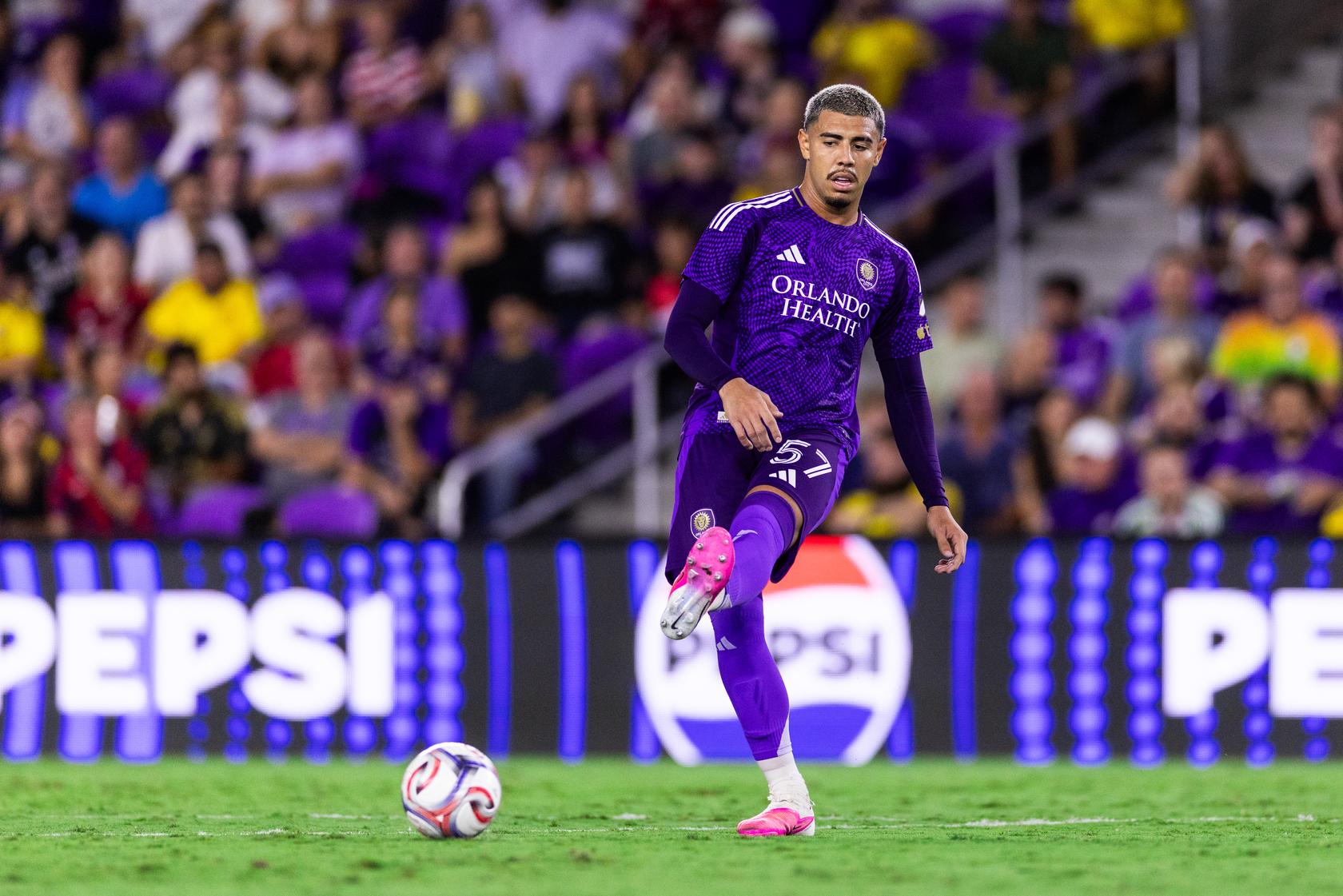
Welcome to Wednesday, Mane Landers. It’s also match day for Orlando City. As the regular season winds down, the tension ramps up. The Lions are currently above the playoff line, but it’s a precarious perch. With two matches this week, earning crucial points will be even more difficult. We will have more match prep later today, but for now, let’s get to the links.
Orlando City Visits Toronto FC Tonight
Orlando City travels to the Great White North tonight for a match against Eastern Conference opponent Toronto FC. Points are at a premium as both teams chase a playoff appearance. Rest assured that Orlando City interim head coach Martin Perelman is making sure the team is prepared and taking it one match at a time. It is a double match week so we’ll see how Perelman rotates the starting lineup.
Orlando Pride News and Notes
Yolanda Thomas is getting the Orlando Pride ready for Sunday’s road match against the Houston Dash. Of course, there are several players on international duty before then. Oihane got the start for Spain against the USWNT (see below) on Tuesday night. Barbra Banda scored a brace for Zambia in a 4-1 win over Uganda in an Olympic qualifier. Ally Lemos contributed two assists in the U.S. Under-23 Women’s National Team’s 5-0 dismantling of the Dominican Republic.
USWNT Comes from Behind to Draw Spain
The USWNT played its second friendly against top-ranked Spain Tuesday night at Subaru Park in Philadelphia. Much like the previous match, Spain was able to build a 2-0 lead before the end of the first half. Unlike last time, the U.S. was able to score two goals to draw Spain. Ashley Sanchez scored in the 49th minute in her first USWNT start in nearly two years, and Mallory Swanson added the second goal in the 86th minute. Unfortunately, the USWNT wasn’t able to get a third, but a 2-2 draw is still a better result than last time and coming back from two goals down made it feel more like a win in the end.
USMNT Players in Club Action
Former Orlando City defender Alex Freeman came on in the 63rd minute of Villarreal’s 3-1 victory over Napoli in the UEFA Champions League. Johnny Cardoso played all 90 minutes for Atletico Madrid in his club’s 2-0 win over Manchester United. He almost scored a goal, but it was disallowed after video review. Sergino Dest’s PSV lost 1-0 to RB Leipzig. Dest is Top 10 when it comes to Champions League appearances by U.S. players. There are a few more USMNT players making appearances in the matches today.
Free Kicks
- Orlando City is up to 12th in the MLS Power Rankings thanks to the 3-2 win over the Columbus Crew. Sure would be nice to follow that up with another three points tonight.
- Orlando City B’s Jacob Ramirez is up for MLS Next Pro’s Goal of the Year, so make sure you go vote.
- The chairman of the Independent Football Regulator, David Kogan, stated that he would resign if he encounters any political interferece regarding Manchester City’s future.
- The Orlando Pride’s Angelina was not in the lineup for Brazil’s 2-2 draw against Argentina.
- Netflix has acquired the broadcast rights in Spain for the 2030 World Cup. U.S. broadcast rights have not been sold yet.
That will do it for today. You can follow The Mane Land on Bluesky for live match updates and we will also have a recap of the match tonight and more coverage tomorrow. Vamos Orlando!


Orlando City vs. Toronto FC: Final Score 3-3 as Road Defense Again an Issue for OCSC

Orlando City vs. Toronto FC: Preview, How to Watch, TV Info, Live Stream, Lineups, Match Thread, and More

SkoPurp Soccer Episode 142: International Pride, Houston Dash Preview, and More

Orlando City vs. Columbus Crew: Preview, How to Watch, TV Info, Live Stream, Lineups, Match Thread, and More

Orlando City vs. Columbus Crew: Final Score 3-2 as Angulo Wins It Late for the Lions

Orlando City vs. Columbus Crew: Five Takeaways


-

 Lion Links2 weeks ago
Lion Links: 9/30/26
-

 Lion Links2 weeks ago
Lion Links: 10/1/26
-

 Orlando Pride2 weeks ago
Orlando Pride vs. San Diego Wave FC: Final Score 2-1 as Pride Near Playoff Elimination with Loss
-
 Lion Links2 weeks ago
Lion Links: 10/2/26
-

 Orlando Pride2 weeks ago
Orlando Pride vs. San Diego Wave FC: Preview, How to Watch, TV Info, Live Stream, Lineups, Match Thread, and More
-

 Lion Links1 week ago
Lion Links: 10/6/26
-
 Orlando City2 weeks ago
Orlando City’s Season to Remember – For Better and Worse
-

 Orlando Pride2 weeks ago
Orlando Pride vs. San Diego Wave: Three Keys to Victory