
Orlando Pride
Orlando Pride vs. Chicago Red Stars: Final Score 1-0 as Pride Lose Second Straight

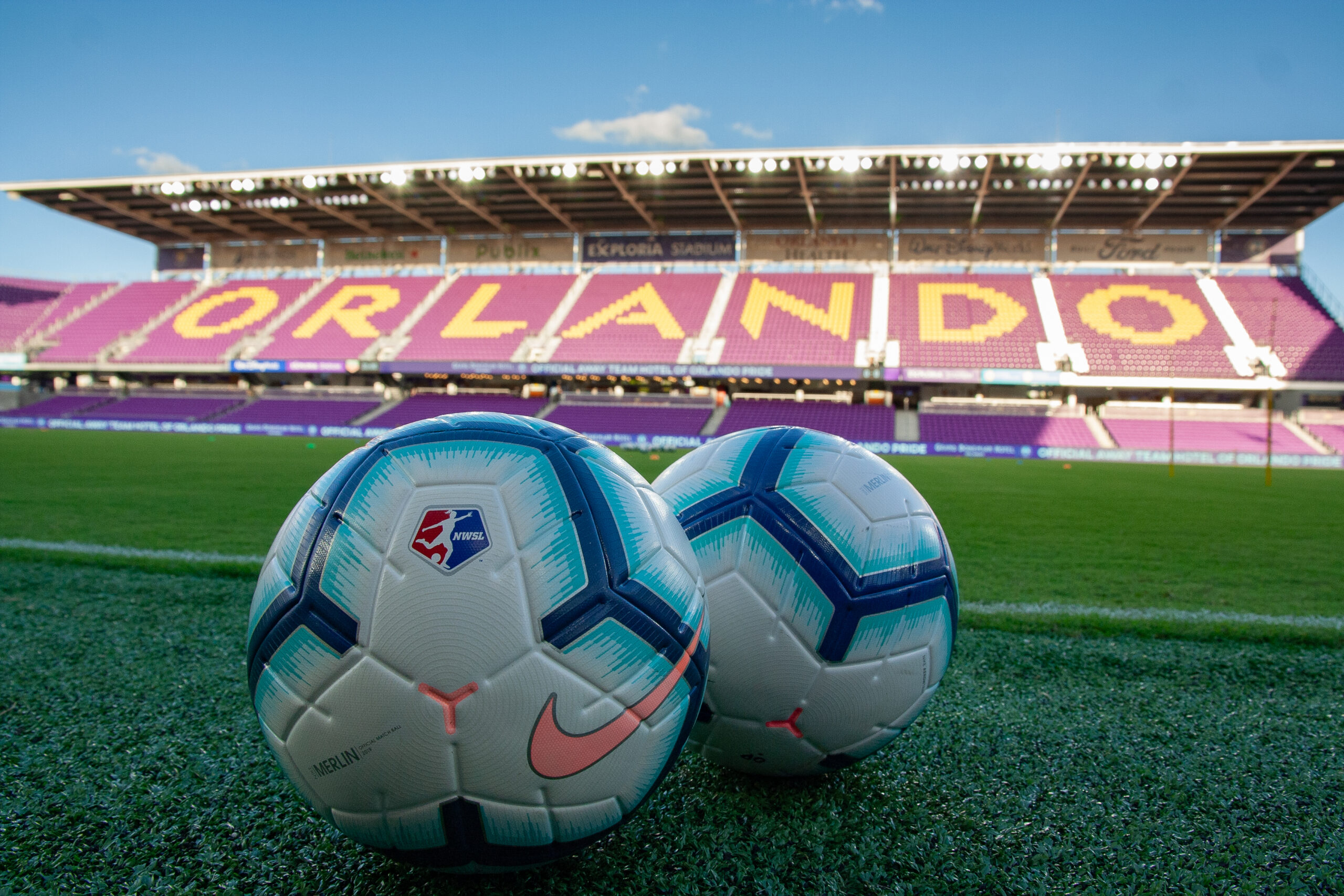
The Orlando Pride (2-4-2, 8 points) fell 1-0 to the Chicago Red Stars (4-1-3, 15 points) in Bridgeview, IL, on Mallory Pugh’s 10th-minute goal. The strike, which came off a Pride turnover in their own defensive half, held up for 80 minutes as the Pride suffered their second straight loss and third in the last four games.
Pride interim head coach Seb Hines was forced to make a few changes to the starting lineup in this game due to injury. Mikayla Cluff (left foot), Sydney Leroux (right ankle), and Leah Pruitt (right knee) were all out or questionable. Additionally, Kerry Abello and Jordyn Listro were on the bench after starting in the 5-0 loss last weekend.
The back four in front of Erin McLeod included Kylie Strom, Megan Montefusco, Toni Pressley, and Courtney Petersen. Gunny Jonsdottir moved up to defensive midfield with Viviana Villacorta after playing defense in Houston. Angharad James, Julie Doyle, and Abi Kim made up the attacking midfield behind Darian Jenkins.
Your #CHIvORL Starting XI ⭐️@orlandohealth | #PrideOfOrlando pic.twitter.com/N2YWCXHUPJ
— Orlando Pride (@ORLPride) June 12, 2022
The game started evenly, with both teams having trouble maintaining possession. The first chance of the game didn’t come until the ninth minute when Pugh sent a cross into the box from the left, looking for the head of Sarah Luebbert. The ball was a little high and behind the forward, so she wasn’t able to get much on it. As a result, the ball rolled slowly wide of the far post and out of play.
A minute later, Luebbert got behind the Pride back line, chasing a ball sent through by Pugh. However, McLeod did well to come off her line and beat Luebbert to the ball.
The Red Stars opened the scoring in the 10th minute from the best player on the field. It started with a bad giveaway by Strom to Bianca St. Georges on the Pride half of the field. Receiving the ball from the defender, Pugh took a couple of steps toward the Pride box. But neither Montefusco nor Pressley closed down the dangerous attacker, so the U.S. international took a shot on goal. It was perfectly placed into the top right corner, beyond the reach of McLeod, to give the hosts a 1-0 lead.
😱 @MalPugh ARE YOU SERIOUS 😱#MKOT | #AllTheAction pic.twitter.com/B6cqkXzlkY
— National Women’s Soccer League (@NWSL) June 12, 2022
The Red Stars almost doubled their lead in the 12th minute with a nearly identical play, but from Vanessa DiBernardo. Another giveaway provided an opportunity for a quick give-and-go between DiBernardo and Chelsie Dawber. Like Pugh two minutes earlier, DiBernardo took a shot on goal. But fortunately for the Pride, this one was off the crossbar.
“Obviously, the goal came from a turnover. And then I think the other shot that hit the crossbar came from a turnover,” Hines said after the game. “I mean, we’ve had a couple of sessions and it’s something that we need to work on.”
“Great goal from Mal Pugh,” Strom said. “But the main focus of this game was to stay tight defensively, not let them play through the middle. And for the most part we were successful in that. Yeah, great goal by her and we just need to, you know, step up and make sure we get pressure on the ball and don’t give the ball away.”
The Pride didn’t get their first chance until the 14th minute and it wasn’t a very good one. Montefusco received the ball from outside the box and took a shot towards goal but it was blocked.
The best first-half chance for the Pride came in the 35th minute. Montefusco sent a long ball up the right side for Jonsdottir. The midfielder quickly sent a cross in for Kim, who was darting towards the near post. However, Tatumn Milazzo did well to track the run and blocked the ball out of play. The ensuing corner was caught by Chicago goalkeeper Alyssa Naeher, her first real action of the day, ending the attack.
The final chance of the half was for the hosts a minute into injury time. In her first NWSL game, Dawber sent a dangerous ball through the Pride back line for St. Georges. As the defender reached the end line, McLeod came out to block it out of play.
While the Pride had a couple of chances in the first half, it was a dominant 45 minutes for Chicago. They ended the first period of play with more possession (58.7%-41.3%), shots (6-2), shots on goal (2-0), corners (2-1), crosses (3-2), and more accurate passing (83.2%-76.5%).
The Pride got off to a much better start to the second half and created their first chance inside two minutes. Jonsdottir got the first shot of the half, but it was blocked out of play by Amanda Kowalski.
The Pride continued to pressure the Red Stars back line, creating three corner kicks inside the first five minutes. The third corner by Strom found the head of Pressley at the near post. The Orlando captain redirected the ball towards goal but sent it just wide.
“You can see that we started the second half more aggressive,” Hine said. “Won some corners and set pieces and created more turnovers from Chicago. It’s just the final piece of making them turnovers into goal-scoring opportunities.”
The first second-half chance for Chicago came via a free kick after Pressley fouled Ava Cook just outside the box. Pugh sent a dangerous ball in for Yuki Nagasato. The former Japan international was unmarked at the top of the six, but couldn’t get her head on the cross as it went through the box.
In the 64th minute, the Pride escaped a dangerous situation when Zoe Morse found Pugh on the right side. The midfielder sent a cross to the back post where Milazzo was left completely unmarked. With McLeod covering the other side of the goal, Milazzo had a wide open net but couldn’t get her foot on the ball.
After the early second half flurry of chances, the Pride had trouble finding a rhythm offensively. They did get a chance in the 73rd minute through substitute Abello. Receiving the ball on the right side, the attacker did well to turn Rachel Hill and create some space for a shot. It was an ambitious attempt, but just missed a little high.
Chicago had another great chance in the 76th minute when St. Georges beat Petersen to a long ball by Hill at the end line. The defender’s first touch was back for Pugh, who was charging into the box. But Pressley did really well to get in front of the shot and block it.
Each team had chances to add to the scoring near the end. Pugh had an opportunity in the 89th minute, but the Pride defense did well to stay in front of her, forcing her into an off-balance shot that was easily collected by McLeod.
The Pride sprinted the other way, looking for an equalizer. The attack ended with Erika Tymrak taking a long-distance shot, but she didn’t get anything on it and it caused no trouble for Naeher, who easily caught it. It was Orlando’s first, and only, shot on target in the match.
It was a much better second half for the Pride, but they didn’t scare the hosts after the header by Pressley. The visitors had more shots in the second half (7-4) but only managed to get one of those shots on target.
“During halftime, we made a few adjustments. Talked about how to exploit them, what was working, what was not,” Strom said. “So yeah, we had a clear idea going into the second half of how we could expose them and get the equalizer. Especially in the last minutes, we created a few opportunities.”
Despite a better second 45 minutes by the Pride, the Red Stars ended the game with more possession (56.6%-43.4%), shots (10-9), shots on goal (4-1), and passing accuracy (79.3%-75.8%).
“I feel like it’s come down to one moment of brilliance from a brilliant player,” Hines said. “That goal is whatever you’re putting in any game and it’s very apparent that she’s on form right now and she’s playing well. And it’s come down to the fine margins. You know, we stuck to the game plan, we didn’t want to give anything up early in the game. The way that Chicago play, they like to play through the lines so we kind of clogged the middle up and were really disciplined with our pressing to win the ball in transition with the speed of Abi Kim and Julie Doyle. So the game plan was there, but like I said, it came to a moment of brilliance to find the result.”
Defensively, it was the first time that the Pride haven’t conceded multiple goals in five games. Only giving up an excellent goal after conceding five last weekend against the Houston Dash was something the team focused on coming into this one.
“Obviously, after what happened in Houston, we knew we had to come in and make a point and let everybody know that that will never ever happen again,” Strom said. “We put up a good fight. We came in really prepared. It’s unfortunate always to lose but I think we definitely made some steps forward.”
While there were obvious defensive improvements in this game, the lack of finishing or even generating clear-cut chances remained a problem. It was the second straight game that the Pride were held scoreless and the third straight game they were held scoreless before injury time.
“It’s the hardest part of the game, right? Putting the ball in the goal,” Hines said. “We’ve struggled of late to score goals, but I think the main focus was not to concede. We’ve conceded way too many goals this season. And that was the main focus going into the game.”
With the defense seemingly on the right path, the Pride will now work on the other end. That starts next Sunday when the team ends its three-game road trip in Portland.



Orlando Pride
Orlando Pride vs. Houston Dash: Final Score 2-1 as Pride Ride Big First Half to Road Win
The Pride avoided postseason elimination today by defeating the Houston Dash 2-1 in Southeast Texas.
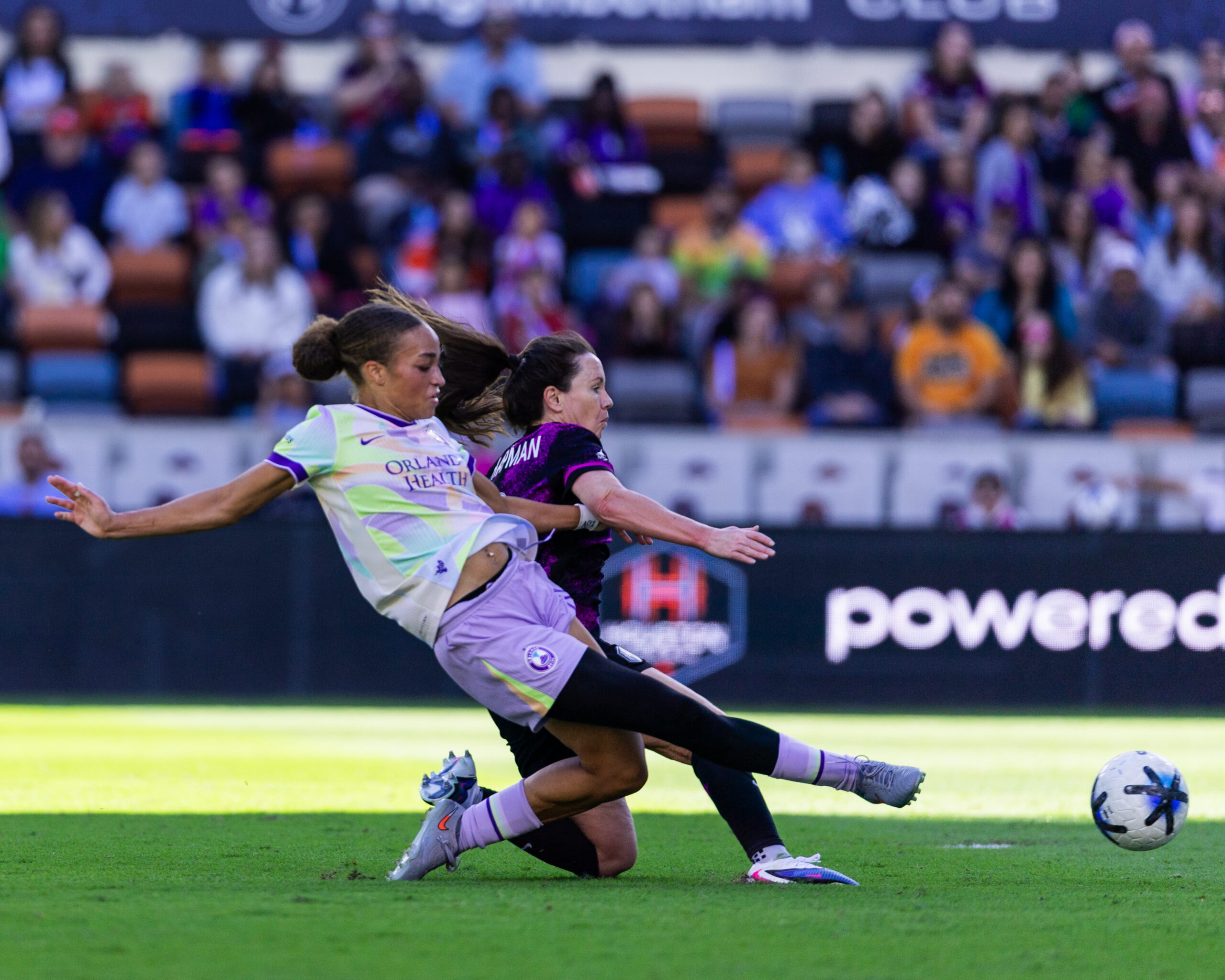
The Orlando Pride (11-14-3, 36 points) went on the road and snatched three valuable points, defeating the Houston Dash (8-14-6, 30 points) 2-1 this afternoon at Shell Energy Stadium in Houston, TX. Luana gave the visitors the lead with a 16th-minute penalty and Solai Washington doubled the advantage in the 31st minute. Daniele Colaprico pulled one back for the hosts in the 55th minute, but it wasn’t enough as the Pride staved off postseason elimination — at least for the moment — pending the result of the Seattle-Chicago match tonight.
Pride interim head coach Yolanda Thomas made four changes to the team that lost 2-1 to San Diego Wave FC on Oct. 2. Rafaelle, Kerry Abello, Luana, and Marta entered the lineup, replacing Hannah Anderson, Ally Lemos, Jacquie Ovalle, and Barbra Banda.
The back line in front of goalkeeper Cosette Morche was Hailie Mace, Rafaelle, Cori Dyke, and Oihane. Angelina and Luana were the defensive midfielders behind Abello, Haley McCutcheon, and Washington with Marta up top.
The Pride dominated the first half of the game, creating nearly all of the dangerous chances. It was a much different second 45 minutes, as Houston looked to erase a two-goal deficit and Orlando struggled to break out of its end for stretches. Thomas’ substitutions didn’t make the impact she hoped they would, and it took a strong effort to hold onto the three points. In the end, the two first-half goals were enough to get the win.
The Pride started the game on the front foot, creating multiple chances early. In the second minute, they kept a short clearance in the Dash third. Angelina sent McCutcheon into the Houston box, but Leah Klenke knocked the ball out for a corner kick.
Marta’s ensuing set piece curled on target, forcing Houston goalkeeper Jane Campbell to punch it away. It was headed further out but to an oncoming Luana, who headed the ball over the crossbar.
The Pride kept the ball in the Houston half, creating a second opportunity in the fourth minute. Washington played Angelina into the box from the right and the defensive midfielder immediately sent the ball centrally for Abello. However, Natalie Hammond deflected Abello’s shot, allowing Campbell to collect it.
The Dash created their first shot in the sixth minute. Kat Rader received a pass forward in the Pride third of the field and had plenty of space to approach the top of the box. Since nobody stepped up to defend the attacker, she took a shot, sending the ball into Morche’s arms.
Oihane pushed forward in the 11th minute, sending Washington toward the Houston box. The attacker avoided a slide tackle from Paige Nielsen and got into the box before Miljana Ivanovic clipped her foot and brought her down. Referee Shawn Tehini immediately pointed to the spot, awarding the Pride an early penalty.
As Luana stood over the ball, there was a lengthy video review to ensure there was contact and to see if the play was onside. The video assistant referee eventually sent Tehini to the monitor, and after another unnecessarily lengthy review, the referee confirmed the penalty..
Despite Marta being the team’s primary penalty taker, Luana remained over the ball and took the spot kick.
“We always have conversations, so players are ready, and we make sure that we train them,” Thomas said about Luana taking the penalty. “But really, in those moments, it’s about having multiple players ready and then letting them make those decisions.”
Campbell guessed correctly, but it was a quality attempt by the Brazilian, sending the ball just beyond Campbell’s reach and into the left corner. It was the second time in the last three games that the Pride have taken the lead inside the first 20 minutes.
“I actually said in the locker room, we are going to score inside the first 15 minutes. I think the goal clocked after 15 because of the VAR review, but that was my expectation,” Thomas said. “I told them I know we have the quality to go out and put this team under pressure, and we did.”
“That’s huge. And I think that catapulted us to having the rest of the first half be so well played,” Washington added. “I think we’re able to play so freely as a team. And all credit to Luana for being able to step up and bury it in the back of the net. Super special for her, and I’m just really glad that she was able to bury that and then you know give us a lead early.”
The Dash attempted a quick response, sending Clarissa Larisey over the top. While the striker had a step on Rafaelle, the center back got enough contact on Larisey to force the shot wide.
On the other end, Washington created another opportunity in the 19th minute. The attacker used her change of pace to create space from Allysha Chapman before sending a low cross to Abello. Unfortunately, Hammond was in front of Abello, forcing a weak shot that didn’t cause much trouble for Campbell.
Angelina sent the ball over the top in the 25th minute for Abello on the left. After entering the box, Abello laid the ball off for Washington, who sent a somewhat weak shot on goal. It looked like Campbell was in position to stop the attempt, but it somehow beat her, rolling just inside the left post. However, she was saved by Tehini’s whistle as Abello was offside on the initial ball.
Luana received a throw-in in her own third in the 31st minute, immediately playing the ball forward for Marta. The Pride captain spun to beat Klenke and sent Washington into the Houston half. Chapman put a body on Washington, but the attacker did well to shield her and beat Campbell, scoring her first professional goal.
“I saw Marta face up, and I know that when she can face up, she can play a perfect ball. And so my job is to run, create the space,” Washington said. “And when I saw that there was so much open space in the second half, I wanted to exploit it. She played a perfectly weighted ball, and I was just able to fight back with it. I mean, all glory to God. I wouldn’t be here without him. And I think it’s just a surreal feeling, kind of like a weight off my shoulders. And it just feels awesome.”
“She’s a forward that wants to score goals and is capable of scoring goals. So, you score a goal, you feel confident, and we wanted to ride that wave,” Thomas said. “So, I’m really happy for her. She worked so hard. She had the early one too that was pulled back. So, credit to her. She created a ton, and I think as she continues to work, she’ll walk out of these games with multiple goals.”
The penalty review and first-half hydration break resulted in seven minutes of stoppage time, allowing the Dash to create a couple of final first-half shots. But neither Kiki Van Zanten or Ivanovic’s chances were on target, giving the Pride a 2-0 lead at the break.
The Pride ended the first 45 minutes with the advantage in possession (58%-42%), shots (7-5), shots on target (3-1), crosses (13-6), corner kicks (5-1), and passing accuracy (84%-83%). Most importantly, they converted on two chances, giving them a commanding halftime lead.
“We wanted to go after them. We wanted to be confident on the ball, take space, play, and move off of each other,” Dyke said. “And I think we did. We did that. We did a really good job of that. And then, defensively, we wanted to put the pressure on them as well — pick our moments to go. And when we go, fully commit to that. And I think we did well with that as well in the first half.”
Thomas made two changes during the break, replacing Luana and Abello with Lemos and Julie Doyle.
Nielsen played a poor pass to Klenke near midfield in the 51st minute, giving the Pride a great chance to make it 3-0. Washington challenged Klenke for the ball, allowing McCutcheon to take possession. As her teammate collected it, Washington made a run forward and was sent on goal. Campbell came off her line to challenge Washington, blocking the shot to keep her team’s deficit at two.
Halftime substitute Khyah Harper intercepted a poor Angelina pass in the 54th minute, sending the ball up the right side for fellow substitute Kate Faasse. Rafaelle got in possession to shield the attacker but knocked the ball out for a corner kick. It was a costly error.
Washington blocked Rader’s initial set piece over the end line, but the second corner resulted in a goal. Hammond beat Angelina and sent the back across the face of goal from the back post. Colaprico got in front of Rafaelle to put the ball off Morche and in to cut the Pride lead in half.
“We obviously are disappointed not to get the clean sheet, Dyke said. “We always want to get that, and it shouldn’t take us a goal against to get going again. But when that happens, for sure, you’ve got to get the group together, refocus, get the energy up for the rest of the half, get that full commitment from the group to make sure we’re getting three points.”
The Pride should have had a third goal in the 57th minute when Lemos intercepted a Nielsen pass that Colaprico whiffed on. She sent a long ball over the back line for Washington making a run into the Houston box. For the second time, Washington had a breakaway, but this time she shot right at the goalkeeper. The rebound fell to the top of the box where Marta got to it first, but the Brazilian also sent her shot right at Campbell.
A giveaway at the back in the 65th minute was nearly costly for the Pride. Harper laid the ball off for Linda Ullmark 25 yards away from the goal. The substitute took a touch inside before unleashing a shot that looked like it might be on target. But she wasn’t able to keep it down, sending her attempt over the crossbar.
It appeared as though Houston tied the game in the 71st minute when Harper received a pass forward on the right. The attacker sent Faasse behind the back line and she did well to finish behind Morche. However, Faasse didn’t hold her run enough, resulting in her being just offside.
Thomas made two more changes in the 74th minute as Ovalle and Sanne Lekven replaced Angelina and Washington.
Lekven received a pass down the left in the 80th minute. She tried to beat Hammond, but her touch was too heavy, allowing the defender to gain position. As the two challenged for it and went down, Lekven rolled her left ankle. She had to be helped off the field and was replaced by Nicole Payne.
Quick passing by Lemos and Doyle in the 83rd minute sent Ovalle toward the end line. The attacker cut inside to lose Hammond and found Marta at the penalty spot. The Pride attacker tried to wrap the ball around Campbell to seal the win but sent her attempt wide.
Rader made a long run in the 86th minute before sending Faasse behind the Pride back line. Morche made the quick decision to come off her line, forcing Faasse to shoot earlier than she wanted, and the attempt rolled wide of the near post.
The Pride did well to see out the seven minutes of stoppage time, keeping possession and preventing the Dash from getting any decent looks.
Orlando ended the game with the advantage in possession (55%-45%), corner kicks (6-5), and shots on target (6-3), but both teams attempted 12 shots during the contest. Houston attempted more crosses (20-15) and had slightly better passing accuracy (81%-80%).
“Really happy with three points,” Thomas said. “So, I think that’s the most important thing. We get out of here with a win. We had a really fantastic first half. Not a great performance in the second half, but finding a way to win is what matters.”
“Always stoked to get three points, so we’re really happy about that,” Dyke added. “We were super encouraged by our performance in the first half. I think there’s a lot of positives to take away from that. Didn’t come out as strong in the second half, and we know that kind of let the level drop a little bit. But we still found a way to win, which at the end of the day is what matters.”
For the time being, the Pride remain in 11th place with 36 points, two behind Denver, four behind the Seattle Reign, and six behind the North Carolina Courage with two games remaining.
The Pride will look to build on this win as they return home a week from today to face NJ/NY Gotham FC in their home finale at Inter.co Stadium.
Orlando Pride
Orlando Pride vs. Houston Dash: Preview, How to Watch, TV Info, Live Stream, Lineups, Match Thread, and More
The Pride return from the international break with a trip to Texas to face the Houston Dash.
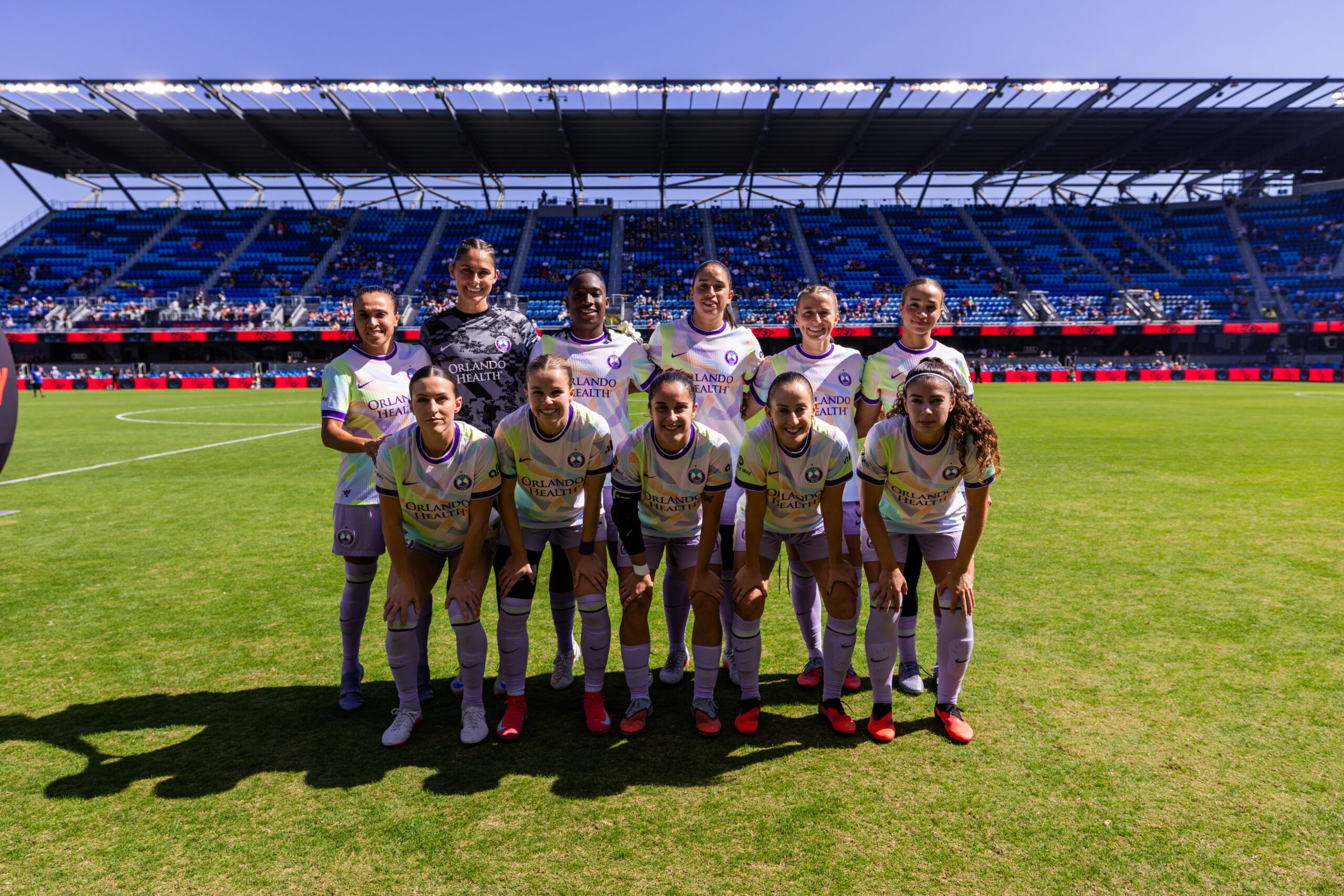
Welcome to your match preview and live thread as the Orlando Pride (10-14-3, 33 points) face the Houston Dash (8-13-6, 30 points) in Texas. This is the second and final time these teams will meet this year.
Here’s everything you need to know about today’s game.
History
The Pride and Dash have played 25 times since the Pride joined the NWSL in 2016. Orlando has a record of 11-9-3 against the Dash in regular-season play and 11-11-3 in all competitions, with the additional two losses coming in the 2020 Fall Series. The Pride hold a 3-6-2 regular-season record in Houston and a 3-7-2 away mark in all competitions.
The most recent meeting between the two teams took place on Sept. 6 in Orlando. The Pride took an early lead when a Barbra Banda cross went off Jane Campbell’s hand and Leah Klenke’s foot for an own goal. Klenke then fouled Summer Yates in the box just before halftime, conceding a penalty that Banda converted. Haley McCutcheon made it 3-0, effectively sealing the win. Kiki Van Zanten got one back for the visitors, but it was no more than a consolation goal as the Pride won 3-1.
The first meeting last year took place on June 7 in Orlando. It looked like the game was going to end in a scoreless draw until Cori Dyke scored in the ninth minute of second-half stoppage time, leading the Pride to a 1-0 win. On Oct. 3, in Houston, Malia Berkley gave the hosts the lead in the second half. But Simone Charley equalized late, ensuring the Pride got a point in the 1-1 draw.
On Aug. 23, 2024, in Houston, Yates’s goal gave the Pride a 1-0 win. The teams met for the second time that year on Sept. 28 in Orlando. Carson Pickett gave the hosts the lead and Angelina doubled the advantage after halftime. Yuki Nagasato got one back two minutes later, but Marta secured the 3-1 win in second-half stoppage time.
The Pride and Dash played June 3, 2023, in Houston in their first clash of that year. The Pride had trouble playing the ball out of the back and were hit on the counterattack, leading to a difficult night. Sophie Hirst gave the hosts the lead early and Michelle Alozie doubled the advantage just before halftime. Despite having more possession and shots, the Pride fell 2-0. The second game took place Oct. 15 in Orlando. The game was scoreless heading into the late stages, however, Marta’s late penalty conversion gave the Pride a 1-0 win.
The teams met for the first of two matches in 2022 on June 3 in Houston. A Nichelle Prince hat trick and goals by Rachel Daly and Alozie led Houston to an easy 5-0 win. It was the last game the Pride played before then-head coach Amanda Cromwell was placed on administrative leave. The teams met again on July 8, 2022, in Orlando. Ally Prisock’s own goal was the only scoring as the Pride took the 1-0 win, the second result in a seven-game unbeaten run.
The Pride and Dash played twice during the 2021 season. The first game was held June 26 in Houston. Maria Sanchez and Veronica Latsko gave the hosts a 2-0 lead. Gunny Jonsdottir got one back, but it wasn’t enough as the Dash won 2-1. The second meeting came on Sept. 5 at Exploria Stadium. The Dash took an early lead through Daly. However, Taylor Kornieck equalized late in a 1-1 draw.
The 2020 NWSL season was canceled due to COVID but these two teams were matched up in the Fall Series. On Sept. 26, 2020, in Houston, Prince put the Dash ahead, but Marisa Viggiano responded just before halftime. Sophie Schmidt gave the hosts another lead and Shea Groom put the game away as Houston won 3-1. The two teams played again on Oct. 9 at Osceola County Stadium in Kissimmee — the only time the Pride have played at the venue. Groom opened the scoring early and Latsko soon made it 2-0. Sydney Leroux got one back for the hosts, but Houston held on for a 2-1 win.
The Pride and Dash played three times in 2019, with the Pride going 0-2-1. During the first game in Houston on May 5, the Pride only recorded one shot on target. Houston scored the game’s only goal through Kealia Ohai in a 1-0 win. The second game on June 15 was also in Houston. Joanna Boyles scored her first professional goal to give the Pride the lead, but the Dash scored twice to take the advantage. A Danica Evans conversion allowed the Pride to escape the Oven with a 2-2 draw.
The third and final meeting in 2019 occurred on Aug. 10 in Orlando. The Pride ended the game with nine players as Julie King was sent off in the 61st minute and Marta was sent off in the 85th minute. However, the Dash were only able to convert once — a late penalty by Daly — and won 1-0.
The teams played three times during the 2018 season. The first game was held April 22 in Orlando. Chioma Ubogagu scored the lone goal, leading the Pride to a 1-0 win. They met again in Orlando on June 27 with Alex Morgan opening the scoring The Pride held that lead at the break, but the second half was all Houston, as Ohai and Sofia Huerta scored in a 2-1 Houston win. The final meeting that season was on July 11 in Houston, where Daly’s brace led the Dash to a 3-1 win.
The Pride and Dash played twice during the 2017 season and the visiting team won both games. The first was on June 17 in Houston. Camila and Alanna Kennedy added to a Marta brace as the Pride took a commanding 4-0 lead. The Dash tried to come back with goals by Poliana and Prince, but the Pride took home a 4-2 win. A week later in Orlando, Carli Lloyd and Daly scored in a 2-0 Houston win.
The teams met four times during the 2016 season — the Pride’s first in existence. The first meeting was the Pride’s first-ever regular-season home game on April 23. An Andressa own goal gave the Pride the lead just after the half before Lianne Sanderson and Morgan made it 3-0 for the hosts. Andressa scored one for her own team, but that was it for Houston as the Pride won 3-1 in front of a then-NWSL record 23,403 fans.
The second meeting was in Houston on May 20. Kristen Edmonds scored the only goal in the 81st minute as the Pride won 1-0. The third meeting that year came on June 23 in Orlando. Jasmyne Spencer broke the scoreless deadlock in second-half injury time as the Pride won 1-0. The fourth and final meeting came on Sept. 3 in Houston. The Dash took a 3-0 lead with goals by Janine Beckie, Poliana, and Ohai. Morgan and Edmonds got the Pride back into the game, but Ohai put it away with her second in a 4-2 Dash win.
Overview
The Pride enter this game looking to finish a challenging season on a positive note. They sit in 11th place on 33 points with a 10-3-14 record through 27 games. The Pride have scored 36 goals — 10th in the league — while their 43 goals conceded is fourth most. After winning the NWSL Shield and NWSL Championship in 2024, and going deep in the playoffs a year ago, the team has struggled to find consistency this season, alternating between promising performances and disappointing results.
The Pride earned a 3-1 win over Bay FC on Sept. 27 before falling 2-1 to San Diego Wave FC on Oct. 2. Banda leads the team with 17 goals and four assists, making her one of the league’s most dangerous attacking players, but she will miss this match due to travel protocols after playing for Zambia during the international break. Haley McCutcheon has emerged as a surprising scoring contributor, ranking second on the team with six goals.
Defensively, the team’s 43 goals conceded reflect its struggles to keep opponents off the scoreboard. The back line changed constantly under Seb Hines, but interim head coach Yolanda Thomas has brought some consistency. Since taking over, Thomas has gone with Hailie Mace, Rafaelle or Hannah Anderson, Cori Dyke, and Oihane in front of goalkeeper Cosette Morche in every game.
As for the Dash, they sit just behind the Pride in 13th with 30 points and an 8-6-13 record. They’ve scored 34 goals and conceded 39 goals. The Dash are three points behind the Pride and will look to take advantage of home-field support at Shell Energy Stadium to close the gap in the standings, despite being eliminated from playoff contention.
Houston’s recent results have also been inconsistent. The Dash beat Boston Legacy FC 2-1 on Sept. 20, drew 1-1 with Portland on Sept. 26, and fell 3-2 to Washington on Oct. 4. Midfielder Kat Rader leads Houston with 10 goals and one assist, providing an important scoring threat from the midfield. She’s followed by Van Zanten with five goals, Kate Faasse and Linda Ullmark with three goals apiece, and Clarissa Larisey and Miljana Ivanovic with two goals each.
Defensively, the Dash have conceded fewer goals than the Pride, but they’ve still struggled to consistently shut down opposing attacks. Campbell will be key to containing the Pride’s attack, while Houston’s defense must limit space in dangerous areas.
“They’re still a team that frankly no one had expectations of. So I think they have shown up every game for themselves. And I don’t think that changes,” Thomas said of today’s opponent. “They’ve obviously had some changes as well in coaches since the last time we played them, but I think they’re going to show up very similarly to the way they did here in terms of their intensity and their willingness to get after it. So, we’re preparing for that. But, I think most of our focus is on handling both emotionally and tactically the reset we’re having to do because we’re in a difficult position. And really it comes down to competing is in our blood. We always want to represent this city and this club with pride. And, at the end of the day, people like to say that pressure creates or pressure builds character, but I’d say that pressure reveals character. And my expectation and goal of the team is that when we walk away from the game, the character that has been revealed is one that we’re proud of.”
The only player missing for the Pride tonight is Banda (excused absence), who can’t re-enter the country yet after representing Zambia. Houston will be without Malia Berkely (maternity leave), Evelina Duljan (excused absence), Makenzy Robbe (knee), and Amanda West (knee). Avery Patterson (foot) is listed as questionable.
Offical Lineups
Orlando Pride (4-2-3-1)
Goalkeeper: Cosette Morche.
Defenders: Kerry Abello, Rafaelle, Cori Dyke, Oihane.
Defensive Midfielders: Angelina, Haley McCutcheon.
Attacking Midfielders: Solai Washington, Luana, Hallie Mace.
Forward: Mace.
Bench: Cara Martin, Kylie Nadaner, Ally Lemos, Jacquie Ovalle, Julie Doyle, Sanne Lekven, Nicole Payne, Summer Yates, Hannah Anderson.
Houston Dash (4-2-3-1)
Goalkeeper: Jane Campbell.
Defenders: Allysha Chapman, Leah Klenke, Paige Nielsen, Natalie Hammond.
Defensive Midfielders: Maggie Graham, Daniele Colaprico.
Attacking Midfielders: Miljana Ivanovic, Kat Rader, Kiki Van Zanten.
Forward: Clarissa Larisey.
Bench: Caroline Delisle, Sophie Schmidt, Sarah Puntigam, Cate Hardin, Kate Faasse, Lisa Boattin, Linda Ullmark, Khyah Harper, Jordan Brewster.
Referees
REF: Shawn Tehini.
AR1: Matt Rodman.
AR2: Chris Schurfranz.
4TH: Mario Maric.
VAR: Abdou Ndiaye.
AVAR: Jackson Krauser.
How to Watch
Match Time: 1 p.m.
Venue: Shell Energy Stadium — Houston, TX.
TV: CBS Sports Network.
Streaming: None.
Social Media: For live updates and rapid reaction, follow @themaneland.bsky.social on Bluesky and the Orlando Pride’s official Twitter (@ORLPride) or Bluesky (@orlpride.com) feed.
Enjoy the game. Go Pride!
Orlando Pride
Individual Brilliance, Collective Failure: The Pride’s Lost Season
Several Pride players have standout statistics, but the team’s performance will leave the Pride short of playoff qualification.

My son joined his first real basketball team this fall, which has given me a reason to share my favorite basketball movies with him. He is not old enough for some (I’m looking at you, Above the Rim and White Men Can’t Jump), but classics like Hoosiers and Space Jam are just as watchable today as they were when they came out last century.
While Hoosiers is probably the top basketball movie on my list, Blue Chips is just behind it. The whole premise of Blue Chips (a coach looking the other way while boosters entice top “blue chip” players to come to his college by offering under-the-table deals) is not something that would be a problem in 2026, with NIL money flowing like lava to high school recruits, but back in the 1990s, those kinds of deals were against NCAA rules. The fictional Western University, which definitely was not based on UCLA, needed some elite players, quickly, and so they broke the rules to bring in three of the best high school players in the country.
There is no official definition of what defines a “blue chip” anything, but the term comes from casinos, where blue chips traditionally were the highest valued chips a player could hold.
As a mathematician, I have spent a lot of time thinking about casinos and games of chance, as all of them are based on probabilities. The end goal in a casino is to walk away with money, preferably more than the amount that you started with, just as the end goal in soccer is to walk away with points, also preferably more than the amount that you started with.
In order to do that in soccer, a team needs to score goals and prevent goals from being scored, and thankfully the American Soccer Analysis (ASA) goals added metric captures that value for us. It is a singular metric, and certainly not the only value metric that exists, but it is my favorite, because I think it does the best job of looking at the entire game of soccer and quantifying value from different components.
The overall goals added value is made up by the sum of a player’s performance in six sub-metrics, each weighted evenly. Those six sub-metrics are:
- Shooting: Shots.
- Receiving: Receptions.
- Passing: Passes.
- Dribbling: Carries, take-ons, miscontrols, dispossessions.
- Interrupting: Tackles, interceptions, blocks, clearances, recoveries, contested headers.
- Fouling: Fouls committed, fouls received.
As there is no formal definition of how to quantify a blue chip performance, I am going to use “in the top 10% at their position” as my benchmark. ASA’s data goes all the way back to 2016, conveniently the same season that the Orlando Pride joined the NWSL, and the table below reveals the number of Pride field players who finished in the top 10% of all players at their position at each sub-metric.
| Season | Dribbling | Fouling | Interrupting | Passing | Receiving | Shooting | Blue Chips |
|---|---|---|---|---|---|---|---|
| 2016 | 1 | 4 | 3 | 1 | 1 | 2 | 12 |
| 2017 | 1 | 1 | 2 | 5 | 4 | 3 | 16 |
| 2018 | 1 | 2 | 0 | 0 | 4 | 4 | 11 |
| 2019 | 1 | 2 | 3 | 2 | 2 | 1 | 11 |
| 2020* | N/A | N/A | N/A | N/A | N/A | N/A | N/A |
| 2021 | 1 | 1 | 6 | 2 | 1 | 0 | 11 |
| 2022 | 0 | 2 | 3 | 0 | 0 | 2 | 7 |
| 2023 | 3 | 2 | 1 | 3 | 3 | 3 | 15 |
| 2024 | 4 | 3 | 2 | 3 | 1 | 3 | 16 |
| 2025 | 1 | 3 | 0 | 1 | 2 | 1 | 8 |
| 2026 | 3 | 3 | 1 | 2 | 3 | 2 | 14 |
- *The Pride did not compete during the 2020 season due to COVID-19.
Unsurprisingly, the two seasons with the most blue chip performances are 2017 and 2024, the only two seasons when the Pride finished in the top three in the league table. It was a little surprising that the 2023 team had so many blue chip performances, considering that team did not make the playoffs. However, even though that team finished seventh in the table, it was just two points back from finishing fourth, and if not for an own goal by Anna Moorhouse on a poor punch attempt during the penultimate game of the season, the Pride would have finished fifth and in the playoffs. Sigh.
The current team ranks next in Pride history, with 14 blue chip performances up to this point of the season. Those 14 are the fourth-most in the NWSL this year, and the team with the most, Kansas City, only has 16.
It is disappointing that Orlando has only a sliver of a chance to make the playoffs, as the team appears likely to have squandered one of the best seasons in league history from Barbra Banda (12th-best season ever in overall goals added, and the top-ranked player in 2026). Among strikers, Banda has four blue chip performances, ranking in the top 10% in dribbling, fouling, receiving, and shooting.
Not to be outdone, Haley McCutcheon is also in the top 10% among defensive midfielders in those same four categories. McCutcheon’s six goals ties her for 24th overall in the league, and she is second on the Pride despite not playing an attacking position (well, sometimes she’s placed there, but she’s still a defensive midfielder). Her season is not as historically impressive as Banda’s (her 2026 is only 61st best among all-time defensive midfielders), but she has been the seventh- best defensive midfielder this season and is in the top 10% in four categories.
Banda and McCutcheon account for eight of the Pride’s 14 blue chip performances, the other six are:
- Zara Chavosi (center back) – Dribbling.
- Rafaelle (center back) – Fouling.
- Julie Doyle (winger) – Interrupting.
- Hailie Mace (fullback) – Passing.
- Marta (striker) – Passing.
- Hannah Anderson (center back) – Receiving.
Among those players, only Rafaelle has had a good season overall. The Brazilian ranks sixth among all center backs in 2026, the other five players, and for that matter everyone else on the team aside from McCutcheon, rank outside the top 25% at their positions.
This includes both of the Pride’s goalkeepers, as neither Moorhouse or Cosette Morché are in the top 25% for 2026. Goalkeeper has never been a strong position for the Pride in ASA’s goalkeeping metrics. Dating back to the 2016 season, there have been 84 opportunities for Pride goalkeepers to earn a blue chip rating in the six goalkeeping metrics (claiming, fielding, handling, passing, shotstopping, sweeping), and the collective has only finished in the top 10% in a category seven times.
Fans could care less about blue chip players. The only color that really matters is gold, as in the Tiffany & Co-designed NWSL trophies for the regular season and playoff champions. Blue chip players can go a long way toward helping a team win those trophies, but in the end, the team’s performance always matters the most.
The 2026 Pride will be remembered for moments of brilliance, in particular from the bluest of blue chip players in Banda, but the enduring memory will be probably be the team’s collective failure to put it all together and even qualify for the playoffs.
And that leaves all of us Pride fans feeling blue.


Intelligence Report: Orlando City vs. New York City FC

Lion Links: 10/23/26

Orlando’s October Outburst Originated Months Ago


-

 Opinion2 weeks ago
Orlando City’s Final Playoff Push Filled with Challenges
-
 Orlando City2 weeks ago
Orlando City vs. Columbus Crew: Five Takeaways
-
 Orlando City2 weeks ago
Orlando City vs. Columbus Crew: Final Score 3-2 as Angulo Wins It Late for the Lions
-
 Orlando City2 weeks ago
Orlando City vs. Columbus Crew: Preview, How to Watch, TV Info, Live Stream, Lineups, Match Thread, and More
-
 Orlando City1 week ago
Orlando City vs. Toronto FC: Preview, How to Watch, TV Info, Live Stream, Lineups, Match Thread, and More
-
 Lion Links2 weeks ago
Lion Links: 10/9/26
-
 Lion Links1 week ago
Lion Links: 10/13/26
-

 Lion Links1 week ago
Lion Links: 10/14/26