
Opinion
How Much Longer will Duncan McGuire be Dunc-ing on Orlando City’s Opponents?
A look into Duncan McGuire’s tenure with Orlando City and an evaluation of what the next few months may look like for him now that he has returned from the Olympics.

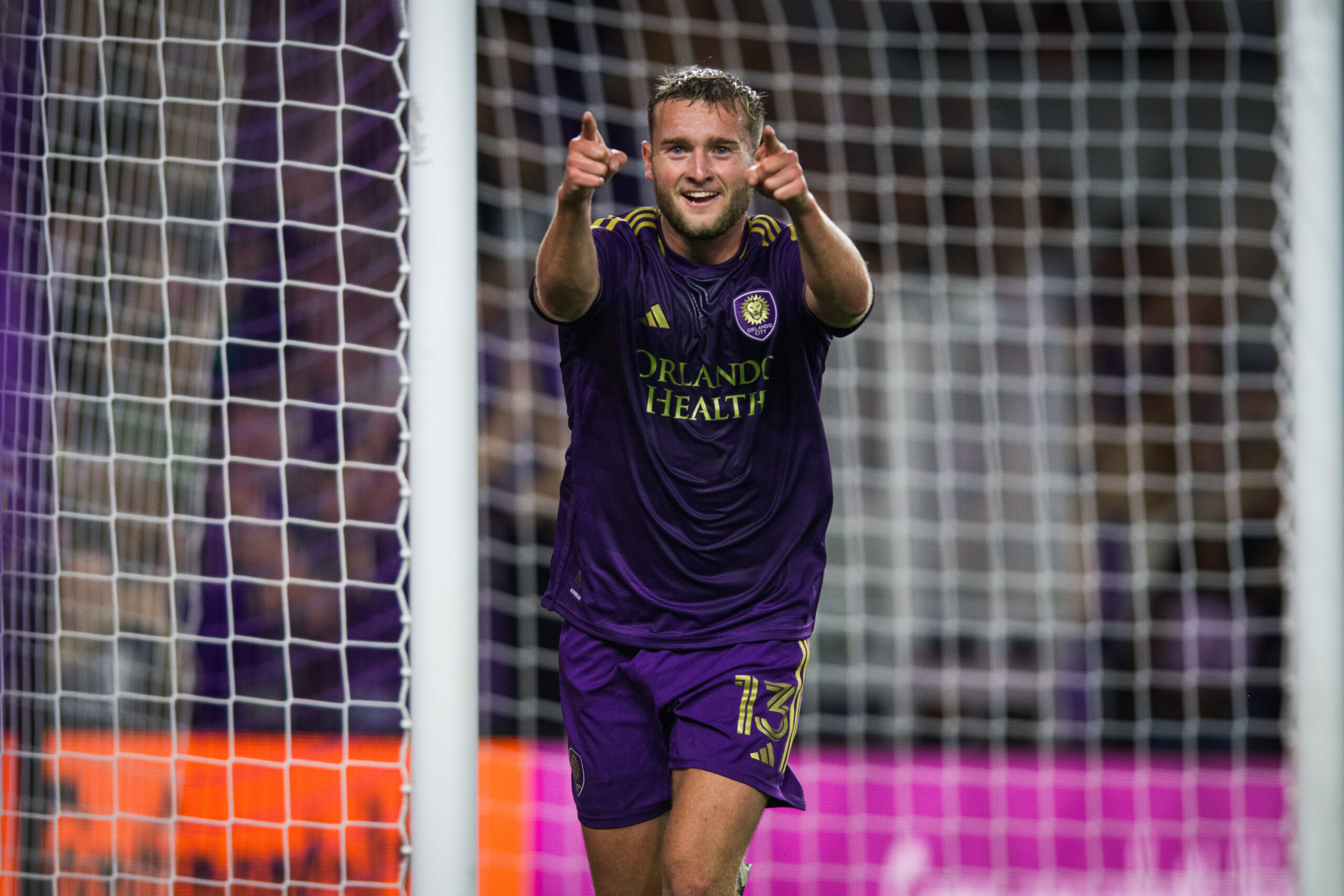
I love dunking. Oreos, Dunkaroos, my son in the pool, basketballs on a lowered rim — I love all types of dunking. You do too, I know you do. In fact, I think dunking is universally loved by everyone, except the NCAA during the 1960s, when they outlawed dunking in basketball because Lew Alcindor (now known as Kareem Abdul-Jabbar) was unstoppable and they were trying to find a way to make college basketball games more interesting.
Frédéric Weis probably also does not love dunking (France, Olympics, basketball, this is the time of all times to reference that dunk), but that may be it for those who were or are anti-dunk. I also love Dunkin’, and their slogan, “America runs on Dunkin’,” which Orlando City fans co-opted to Orlando runs on Duncan (McGuire), who is the subject of my focus this week. Duncan has returned from the Olympics but the question on all of our minds now is: for how long?
That we are even asking that question two years into McGuire’s professional career is a testament to his skill and will, because he is one of only four players from the entire 2023 MLS SuperDraft (88 selections) to have played more than 2,500 MLS minutes, and as the sixth overall pick, he was drafted four spots behind teammate Shak Mohammed, who has played only five MLS minutes in his career thus far. MLS draftees generally do not blossom so quickly that they are European targets after their first season, though Orlando City has had more success than most in the SuperDraft, as they drafted Cyle Larin, Chris Mueller and Daryl Dike, all of whom play(ed) in Europe after starting their careers in Orlando.
While Duncan was not Orlando City’s top pick in 2023 he was still a top six overall pick, so he did come in with some pedigree, but he was not a player who came up playing on youth national teams and with the expectation that he would walk right into minutes as a professional player. He did not play in either of his first two professional matches, and for the opening half of the 2023 season he generally sat behind Ercan Kara and then came in as a sub at some point in the final third of the game. But in those limited minutes he showed that his style of play was better suited to partnering with the rest of the Orlando City attack than that of Kara, leading to Kara’s return to Europe and McGuire taking over as the team’s primary striker.
Looking at his stats in 2023, it is easy to see why he took over that starting role, as using stats found on fbref.com, McGuire finished tied for 12th in goals (13), was third in goals per 90 minutes (0.84), and led MLS in shots-on-target percentage (72.7%), percentage of shots that became goals (39%), and goals – expected goals (+7.7). In general, I do not love bringing in expected goals as a stat, but in some cases it can be instructive, and in this case I think it is, because expected goals measure the average likelihood of a player scoring a goal from a specific location. That means McGuire scored 7.7 more goals than the average player would have been expected to score from where he took his shots in 2023.
Here are his 2023 MLS shots, courtesy of fotmob.com’s shot chart (the red circle is his final goal of 2023, because the site does not have a view without at least one shot highlighted):
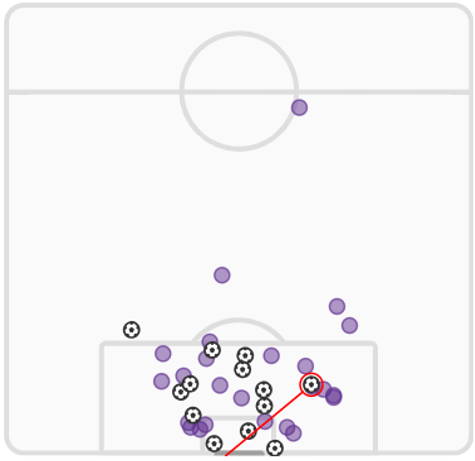
Interestingly, that shot from near the midfield line has an expected goal value of 0.03, meaning the coders who set the values expect a goal about once in every 33 shots from there. I disagree. Vehemently.
Coming back to Duncan, let’s look at how he has been doing in 2024 as compared to 2023 in those same categories where he did so well, with one additional stat added in for comparison purposes (MLS rank among qualified players is shown in parentheses for the metrics; t means tied for):
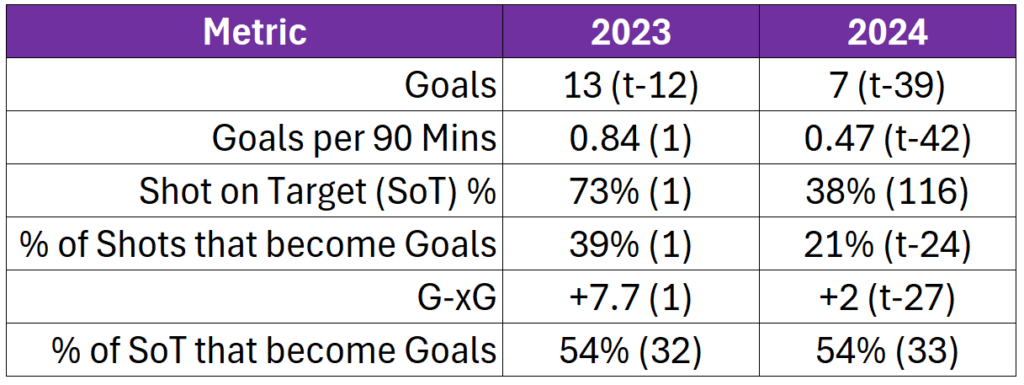
Yes, the numbers on the right do not look quite as impressive as those on the left, as there are no top 10 rankings in any of these metrics so far this year. However, McGuire’s 2024 numbers are not bad, they are just not quite as good as 2023, except for the fact that when he shoots it on target he scores at exactly the same clip as he did in 2023, which is likely not coincidental and is a product of his shooting proficiency.
With about one quarter of the season left to play, he will have plenty of chances to increase his goal tally (unless he’s transferred out), and he also can make some improvements on the other percentage-based metrics as well. I do not think he will get to 13 goals again, but he has a shot to get to 10, which could make him the third or fourth (depending on if Facundo Torres also scores 10 goals) Orlando City player ever to have multiple 10+ goals in an MLS season. McGuire also now has 20 MLS goals in his first two seasons, and I expect he will get a few more before the end of the 2024 campaign, which I will come back to after a quick detour to look at those 20 total goals.
That 20 goals made for a nice round number, so I took a look at this decade (the 2020s) to see how many players in their age 23 or younger season had scored at least 20 MLS goals. The answer: 17. My dad, the world’s foremost pointer outer (go with it) of the prevalence of how often 17 shows up in the world is nodding his head and saying he knew it would be 17.
For those wondering, the leader this decade in goals scored by young players is FC Dallas forward Jesús Ferreira, who has scored 43 goals and will not turn 24 until this December. Ferreira has scored those 43 goals in 8,950 MLS minutes, McGuire’s 20 goals were scored in only 2,730 MLS minutes, the fewest of any of those 17 players. Duncan’s career MLS goals per 90 minutes is 0.66, which ranks him first among those 17 young players and also fourth in all of MLS (among players of any age) in this decade. The other three in the top four (Giorgos Giakoumakis, Chicho Arango, and Cucho Hernandez — presented in order of rank) were/are all Designated Players and all had/have salaries at least 20 times higher than McGuire’s, according to the MLS Salary Guide.
I mentioned that I would come back to the fact that I expect Duncan to score a few more goals this season, and that is because I think that he will finish this season with Orlando City. I have no inside information. I just think it makes more sense for him to finish this MLS season strongly and then depart in the MLS off-season, which is right smack in the middle of European seasons, when there will be teams who really need a striker due to injury or a relegation battle or because they are chasing promotion — like Barnsley was several years ago when the club made a loan deal for Daryl Dike to try to win promotion to the Premier League. It is no secret that McGuire wants to play in Europe, and he clearly has the ability to do so based on his stats and the eye test, but as it usually comes down to, it will be about timing and the purchase price.
Transfermarkt values Duncan at €5 million (approximately $5.46 million), third highest on Orlando City behind Facundo Torres (€14 million, $15.26 million) and Martín Ojeda (€6 million, $6.54 million), tied for 33rd overall among all MLS players, and tied for 12th among players 23 or younger. For a player who cost Orlando City nothing to acquire, any compensation would be nearly pure profit, so the team has an incentive to sell him as opposed to letting him play out his contract and leave for free.
McGuire had an opportunity to break out at the Olympics and drive up immediate interest, but the U.S. Olympic Team was not really set up in a way to maximize, or really even utilize at all, his talents, and he did not contribute any goals or assists. I do not think this Olympic performance will affect how talent evaluators and other teams view him, but had he scored some goals or contributed more than just his trademark max effort at all times, that could have been a catalyst for a move before the end of the MLS transfer window on Aug. 14.
Alas for Duncan, it did not go the way he had hoped, but as he always does, he left it all out on the field…and then left France the following day (Saturday), returning to Orlando in time to sub in during the Leagues Cup match on Sunday night. That’s impressive dedication, and it indicated to me that he is locked in on getting on the field and showing what he can do again.
He did return to a different Orlando City team though, one with a scorching-hot Ramiro Enrique playing in what was McGuire’s striker role and on a five, which became six, game scoring run. We may see the return of supersub Duncan for a while, reminiscent of his first few months in 2023, but I think that by the end of the season we will see McGuire back as the starting striker. If so, it will mean he is in good form, because Enrique is only going to be beaten out by a deserving player.
I think this is a best-case scenario for Orlando City — a highly motivated McGuire who wants his spot back and who wants to show European evaluators that they should bring him across the Atlantic, and a highly motivated Enrique, who wants to keep his starting spot and who will want to be the clear choice to be the starter when Duncan eventually does leave.
Orlando City fans are in for 90 minutes of strong striker play in every match now that McGuire is back and Enrique has come on like the proverbial freight train, and I think we have a good chance to see another end-of-season run coming for the Lions down the stretch.
As the Pride’s Kerry Abello always says, vamos!



Opinion
Orlando City Must Heed August Lessons Ahead of Crowded September
Orlando City would be wise to take the lessons it learned in August and apply them to a packed September slate.

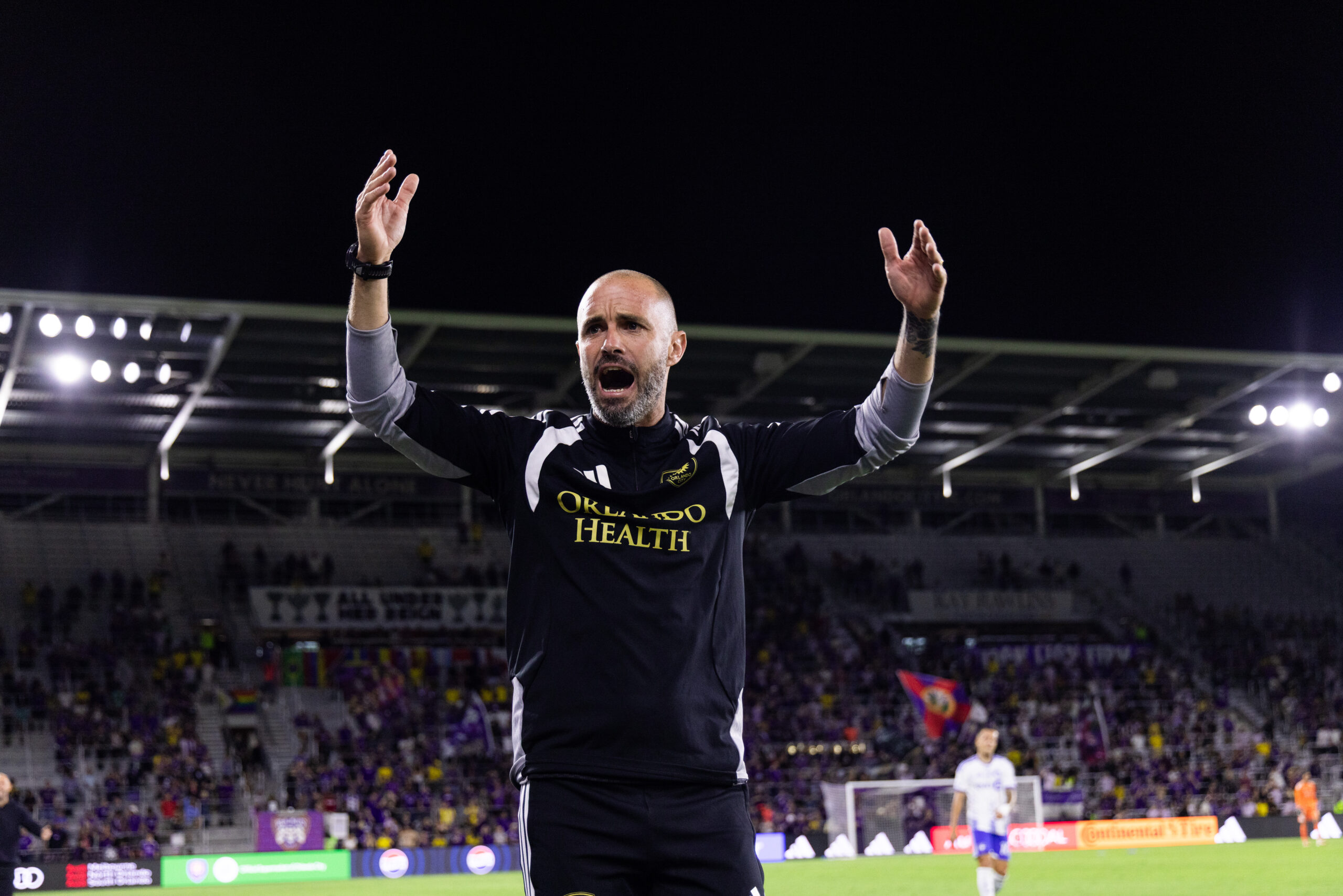
If it feels like Orlando City has played a boatload of matches during the month of August, get ready to experience some deja vu. After playing a whopping seven games in 31 days this month, the Lions will compete six times in 30 days during September. The August slate was a mixed bag for the men in purple. The team won just two of its seven contests and looked leggy as the days drew on after returning to league play with two strong performances over the San Jose Earthquakes and Nashville SC at the end of July. There were certainly mitigating factors, as the Lions battled injuries in areas with questionable depth, but there are a few lessons that have been dished out over the past month that can hold the Lions in good stead ahead of another period of fixture congestion.
Address the Left Back Situation
Fortunately, steps have already been taken to handle the first item on our list. Left back has continuously been a problem for Orlando City this year, as Adrian Marin largely hasn’t looked at the level Orlando needs him to be. Bernardo Rhein showed enough promise to displace him and played well, but he went down injured and Martin Perelman has had to use a combination of Marin and Zakaria Taifi (a natural right back) ever since. Taifi has been inconsistent on the left, and is susceptible to being beaten down the flank and over the top at the back post, and he certainly looks more comfortable on the right than the left.
Thursday’s loan signing of left back Vinicius Nogueira gives the Lions another natural left back to work with, and his arrival will hopefully help solve the problems in that area of the field. If it doesn’t, then it might be wise to consider shifting Brekalo out wide until Rhein returns to fitness, although that solution would depend on Iago, Marin, or possibly Wilder Cartagena being able to capably deputize at center back.
Don’t Be Afraid to Rotate
While rotation in certain areas was difficult at times due to absences at times of Rhein, Marin, Braian Ojeda, Martin Ojeda, and Marco Pasalic, Orlando looked noticeably leggy as August stretched on. Antoine Griezmann has yet to come off the field in a game he’s played for the Lions, and Justin Ellis has started all but three of the nine games the team has played after the World Cup break. Considering they are currently the team’s two most dynamic players, Orlando needs them at their best, and it wasn’t surprising to see loose touches, sloppy passing, and slow decision-making start to creep in as the month drew itself out. Fortunately, Perelman has shown himself more amenable to finding rest for Ellis lately, as the youngster has played just 308 of the last possible 540 minutes since. That will need to continue in order for him to be at his best, and Griezmann almost certainly needs to start being used in a similar way so as not to risk an injury.
Mix-Up the On-Field Approach
When Orlando’s fluid, position-less style of football works, as it did against San Jose, it’s almost unstoppable. The new-look style is at its best against opponents that want to come out and attack, as it emphasizes flooding numbers forward in transition and hitting opponents on the counterattack. When it doesn’t work, in the way we saw during the first half against Real Salt Lake, it’s extremely ineffective. Players need to be fit and rested to do the level of running that’s asked of them, and against teams that are content to sit back and stack numbers behind the ball, it can be hard to create chances when the Lions lack a traditional focal point up front to play off of.
By contrast, when Daryl Dike came on in the second half of the RSL game and Griezmann shifted into midfield, OCSC looked like a completely different team that arguably should have scored more than the two goals it managed. Perelman did well to make the correct adjustments, but there needs to be a willingness to be more flexible with the lineups and approach from the opening whistle — both for rotational and strategic purposes.
In soccer, as in life, there are no guarantees of anything. With that said, if OCSC can successfully incorporate those three August takeaways into its September campaign, it should theoretically put the team in a good position to succeed. Vamos Orlando!
Opinion
Three Unlikely Players Who Could Shape the Second Half of Orlando City’s Season
Three Lions who are in position to affect Orlando’s fortunes as they start the back half of the 2026 season.
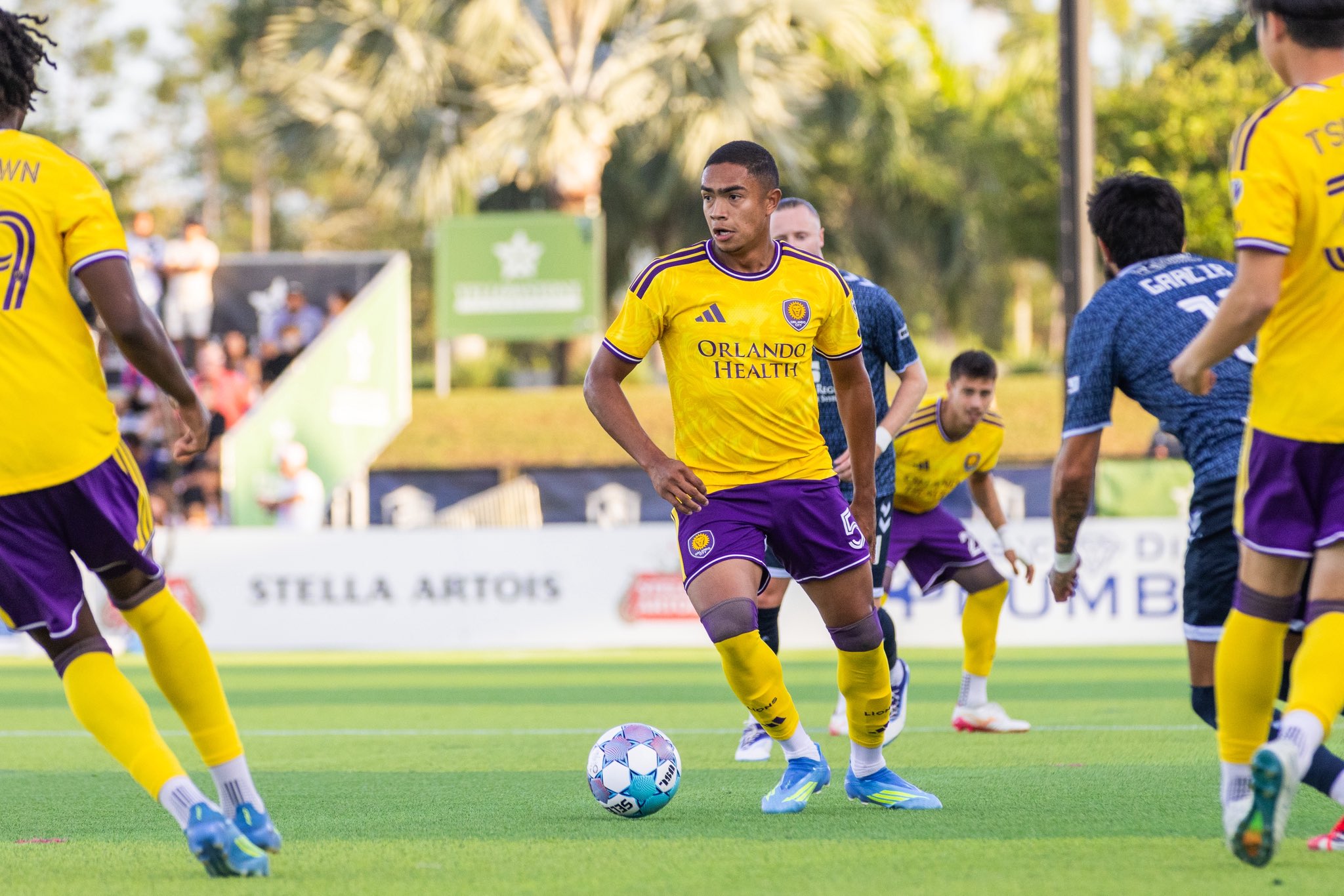
With 18 matches under its belt in Major League Soccer, Orlando City is just past the midway point of its season. Despite a horrific first few months, there’s been reason for optimism lately with improved play and some better results to go along with it. There’s still a lot of improvement that can be made, and with MLS play, Leagues Cup, and a U.S. Open Cup semifinal all on the table, there will be plenty of time to do so.
When it comes to key players for the rest of the season, there are a few usual suspects that spring to mind. Antoine Griezmann, Justin Ellis, Martin Ojeda (once he’s back from injury), Robin Jansson, and Maxime Crepeau are probably chief among those names. Rather than focus on them, I’d like to discuss a few less prominent names that could have large impacts on the remainder of the Lions’ season.
Bernardo Rhein
We start with a player who has emerged at a rapid pace in Orlando’s first four games back from the World Cup break. The 18-year-old Rhein has started two of them, and for my money he’ done enough to firmly displace Adrian Marin as the starting left back. He helped keep a clean sheet in his first start against Nashville, contributing a tackle, a clearance, an interception, and six recoveries while also providing a key pass. He then came on at halftime against the New York Red Bulls and had two interceptions, a tackle, and two key passes, while providing both an offensive and defensive upgrade over Marin after a rough outing for the Spaniard. Against Monterrey, his three completed dribbles were tied for the most in the match, and he also recorded three tackles, two interceptions, a clearance, and seven recoveries.
It hasn’t been flawless, as he can get caught out of position or have balls played over him at times, but by and large he’s looked like he’s belonged. That’s good too, because while Marin’s technical ability isn’t an issue, his physical traits are. He simply doesn’t look like he can move well enough or quickly enough to play fullback in MLS, and shy of him taking over for David Brekalo while the Slovenian reprises the left back role he’s so often held for this team, Marin should be backing up Rhein. The youngster has flashed good defending in 1-v-1 situations, and has shown himself to be capable of contributing at the other end of the field as well.
That offensive ability gives Orlando the option to overload either side of the field and provides some balance and variance in the attack that will make the Lions tougher to play against. Care will be needed to not have Rhein and Griffin Dorsey pushing forward at the same time, leaving the defense exposed, but the next player on the list can help mitigate the danger that would come from those situations.
Luis Otavio
Orlando City announced on Thursday night that Braian Ojeda has had surgery to repair a Jones fracture in his right foot. He’ll likely be on the shelf at least six to eight weeks, and the club says it expects him to be back in the fall. With Ojeda out, 19-year-old Luis Otavio likely has the inside track to his starting role in central midfield. He’s the one who took Ojeda’s place in the lineup against Monterrey, and he’s played more than Wilder Cartagena, with 13 appearances and 547 league minutes to five and 47 for the Peruvian.
After some shaky performances earlier in the year, Otavio was excellent in his two recent starts against Nashville and Monterrey — going the full 90 against the Mexican side. Against the ‘Yotes, he filled in admirably for the suspended Eduard Atuesta with three tackles, two clearances, two recoveries, and a key pass. Wednesday night saw him take over for the injured Ojeda and record three tackles, two interceptions, one clearance, and three recoveries.
So far, he hasn’t offered what Ojeda does going forward, but frankly he doesn’t really need to. With the way Ivan Angulo, Tyrese Spicer, Ellis, and Griezmann have been playing, there are plenty of creative forces on the field, and that’s without the injured Martin Ojeda. All Otavio needs to do is provide a physical and energetic presence in the middle of the field, and he’s capable of doing that. The youngster can cover a lot of ground, isn’t shy about putting in a tackle, and is generally good at doing the sort of unheralded dirty work that made Cesar Araujo so vital during his time as a Lion. It’s too soon to say for sure that Otavio will follow in the Uruguayan’s mold, but he should certainly get plenty of opportunities to do so given (Braian) Ojeda’s injury.
Daryl Dike
That brings me to Orlando’s most recent signing. Dike made his first appearance in his second stint as a Lion on Wednesday, and he showed some encouraging signs during his 20 minutes on the field. His hold-play was as good, his movement was clever, and he completed two of the three dribbles he attempted while generally being the fast and physical handful that he was before going across the pond. He’ll rue the cross that he fluffed his lines on, as a goal on his return would have been a dream, but he got himself into good areas and was extremely difficult for the Monterrey defenders to deal with.
There’s probably some rust that needs to be shaken off — a few of his runs could have been timed a little better, and while he only attempted four passes, completing just two of them leaves a little to be desired. He should get plenty of chances to build sharpness though, as the Lions have at least six more matches to play during the month of August, and he’s got a unique profile when compared to the rest of the attacking options on the team. While it’ll be tough to displace Ellis, given how he’s been playing, Dike offers an option as a target forward and could be lethal when receiving service from Orlando’s creative players.
Sean Rollins recently wrote about Orlando’s need for a dependable, goal-scoring center forward, and if Dike can rediscover the form he showed during his first stint in purple, then it could push the Lions in the right direction up the table. While the defense has been better after the World Cup break, its still shown itself to be vulnerable, and OCSC will likely find itself in need of regular goals if it wants to keep picking up results. Once Martin Ojeda returns, he and Griezmann should be able to help with that, but if Dike can share the load, then it’ll add another dimension to the team.
On the flip side, if those three guys don’t play well, then it could make life much more difficult for Orlando. If Rhein struggles, then either Marin will need to reprise his role, swap with Brekalo, or the Lions might move to a three man defense that would risk disrupting the fluid offensive style they’ve been using. Otavio not playing well would put a lot of pressure on Wilder Cartagena, Joran Gerbet, and Colin Guske — all of whom are either mostly or completely untested this year for various reasons. If Dike can’t get going again it might not be the end of the world since OCSC’s offense largely hasn’t been the problem this season, but it would deprive the Lions of a unique, difficult-to-handle option and lessen Orlando’s ability to effectively rotate.
Personally though, I think all three players will come good to some degree. Otavio and Rhein have done good things in their extended time on the field lately, and Dike looked promising on Wednesday and should get plenty of great service while also having familiar surroundings and a proven track record to hold him in good stead. Here’s hoping I’m right. Vamos Orlando!
Opinion
Mirage vs. Reality: On the Sustainability of the San Jose Performance
Was the 4-0 win in California simply a flash in the pan, or should we expect more of the same from OCSC?
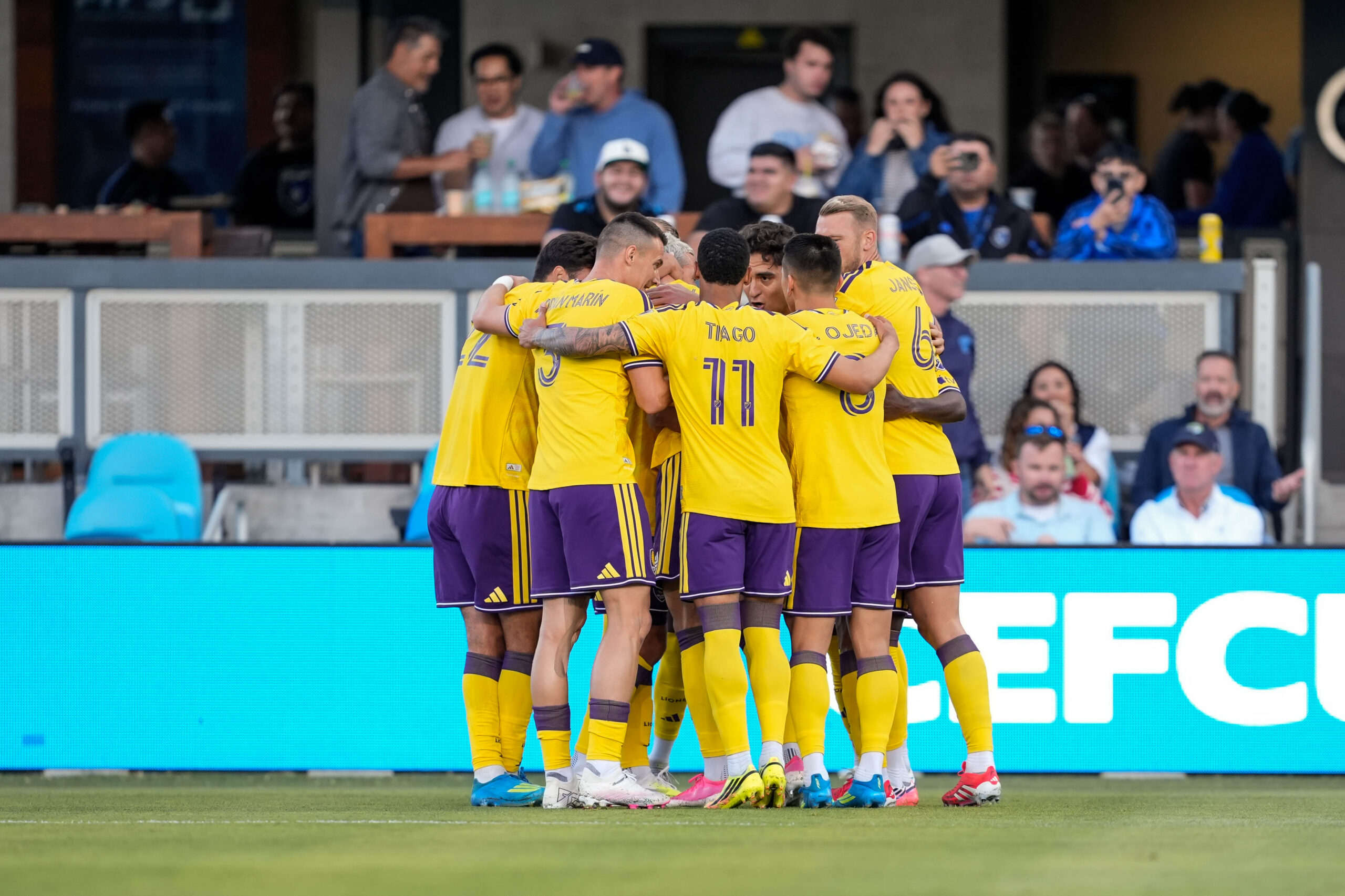
While we all no doubt missed having Orlando City games to watch during Major League Soccer’s sabbatical for the World Cup, its also probably fair to say that Wednesday’s return to action against the San Jose Earthquakes was tinged with a good deal of trepidation. After all, the Lions had been hammered 6-2 on the road by FC Cincinnati in their final match before the layoff, comfortably had the worst defense in the league, had yet to keep a clean sheet, and had given up a whopping 31 of their 44 goals conceded on the road.
It didn’t help matters that San Jose was in the top five of the Supporters’ Shield standings, was the second-best team in the Western Conference (level on points for first but edged out on goal differential), and had scored 33 goals in 15 games while giving up just 15. It’s true that the Quakes weren’t in great form before the break, winning just one of their last five, but there was still plenty of reasons to worry that Orlando would pick up where it had left off in Ohio back on May 23.
Instead, the Lions not only hammered San Jose 4-0, but arguably should have beaten the Earthquakes by an even more lopsided scoreline. The team played a fluid, position-less brand of soccer that gave the home team absolute fits, and kept a first league clean sheet of the year to boot. It was an extremely unexpected, but exceedingly welcome, performance.
The big question now, is whether it can be replicated.
Well, maybe not directly replicated, as 4-0 wins tend to be relatively uncommon occurrences for even the very best of teams. Rather, can the things that made Orlando successful on Wednesday be built upon and repeated, or was the team’s performance a flash in the pan that we shouldn’t expect to see again?
First, let’s talk about the performance itself.
The highlight was how the team looked going forward. Every player on the field not named Maxime Crepeau, Adrian Marin, Robin Jansson, or David Brekalo was constantly drifting anywhere and everywhere in the attacking half, taking up unexpected positions and rarely remaining in the position designated for them by the formation. Ivan Angulo functioned as a no.10 despite nominally playing right midfield, Justin Ellis and Antoine Griezmann could be found anywhere from the opposition’s 18-yard box to the midfield line or deeper, and the same could be said for Braian Ojeda and Eduard Atuesta. San Jose found the positional interchanging extremely difficult to deal with, especially during the first half hour of the game, but did settle in a little better after halftime.
Speaking of Ellis and Griezmann, they were terrors for their entire time on the pitch. As previously mentioned, both of them were dropping deep to receive the ball, exchanged quick passes with their teammates, and then turned to bomb forward themselves or play balls through or over the defense. That quick passing and clever movement was a theme for OCSC as a whole, but the two forwards were the best examples of it with Angulo coming a close third.
The speed of play for Orlando meant that the team had a lot of joy in transition moments, and the Lions constantly seemed to be springing players behind the defense, or running at San Jose’s defense with men in support. Only some poor execution when it came to passing and finishing in the final third prevented the good guys from putting even more goals on the board.
When it came to keeping the ball out of their own net, the Lions did several things very well. For one thing, the defense seemed to be more organized than we’ve seen it this year, aside perhaps from the U.S. Open Cup win against Atlanta. Orlando caught San Jose offside seven times on Wednesday, and on several occasions it was more down to the defense stepping together as a unit and staying in a disciplined line than it was on the Earthquakes being lazy or mistiming their runs.
When San Jose did carve out good chances, Crepeau was a towering presence in between the posts for the Lions. His seven saves will take the headlines, but there were also several instances where he was quick and smart in coming off his line to beat a San Jose runner to a ball and prevent a 1-v-1 situation. He also made several of his best saves on shots that were ultimately ruled out for offside or he almost certainly would have cracked double digits. It was a pre-eminent performance, and he looked to be brimming with confidence after a good showing for Canada at the World Cup.
Now to be objective, OCSC had some things working in its favor. San Jose was without Niko Tsarikis, who has two goals and four assists in 11 games (then again, the Lions were without Martin Ojeda, Marco Pasalic, and Daryl Dike), and the Earthquakes’ finishing was…not great. Two particular instances stood out: Beau Leroux missing wide left in the 38th minute when he was unmarked at the top of the six-yard box, and Jack Skahan touching a ball toward on onrushing Crepeau in the 57th minute rather than passing to a wide-open Ousseni Bouda for a tap-in. There were also several times when a ‘Quakes player just missed getting on the end of a ball in a dangerous area, or when bad giveaways in dangerous areas by the Lions went unpunished.
San Jose also made some unforced errors of its own, like the turnover that led to Griezmann’s goal. Then there was the set piece marking, which was atrocious. Brekalo and Ojeda were both completely unmarked for their goals, and it was shockingly bad defending for a team that hadn’t given up any set piece goals going into Wednesday’s game.
Now, what exactly should we make of all this?
Well, when it comes to what Orlando did, there’s an argument to be made that the team’s offensive performance from open play can be replicated. The team has had plenty of time to work on this position-less style of play on the training ground and was still having lots of joy with its quick passing and fluid movement even after San Jose had time to make halftime adjustments. The defense mostly held up well and stayed organized against one of the league’s more potent attacks, and when the Earthquakes did create chances, Crepeau kept up the form he showed in his last four games for Canada.
Orlando could also have benefitted from Tiago and Tyrese Spicer finishing clear-cut chances they were given by Ellis, Atuesta, and Griezmann. Martin Ojeda’s return and the addition of Dike can help chances turn into goals.
On the flip side, this is the first time anyone’s seen the Lions try to play this way, so its always going to be tougher to stop something you haven’t been able to train for. The element of surprise isn’t something that should be discounted when it comes to Wednesday. Other teams may make Orlando pay for some of the shaky moments that it had at the back, and not every team is going to make three big errors that the Lions can take advantage of.
For me, the answer lies somewhere between the two ends of the spectrum. I do not expect the Lions to look like 2008-2009 Barcelona every week, but I also don’t think its fair to say that Orlando simply benefitted from favorable circumstances and bounces. It’s perhaps best to say that OCSC did things that can be replicated, but there’s no guarantee those things will be replicated. The movement, passing, decision-making, defensive organization, and goalkeeping are things that can build a good foundation for success if Orlando can repeat them, and those are the things I’d focus on more than the number of goals or the clean sheet.
At the end of the day, we’re working on a small sample size and shouldn’t get carried away by one game, regardless of how fun it was. Wednesday’s performance wasn’t necessarily an illusion or the truth of what this team is. Rather, it was a glimpse of what this team has an opportunity to be. There’s work to be done and areas that can be improved on, but the Lions showed enough in San Jose for us to have hope for a season that’s looked hopeless more often than not. Vamos Orlando.


Orlando City vs. San Diego FC: Preview, How to Watch, TV Info, Live Stream, Lineups, Match Thread, and More

Orlando City B vs. Inter Miami II: Final Score 4-1 as OCB Claims Three Huge Points in South Florida

Orlando City vs. San Diego FC: Three Keys to Victory


-

 Orlando City2 weeks ago
Orlando City vs. Real Salt Lake: Final Score 2-1 as Griezmann’s Brace Lifts Lions to Win
-
 Orlando City2 weeks ago
Orlando City vs. Real Salt Lake: Preview, How to Watch, TV Info, Live Stream, Lineups, Match Thread, and More
-
 Orlando City B2 weeks ago
Orlando City B vs. Atlanta United 2: Final Score 5-1 as Young Lions Fall for Fifth Straight Time
-
 Orlando City1 week ago
Orlando City vs. Minnesota United: Preview, How to Watch, TV Info, Live Stream, Lineups, Match Thread, and More
-
 Lion Links2 weeks ago
Lion Links: 8/24/26
-
 Orlando Pride2 weeks ago
Orlando Pride vs. Washington Spirit: Preview, How to Watch, TV Info, Live Stream, Lineups, Match Thread, and More
-

 Orlando City2 weeks ago
Orlando City vs. Real Salt Lake: Five Takeaways
-
 Orlando City1 week ago
Sometimes the Solution Is Just to Sign Antoine Griezmann