
Orlando City
Why Three Could Be Greater Than Four In Orlando City’s Back Line
An analysis of MLS teams using three, four, and five-man back lines and whether it would benefit Orlando City to use a three-man grouping going forwards.


Orlando City rolled out a three-man back line during last Sunday night’s game against Columbus, and while that formation alone is not responsible for the Lions leading for most of the game and getting their first point of the season on the road, it definitely played a role. During the Óscar Pareja era, Orlando City nearly always played with a four-man back line, but with a lot of roster turnover from last season and new leadership on the sideline, it could be time to give the three-man group a look, as the Lions try to climb out from the bottom of the standings and make the playoffs for the seventh consecutive season.
We will explore whether a three-man back line is worth pursuing below, but making the playoffs is definitely a five-star idea and highly recommended.
Soccer back lines, and formations in general, are fluid. Baseball is static before every play, so you can see exactly where every fielder (defender) was and evaluate offensive and defensive performances against shifts or alignments. American football is not exactly static, but it is closer to baseball than soccer, with most players being still as the play is initiated. Soccer is most similar to hockey, basketball, and lacrosse, where even though players are nominally playing set positions, those positions can constantly change throughout a play and throughout the entirety of the game.
That said, most players generally play in a specific position for much of the game, so we can look at some tracking data and make generalizations about the formations. Opta’s tracking analysts list a primary formation for each team in every game, and while it is not perfect, it is correct more often than not for the general formation used by that team in that game.
Opta’s tracking on fbref.com gives the following table for every formation used in MLS play so far this year, and I have added the associated points earned, goals scored, and goals allowed by each team while in that formation. Make sure you are taking the formation with somewhere between a grain of salt and the bottom third of the salt shaker, but this is the unedited data:
| Formation | Games Used | Avg. Points Earned | Avg. Goals For | Avg. Goals Allowed |
|---|---|---|---|---|
| 4-2-3-1 | 77 | 1.58 | 1.74 | 1.44 |
| 4-3-3 | 48 | 1.35 | 1.67 | 1.65 |
| 4-4-2 | 32 | 0.97 | 0.84 | 1.41 |
| 3-4-3 | 30 | 1.47 | 1.57 | 1.83 |
| 3-5-2 | 7 | 1.43 | 1.57 | 1.57 |
| 5-4-1 | 4 | 1.25 | 1.25 | 0.75 |
| 4-1-4-1 | 3 | 1.33 | 1.67 | 1.33 |
| 3-4-1-2 | 3 | 1.67 | 2.00 | 1.67 |
| 3-5-1-1 | 1 | 3.00 | 4.00 | 3.00 |
| 4-4-1-1 | 1 | 0.00 | 0.00 | 3.00 |
I think it is probably easier to just bucket the different formations into simpler sets, using the number of defenders to segment the formations:
| Back Line | Games Used | Avg. Points Earned | Avg. Goals For | Avg. Goals Allowed |
|---|---|---|---|---|
| Three-man | 41 | 1.51 | 1.66 | 1.81 |
| Four-man | 161 | 1.38 | 1.53 | 1.50 |
| Five-man | 4 | 1.25 | 1.25 | 0.75 |
Most teams in MLS, and also around the world, utilize four-player back lines. Coaches are pragmatists, and some combination between using a lineup that feels more secure (i.e. usually one with more defenders) and one that will not get ridiculed by players, pundits, fans, owners, and writers (the audacity of someone to analyze and comment on lineup choices, how dare they?) drives a hefty portion of the decision making for those making lineup decisions.
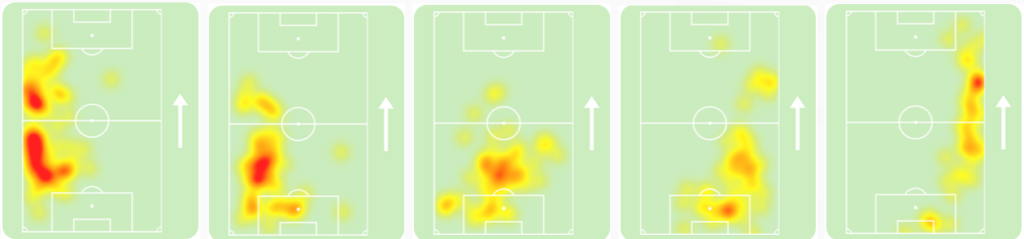
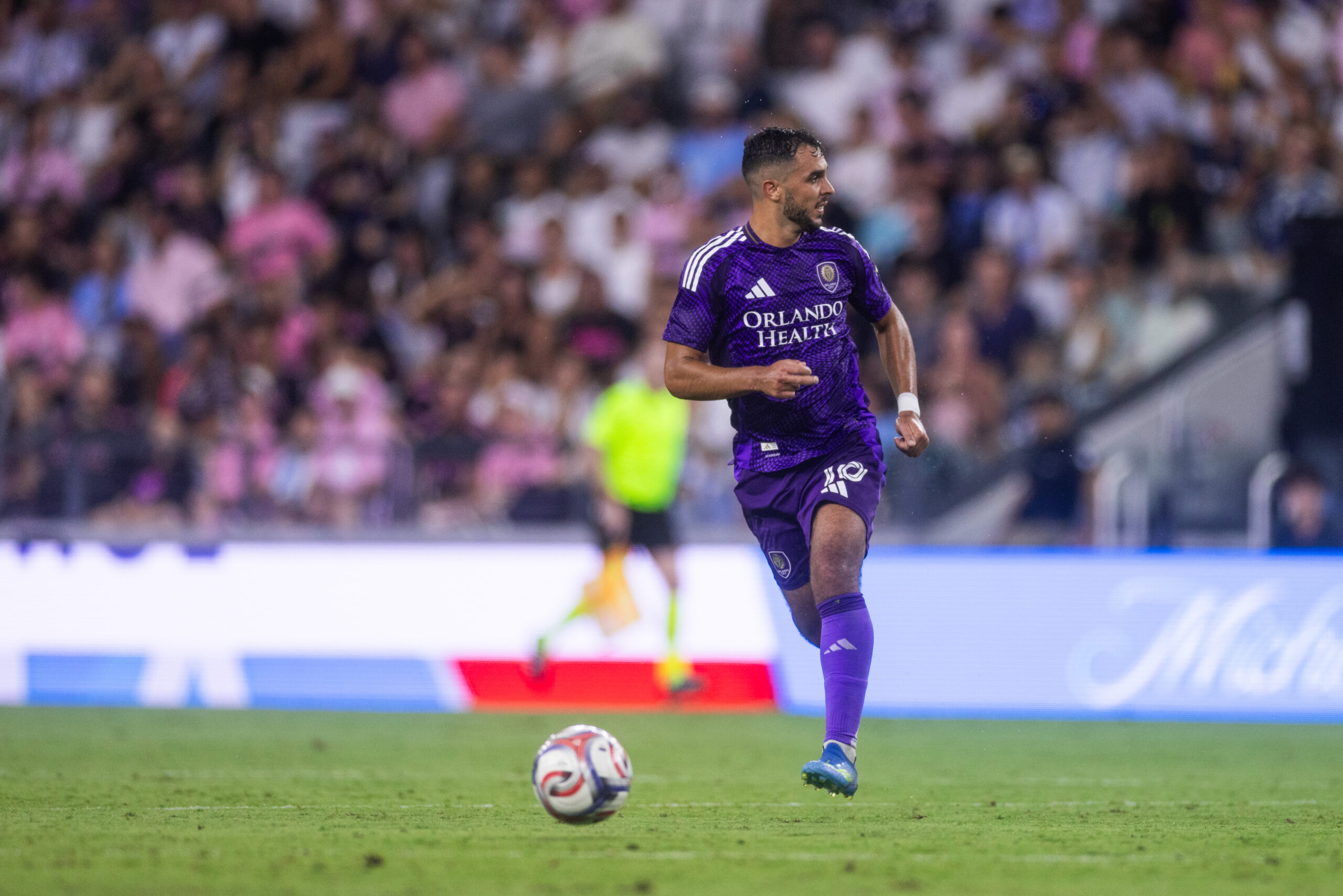
Orlando City used a three-man back line in the game against Columbus, though there were parts of the game when it looked much more like a five-man back line with Griffin Dorsey and Iván Angulo dropped all the way back on defense. The sofascore.com heatmaps for all five (Angulo, David Brekalo, Robin Jansson, Iago, and Dorsey) are listed below in order from left to right, and you can see where all five have a good amount of touches in the defensive third. Angulo and Dorsey played far higher than the middle three, however, which is why the formation Opta assigned to Orlando City was a back three. Imperfect, but directionally it makes sense.
With the players on the current roster, a back three may well be the right lineup to use until the next transfer window. There is a not a lot of blazing speed among Orlando City’s defensive group, but most of the defenders have decent size and are good in the air, so protecting the heart of the defense with Brekalo, Jansson, and Iago as the starters and Adrián Marín and Tahir Reid-Brown as backups gives the team some decent depth without sacrificing size. Alas, this comes one year too late for former Lion Thomas Williams, who probably would have been better suited to a back three than a back four.
In addition to having a good set of center back candidates, Angulo, Dorsey, Zakaria Taifi, and Marín are all good wingback options as well, and players who have the skills and pace to get up into the attack while also recovering back to help out the defensive line.
Orlando City’s current personnel fits the three-man back line well, and considering most teams in MLS are using four-man back lines, that decision also bodes well considering how three-man back lines have done this season when playing against four- or five-man back lines. Three-man back lines have been used against four- or five-man back lines 31 times thus far this season, and those teams are earning 1.58 points per match during those games. That amount of points per match would have been in the top half of MLS last season (13th), right above the actual 2025 Orlando City team, which finished on 1.56 points per match.
Orlando City hosts Houston this weekend, and the Dynamo have primarily used a four-man back line (featuring former Lion Antonio Carlos) thus far this season. On Saturday night we will see if the three-man back line was just for the Columbus game or if it is something that the Lions will trot out again in hopes of continuing the league-wide trend of teams finding success when playing three in the back against teams playing four in the back.
I do not really care whether it is three or four in the back, as long as that by the end of the game Orlando City has done better than Houston at putting more in the back…of the opposition’s net.
Vamos Orlando!


Lion Links
Lion Links 9/22/26
Cosette Morche up for weekly honors, lessons from matchday 27, key players in the UEFA Women’s Champions League, and more.

Good morning, everyone. It was a terrible, horrible, no-good, very bad weekend for Orlando’s three soccer teams, as they all lost and did so by an aggregate score of 12-5. Fortunately, we’ve got lots to talk about this morning, so let’s not dwell any further on the horror show that was the weekend slate, and instead dive into today’s links.
Cosette Morche up for Weekly Honors
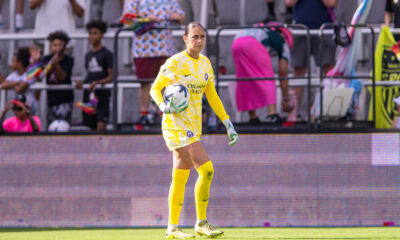
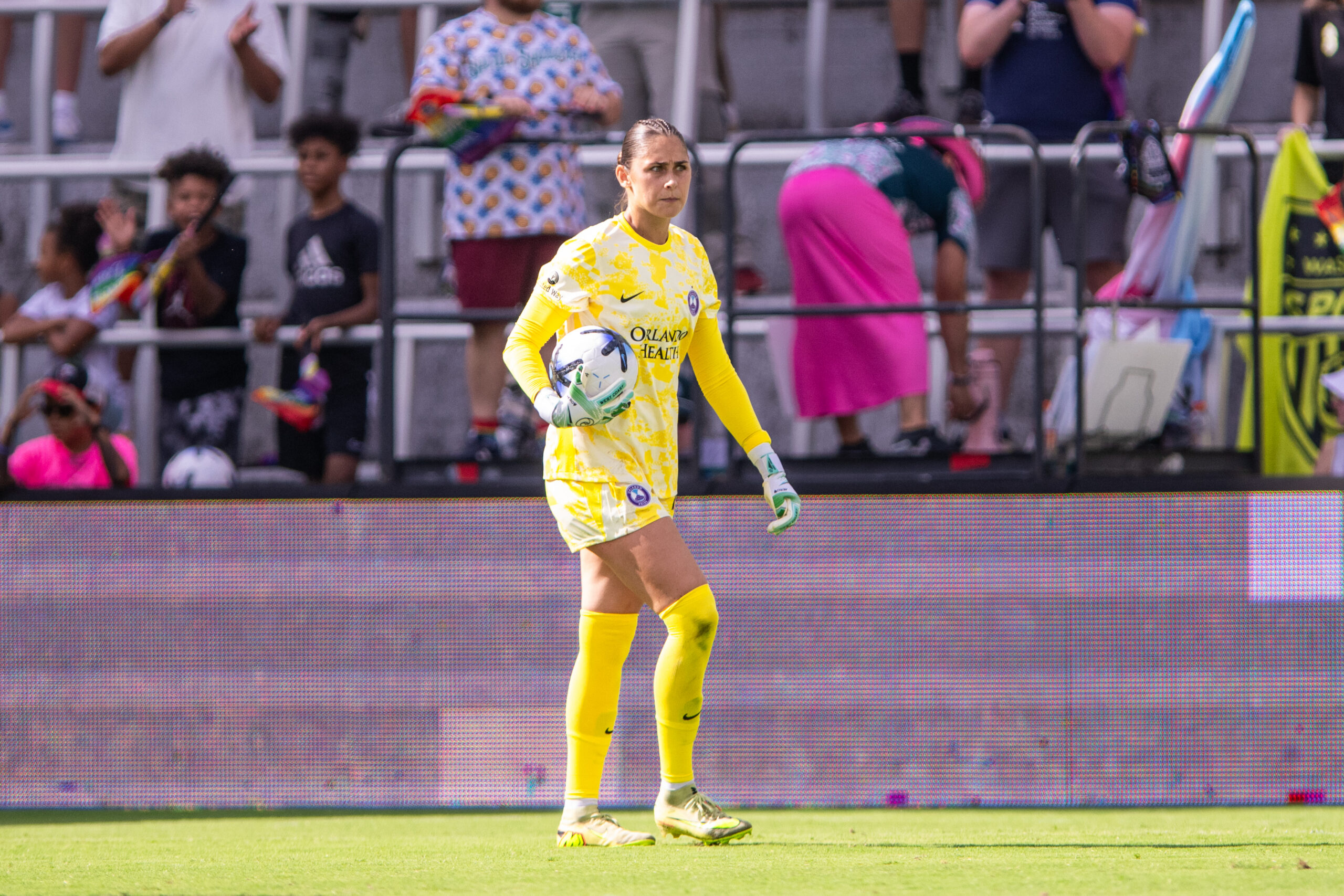
Despite the Orlando Pride falling at home against the Portland Thorns, a bright spot has emerged from the game in the form of Cosette Morche being nominated for the NWSL Save of the Week. She made a fantastic triple save in the 17th minute to frustrate both Sophia Wilson and Pietra Tordin and keep the score at 1-0. Unfortunately, the Pride went on to lose 4-1, but Morche continued a trend of strong performances in net since taking over for the loaned-out Anna Moorhouse. Make sure you go vote for her to win!
Lessons from Matchday 27
Matchday 27 is in the books for Major League Soccer, and there are plenty of things to be learned from the weekend’s action. A number of young players called up by the United States Men’s National Team turned in impressive performances, as Cavan Sullivan had a goal and an assist, Frankie Westfield and Neil Pierre helped Sullivan and the Union overturn a 4-3 deficit against Sporting Kansas City, and Julian Hall scored the winner in the Hudson River Derby. Elsewhere, Nashville clinched a playoff spot and did so in style by knocking off a good Chicago Fire team 3-0. Finally, St Louis City beat Toronto FC 3-1 and now has a mind-boggling 16-game unbeaten streak in the league that grows to 18 games unbeaten in all competitions.
Women’s Champions League Key Players
The UEFA Women’s Champions League kicks off today, so this is an excellent time to familiarize yourself with some of the most important players in the competition. Some of them may be familiar to you already, like Real Madrid’s Colombian attacker Linda Caicedo or Chelsea midfielder Lauren James. Midfielder Patri Guijarro will be an important piece for Barcelona following the summer departures of Alexia Putellas and Salma Paralluelo, while Annamaria Serturini, Remina Chiba, and Redondo are in a similar situation for Juventus. Finally, there are players on less heralded teams, like Uka Modesta for Austria Wien and Lowiese Seynhaeve for OH Leuven.
Granit Xhaka Dropped by Switzerland
We finish our main story section today with an odd one, as Granit Xhaka has been left out of the latest Switzerland squad after he admitted to using a fake COVID-19 vaccination certificate. Amid an investigation into a Swiss doctor who was allegedly producing false certificates for unvaccinated individuals, Xhaka has admitted to using falsified paperwork. Not only has he been left out of the Swiss squad, but he could also face legal repercussions, and the player confirmed that he is currently in the process of speaking to the authorities. Xhaka is Switzerland’s all-time leader in appearances, and has been a key member of the team for a number of years.
Free Kicks
- Orlando City somehow rose two spots to no.10 in ESPN.com’s MLS power rankings.
- The Orlando Pride held fast at no. 12 in the same outlet’s NWSL power rankings.
- For better or worse, Orlando City will be back in the red kits for Saturday’s match against the Philadelphia Union.
- Alexis Mac Allister says no decision has been made yet on his Liverpool future, but he has plenty of time and plenty of options to consider.
- Italy coach Roberto Mancini says he is hoping to win back fans who were upset with him for leaving the national team three years ago.
That’s all I’ve got for you this morning. Vamos Orlando!
Orlando City
Orlando City vs. New England Revolution: Player Grades and Man of the Match
How did your favorite Lions perform in Orlando City’s road loss to the New England Revolution?


Orlando City was minutes away from drawing the New England Revolution Saturday night, which would’ve been a big point in the Lions’ quest for the postseason. But two second-half injury-time goals saw that point dissipate. Instead, they followed their U.S. Open Cup semifinal defeat with a crushing 4-2 loss.
Let’s take a look at how the individual players fared in the disappointing result.
Starters
GK, Maxime Crepeau, 5 — None of the four goals were specifically Crepeau’s fault, with one being a deflection and the other three coming from poor defense. But the goalkeeper’s four goals conceded matched his number of saves. It can also be argued he should’ve come out earlier on some of the goals to cut down the attacker’s angle. In addition to his four goals conceded and four saves, he ended the game with 39 touches and completed 74.1% of his 27 passes, including seven of his 14 long balls.
D, Bernardo Rhein, 5.5 — The teenager got the start at left back in this game, touching the ball 58 times. He completed 83.3% of his 42 passes, but neither of his two long balls nor his lone cross. Defensively, Rhein recorded a tackle and a blocked shot before being replaced in the 77th minute by Harvey Sarajian in an attacking change.
D, Robin Jansson, 5.5 — The Orlando City captain had 65 touches in this game and completed 98.1% of his 53 passes, including three of his four long balls. Defensively, he had an interception, a team-high six clearances, and an aerial duel won. But his age showed as he was unable to keep up with the counterattacks the other way. While it wasn’t a bad game for Jansson, I can’t give a higher grade to a key component of a back line that conceded four times.
D, David Brekalo, 5.5 — Jansson’s center back partner had 52 touches and completed 95% of his 40 passes, including one of his two long balls. He took one shot in the game, but it was off target. Defensively, Brekalo recorded a tackle and six clearances, and won two aerial balls. Similar to Jansson, Brekalo wasn’t necessarily bad, but was part of a center back pairing that helped concede four goals.
D, Ivan Angulo, 6 — Angulo started this game at right back and moved to left wing and left back as the game progressed. As you would expect, the Colombian pushed forward quite a bit. He ended the game with 69 touches and completed 81.3% of his 48 passes, including one of his three long balls. His most impactful play came in the 62nd minute, when he shielded his defender to tuck away the Lions’ first goal, cutting the deficit to 2-1. That was his lone shot of the night. Defensively, he added five tackles and two interceptions, providing one of the team’s best performances.
MF, Tyrese Spicer, 5 — In the team’s third game in eight days, Spicer got the start in the midfield. He touched the ball 20 times and completed 72.7% of his 11 passes, including his lone long ball. Other than that, he did little offensively before being replaced by Zakaria Taifi at halftime, allowing Angulo to go forward. Defensively, he added a tackle and an interception, but the Lions could’ve used much more from the speedster.
MF, Joran Gerbet, 6 — Gerbet once again was in the lineup for the Lions, playing his typical defensive midfield role. The Frenchman had a team-high 72 touches and completed 98.5% of his 67 passes, including two key passes and both of his long balls. The midfielder’s only shot was blocked, but it bounced off Peyton Miller’s hand for a penalty. He also contributed defensively with a tackle and an interception. Gerbet was replaced by Tiago in second-half stoppage time to bring on an attacker after the team fell behind again.
MF, Luis Otavio, 5.5 — The quick turnaround gave Otavio a chance to start, though he only played 45 minutes. The Brazilian had 21 touches and completed 94.1% of his 17 passes, including one of his two long balls. He didn’t contribute any shots in the attack and only recorded a clearance defensively in what was a rather forgettable performance. His night ended at halftime when he was taken off for regular starter Eduard Atuesta.
MF, Marco Pasalic, 5.5 — With Antoine Griezmann injured, Pasalic got a rare start. He touched the ball 35 times and completed 91.7% of his 24 passes, including one of his two long balls. The attacking midfielder took two shots and put one on target. Defensively, he recorded two tackles and a clearance before being replaced by Daryl Dike in the 71st minute.
F, Martin Ojeda, 6 (MotM) — Ojeda is starting to look more like his old self since returning from injury and was the primary attacker for the Lions in this game. The Argentinian had 59 touches and completed 79.6% of his 44 passes, including a key pass, two of his three long balls, and two of his four crosses. He also put two of his three shots on target. Ojeda was instrumental in the attacking movement that ended with Angulo’s goal, working a give-and-go straight up the middle with Justin Ellis. In the 88th minute, he converted the game-tying penalty, keeping his record from the spot perfect and pulling him to within one goal of Facundo Torres for the club record. He was the best player for me and earned my Man of the Match.
F, Justin Ellis, 5.5 — Ellis was active in this game, touching the ball 67 times and completing 76.1% of his 46 passes, including one of his two long balls and one of his two crosses. His only shot was off target. The forward added two tackles in his last game before heading out on international duty.
Substitutes
D, Zakaria Taifi, 5.5 (45’) — Taifi came on at halftime for Spicer, allowing Angulo to move forward into his natural position. The Homegrown Player had 24 touches in his 45 minutes while completing 85.7% of his 14 passes. He had three key passes, completed his lone cross, and didn’t complete either of his two long balls. The defender didn’t do anything else offensively, but added a tackle and a clearance.
MF, Eduard Atuesta, 5.5 (45’) — A regular starter, Atuesta got the first half off before coming on for Otavio. The Colombian touched the ball 41 times and completed 94.1% of his 34 passes, including a key pass and two of his three long balls, but neither of his two crosses. Additionally, his only shot was on target. Defensivley, Atuesta didn’t record any statistics.
F, Daryl Dike, 4.5 (71’) — Dike came on for Pasalic in the 71st minue with the Lions looking for a goal. It was another disappointing performance for the striker, who only had six touches and completed two of his four passes. Despite coming on to score, his only shot was off target and he didn’t contribute anything defensively.
F, Harvey Sarajian, 5 (77’) — Sarajian came on for Rhein in the 77th minute, another move aimed towards finding an equalizer. The rookie had seven touches in 13 minutes while completing 83.3% of his six passes. Sarajian also didn’t contribute much in this game, failing to take a shot or build an attack.
MF, Tiago, N/A (90+5’) — Tiago came on in the dying minutes for Gerbet after Orlando CIty fell behind again. The attacker only recorded three touches, completed his lone pass, and drew a foul in his brief stint on the field.
That’s how I saw the individual performances in this disappointing loss. Let us know how you saw the game in the comments below, and don’t forget to vote on your Man of the Match.
Lion Links
Lion Links: 9/21/26
All of Orlando’s soccer teams lose, Lions unveil Vinicius Nogueira, and more.

Hello, Mane Landers! I hope all is well with you down in Florida. I’ve been staying busy at work over the weekend. Let’s wish a happy belated birthday to Orlando Pride defender Cori Dyke, who turned 26 on Sunday, and a happy birthday to Orlando City defender Bernardo Rhein, who turns 19 today. We’ve got plenty to cover today, so let’s get to the links.
Lions Concede Two Late Goals in Loss at New England
Orlando City fell 4-2 to the New England Revolution on the road on Saturday at Gillette Stadium, conceding twice in stoppage time to drop a point. After trailing 2-0, the Lions came back with second-half goals from Ivan Angulo and Martin Ojeda, with the latter from the penalty spot just before the 90 minutes were up. However, in stoppage time, the Lions imploded, with Peyton Miller and Carles Gil closing out the night with two goals each for the Revolution. The loss snapped Orlando’s five-game unbeaten streak in league play, and the Lions left Foxborough with no points instead of at least one. Orlando City will be back on the road for its next match on Saturday against the Philadelphia Union.
Lions Unveil Vinicius Nogueira
Orlando City unveiled left back Vinicius Nogueira on Friday with a photo shoot at Inter.co Stadium.
The Lions signed Nogueira on Aug. 27 on loan from Bulgarian First League side PFC Ludogorets through the end of the 2027 MLS Sprint Season, with an option to make the move permanent. The 24-year-old Brazilian was on the bench during Orlando City’s match against the New England Revolution on Saturday but did not play.
Pride Fall at home to Portland Thorns
The Orlando Pride lost 4-1 to the Portland Thorns on Saturday at Inter.co Stadium, and while the team is still mathematically alive for the postseason, the home defeat made things even more of a longshot than they were. The Pride started slowly and were down 2-0 before Ally Lemos pulled one back in the first half. Orlando missed several scoring chances, and in the second half, Portland scored two goals to put the match away. Orlando will travel to the West Coast to take on Bay FC on Sunday.
OCB Falls to Atlanta United 2 on Decision Day
Orlando City B lost 4-2 to Atlanta United 2 on Decision Day Sunday at Osceola County Stadium, falling all the way to 10th and out of the playoff places. Atlanta struck first early before Issah Haruna tied it up for the Young Lions. However, Atlanta got an own goal when Tristan Himes punched a set piece deliver in off Harvey Sarajian to retake the lead, and Ignacio Saurez-Couri added another to make it 3-1. Justin Hylton scored for OCB to cut the deficit to one before halftime. In the second half, Dominik Chong-Qui scored the final goal to secure Atlanta’s win. For the Young Lions, the season ends in disappointment again, missing the MLS NEXT Pro postseason for the second straight season.
Free Kicks
- Just two days after Gabi Nunes and the Orlando Pride mutually agreed to part ways on Wednesday, Nunes signed with Liga F side Atletico de Madrid Femenino on Friday.
- New York City FC is reportedly signing defender Matt Miazga after he was waived by FC Cincinnati earlier this month.
- German-American and FC Augsburg defender Noahkai Banks announced Friday that he has committed to playing for the German Men’s National Team over the USMNT. Banks had previously played for the U.S. at the youth level.
- Folarin Balogun made his first appearance of the season in Ligue 1 for AS Monaco in a 2-1 win against RC Lens after his move to Everton fell through in the final hours of the transfer window earlier this month.
- Christian Pulisic started and scored for AC Milan in a 3-0 win against Lecce, extending the team’s Serie A unbeaten streak to five matches.
That will do it for me today, Mane Landers. Enjoy your Monday, and I’ll see you next time.


PawedCast Episode 552: Crew and Revs Rewinds, Philly Preview, OCB Out of Playoffs, and More

Lion Links 9/22/26

Orlando City vs. New England Revolution: Player Grades and Man of the Match


-
 Orlando City7 days ago
Orlando City vs. Columbus Crew, U.S. Open Cup: Preview, How to Watch, TV Info, Live Stream, Lineups, Match Thread, and More
-
 Orlando City2 weeks ago
Orlando City vs. Atlanta United: Preview, How to Watch, TV Info, Live Stream, Lineups, Match Thread, and More
-

 Orlando City2 weeks ago
Orlando City vs Atlanta United: Final Score 3-2 as Lions Secure First Win in Atlanta Since 2023
-

 Orlando City2 weeks ago
Orlando City vs. Toronto FC: Preview, How to Watch, TV Info, Live Stream, Lineups, Match Thread, and More
-

 Orlando City1 week ago
Orlando City vs. Toronto FC: Final Score 3-0 as Lions Keep Rolling
-

 Orlando Pride2 weeks ago
Orlando Pride vs. Kansas City Current: Preview, How to Watch, TV Info, Live Stream, Lineups, Match Thread, and More
-
 Lion Links2 weeks ago
Lion Links: 9/11/26
-

 Lion Links2 weeks ago
Lion Links: 9/10/26